
Reviewed · HISTORICAL TOURS
Augsburg – Private Historic Tour
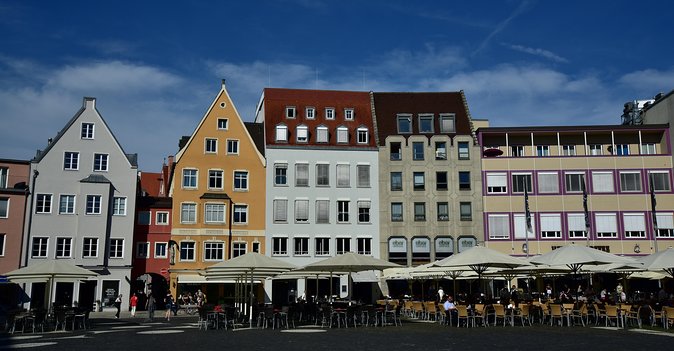
Augsburg’s story is packed into a surprisingly walkable old center, and this private tour gives you the big picture without asking you to research Roman roots, medieval churches, Fugger wealth, and postwar rebuilding on your own. You’ll see the Fuggerei, one of the world’s oldest social housing complexes still in use, along with the grand Rathaus and its Goldener Saal.
I like the route’s variety: fountains and towers break up the church visits, while the private format lets you ask questions or adjust the pace. I also like the practical personal touch shown by guides Kristen and Stephanie, who have met guests at hotels or the train station and tailored the outing to their needs. The main drawback is cost: $417.72 for a group of up to 15 is good value for a full group, but expensive for one or two people, especially since two admission fees are extra.
Key points to know before you book
- Three hours covers ten central Augsburg sights: The walk moves from Rotes Tor and St. Ulrich and Afra to the town hall, cathedral, and Fuggerei.
- The private format is the real advantage: You can ask questions freely and request flexible timing within the tour.
- Fuggerei gives the walk a human story: Founded in 1516, it still serves as social housing connected with the Fugger family.
- Two interior visits cost extra: Schaezlerpalais is €7 per person, and the Goldener Saal is €2.50 per person.
- The route finishes at Fuggerei: You start at Augsburg Town Hall, so plan for a one-way walk through the center.
- Personal guiding is part of the appeal: Kristen and Stephanie have provided hotel and train station meeting options and adjusted tours around individual interests.
Why a private walk works well in Augsburg
Augsburg is one of Germany’s oldest cities, but its story is not confined to one monument. Roman beginnings, medieval church life, the Fugger family, Renaissance civic pride, and the damage and rebuilding of the Second World War all appear within a compact city-center route.
That mix can be hard to sort out on your own. A private guide gives you a timeline as you move, so the sights connect instead of feeling like a string of unrelated buildings. You can stop at a fountain, ask why a tower mattered, then carry that answer into the next square.
The tour is priced at $417.72 per group of up to 15 people. For a full family or friend group, that can be sensible: one guide serves everyone, and the cost does not rise with each additional person in the group. For a couple, the price is much harder to justify unless you place a high value on private attention and a customized pace.
The planned visit lasts about three hours. The listed stops add up to roughly 170 minutes of viewing time, leaving room for walking between sights and for questions. You should still expect a steady city walk rather than a leisurely café-style outing.
More Historical Tours across Germany
- Leipzig: City History Canal Sightseeing Tour on a Motorboat
★ 4.7 · 6,232 reviews - Berlin: Natural History Museum Entrance Ticket
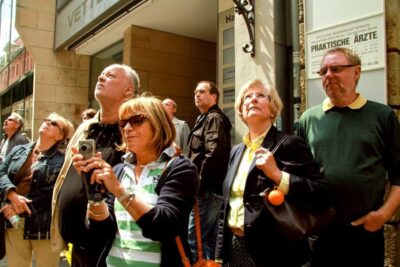
★ 4.6 · 3,382 reviews - Leipzig: 1.5-Hour Historical Walking Tour in German
★ 4.7 · 2,217 reviews
Starting at Rotes Tor and St. Ulrich and Afra
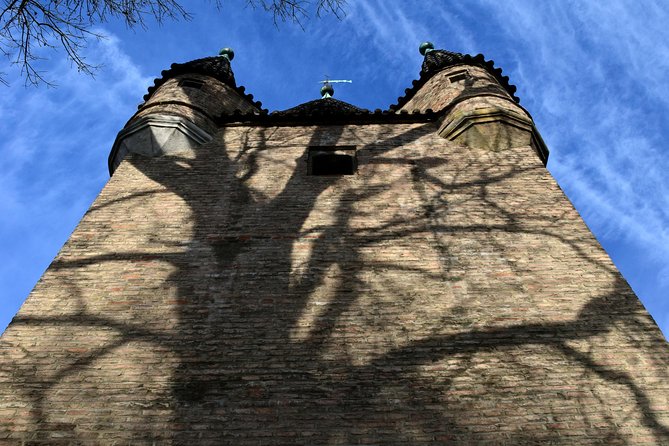
The walk begins at Augsburg Town Hall, then heads to Rotes Tor, or the Red Gate. The tower was renovated in the 20th century, and its role in the old city makes it a fitting first stop. You get about 15 minutes here, enough to take in the structure and hear why city gates mattered.
From there, the route continues to the Basilica of St. Ulrich and Afra. The church grew from the Roman tomb of St. Afra, who was martyred in 304, and its Gothic design gives you an early sense of Augsburg’s religious importance.
The stop is also useful for showing how older Roman and medieval layers overlap. You are not simply looking at a church façade. You are hearing how a Roman-era martyr became tied to a major Catholic site in the city.
Both stops are free, which keeps the opening part of the tour simple. Since each is scheduled for about 15 minutes, you should not expect an extended church service or a long architectural study. The guide’s explanation is the main value here.
Schaezlerpalais and Augsburg’s grand interiors
Schaezlerpalais brings a change of mood. This 1765 palace is known for its baroque architecture and artistic importance. The exterior and historical setting are part of the walk, but the palace interior is where the visit becomes more rewarding for anyone interested in decorative design.
The planned stop lasts about 30 minutes, making it one of the longer visits on the route. Admission is not included and costs €7 per person. Add that charge to your budget before booking, especially if your group is large.
I like having a palace on the route because it gives context to Augsburg’s wealthy civic past. After the basilica, the palace shows a different kind of power, expressed through grand rooms, ornament, and private status rather than worship.
The extra fee is reasonable for an interior visit, but you should ask the guide or confirm at booking how much time will be spent inside. The tour information gives the admission price and planned duration, but it does not promise that every room will be open on every date.
Hercules’ Fountain and the story told in bronze
Hercules’ Fountain is a short, free stop, scheduled for about 15 minutes. The fountain dates to 1597 and features Hercules killing the Hydra, the seven-headed monster from Greek mythology.
This is a good example of how Augsburg’s public art carried messages about strength and civic authority. You do not need a long stop to appreciate it, but a guide can explain why such a large mythological figure belonged in the center of a prosperous European city.
The fountain also provides a welcome outdoor pause between larger buildings. If you enjoy sculpture, it deserves more than a quick photograph. If fountains are not high on your list, the 15-minute visit keeps it from taking over the day.
A few more things to do in Germany worth a look
- Berlin: Private Reichstag and Glass Dome Tour
★ 4.8 · 2,226 reviews - Berlin Private Complete History All Day Walking Tour
★ 5.0 · 474 reviews - Munich Private Tour with a Local – Highlights & Hidden Gems
★ 5.0 · 469 reviews - Private Walking Tour Berlin Third Reich Hitler and World War II
★ 5.0 · 360 reviews
Goldener Saal and the rebuilt Rathaus
The Goldener Saal is inside Augsburg’s town hall, at the same general starting point as the tour. Its ceiling paintings and gold wall decoration give you the most ornate interior on the route.
The room was completed in 1643, then destroyed along with the town hall in a 1944 air raid. It was rebuilt after the war. That detail matters. What you see is not just a preserved historic room, but also part of Augsburg’s long effort to restore a damaged civic center.
Plan for about 30 minutes here, making it another major stop. Admission costs €2.50 per person and is not included. Compared with the price of the private tour, this is a small extra, but the charge is still worth knowing about in advance.
The Goldener Saal may be the high point for visitors who like interiors, painting, and civic architecture. You should also remember that the room can feel very different from the city’s medieval churches. One expresses municipal wealth and ceremony; the other reflects religious devotion and long use.
Perlach Tower and Augustusbrunnen in Rathausplatz
Perlach Tower rises about 70 meters in the central district. It began as a watchtower in the 10th century, so it connects Augsburg with an earlier defensive past.
The stop is brief, about 10 minutes, and admission is listed as free. The tour focuses on seeing the tower rather than promising a climb. If you are hoping to go up, ask the guide about access rather than assuming it is part of the visit.
Nearby Augustusbrunnen adds another Renaissance-era landmark. The fountain was cast between 1588 and 1594 and sits in the town hall square. Its location helps you read the square as a civic stage, with the fountain, tower, and town hall working together.
These short stops are valuable because they keep the route moving. You get architectural variety without spending the whole morning inside museums. They also make the city center easier to understand as a connected public space.
St. Anne’s Church and Augsburg Cathedral
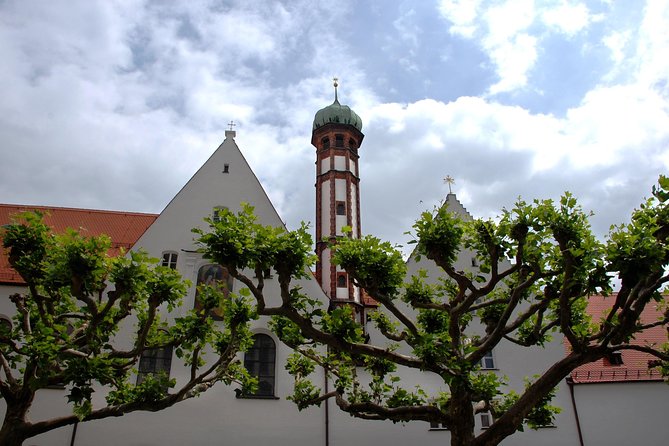
St. Anne’s Church was originally part of a monastery and was built in 1321. Its elaborate interior decoration makes it worth seeing even though the visit is scheduled for only about 15 minutes.
The church adds a medieval layer to the route, while its former monastic connection gives the guide another way to explain religious life in Augsburg. Admission is listed as free, so there is no extra ticket decision here.
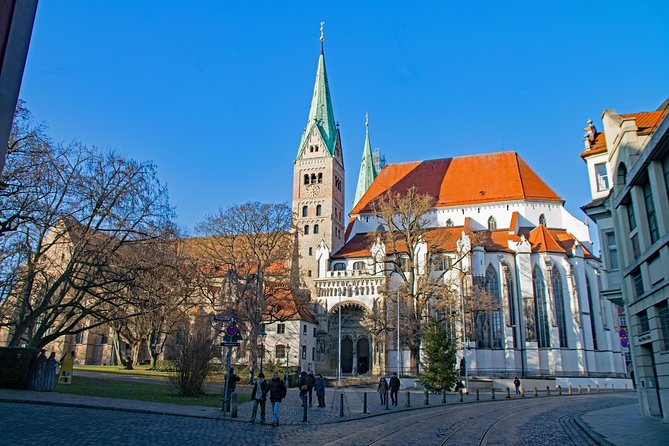
The cathedral follows with another 15-minute visit. Augsburg Cathedral began in the 11th century and gained Gothic additions in the 14th century. Its tower reaches about 62 meters, giving the building a strong presence in the old center.
These two churches can blend together if you visit them without context. With a private guide, you can ask what changed between the earlier cathedral foundation, later Gothic work, and the medieval monastery church. Since both stops are short, focus on the architectural details the guide points out rather than trying to inspect everything.
Fuggerei, the tour’s most distinctive stop
The route ends at Fuggerei, founded in 1516 by the Fugger family. It is described as the world’s oldest social housing complex still in use, created to house needy citizens of Augsburg.
This is the stop that gives the tour its strongest human scale. Palaces, towers, and fountains show wealth and civic pride. Fuggerei asks a different question: how did a powerful family address poverty, and what did housing look like for people with limited means?
You will spend about 15 minutes walking through the complex. The visit is short, but the idea is substantial. It also makes a fitting endpoint because the route moves from public monuments and elite interiors to a place built around everyday housing.
The end point is at Fuggerei by St. Jakob’s Church, not back at the town hall. That is useful if you want to continue exploring on foot, but less convenient if you left belongings near the starting point. The tour is near public transportation, and guides have provided train station assistance in at least some arrangements, so ask ahead if your departure plans are tight.
What the private format adds
A private tour can be more than a smaller group. Here, it gives you room to ask about the Fugger family, the 1944 destruction of the town hall, the meaning of the fountains, or the difference between Augsburg’s churches.
The schedule is described as flexible, and the private setup means only your group takes part. That matters if one person wants more time at Schaezlerpalais while another prefers the churches or civic buildings.
Guide names connected with this experience include Kristen and Stephanie. Kristen has offered to meet a guest at the train station and escort that person back afterward. Stephanie has met a group at its hotel and adjusted the tour around its needs. Those details suggest that the guide relationship can extend beyond simply meeting at Rathausplatz, though you should confirm any special meeting arrangement before paying.
The private format also works well for groups with different interests. You can ask for more explanation at the Goldener Saal, keep the fountain stops brief, or spend more time discussing Fuggerei. The exact changes are subject to the guide’s schedule and site access, but the format gives you far more control than a fixed group walk.
Timing, tickets, and practical value
The official duration is about three hours. Ten stops in that time calls for a steady pace, with most visits lasting 10 to 15 minutes and two longer interior stops lasting 30 minutes each.
The guide is included. The two known admission costs are not:
- Schaezlerpalais: €7 per person
- Goldener Saal: €2.50 per person
The other listed stops have no admission fee. Ask at the start how the paid entries will be handled and whether both interiors are planned for your date.
The meeting point is Augsburg Town Hall at Rathausplatz 2. The tour finishes at Fuggerei, at Fuggereib. d. Jakobskirche. Most people can participate, and the route is near public transportation, but the information does not provide a detailed accessibility assessment. If stairs, walking distance, or interior access matter to you, discuss those needs with the guide before booking.
Confirmation is provided at booking. The activity is non-refundable and cannot be changed for any reason, so book only when your schedule is firm.
Who should book this Augsburg tour?
I would choose this tour if you have only a few hours in Augsburg and want a clear introduction to the city’s main sights. It also suits families and groups who want one guide, one shared route, and the freedom to ask questions without holding up strangers.
History fans will appreciate the range of subjects: Roman martyrdom, medieval churches, Renaissance sculpture, baroque architecture, wartime destruction, and social housing. The tour also works for first-time visitors who want to get oriented before exploring independently.
I would think twice if you are traveling alone or as a couple on a strict budget. The group price is much easier to defend when divided among several people. You should also avoid booking if you need a guaranteed slow pace or a detailed accessibility plan, since those points are not specified.
Should you book it?
Book this private Augsburg walk if you want a well-rounded introduction, personal attention, and a route that finishes with the unusual story of Fuggerei. The strongest value comes from sharing the $417.72 cost among a larger group and using the guide’s flexibility.
Skip it if you prefer to visit only free sights, explore at your own speed, or spend a full day inside museums. For a short stay, though, this tour efficiently connects Augsburg’s churches, civic buildings, fountains, and social history, with enough private time to make the city feel understandable rather than merely old.
FAQ
How long does the Augsburg private historic tour last?
The tour lasts approximately three hours.
How much does the tour cost?
The price is $417.72 per group, with up to 15 people allowed in the group.
Is the tour private?
Yes. Only your group participates in the activity.
Where does the tour begin?
It begins at Augsburg Town Hall, Rathausplatz 2, 86150 Augsburg, Germany.
Where does the tour end?
It ends at Fuggerei by St. Jakobskirche, Augsburg, Germany.
Is a tour guide included?
Yes. An official tour guide is included.
Are admission fees included?
No. Schaezlerpalais costs €7 per person, and the Goldener Saal costs €2.50 per person. The other listed stops have free admission.
Can the timing be adjusted?
The tour offers flexible timing depending on your preferences. The exact adjustments should be arranged with the guide.
Can I cancel or change the booking?
No. The experience is non-refundable and cannot be changed for any reason.
Just added in Germany
- Private One way Airport Transfer Berlin Airport To Berlin★ 3.5 · 17 reviews
- Private Walking Tour: Berlin Wall, Cold War and Checkpoint Charlie★ 5.0 · 37 reviews
- Modern Berlin Private Walking Tour: Diverse, Vibrant and Exciting German Capital★ 5.0 · 13 reviews
- Private Day Trip to Potsdam from Berlin by Train★ 4.5 · 27 reviews
- City Explorer: Potsdam Private Day Trip★ 4.5 · 10 reviews
- Berlin Private Custom 5-Hour Tour by Car★ 5.0 · 30 reviews
- Private Half-Day Sightseeing Tour in Berlin★ 3.5 · 6 reviews
- Berlin Private Custom Tour in a Minivan, East and West★ 5.0 · 123 reviews
Historical Tours, compared.
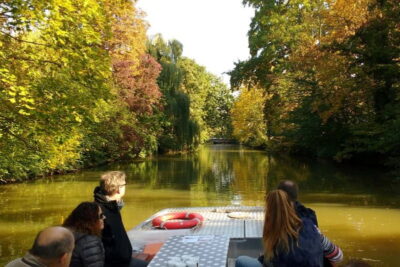
City History Canal Sightseeing Tour on a Motorboat
Read our review →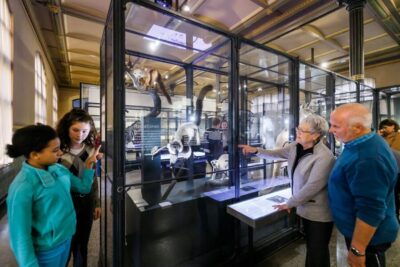

Browse the lists this tour appears in