
Reviewed · CYCLING TOURS
Berlin (E)Bike Tour Historical Highlights in Small groups
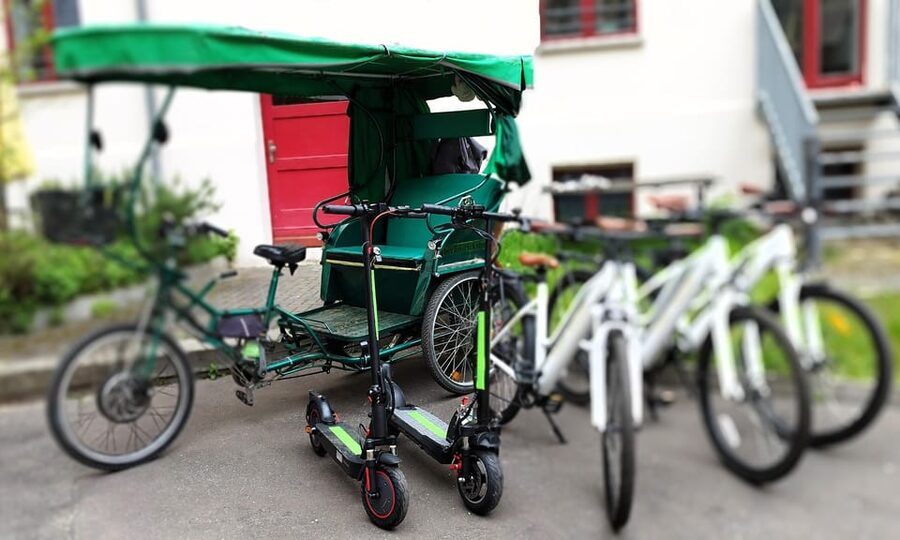
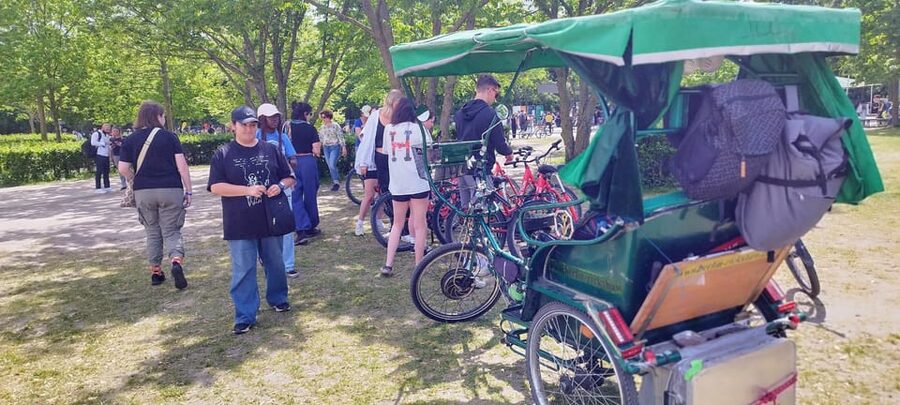
Berlin has too many major sights for one easy walk, yet many are too close together to justify a bus. This small-group e-bike and rickshaw tour solves that problem, linking the TV Tower, Museum Island, the Berlin Wall, Checkpoint Charlie, the Holocaust Memorial, Brandenburg Gate, and the Reichstag in one 3.5-hour outing. I especially like the choice of transport: you can ride an e-bike while a less mobile companion travels in a traditional rickshaw.
I also like the early orientation value. The route gives you a useful map of Berlin Mitte, so you can return later to the places that catch your eye. The main caution is that the experience depends on smooth equipment and clear communication. One booking had an e-bike lose its electric power, and the group found the organizer difficult to deal with, so check the bikes before setting off.
Key points at a glance
- A practical 3.5-hour route: Cover Berlin Mitte’s major historic sights without spending the day walking between them.
- E-bike and rickshaw options: Mix riders with non-riders, young children, grandparents, and people with limited mobility.
- Only six people per group: The small size should make it easier to hear the guide and ask questions.
- Strong first-day choice: Use the tour to understand Berlin’s layout before choosing which museums and memorials deserve more time.
- Photo stops built in: The route pauses at major landmarks, and the guide also takes photographs.
- One equipment concern: Battery failure has happened, so inspect the e-bike and ask how support works before departure.
Why this tour works for Berlin’s spread-out center
Berlin Mitte is not a compact old town where every sight sits around one square. The TV Tower and Museum Island are east of the main government quarter. Brandenburg Gate, the Reichstag, the Holocaust Memorial, Checkpoint Charlie, Potsdamer Platz, and the former Wall sites stretch across a large area.
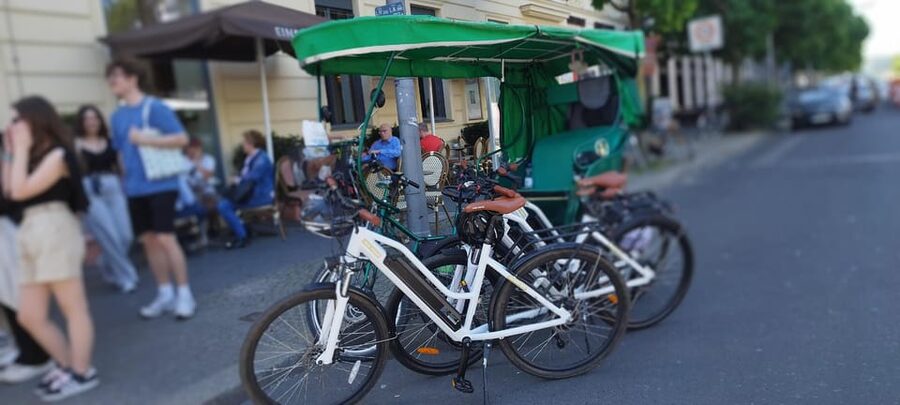
You can walk between these places, but the distances add up quickly. Public transport can also feel excessive when the next stop is only a short ride away. An e-bike lets you cover ground while still seeing the streets, buildings, memorials, and changing character of central Berlin.
The route is especially useful if you have only a few days in the city. In 210 minutes, you get a broad introduction rather than a long visit at any one site. I would treat it as a moving history lesson and city orientation, not as a substitute for going inside Berlin’s museums.
The group limit of six matters here. A guide can usually keep the group together more easily, and you have a better chance to ask about the Nazi period, the Cold War, architecture, or present-day Berlin without losing your question in a crowd.
Other rides around Berlin:
- Berlin: Sights and Highlights Bike Tour with a Local Guide
★ 4.8 · 2,698 reviews - Berlin Highlights 3-Hour Bike Tour
★ 5.0 · 948 reviews - Berlin City Bike Tour with Beer Garden Stop
★ 5.0 · 917 reviews
Starting at Rosenthaler Platz
The meeting point is Weinbergsweg 6, close to Rosenthaler Platz and the Rosenthaler Platz U-Bahn station. Look for the Weinbergsweg exit rather than simply heading toward the general center of the square.
Rosenthaler Platz is a useful place to begin because it sits in Berlin Mitte, near cafes, shops, bars, street art, and Weinbergspark. If you arrive early, you can wait in the park or find a nearby cafe. The setting gives you a quick taste of modern Berlin before the tour turns toward the city’s older and more difficult chapters.
Wear comfortable shoes even though you will ride. You will stop at monuments and may need to stand beside the bike or rickshaw while the guide explains what you are seeing. Free bottled water is provided, which is a small but welcome touch during a three-and-a-half-hour outing.
The tour is offered in English. Guide quality can shape the experience, and the named guides connected with the operation include Levent and Jakob. Levent has led a lively tour in Dutch as well as English, while Jakob received especially strong praise for his guiding. The person handling the bikes may be a separate member of the team, so allow a few minutes for fitting and equipment checks.
TV Tower and Museum Island: Berlin’s eastern core
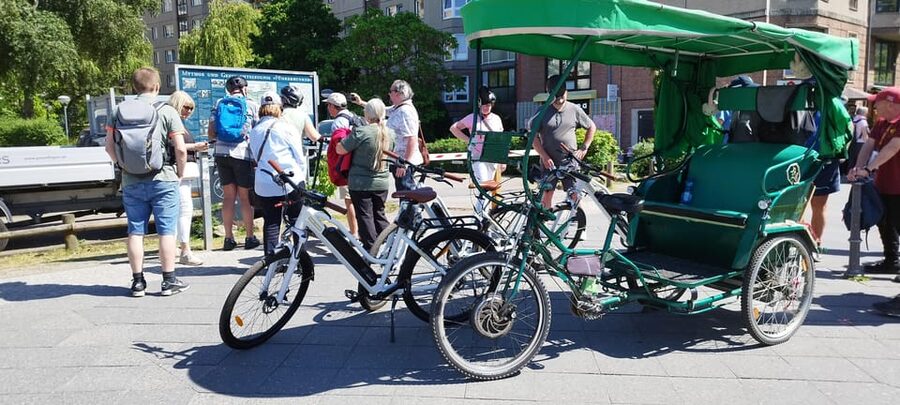
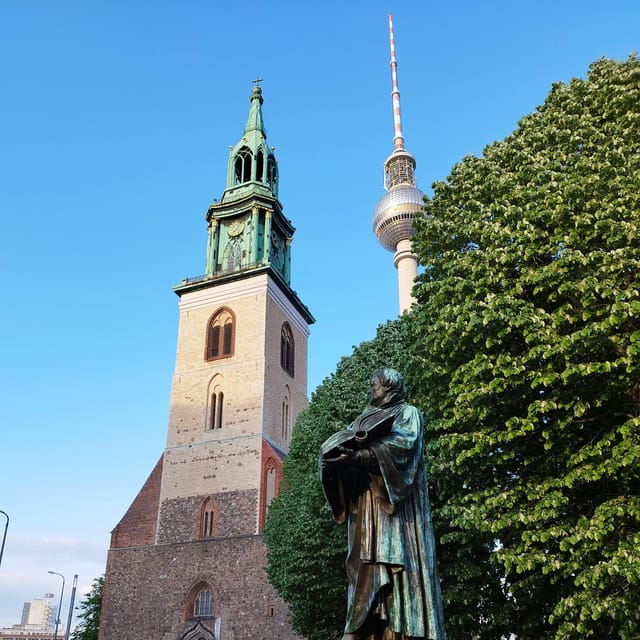
The first sightseeing stop is the Berlin TV Tower, or Fernsehturm, on Alexanderplatz. The tower is one of the clearest orientation points in the city. From ground level, it gives you a sense of Berlin’s former East German center and helps explain the route ahead.
This is a photo and guide stop, not a visit to the observation deck. If you want the high view from inside the tower, you need a separate ticket and more time. The advantage here is speed: you see one of Berlin’s best-known structures without losing a large part of the tour.
Next comes Museum Island, where several major museums gather beside the River Spree. The route gives you an outside view and historical context, but entry to the museums is not part of this ride. That distinction matters. If you love ancient art, sculpture, or archaeology, reserve a separate block of time for the museum complex.
Berlin Cathedral is also part of the central view in this area. Its large dome and ornate facade contrast with the plain scale of many East Berlin buildings. From a bike or rickshaw, you can take in the architectural shift quickly, though you will not have time for a full interior visit.
Unter den Linden and the book-burning memorial
From Museum Island, the route follows Unter den Linden, Berlin’s grand east-west boulevard. The avenue links the historic center with Brandenburg Gate and the government quarter. It is one of the best places to see how Berlin uses wide ceremonial streets to connect monuments, universities, museums, and government buildings.
The tour also stops at the memorial to the Nazi book burning of May 10, 1933. This site is easy to miss if you are simply walking down the boulevard. The memorial is set below ground level, with a stark view into empty white bookshelves.
The stop is brief, but its subject is serious. The guide can connect the book burning with the wider destruction of free expression under the Nazi regime. I appreciate that this is included because it adds an intellectual and cultural layer to a route otherwise packed with famous buildings.
Keep in mind that the itinerary moves quickly. You will hear the story and take photographs, but you should not expect a long, quiet period at each memorial. If you want time to read every plaque, plan to return on foot.
Other history to see in Berlin:
- Berlin: Natural History Museum Entrance Ticket
★ 4.6 · 3,382 reviews - Berlin: World Heritage Cruise to Potsdam
★ 4.5 · 1,435 reviews - Berlin Historical Highlights Walking Tour
★ 4.9 · 657 reviews - Berlin Private Complete History All Day Walking Tour
★ 5.0 · 474 reviews
Checkpoint Charlie and Hitler’s bunker site
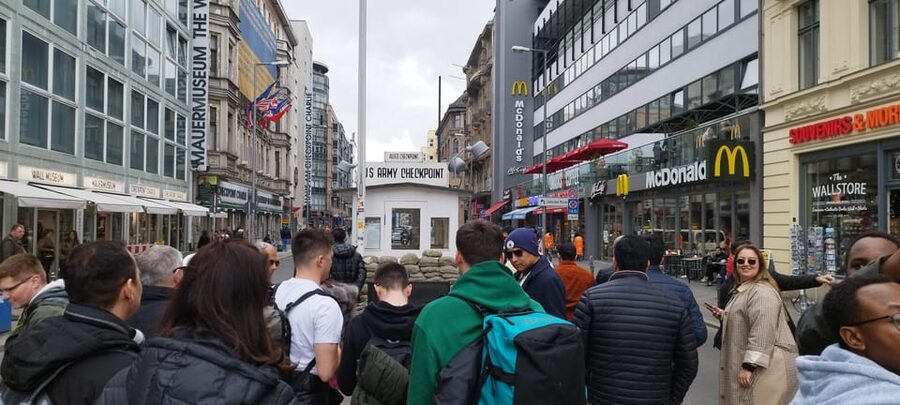
Checkpoint Charlie is one of Berlin’s most recognizable Cold War locations. The former crossing point divided the American and Soviet sectors and became a symbol of the city’s separation. Today, the area is crowded with shops, signs, and photo opportunities, and parts of the presentation can feel theatrical.
The guide’s explanation is particularly useful here because the remaining physical evidence is limited. You need the historical story to understand why this intersection mattered. The tour helps place the checkpoint within the larger Berlin Wall system rather than treating it as a stand-alone photo stop.
The route then reaches the site of Hitler’s bunker. There is no intact bunker interior to visit. What you see is a modest site in the city, and the value comes from knowing what happened beneath the ground during the final weeks of the Second World War.
I find this stop important because it corrects a common expectation. Berlin does not offer a grand preserved monument to the bunker. The low-key site makes the story feel more unsettling, not less. It also lets the guide explain why the location is not presented as a shrine or spectacle.
The Holocaust Memorial and Berlin’s difficult memory
The Memorial to the Murdered Jews of Europe sits near Brandenburg Gate and the former government district. Its field of concrete blocks creates a shifting experience as you move between rows. From the rickshaw or bike, you can see the full scale of the memorial, then stop for an explanation.
This is a place where respectful behavior matters. The route may not allow the time for a long personal visit, and some people will prefer to return later on foot. I would do that if the memorial is a priority for you. Its layout deserves quiet attention, and the underground information center requires a separate visit.
The tour’s strength is the sequence. After the book-burning memorial, Hitler’s bunker site, and Checkpoint Charlie, you are not seeing isolated attractions. You are moving through places tied to dictatorship, genocide, war, division, and reunification. A good guide can connect those chapters without turning the route into a list of dates.
The experience is educational, but it is not light entertainment. Families should consider the age and interest of younger children, even though the rickshaw makes the transport easy for them.
Berlin Wall and Topography of Terror
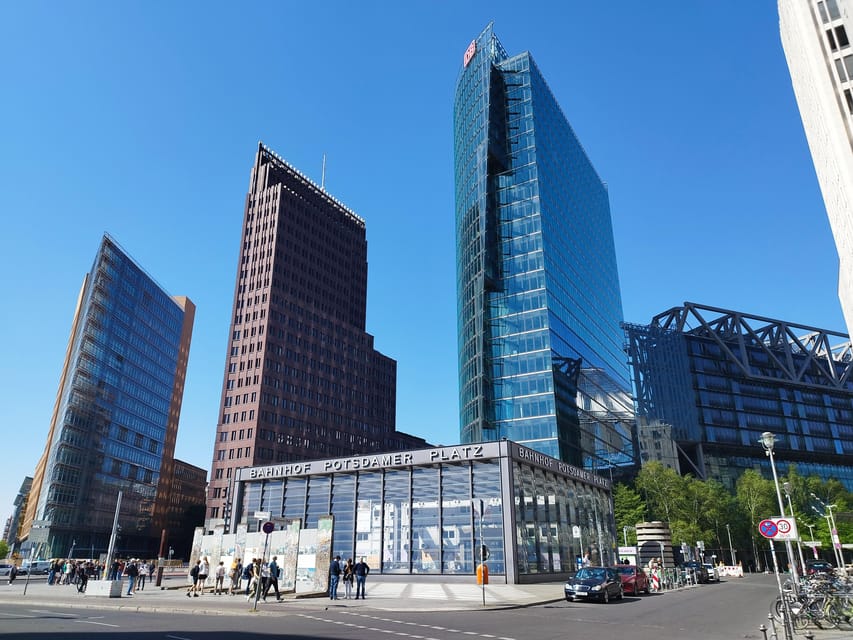
The Berlin Wall section gives you a chance to understand the city’s division in physical terms. Much of the Wall itself is gone, so context is essential. The guide points out the historical role of the barrier and explains how it affected daily life in East and West Berlin.
You should expect a guided sightseeing stop rather than a long museum visit. If you want extensive Wall remains, the East Side Gallery is a separate destination and is not listed on this route. This tour instead keeps its focus on the central sights of Mitte.
The Topography of Terror follows the story of Nazi repression. The documentation center occupies the former headquarters area of the Gestapo and SS. The outdoor section is especially useful for placing the site in its original setting, but a full visit to the indoor exhibition would require more time than this moving tour allows.
The route includes a photo stop here, but the subject calls for restraint. It is not simply another landmark to collect. I value its inclusion because it shows how the Nazi state operated through offices, police structures, and bureaucracy, not only through grand public buildings.
Brandenburg Gate and the Reichstag
Brandenburg Gate is Berlin’s postcard monument, but its meaning changed repeatedly. It was once a city gate, later a symbol of Prussian power, then a backdrop to Nazi ceremonies, a Cold War emblem, and finally a central image of reunified Germany.
The guide can give you the quick historical frame while you take photographs from the surrounding square. The gate is often busy, so the small group helps the guide keep everyone together. You will have more freedom to look around than on a large coach tour, but do not expect the area to be quiet.
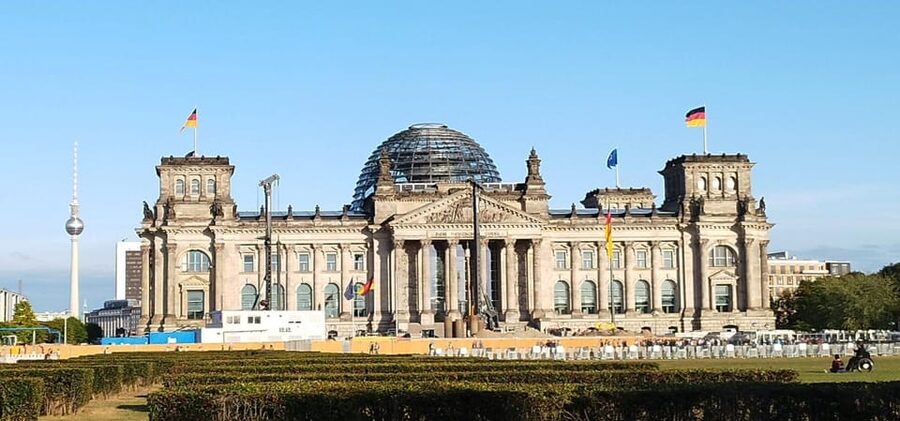
The Reichstag is next. Germany’s federal parliament combines a historic facade with a modern glass dome. The tour stops outside for photographs and explanation. It does not include entry to the building or dome, which requires separate arrangements.
This pairing works well. Brandenburg Gate tells the story of Berlin as a symbol, while the Reichstag points to the country’s current democratic government. Together they bring the route from dictatorship and division to modern civic life.
What the rickshaw option changes
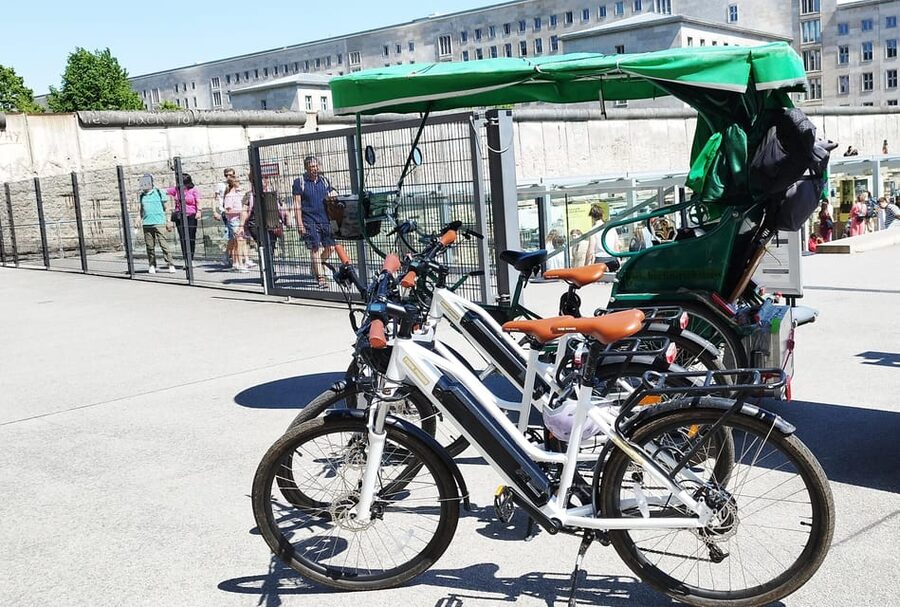
The rickshaw is not merely a backup for people who cannot cycle. It changes who can take the tour together. A rickshaw accommodates up to two people, making it suitable for grandparents, younger children, non-bikers, and people who prefer not to pedal.
Boarding requires only a few steps, and the seating offers a less demanding way to cover the route. If you have a mixed-age family, this can prevent the common problem of one person staying behind while everyone else rides.
The rickshaw also keeps you close to the city. You sit at street level, see the monuments without a bus window between you and the view, and can stop for photographs. The traditional design adds a little old-fashioned charm without requiring physical effort.
There is a practical limitation. The e-bike riders follow the rickshaw, according to one poor experience, rather than the guide riding alongside them on another bike. Ask at the start how the group will move through traffic and where the guide will be positioned. This is especially important if you are not confident cycling in a city.
E-bikes, pace, and the one serious concern
The e-bikes are intended to make the route easier and faster than ordinary bicycles. That matters on a long sightseeing circuit, especially if you want to save energy for museums or evening plans.
Before leaving, test the brakes, seat, pedals, and electric assistance. Confirm how to report a fault and what happens if the battery stops working. One booking involved a loss of electric power for about half the ride, turning the promised assisted ride into a much harder one.
That appears to be an equipment and service problem rather than the purpose of the tour, but it is worth taking seriously. The same account described tense communication with the organizer. By contrast, the guide received warm praise in several bookings, including strong comments about the information provided and the overall introduction to Berlin.
I would separate the guide from the bike handover in your expectations. The tour can be excellent when the route and guiding work well, but the practical setup needs to be orderly. Arrive ready to ask direct questions before you begin.
Price, timing, and overall value
At $82 per person, this is not the cheapest way to see Berlin. You are paying for a three-and-a-half-hour guided route, an e-bike, the small group format, bottled water, and the ability to include someone in a rickshaw. The value improves when you compare it with separate taxi rides, rental costs, and the time needed to connect these sights on your own.
For a solo visitor who enjoys walking and public transport, the price may feel high. You could see several of these places independently for less, but you would spend more time planning the sequence and would not receive the same continuous explanation.
For a family or mixed-mobility group, the calculation changes. The rickshaw means everyone can share the same route and commentary. That can be worth paying for, especially if a standard bicycle tour would exclude one or two people.
The best timing is near the start of your stay. You will see places you may later revisit, and the route gives you a clear sense of how the central districts fit together. Taking it halfway through your visit still works, but you may already have passed some of the stops independently.
You can cancel up to 24 hours ahead for a full refund, and the reserve-now, pay-later option keeps your plans flexible. Starting times depend on availability, so check the schedule before building the rest of your day around it.
Who should book this Berlin ride?
I would choose this tour if you want a fast, guided introduction to Berlin’s central history and prefer not to organize transport between each sight. It is particularly well suited to:
- Families with younger children
- Groups including grandparents
- Couples with one cyclist and one non-cyclist
- Visitors with limited mobility
- First-time visitors who want a city orientation
- People who prefer a small group over a large coach
I would think twice if you want long museum visits, extended time at memorials, or a slow photography walk. The schedule is designed to cover many places, so the stops are necessarily selective.
Should you book this e-bike and rickshaw tour?
Book it if your priority is seeing a large share of Berlin Mitte in one afternoon without leaving less mobile people behind. The combination of e-bikes and rickshaws is the main reason to choose it, and the six-person limit gives the route a more personal feel than a bus excursion.
Use it early in your stay, wear comfortable shoes, and inspect the bike before departure. Ask how the guide and riders will stay together, especially if some people are in the rickshaw. With those points settled, this is a useful, history-focused way to get your bearings and decide where you want to spend more time afterward.
FAQ
How long does the Berlin e-bike and rickshaw tour last?
The tour lasts 210 minutes, or 3.5 hours.
Where does the tour start?
It starts at Weinbergsweg 6, near the Rosenthaler Platz U-Bahn station in Berlin.
Where does the tour finish?
The tour returns to Weinbergsweg 6.
What language is the tour offered in?
The live guided tour is offered in English.
How many people can join the group?
The group is limited to six participants.
Can someone who does not ride a bike join?
Yes. The tour offers a traditional rickshaw for non-bikers, people with limited mobility, younger children, and those who prefer not to cycle.
How many people can sit in one rickshaw?
Each rickshaw accommodates up to two people.
What landmarks does the route visit?
Stops and sightseeing points include the TV Tower, Museum Island, Unter den Linden, the book-burning memorial, Checkpoint Charlie, Hitler’s bunker site, the Holocaust Memorial, Berlin Wall sites, Topography of Terror, Brandenburg Gate, and the Reichstag.
Is entry to the museums or Reichstag included?
The activity includes guided sightseeing and photo stops. Entry to museums and the Reichstag is not stated as included.
What should I bring?
Bring comfortable shoes. Bottled water is provided, and the tour includes photo stops with the guide.
Just added in Berlin
- Private One way Airport Transfer Berlin Airport To Berlin★ 3.5 · 17 reviews
- Private Walking Tour: Berlin Wall, Cold War and Checkpoint Charlie★ 5.0 · 37 reviews
- Modern Berlin Private Walking Tour: Diverse, Vibrant and Exciting German Capital★ 5.0 · 13 reviews
- Private Day Trip to Potsdam from Berlin by Train★ 4.5 · 27 reviews
- City Explorer: Potsdam Private Day Trip★ 4.5 · 10 reviews
- Berlin Private Custom 5-Hour Tour by Car★ 5.0 · 30 reviews
- Private Half-Day Sightseeing Tour in Berlin★ 3.5 · 6 reviews
- Berlin Private Custom Tour in a Minivan, East and West★ 5.0 · 123 reviews
Cycling Tours, compared.
Sights and Highlights Bike Tour with a Local Guide
Read our review →
Classic Mike’s Bike Tour daily @ 11.30 incl Beer Garden & Surfers
Read our review →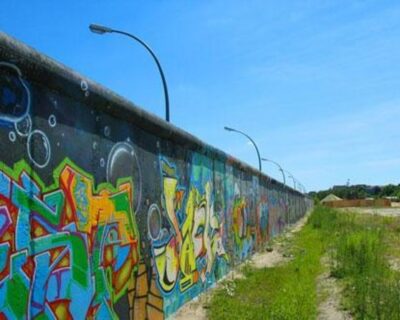

Berlin Highlights Sightseeing Bike Tour in Small Groups
Read our review →
Browse the lists this tour appears in