
Reviewed · HISTORICAL TOURS
Berlin‘s Jewish Heritage Private Tour With Jacob
Berlin’s Jewish story is written across the city, from the achievements of Jewish citizens before the Nazi era to the destruction of the Holocaust and the effort to rebuild Jewish life today. This tour connects that story through memorials, former Jewish-quarter sites, and working cultural spaces, rather than treating history as something confined to a museum.
I like the private format, which gives you room to ask direct questions and move at a sensible pace. I also like the route’s mix of famous places and smaller sites, especially Otto Weidt’s workshop and Haus Schwarzenberg. The main consideration is pace: you cover a lot in 2.5 hours, with walking and public transport between stops.
Key points
- A private tour with Nadav Jacob: Your guide meets you at your Berlin hotel and leads a group of up to six.
- A clear historical arc: The tour covers Jewish life before the Nazis, the Holocaust, and contemporary Jewish life in united Germany.
- Nine meaningful stops: You visit memorials, Bebelplatz, the former Jewish quarter, a cemetery, a workshop museum, and the New Synagogue.
- A walking route with transit: Public transport links parts of the tour, and the ticket costs about €3 to €6.
- Good for questions and discussion: A private guide makes this a better fit than a large group tour for visitors who want context.
- Manageable but active: The walking is generally manageable for people with mobility issues, with taxi, van, or subway arrangements available for an extra cost.
Berlin’s Jewish story, told across the city
This tour works best when you see it as a connected story rather than a string of sightseeing stops. Berlin’s Jewish community did not begin with the Holocaust, and it did not end there.
The tour explains how Jewish people, dispersed across Europe after exile from their homeland, preserved their faith and customs despite repeated persecution. In Germany, Jewish residents were excluded from normal civic life for long periods. Over time, they gained full citizenship and took important roles in business, science, culture, and democratic politics.
That progress was shattered when the Nazis took power. The route then turns to the Holocaust and the physical reminders left in central Berlin. Finally, it addresses the attempt to revive Jewish life in united Germany. That last part matters. The story is not only about loss. It also asks what it means for a Jewish community to exist in Berlin today.
Nadav Jacob’s role is especially useful here because the sites are scattered. Without a guide, you could visit several of them and still miss how they relate to one another. With a private group, you can stop the tour to ask about a name, a memorial, or a point in Berlin’s history that needs more explanation.
Other history to see in Berlin:
- Berlin: Natural History Museum Entrance Ticket
★ 4.6 · 3,382 reviews - Berlin: World Heritage Cruise to Potsdam
★ 4.5 · 1,435 reviews - Berlin Historical Highlights Walking Tour
★ 4.9 · 657 reviews
From your hotel to the Holocaust Memorial
The tour begins with pickup at the reception of your Berlin hotel. You need to provide the hotel name when booking, so the start is arranged around your location rather than at a fixed public meeting point.
From there, you use public transport for about 15 minutes. A transport ticket is not included, and you should budget about €3 to €6 for the journey during the tour. That is a small extra cost, but it is worth knowing in advance so you are not trying to buy a ticket while the group is getting started.
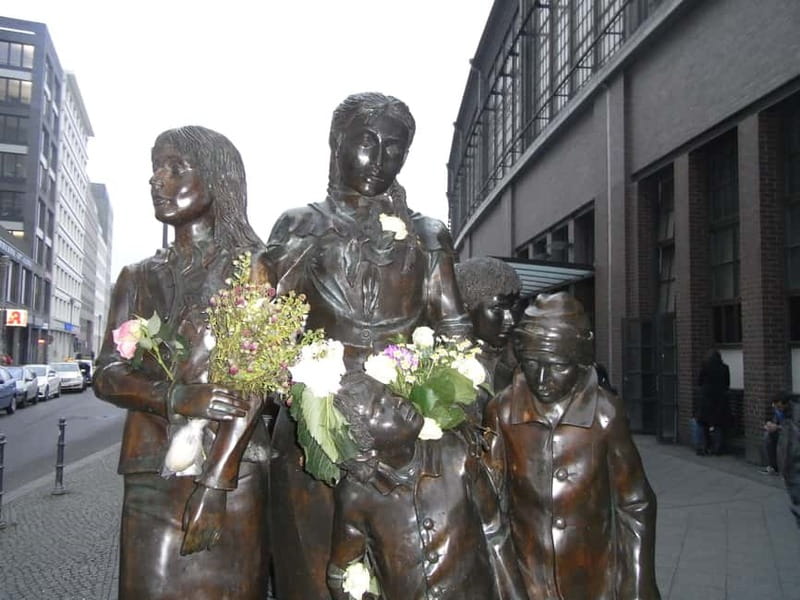
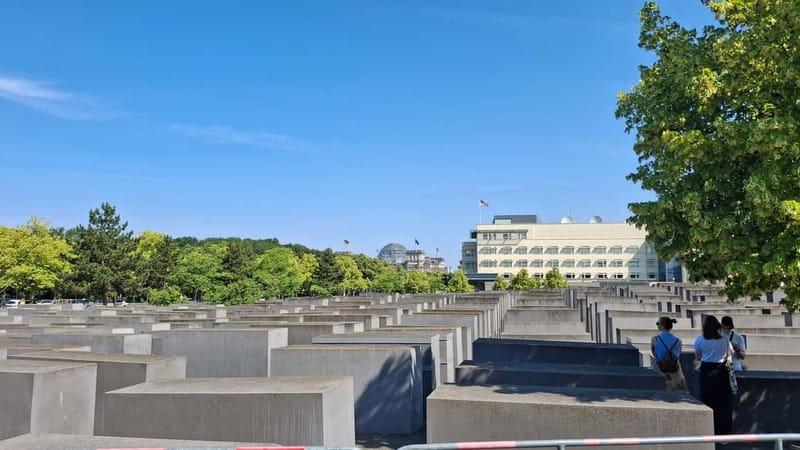
The first main stop is Berlin’s Holocaust Memorial. You spend about 20 minutes here with guided explanation. The memorial is one of the city’s most important places for confronting the murder of Europe’s Jews, and it gives the tour an immediate sense of purpose.
Do not expect a long museum visit at this point. The stop is brief and focused. Jacob provides the historical frame, while the memorial itself gives you space to think about what happened. If you want extended time to walk through the site on your own, you may need to return later, since the tour continues to several more locations.
Bebelplatz and the Block of Women
The next stop is Bebelplatz, where the guided visit lasts about 15 minutes. This is one of the central locations for understanding how Nazi persecution entered public life in Berlin.
The tour places Bebelplatz within the wider story of Jewish life and Nazi rule. It is a useful stop because it shifts the focus from the community that existed before the Holocaust to the public actions and policies that helped destroy it.
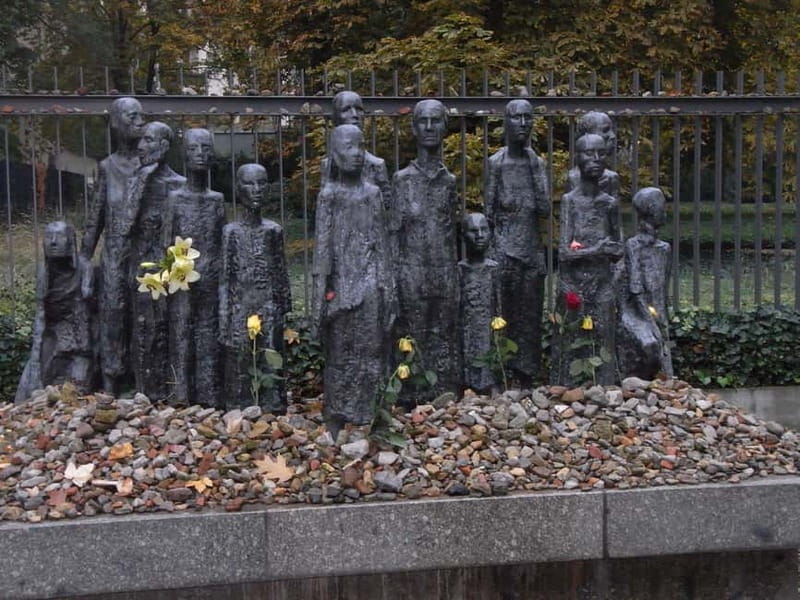
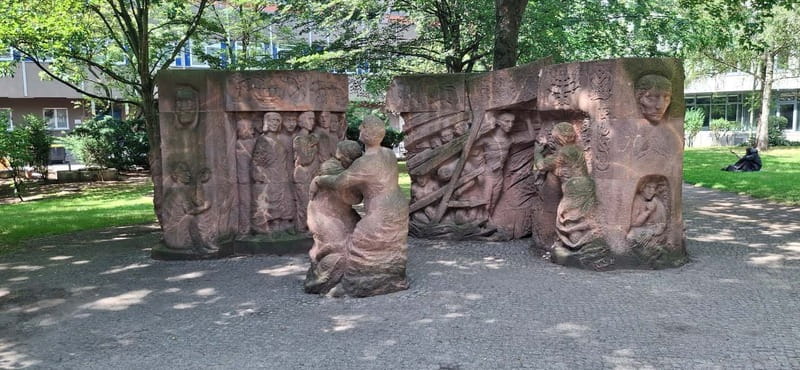
You then visit the Block of Women for about 10 minutes. This memorial is connected with a protest by non-Jewish women whose Jewish husbands had been arrested. The stop adds an important detail to the larger story: resistance did occur, and the form it took was not always armed or organized by major political groups.
The short timing here is both a strength and a limit. You get a compact introduction to two important sites, but this is not a slow, reflective tour at every stop. If you want to study each memorial in detail, take notes and return later.
Hackescher Markt and the former Jewish quarter
The route continues with a 20-minute walk around Hackescher Markt. This is where the tour begins to feel less like a memorial circuit and more like a walk through the old Jewish quarter of Berlin.
The value of this section is the setting itself. Jewish life was not limited to monuments. It was tied to streets, homes, businesses, religious buildings, schools, and community spaces. Walking between the sites helps you picture that neighborhood as a lived-in part of Berlin.
The walk also gives you a change of pace after the more solemn memorials. Still, wear comfortable shoes. The itinerary includes several walking sections, and the route moves onward rather than allowing long pauses at each location.
For anyone concerned about mobility, the tour is described as generally manageable, and the entire experience is wheelchair accessible. If walking between stops is difficult, you can ask about using a taxi, van, or subway instead. Those arrangements cost extra, so confirm the details before the tour begins.
A few more things to do in Berlin worth a look
- Berlin: Private Reichstag and Glass Dome Tour
★ 4.8 · 2,226 reviews - Berlin Private Complete History All Day Walking Tour
★ 5.0 · 474 reviews - Private Walking Tour Berlin Third Reich Hitler and World War II
★ 5.0 · 360 reviews - Private Berlin: Iconic Sights and Hidden Gems Walking Tour
★ 5.0 · 292 reviews
Haus Schwarzenberg and Otto Weidt’s workshop
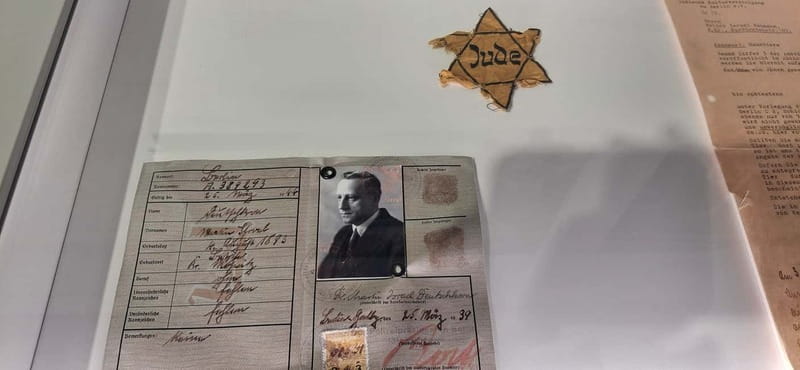
Haus Schwarzenberg is the next stop, with about 10 minutes of guided time. Its presence on the route helps show how the Jewish quarter is not only a place of memorials. It is also part of Berlin’s contemporary cultural life.
The tour then visits Otto Weidt’s Workshop for the Blind for about 15 minutes. This is one of the most distinctive stops because it focuses on a specific person and workplace rather than a broad political event.
The workshop is connected with Otto Weidt, who employed blind and deaf Jewish people during the Nazi period and worked to protect them. The stop gives the history a human scale. Instead of hearing only about laws, institutions, and dates, you encounter a place associated with individual decisions and attempts to save lives.
You should pay attention to the difference between these two stops. Haus Schwarzenberg connects the former Jewish quarter with present-day Berlin. Otto Weidt’s workshop brings you back to the Holocaust through a personal story of protection and courage.
The timing is short, so the experience is best for getting a strong introduction rather than a complete museum visit. If this subject matters deeply to you, you may want to set aside extra time in your Berlin schedule to revisit the workshop independently.
Große Hamburger Straße Cemetery

The route then moves to the Große Hamburger Straße Cemetery, with about 15 minutes of walking time. This stop adds another layer to the story of Jewish Berlin by focusing on burial and memory.
A cemetery is different from a memorial built after the Holocaust. It belongs to the community’s older life and shows that Jewish presence in Berlin existed across generations. In the context of this tour, the stop helps you think about continuity, not only persecution.
The walk to the cemetery also links the earlier neighborhood stops. You are not simply being driven from one isolated attraction to another. You are moving through the area where Jewish institutions and residents once formed part of Berlin’s daily life.
Again, the schedule is compact. You will receive a guided look at the site, but the tour is not designed for extended personal reflection at every location. That is the tradeoff for fitting so many important places into one morning or afternoon.
The New Synagogue and Jewish life today
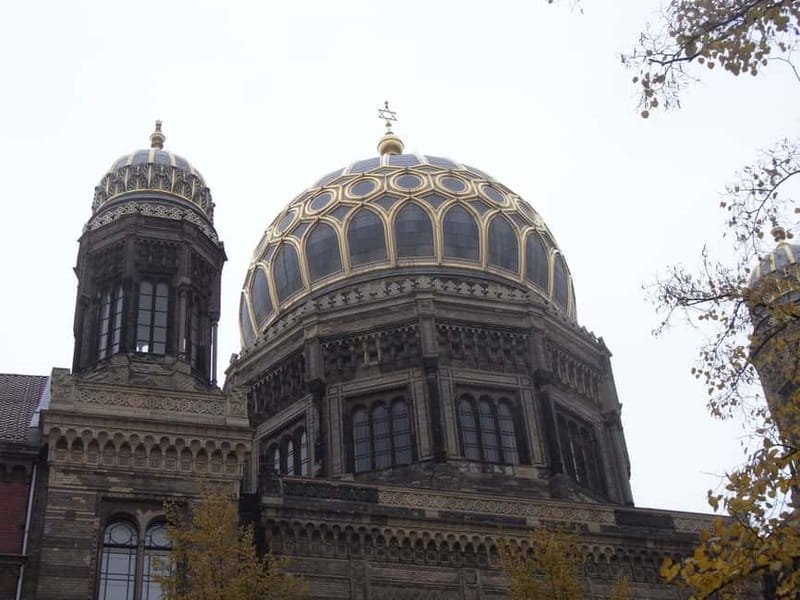
The final major stop is the New Synagogue Berlin, also known as the Jewish Centre. You spend about 15 minutes here with the guide.
This stop brings the tour into the present. After tracing Jewish life before the Nazis and the destruction of the Holocaust, the New Synagogue represents the effort to restore Jewish institutions and community life in modern, united Germany.
It is an important ending because it prevents the tour from closing only on tragedy. The historical damage cannot be softened, but the contemporary Jewish community is part of Berlin too. The tour’s central question becomes how a community rebuilds its public presence after such devastation.
The visit is guided rather than presented as a long independent museum session. That makes Jacob’s explanation central to what you take away. If you are interested in architecture, religious practice, or the synagogue’s exhibitions, check what access is available on your date, since the supplied tour details promise a guided stop but not a separate extended visit.
After the New Synagogue, you return to Berlin. The tour does not list a separate final attraction, so think of the last synagogue stop as the closing point for the main historical narrative.
What the private format is worth
The price is $303 per group of up to six people. That is not a cheap add-on for one person, but the calculation changes if you fill the group.
For six people, the cost works out to about $50.50 per person before public transport. For two people, it is about $151.50 each. The value is strongest for a family or small group that wants a private conversation rather than a large scheduled tour.
You are paying for more than transport between sights. The price includes hotel pickup, a private English-speaking guide, and a route that links nine stops in 2.5 hours. The guide’s interpretation is the main reason to choose this format. The Holocaust Memorial, Bebelplatz, and the New Synagogue can all be visited independently, but connecting them into one historical account takes planning.
The price is less attractive if you only want to see one memorial or prefer to spend a long time at each site. This tour favors breadth, context, and personal questions over a slow visit to a single museum.
The current rating is 5 out of 5 from seven ratings. That is a positive signal, but it is still a small number of ratings, so I would treat it as encouraging rather than final proof. The tour’s strongest practical advantage is clear from its design: a small private group, hotel pickup, and a guide who can adjust the explanation to your interests.
Timing, walking, and practical planning
Two and a half hours is a useful length for a first introduction, but the schedule is full. You move by public transport and on foot, with stops ranging from 10 to 20 minutes. That means you should arrive ready to keep moving.
You do not need to plan a full day around this experience. It fits well into a Berlin morning or afternoon, leaving time for a longer museum visit afterward. I would avoid booking it immediately before a timed attraction, since transport and questions can affect the exact finish.
Wear shoes suitable for walking and keep your public transport ticket money ready. The walk is described as manageable for people with mobility issues, and wheelchair access is available. Still, a short tour with many stops may feel tiring if you need frequent pauses.
If you prefer to avoid walking, taxi, van, or subway connections can be arranged at an additional cost. Ask about this ahead of time. It is better to settle the plan before the day begins than to change the route at every stop.
Free cancellation is available up to 24 hours before the tour for a full refund, and you can reserve now and pay later. Those policies are useful if your Berlin schedule is still shifting, but the key booking detail is the hotel name for pickup.
Who should choose this Berlin tour?
I would recommend this experience to you if you want a clear introduction to Jewish Berlin and prefer history explained at the actual places where it unfolded. It suits couples, families, and small groups who can share the $303 price and who value a private guide.
It is also a good choice if the Holocaust is only one part of your interest. The route spends time on Jewish life before the Nazis and on the rebuilding of the community after the war. That wider frame makes the experience more useful than a tour that focuses only on destruction.
You may want a different plan if you prefer long museum visits, extensive free time, or a quiet self-guided walk. The stops are tightly timed, and the public transport and walking add movement to the experience.
Should you book it?
Book this tour if you want the major Jewish sites of central Berlin explained as one connected story, especially with a private guide and hotel pickup. The mix of memorials, neighborhood streets, Otto Weidt’s workshop, the cemetery, and the New Synagogue gives you a strong first look at both historic and contemporary Jewish Berlin.
Before booking, make sure the 2.5-hour schedule suits you and remember to budget for public transport. For a group of up to six, the cost can be fair for a private experience. For one or two people, it is a more deliberate choice, but the direct access to Nadav Jacob and the focused route may justify it if this subject is central to your Berlin visit.
FAQ
How long does the Jewish Heritage Private Tour with Jacob last?
The tour lasts 2.5 hours. Check availability for the starting times offered on your date.
Where does the tour begin?
Pickup is included from the reception of your Berlin hotel. You need to provide the hotel name when booking.
Is public transport included?
No. Public transport is not included. The ticket for the tour costs about €3 to €6.
Is this a private tour?
Yes. It is a private group experience for up to six people, with an English-speaking live guide.
Is the tour wheelchair accessible?
Yes. The tour is wheelchair accessible, and the walking is generally manageable for people with mobility issues. Taxi, van, or subway travel between stops can be arranged at an additional cost if you prefer to avoid walking.
Can I cancel the tour for a full refund?
Yes. You can cancel up to 24 hours in advance for a full refund. You can also reserve now and pay later.
Just added in Berlin
- Private One way Airport Transfer Berlin Airport To Berlin★ 3.5 · 17 reviews
- Private Walking Tour: Berlin Wall, Cold War and Checkpoint Charlie★ 5.0 · 37 reviews
- Modern Berlin Private Walking Tour: Diverse, Vibrant and Exciting German Capital★ 5.0 · 13 reviews
- Private Day Trip to Potsdam from Berlin by Train★ 4.5 · 27 reviews
- City Explorer: Potsdam Private Day Trip★ 4.5 · 10 reviews
- Berlin Private Custom 5-Hour Tour by Car★ 5.0 · 30 reviews
- Private Half-Day Sightseeing Tour in Berlin★ 3.5 · 6 reviews
- Berlin Private Custom Tour in a Minivan, East and West★ 5.0 · 123 reviews
Historical Tours, compared.
City History Canal Sightseeing Tour on a Motorboat
Read our review →

Browse the lists this tour appears in