Reviewed · TOURS IN STRALSUND
Stralsund: Factory Tour with Fermented and Organic Tastings
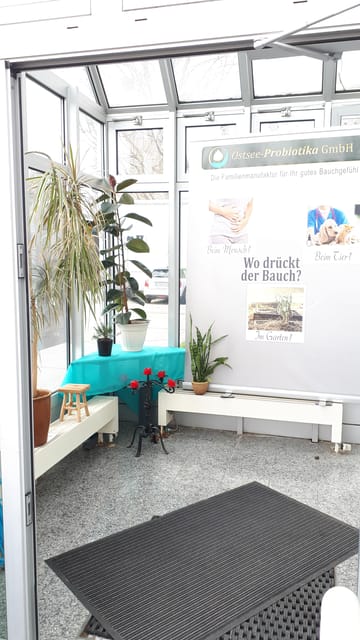
The unusual appeal here is that fermentation reaches beyond the dinner table. At Ostsee-Probiotika GmbH, you learn how organic products made with lactic acid bacteria, herbs, berries, roots, and spices are prepared for people, animals, and even garden soil. The tour takes you into production areas normally closed to the public, then ends with a tasting.
I like the small six-person limit, which gives the hour a more personal feel than a standard factory visit. I also like the chance to see a real family business at work, including the large equipment and handmade methods that impressed several guests. The main drawback is simple: the tour lasts only one hour, so anyone hoping for a full technical course on fermentation may find it brief.
Key points at a glance
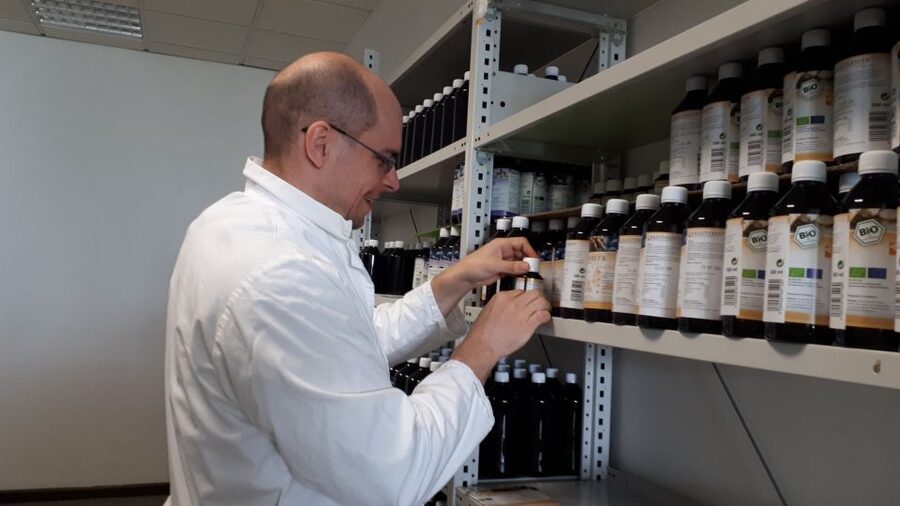
- See behind closed doors: The tour enters production rooms that are not normally open to the public.
- Nine bacterial strains: Your guide explains how different lactic acid bacteria fit into the company’s recipes.
- More than food: Products are made for people, animals, and soil care.
- Organic ingredients: Herbs, berries, roots, spices, and other ingredients are selected for natural production.
- A tasting closes the visit: You can judge the flavors yourself, including the company’s mustard.
- Small and accessible: Groups are limited to six, and the factory is wheelchair accessible.
A Stralsund factory tour with a different idea of food
Many factory tours end with a product you already know. This one asks you to think about food in a wider way. Fermentation is used here to make products intended to support a good gut feeling, but the company also produces items for animal care and for improving soil used in plant growing.
That gives the visit a useful point of difference. You are not only watching a food item move through a production line. You are learning how a small manufacturer applies the same broad principles of natural processes, organic ingredients, and bacterial cultures to several kinds of products.
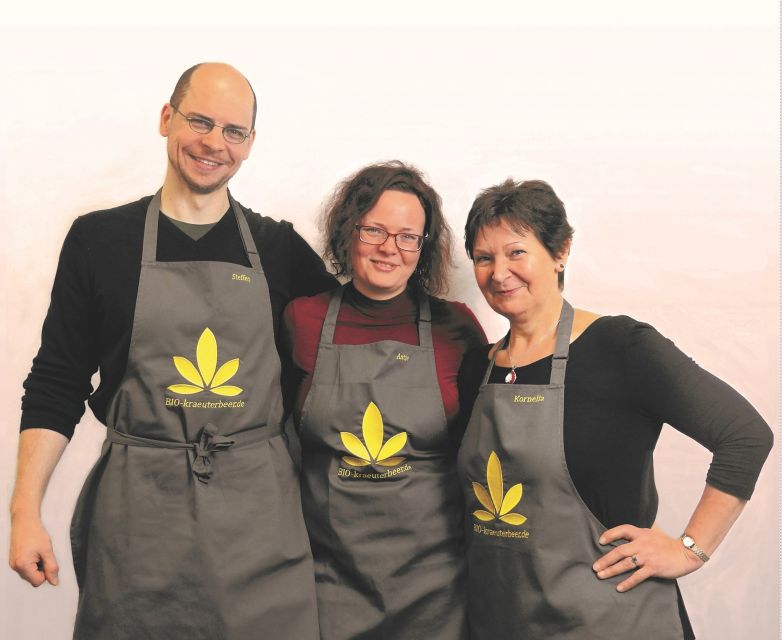
The company is Ostsee-Probiotika GmbH, a family-run business in northern Germany. Its products are BIO certified or approved for organic farming, according to the information provided for the tour. That matters if you care about production standards, but I would keep your expectations sensible: this is a compact introduction, not a formal certification seminar.
The mood appears to be friendly and down to earth. One highly positive account describes the team as exceptionally kind, including waiting briefly for a late-arriving party from Berlin. That small detail tells you something useful about the tone. The experience is likely to feel more like a visit to a working local business than a polished attraction with a script and a large crowd.
Other trips people book in Germany:
- Berlin: Reichstag, Dome and Government District Guided Tour
★ 4.7 · 18,288 reviews - Berlin: 1-Hour City Tour by Boat with Guaranteed Seating
★ 4.3 · 16,993 reviews - Hamburg: Sex and Crime in St. Pauli Tour for Ages 18+
★ 4.7 · 15,447 reviews
What happens during the one-hour visit
The tour begins with an introduction to the factory and the company’s approach to fermentation. Your guide explains the role of lactic acid bacteria, herbs, berries, roots, and spices, then places those ingredients within the wider production process.
You can expect the discussion to cover the stages a product passes through before it reaches your hands. The available information does not give a fixed room-by-room schedule, so the exact order may depend on the day’s production activity. Still, the central thread is clear: you see how recipes are developed around natural processes and how the ingredients are brought together.
The most useful part for many people will be access to the production rooms. These are areas you would not normally see as a casual customer. You may find large pieces of equipment, containers, preparation areas, and other working parts of the factory. A visitor described the machinery as impressive and the tour as an informative look at the craft of fermentation.
Do not expect a huge industrial plant. The small-group format and family-business setting point in the other direction. That is a plus if you prefer direct contact and a closer look at how a smaller producer works. It may be less satisfying if you want a large-scale factory with long conveyor belts and an expansive production floor.
The fermentation lesson: nine strains, many ingredients
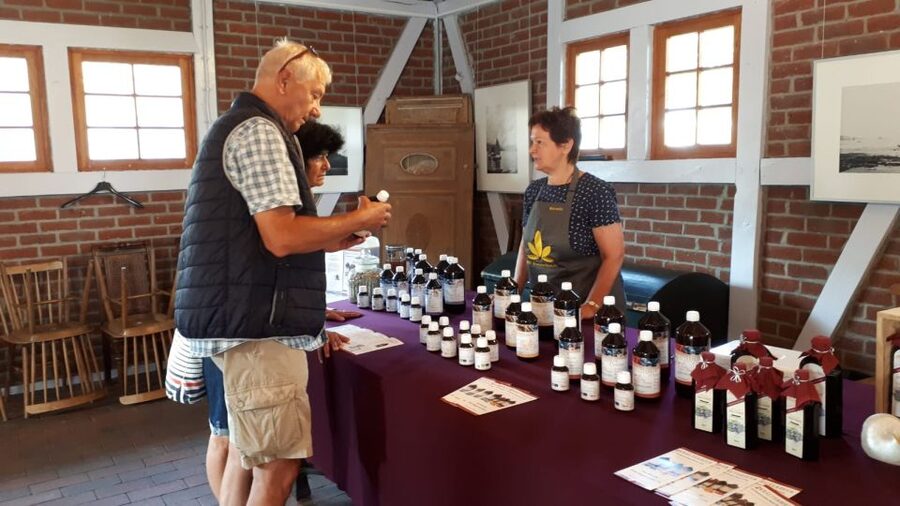
The company uses nine different strains of lactic acid bacteria. That number gives the tour a useful scientific hook. Fermentation is not simply a matter of leaving ingredients in a container and waiting. Different bacterial strains can affect the process and the final product in different ways.
Your guide explains the company’s recipes and the principles that shape daily production. The information supplied does not promise a laboratory demonstration or a hands-on workshop, so you should expect explanation and observation rather than active food preparation.
The ingredients are part of the story too. Handpicked herbs, special berries, roots, and spices are used alongside the bacterial cultures. That combination gives the factory a more distinctive identity than a producer focused only on one familiar fermented food.
You may already know foods such as sauerkraut, yogurt, or sourdough. This visit takes the subject in a broader direction, showing how fermentation can be built into products with different purposes. The company connects its recipes with people’s stomachs, animals’ wellbeing, and the health of garden soil.
Keep in mind that the tour presents the company’s own approach. If you have a strong interest in nutrition, probiotics, or organic farming, you will probably want to treat the explanations as an introduction and ask questions during the visit. The guide can tell you what makes these products special within the company’s system, but the one-hour schedule will not cover every scientific debate around fermented foods.
From people to pets and garden soil
One of the most interesting details is the range of products made at the factory. The focus is not limited to food for human consumption. The company also makes products for animals and for soil preparation.
That wider purpose helps explain why the tour can appeal to more than food enthusiasts. If you care for animals or grow plants, you may find the production philosophy especially relevant. The information provided describes soil preparation as a basis for healthy plant growth, which gives the visit a practical gardening angle.
I like this part because it shows how the business has built its identity around a principle rather than a single product. Fermentation, organic ingredients, and natural processes link the different product lines. You can see how a small producer creates a range of goods without feeling like a generic factory.
At the same time, the tour is not presented as veterinary, medical, or agricultural treatment. You should not book it expecting personal health advice or a diagnosis for a pet or garden. It is an educational factory visit with a tasting, and its value comes from seeing how the products are made and understanding the ideas behind them.
Same base, a different kind of day out:
- Hamburg: 1.5-Hour Harbor and Speicherstadt Day Cruise
★ 4.6 · 14,200 reviews - From Munich: Neuschwanstein & Linderhof Castle Full-Day Trip
★ 4.5 · 12,494 reviews - Dresden: Semperoper Tickets and Guided Tour
★ 4.7 · 12,102 reviews - Berlin: Boat Tour Along the River Spree
★ 4.4 · 11,252 reviews
The tasting: a chance to judge the flavors
The final part of the experience is a tasting of the company’s products. This is important because fermentation can sound more appealing in theory than it tastes in practice. You get to use your own senses and decide what you think.
The tasting makes the visit more than a technical talk. You hear about the ingredients and production steps, then test the results on your own tongue. That direct comparison can help you understand the company’s style better than a shelf of unopened jars ever could.
One specific item received a positive mention: the mustard. If you like mustard, it is worth paying attention to that part of the tasting. The available details do not list every sample or promise a set menu, so the selection may change according to what the factory is producing or presenting.
I would not assume that every sample will suit every palate. Fermented products can have strong, sour, herbal, or earthy notes. The tasting is best approached with curiosity, not with the expectation of a familiar snack. If you are cautious about unusual flavors, the small setting should make it easier to ask what you are trying before tasting it.
The tasting also gives you a chance to connect the company’s several product lines. You may sample food products while hearing about goods intended for animals or soil. The experience is not just about buying a souvenir. It is about understanding the full range of what happens inside this small operation.
Why the small group matters
Only six people can join each group. For a factory tour, that is a meaningful limit. You should have a better chance of hearing the guide clearly, asking questions, and seeing the equipment without being pushed toward the back of a crowd.
The group size also suits the family-business character of the visit. One account describes the team as friendly, committed, and involved in making products by hand. Another praises the tour for combining solid information with relaxed humor. Those details suggest that the guide’s style is conversational rather than stiff.
No individual guide names are provided, so I cannot tell you to look for a particular person. Tours are available in German, English, and French, which makes the activity practical for a mixed group or for visitors who do not speak German.
The small format has one tradeoff: places may be limited. If this is important to you, check the available time before building your day around it. The tour lasts one hour, which makes it easy to fit into a Stralsund visit, but a group of six can fill quickly.
Price, timing, and practical value
At $11 per person, this is an inexpensive organized activity. The price includes the guided factory tour and the product tasting, not just admission to a room with display panels.
I see the strongest value in the combination of access and explanation. You are paying to enter working production areas, hear how the recipes are made, and sample the results. A simple tasting alone might not tell you much, while a factory talk without samples could feel abstract. This experience links the two.
The one-hour length is also useful. You do not need to surrender half a day, and you can plan another Stralsund activity around it. On the other hand, the short duration limits how much detail the guide can provide. If fermentation is your main travel interest, you may wish it lasted longer or included a more hands-on element.
The booking terms are flexible. You can cancel up to 24 hours before the activity for a full refund, and you can reserve now while paying later. Those options reduce the risk of committing too early, especially when your northern Germany plans are still changing.
The factory is wheelchair accessible. That is worth checking against your own needs when you reserve, but it is a helpful feature. The activity is not described as having special food substitutions or allergy arrangements, so ask ahead if those issues matter to you.
Rules inside the production rooms
Because this is a working factory, the rules are stricter than at a normal food tasting. Smoking is not allowed, and smoking indoors is specifically prohibited. Alcohol and drugs are not allowed either.
You cannot bring weapons or sharp objects, and drones are forbidden. Photography and video recording inside are not allowed, so do not plan to document the production rooms with your phone.
Bare feet are also not allowed. Wear normal closed footwear and sensible clothing for a production setting. These rules may feel fussy if you are expecting a casual tasting, but they help protect cleanliness, safety, and the privacy of the working operation.
The no-photography rule is the one most likely to affect your plans. If you like collecting factory images or posting short videos from every stop, this is not the place to do it. Instead, pay attention to the guide and use the tasting to remember the visit.
Who will enjoy this activity most?
I would recommend this tour to you if you like small producers, food traditions, organic ingredients, or the science behind fermentation. It also suits visitors who want a short activity with a clear start and finish rather than a long museum visit.
Gardeners and animal owners may find extra interest in the products made for soil and animal care. You do not need to be an expert. The basic appeal is seeing how one family business applies its methods across several types of products.
The experience is also a good match for curious eaters who want to try something beyond standard tourist food. The tasting lets you decide for yourself if the flavors work. The mustard is a particularly accessible point of entry, while the fermented products may be more distinctive.
I would be less likely to recommend it if you dislike tastings, cannot eat the available samples, or want a major industrial spectacle. You should also keep your expectations realistic if you want a long scientific lecture. This is a friendly, compact introduction with access to a real production site.
Should you book the Stralsund fermentation tour?
Book it if you want an affordable, unusual hour with a small organic producer. The best reasons are the six-person group, the chance to see production rooms, the nine lactic acid bacteria strains, and the tasting that includes products connected to people, animals, and soil.
The strongest praise centers on the friendly team, clear explanations, family-run character, and relaxed humor. One person called the visit very informative, while another found the family business sincere and careful in its work. Those points fit the activity’s main strength: it offers a personal look at a local manufacturer rather than a generic attraction.
Skip it if you need extensive scientific detail, photography access, or a long hands-on workshop. At $11 for an hour, though, the risk is low. If fermentation and organic production interest you, this is a sensible addition to your Stralsund plans.
FAQ
How long does the factory tour last?
The tour lasts one hour.
How much does the activity cost?
The price is $11 per person.
What is included in the price?
The price includes the guided factory tour and a tasting of the company’s products.
Which languages are available?
The live tour guide can conduct the experience in German, English, or French.
How many people can join the tour?
The activity is limited to six participants.
Is the factory wheelchair accessible?
Yes, the activity is listed as wheelchair accessible.
Can I cancel for a full refund?
Yes. You can cancel up to 24 hours in advance for a full refund.
Can I reserve now and pay later?
Yes. You can reserve your place and pay later.
Are photography and video recording allowed inside?
No. Photography and video recording inside are not allowed. Smoking, drones, alcohol, drugs, weapons, sharp objects, and bare feet are also prohibited.
Just added in Germany
- Berchtesgaden: Via Ferrata Beginner Tour of Schützensteig★ 4.7 · 15 reviews
- Berlin: Energizing 2-Hour Morning Segway Tour★ 4.7 · 35 reviews
- Berlin: Thrilling E-Scooter Adventure Tour★ 4.4 · 66 reviews
- Beelitz-Heilstätten: Baum&Zeit Tree Top Walk Entry Ticket★ 4.9 · 7 reviews
- Beer Bike & Party Bike: Unforgettable Berlin City Tour incl. pickup★ 5.0 · 5 reviews
- Bayreuth: German City Walking Tour (Tourist Info)★ 4.7 · 202 reviews
- Bavaria: Beginner Canyoning Tour★ 4.5 · 10 reviews
- Bayreuth: Christmas city tour in German★ 4.9 · 12 reviews
Tours in Stralsund, compared.