
Reviewed · HISTORICAL TOURS
Güstrow: Guided tour of the historic city center
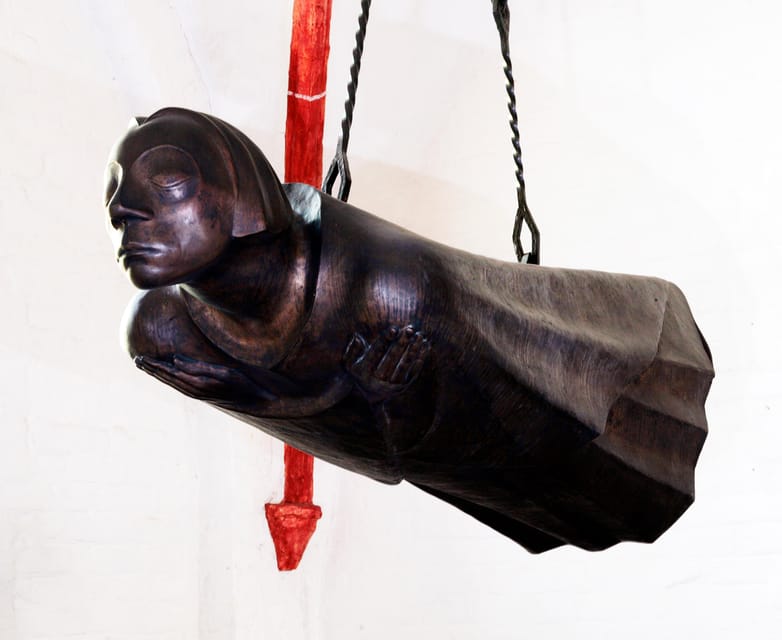
Güstrow’s brick Gothic cathedral holds the city’s most arresting sight: Ernst Barlach’s Floating figure, a spare, suspended sculpture that gives the church a modern emotional edge. The tour then threads through an old town said to have survived largely intact for 500 years, with Renaissance, classicist, and Gothic buildings close together.
I like the way this $10 walk links major sights instead of treating them as isolated photo stops. I also like the free city museum entry, which gives you something useful to see before or after the 90-minute tour. The main tradeoff is coverage: some visitors wanted more of the town center, while another felt the cathedral received a little too much attention.
Key points
- Barlach’s Floating figure: See Ernst Barlach’s famous work inside Güstrow Cathedral.
- Three building traditions: Look for brick Gothic, Renaissance, and classicist architecture in one compact town center.
- Renaissance castle: Hear the story of one of Northern Europe’s most important Renaissance castles, currently under restoration.
- Market square: Visit the town hall, parish church, and town houses from different periods.
- Strong guide-led storytelling: Guides are praised for clear explanations, patience, and lively delivery.
- Good-value timing: A 90-minute walk costs $10 per person and includes free city museum entry.
Why Güstrow rewards a guided walk
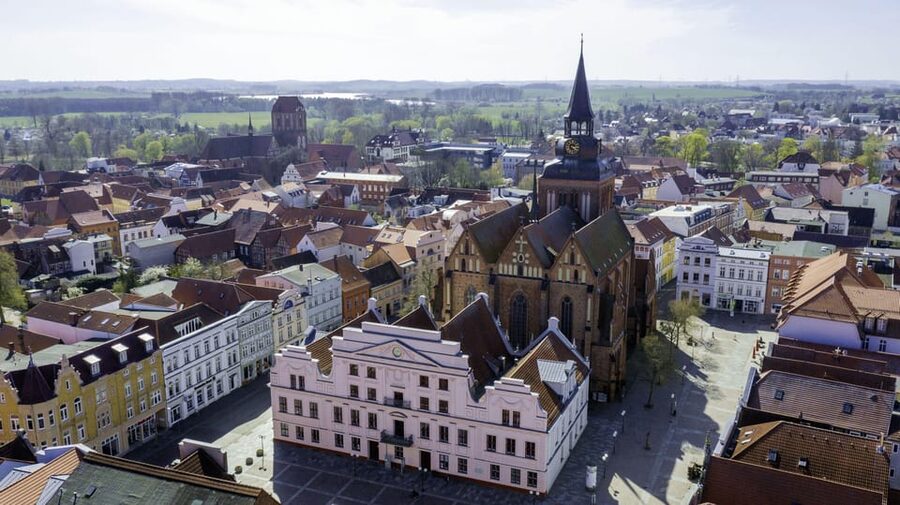
Güstrow is not a city you visit only for one famous building. Its appeal comes from the way several centuries sit close together, often within the same short walk. You can move from brick Gothic churchwork to Renaissance court architecture, then on to orderly classicist town houses without needing a full day of sightseeing.
That mix reflects Güstrow’s former role as a residential and administrative town. Important figures connected with the city include Wallenstein, August the Strong, Tsar Peter the First, Georg Friedrich Kerting, John Brinkmann, Ernst Barlach, and Uwe Johnson. A guide can turn those names into a useful framework, showing how politics, art, religion, and civic life shaped the streets you are seeing.
I would choose this tour early in a Güstrow visit. You get your bearings quickly, learn which buildings deserve a closer look, and can return later to the places that catch your eye. The route lasts 1.5 hours, so it gives you a solid introduction without taking over the day.
More Historical Tours across Germany
- Leipzig: City History Canal Sightseeing Tour on a Motorboat
★ 4.7 · 6,232 reviews - Berlin: Natural History Museum Entrance Ticket
★ 4.6 · 3,382 reviews - Leipzig: 1.5-Hour Historical Walking Tour in German
★ 4.7 · 2,217 reviews
Starting at Franz-Parr-Platz 10
The walk begins at Güstrow Information, Franz-Parr-Platz 10, 18273 Güstrow. This is a practical starting point because the route returns to the same place, making it easy to continue with independent sightseeing afterward.
You meet a live German-speaking guide there. No individual guide names are provided, but the strongest praise focuses on the guides’ personal manner, broad subject knowledge, and ability to answer questions patiently. One visitor described a very personal tour, while another appreciated that the guide made the material lively rather than simply reciting dates.
The language point matters. This is a German-language tour, so you will get the most from it if you understand German well enough to follow historical explanations. The experience is listed as wheelchair accessible, though the information does not give detailed route notes about surfaces, slopes, or interior access.
Güstrow Cathedral and Barlach’s Floating
The cathedral is the tour’s clearest centerpiece. Built in the brick Gothic style, it brings you face to face with the north German tradition of red-brick religious architecture. Its importance is not only architectural. Inside, you see Ernst Barlach’s Floating figure, the work most closely tied to Güstrow’s artistic identity.
Barlach’s sculpture changes the feel of the visit. Instead of looking only at masonry, arches, and historical dates, you encounter a modern work with a quiet, human presence. The figure’s suspended form is visually unlike the surrounding medieval architecture, and that contrast is part of the experience.
You should expect the cathedral to receive a substantial share of the guide’s explanation. For some people, that is exactly right. It gives the sculpture and the building enough context to feel meaningful rather than rushed. If you mainly want a broad survey of streets and façades, however, the cathedral portion may feel a little long.
That balance is worth considering before you book. Several comments praise the guide’s detailed explanation, while one visitor specifically wanted less time on the cathedral and more sightseeing elsewhere. The best choice depends on your interest: art and church architecture will find plenty to hold attention here, while a quick architectural sampler may prefer a more evenly spread route.
Winding streets and the old town’s layered buildings
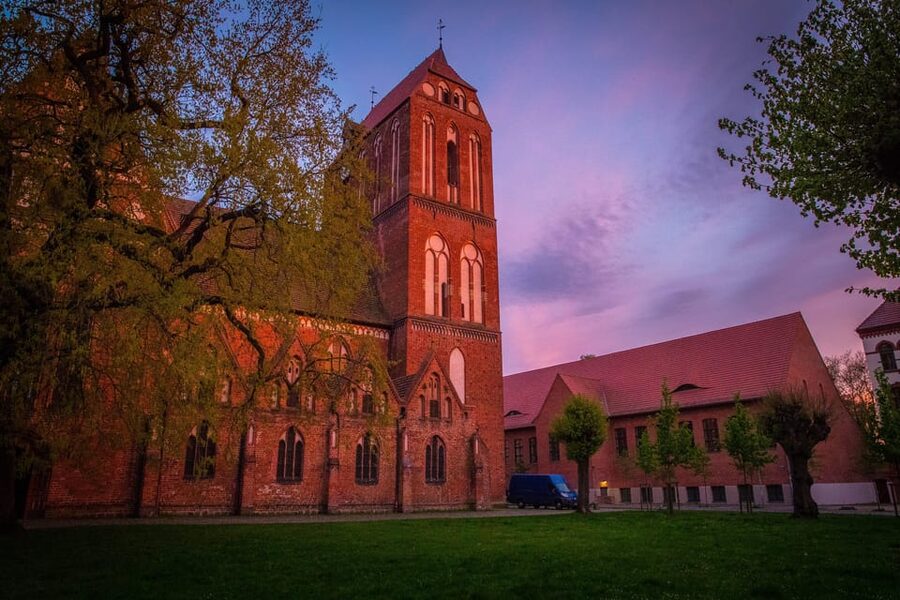
After the cathedral, the walk continues through winding streets and historic squares. Güstrow’s old center is described as undestroyed for 500 years, an unusual advantage for anyone who likes to read a town through its buildings rather than through a series of isolated monuments.
Look closely at the town houses. The point is not simply that they are old. They represent different periods and civic tastes, including classicist façades and Renaissance details alongside brick Gothic work. A guide helps you compare these styles and notice how a former residential town developed over time.
I like this part of the tour because it asks you to slow down. On your own, you might photograph a handsome façade and keep moving. With a guide, that building can become evidence of changing wealth, planning, status, or local administration. The supplied information does not identify every house on the route, so you should treat the walk as an introduction rather than a complete architectural inventory.
The route also crosses historic squares, giving you wider views of the town’s civic core. This is where you can better understand how the cathedral, parish church, town hall, and surrounding houses relate to one another. Some visitors wanted more stops in the central area, so do not expect every notable building in Güstrow to fit into 90 minutes.
A few more things to do in Germany worth a look
- Berlin: Reichstag, Dome and Government District Guided Tour
★ 4.7 · 18,288 reviews - Dresden: Semperoper Tickets and Guided Tour
★ 4.7 · 12,102 reviews - Berlin: Government District around the Reichstag Guided Tour
★ 4.7 · 8,447 reviews - Hamburg: Elbphilharmonie Plaza Guided Tour
★ 4.7 · 5,882 reviews
Market square, town hall, and parish church
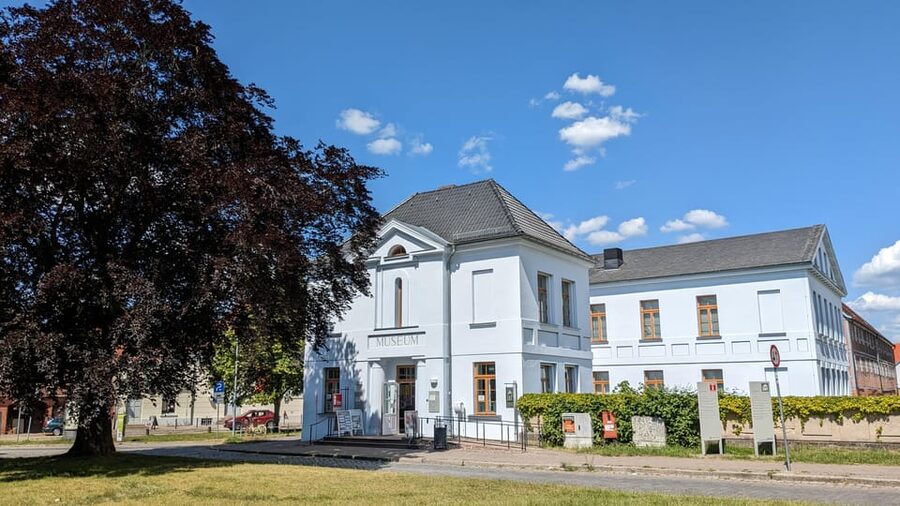
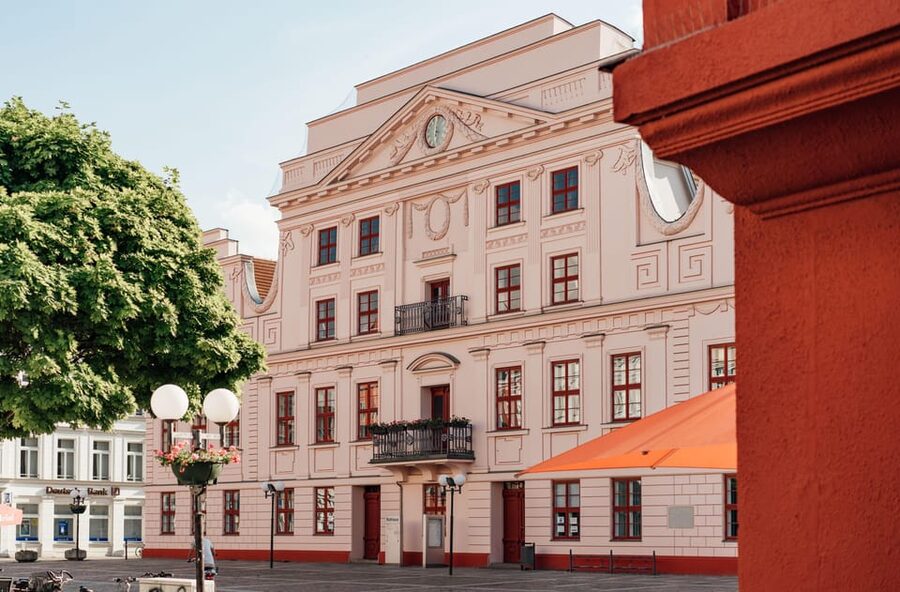
The market square brings together several of the city’s main civic markers. You see the town hall, the parish church, and town houses from different stylistic periods, all within the same general setting.
For me, this is one of the most useful sections for first-time visitors. A market square is rarely just an attractive open space. It tells you where trade, government, worship, and daily public life met. The guide’s job is to connect those functions so the buildings make sense as a group.
The square also offers a helpful comparison with the cathedral. The cathedral presents religious power and medieval brick construction, while the town hall and surrounding houses show the city’s civic and domestic sides. You get a more balanced picture of Güstrow by seeing both.
Still, keep the timing in mind. The tour has 90 minutes, and the route includes the cathedral, castle, market square, old streets, and historical figures. You will hear a good deal, but you may not stop at every location for long. If you want extensive photography, plan time after the tour rather than trying to take every picture during the guide’s explanation.
The Renaissance castle under restoration
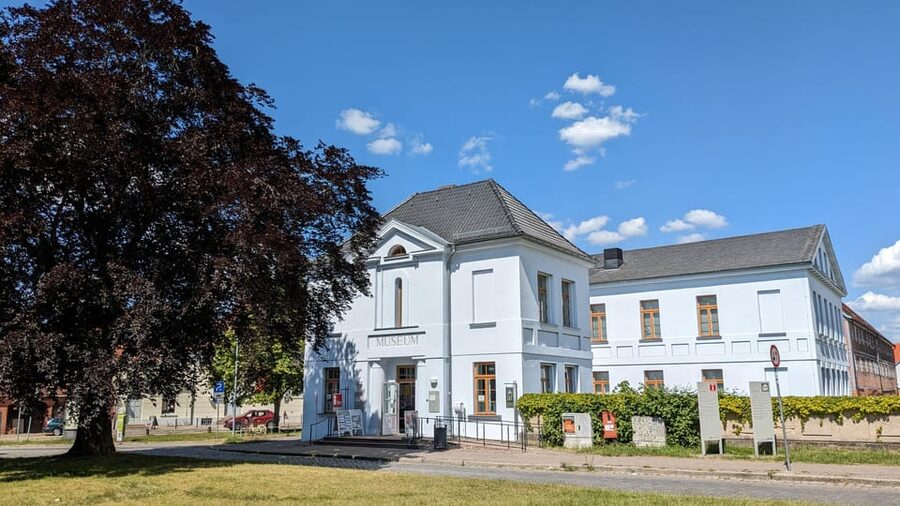
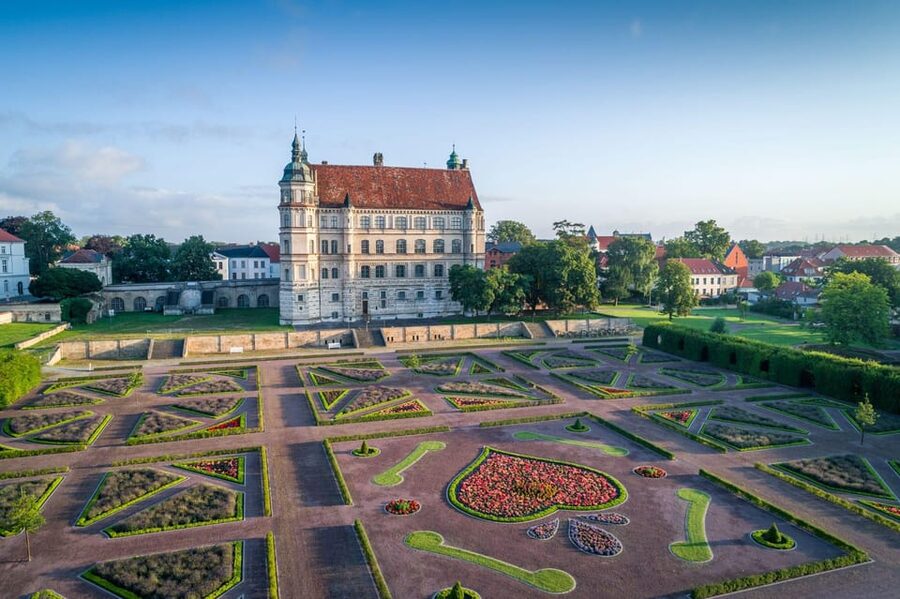
Güstrow’s Renaissance castle is another major reason to take the walk. It is described as the most important Renaissance castle in Northern Europe, and the guide explains its place in the city’s story.
The castle is currently under restoration. That means you should not treat this tour as a promise of a full interior visit or a finished palace presentation. Entrance fees are not included, and the available information does not specify which castle areas are open during the walk.
Even so, the castle matters as part of the city’s overall character. Its Renaissance identity adds a different note to the brick Gothic cathedral and the later town houses. You can see how Güstrow was not merely a church town or a small administrative center, but also a place with courtly and political importance.
This is a good example of why the guide adds value. Restoration can make a building harder to understand if you are seeing scaffolding, closed sections, or incomplete surfaces. Historical explanation helps you picture the castle’s importance while the work continues. If the castle is your main goal, confirm current access separately and allow extra time beyond the walking tour.
What the guide adds to the buildings
The most consistently praised quality is the guide’s ability to explain a lot without making the walk feel dull. One guide was described as especially friendly and lively, with clear pleasure in the work. Another impressed a visitor with extensive knowledge and patient answers to questions.
That human element matters in a town like Güstrow. The buildings are appealing, but their details can blur together if you do not know what to look for. A good explanation gives you a reason to pause at one façade, compare two churches, or understand why a person such as Wallenstein or Tsar Peter the First appears in the city’s story.
The tour also seems capable of adapting to a small group. One booking became a very personal walk because the group was alone, yet the guide still delivered the tour with energy and care. Group size is not specified as a standard feature, so I would not book on the assumption that you will receive a private tour. Still, the format appears suited to questions and conversation.
Some guides may run a little beyond the advertised 90 minutes when the discussion is lively. That can be welcome if you have time, but it is wise not to schedule a tight connection immediately afterward.
How much $10 buys you
At $10 per person, this is an inexpensive way to add structure to a Güstrow visit. You receive a 90-minute guided tour led by an experienced city guide, plus free entry to the city museum before or after the walk.
The value is strongest if you want context. A self-guided stroll costs nothing, but it may leave you guessing about the people, periods, and purpose behind what you see. Here, the fee buys interpretation of the cathedral, castle, market square, and old town rather than transport or entertainment extras.
You should budget separately for any entrance fees. They are not included, and the information does not list the cost of individual attractions. The free museum entry is a useful bonus, but it does not mean every building on or near the route is free.
Because the tour lasts only 1.5 hours, you can fit it into a day trip or use it as a morning orientation. It also works well for a short stay when you want one organized activity without committing to a half-day excursion.
Who will enjoy this tour most
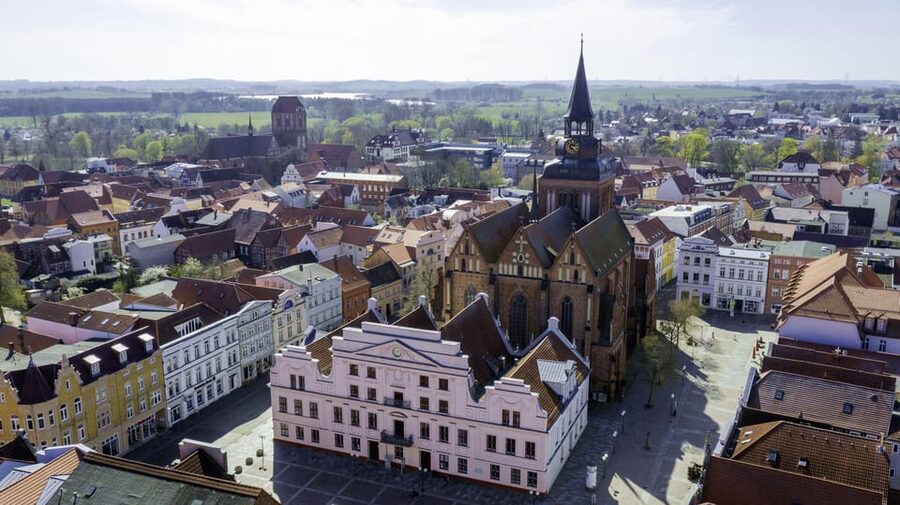
I would recommend this walk to you if you enjoy architecture, local history, public squares, and art. It is especially suitable if you want to understand Güstrow before exploring alone, or if you prefer a guide who can answer questions rather than a printed route.
Art lovers should pay special attention to the cathedral and Barlach’s Floating figure. Architecture fans will appreciate the combination of brick Gothic, Renaissance, and classicist forms. Visitors interested in German civic history will find the former residential and administrative role of Güstrow useful context.
Families and older visitors may like the short format, though the route’s detailed accessibility conditions are not provided. The tour is listed as wheelchair accessible, which is encouraging, but you may still want to confirm the precise route if ground conditions are important for your plans.
I would be more cautious if your main aim is to see every corner of the town center. The 90-minute schedule cannot cover everything, and some participants wanted additional stations. In that case, use the tour as an introduction and reserve extra time afterward for independent wandering.
Practical details before you book
The tour is conducted in German, with a live guide. Check the available starting times when booking because the exact departure schedule is not fixed in the information provided.
You meet at Güstrow Information on Franz-Parr-Platz 10 and return there after the route. The price is $10 per person. The activity allows cancellation up to 24 hours in advance for a full refund, and you can reserve now and pay later, which helps if your plans are still changing.
The city museum is free before or after the tour. I would save it for the side of the walk that fits your schedule best. If you want historical background first, visit it before meeting the guide. If you prefer to see the town with fresh eyes, take the walk first and use the museum to reinforce what you have learned.
Should you book the Güstrow city tour?
Book it if you want a friendly, information-packed introduction to Güstrow for a modest price. The cathedral, Barlach’s Floating figure, preserved old streets, market square, and Renaissance castle make a strong 90-minute route, and the free museum entry improves the value.
Skip it only if you need a very broad route with many brief stops, or if German is not a language you can comfortably follow. The cathedral may receive more attention than you want, and some parts of the town center may remain for your own follow-up walk. For most visitors interested in Güstrow’s buildings and personalities, I would take the tour early, then continue independently with the sights that caught your attention.
FAQ
Where does the Güstrow city tour begin?
The meeting point is Güstrow Information, Franz-Parr-Platz 10, 18273 Güstrow.
How long does the tour last?
The guided walk lasts 1.5 hours, or 90 minutes.
What language is the tour conducted in?
The live tour guide speaks German. German is the only language listed for the activity.
How much does the tour cost?
The listed price is $10 per person.
What sights are included in the route?
The route includes Güstrow’s historic center, the brick Gothic cathedral, Ernst Barlach’s Floating figure, historic squares, the market square, the town hall, the parish church, historic town houses, and the Renaissance castle.
Is the city museum included?
Yes. Free city museum entry is included before or after the guided tour.
Are entrance fees included?
No. Entrance fees are not included in the tour price.
Is the tour wheelchair accessible?
Yes. The activity is listed as wheelchair accessible.
Can I cancel the booking?
Yes. You can cancel up to 24 hours in advance for a full refund.
Do I have to pay when I reserve?
No. The activity offers reserve now and pay later, so you can book your place without paying immediately.
Just added in Germany
- Private One way Airport Transfer Berlin Airport To Berlin★ 3.5 · 17 reviews
- Private Walking Tour: Berlin Wall, Cold War and Checkpoint Charlie★ 5.0 · 37 reviews
- Modern Berlin Private Walking Tour: Diverse, Vibrant and Exciting German Capital★ 5.0 · 13 reviews
- Private Day Trip to Potsdam from Berlin by Train★ 4.5 · 27 reviews
- City Explorer: Potsdam Private Day Trip★ 4.5 · 10 reviews
- Berlin Private Custom Tour in a Minivan, East and West★ 5.0 · 123 reviews
- Berlin Private Custom 5-Hour Tour by Car★ 5.0 · 30 reviews
- Private Half-Day Sightseeing Tour in Berlin★ 3.5 · 6 reviews
Historical Tours, compared.
City History Canal Sightseeing Tour on a Motorboat
Read our review →

Browse the lists this tour appears in