
Reviewed · OLD TOWN WALKING TOURS
Munich: Old Town Guided Walking Tour
Munich’s old town packs centuries of power, faith, war, shopping, and beer into a compact center. This two-hour English walking tour gives you a useful first look at Marienplatz, the New Town Hall, Frauenkirche, Odeonsplatz, the Residenz, and other central sights without asking you to solve the city on your own.
I like the easy pace and the way guides connect grand buildings with human stories, from Bavarian dukes and church builders to Napoleon and the city’s recovery after World War II. I also like the practical finish near Viktualienmarkt, where you can turn a history lesson into coffee, wine, or a look at local food stalls. The main drawback is time: two hours allows for an excellent orientation, but not long interior visits or a detailed look at every stop.
Key points at a glance
- Marienplatz is the practical starting point: Meet in front of the Tourist Information Office at the New Town Hall, the easiest central landmark in Munich.
- The route covers the essential old town: Expect the New Town Hall, Frauenkirche, Maximilianstrasse, Odeonsplatz, the Residenz, and Viktualienmarkt.
- The history reaches beyond medieval Munich: Guides have covered Bavarian rulers, beer, church building, Napoleon, World War II, and post-Cold War Munich.
- English delivery is a major strength: Guides including Markus, Vanessa, Paola, Ulrich, Valerie, and Matthias have been praised for clear, lively explanations.
- The pace suits a first visit: The walk is generally easy, with enough time to stop, listen, ask questions, and take photographs.
- The price is fair for an orientation: At $23 per person, you are paying for a certified guide and a useful introduction rather than admission to attractions.
Why this Munich walking tour works so well for a first visit
Munich can feel simple at first glance. The old town is compact, the major squares are close together, and the buildings are easy to photograph. But without context, you may see a grand church, a palace, and a pretty square without understanding why each mattered.
That is where this tour earns its money. A good guide turns the center into a connected story. The city’s ruling family, Catholic traditions, public ceremonies, beer culture, wartime destruction, and postwar rebuilding all appear within a fairly small area. You get the map in your head first, then you can choose where to return.
The experience is especially useful if you have only a weekend in Bavaria’s capital. It also suits anyone arriving by train, since the old town is a natural first stop and the meeting point at Marienplatz is easy to locate. You can take the tour early in your visit, then use the guide’s suggestions to plan the rest of your time.
The rating is 4.6 out of 5 from 479 ratings, and the strongest pattern is clear: the guides make the difference. Names such as Markus, Vanessa, Paola, Ulrich, Valerie, Matthias, Lucia, and Silke appear in especially warm feedback. You should not expect one particular guide, but the range of positive comments suggests a strong guiding team rather than a single lucky personality.
More Old Town Walking Tours in Munich
- Munich: Old Town & Viktualienmarkt City Walk in German
★ 4.7 · 2,304 reviews - Munich Old Town Walking Tour
★ 4.5 · 1,287 reviews - Munich: Spooky Tour of Old Town in German
★ 4.6 · 1,112 reviews
Meeting the guide at Marienplatz
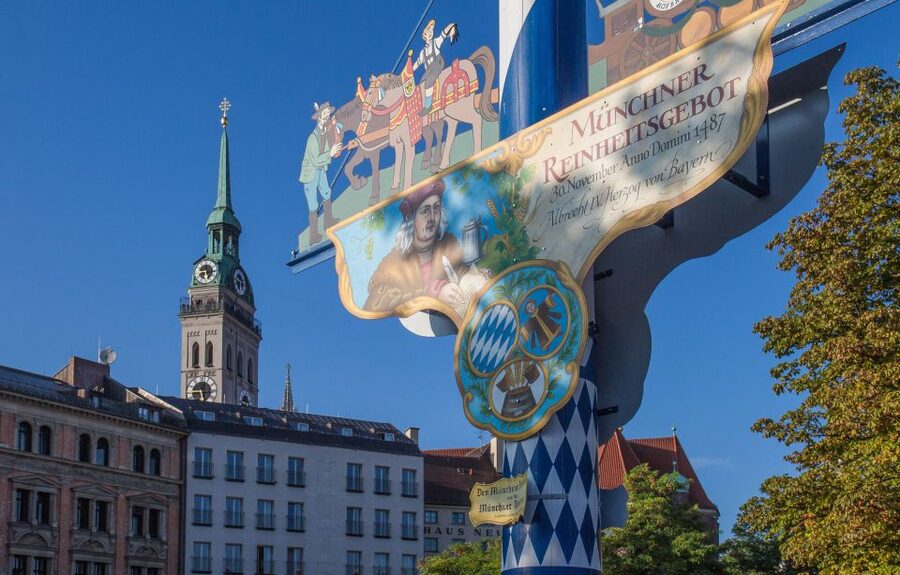
Arrive about 10 minutes early at the Tourist Information Office in the New Town Hall on Marienplatz. This is a sensible meeting point because you are already in the heart of Munich, surrounded by the square’s most important buildings and close to public transport connections.
Have your booking confirmation ready on your phone or printed. The tourist office also provides a city map and a 50 percent discount on the official Simply Munich guide when you show your confirmation there. That small extra can be useful if you like to continue exploring independently after the walk.
Marienplatz is likely to be busy, so give yourself enough time to identify the tourist office rather than simply arriving at the square. The central location is convenient, but it is not quiet. Arriving early gives you a few minutes to find the right person and take in the setting before the group moves off.
Marienplatz and the New Town Hall
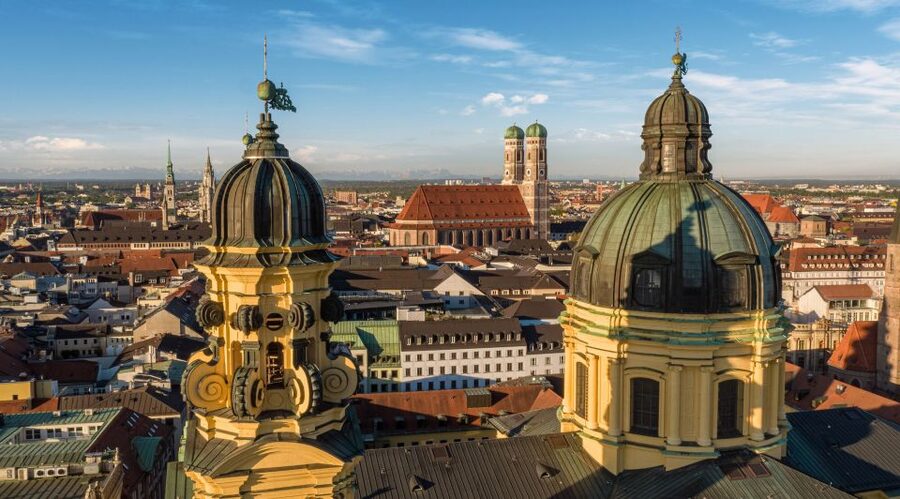
The tour begins with Munich’s main square and its impressive New Town Hall. This is the place where the city feels most theatrical, with a grand Gothic-style facade, a tall tower, and a history tied to civic power.
Your guide will explain the building and the role of Marienplatz in Munich’s public life. You will also hear the kind of background that makes the architecture easier to read, including stories about the city’s rulers, its growth, and the way public squares have been used over time.
This first stop is valuable because it gives you orientation. If you return later for photographs, shopping, or a meal, you will understand why Marienplatz is more than a scenic backdrop. It is the reference point for the old town.
The limitation is that this is a walking tour, not a town hall visit. The supplied information does not promise interior access or a dedicated presentation of every feature. You should treat the New Town Hall as a major exterior stop and listen closely to the explanation rather than expecting a long indoor tour.
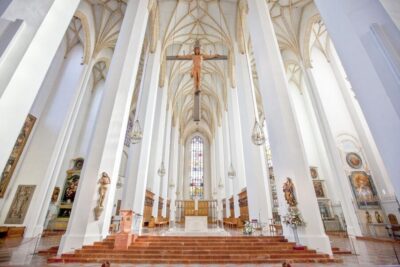
Frauenkirche, Munich’s unmistakable landmark
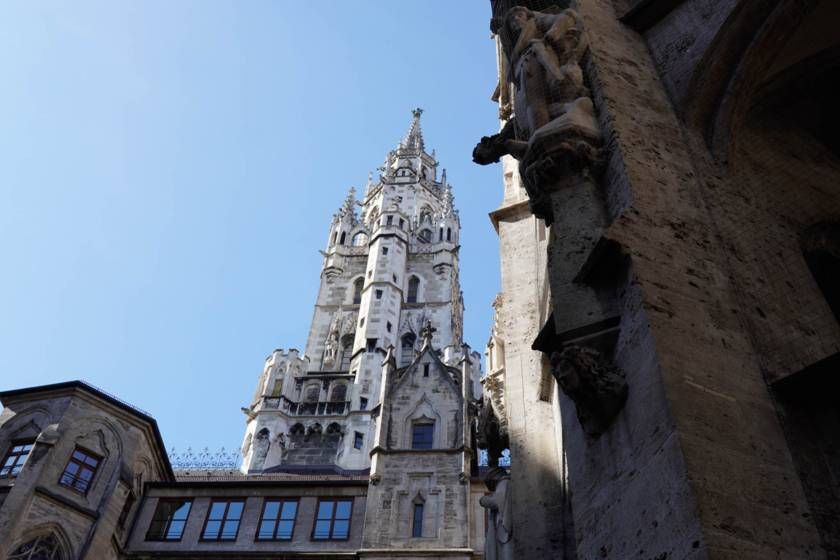
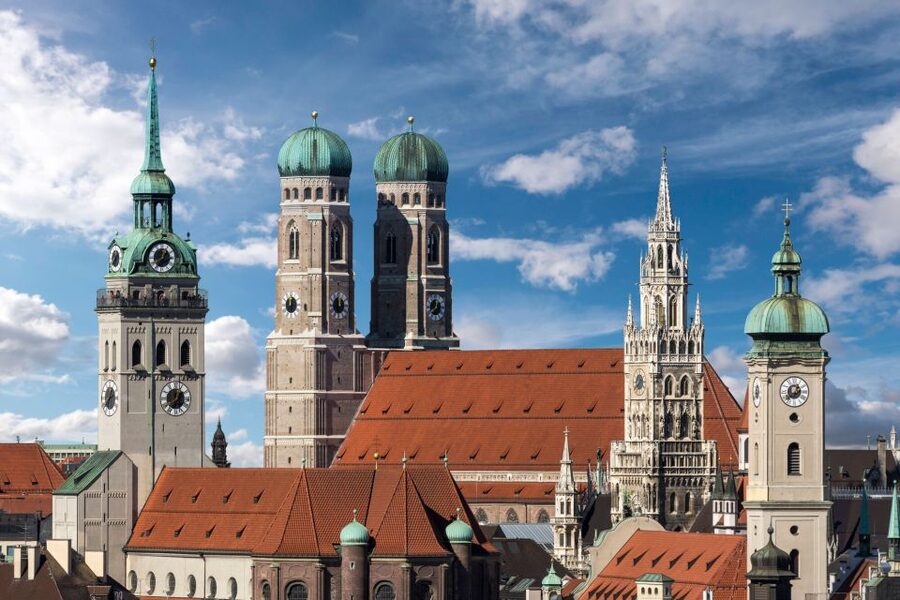
The Frauenkirche is one of the defining sights of Munich, with its twin towers shaping the city’s familiar profile. The church also gives the guide a chance to explain how faith, civic pride, architecture, and local stories overlap.
One useful feature of this tour is the room for questions. A guide may explain what you are looking at, then respond to what interests you most. That matters at a church, where you may care more about construction and design than dates, or more about local legends than architecture.
One guide even spent additional time with a small group inside a church after the formal tour because the group wanted to see it. That was a personal extra, not a promised part of the program, so you should not book expecting an extended church visit. Still, it reflects the value of having a human guide who can respond to your interests.
The walk does not appear to include a formal religious service or guaranteed interior access at every church. If entering the Frauenkirche is important to you, ask the guide what is possible on the day and plan a separate visit if needed.
Other walks through the old centre of Munich:
- Munich: Walking Tour Old Town and Viktualienmarkt
★ 4.7 · 839 reviews - Munich: Old Town Walking Tour
★ 4.7 · 589 reviews - Dresden: Semperoper and Old Town Tour
★ 4.8 · 5,735 reviews - Nuremberg: Old Town Guided Walking Tour
★ 4.6 · 2,416 reviews
From royal Munich to Maximilianstrasse
The route continues through areas linked with Munich’s royal past and present-day city life. Maximilianstrasse brings a different mood from Marienplatz. Here, the focus shifts toward grand urban planning, luxury shopping, and the public image of Munich.
This contrast helps you see the city in layers. Munich is not only old churches and palace rooms. It is also a modern capital with expensive shops, busy streets, and a strong sense of civic identity. A guide can point out how these parts fit together rather than treating each sight as an isolated photo stop.
The walk is not designed as a shopping tour, and you should not expect time to browse stores. Instead, Maximilianstrasse works as a visual and cultural stop along the route. If you want to return for shopping, the guide’s orientation will help you place it in relation to the rest of the old town.
Odeonsplatz and the Residenz
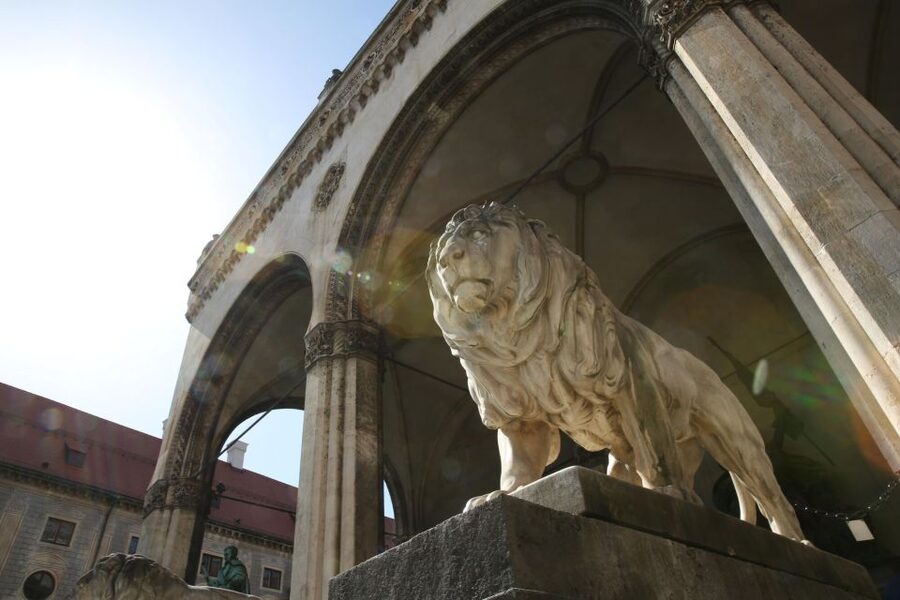
Odeonsplatz opens the story toward Munich’s courtly and political past. The square is broad and formal, with a feel quite different from the close pedestrian streets around Marienplatz. It is one of the places where the city’s connections to power and ceremony become easier to understand.
The nearby Residenz is particularly important. It was the palace of Bavaria’s rulers, and even a short explanation outside can help you decide if a later interior visit belongs on your list. The walking tour does not include admission to the palace, so you are getting an introduction rather than a full palace experience.
I like this part of the route because it adds scale. You begin with the busy central square, then move toward spaces built for rulers, court life, and formal display. Guides have also connected this part of Munich to Napoleon and other turning points, giving the tour a wider European frame.
If you are interested in art, architecture, or royal history, take note of the Residenz and consider returning with more time. Two hours is enough to understand its importance, but not enough to explore a major palace collection in detail.
Stories that stretch from dukes to postwar Munich
The best aspect of the tour is not simply the list of buildings. It is the range of history covered between them. Guides have discussed the origins of the city, the dukes, the development of beer culture, church construction, Napoleon, World War II, reconstruction, and Munich after the Cold War.
That range keeps the walk from becoming a parade of dates. You get the old city, but also the city that survived destruction and rebuilt itself. A guide can point out how modern Munich relates to its past rather than presenting history as something sealed behind museum glass.
Several guides have been praised for adding unexpected stories, dry humor, and current information. That is a useful balance. Too much historical detail can make a two-hour walk feel like a lecture, while too little leaves you with names and dates but no sense of place.
The experience will vary with the guide and the group. Some groups may ask many questions, while others may move more quickly through the planned stops. The tour is built around live explanation, so you should expect a personal, flexible feel rather than an audio guide with identical content every time.
Finishing near Viktualienmarkt
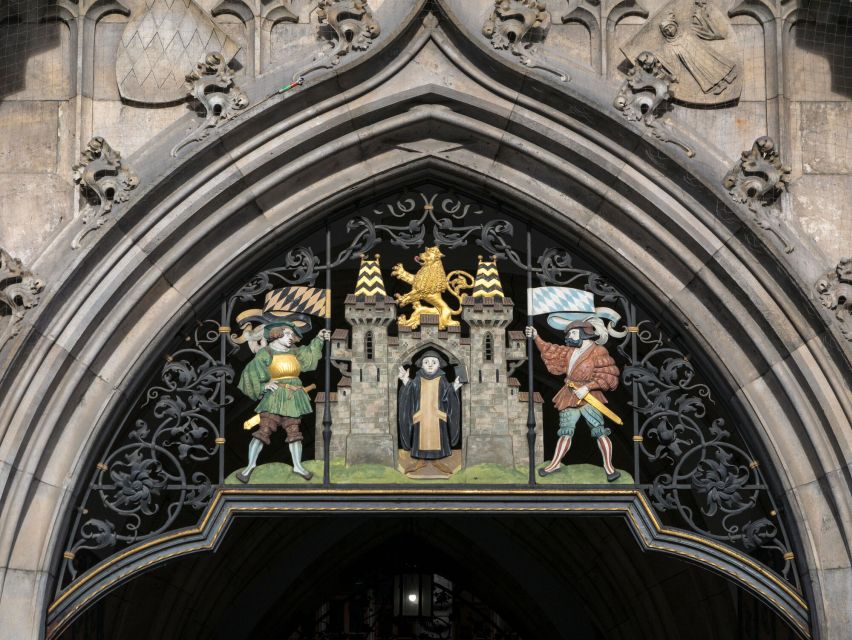
Viktualienmarkt is a smart place to finish. This lively food market gives you a chance to shift from looking at Munich to tasting it. The market stalls offer local foods and specialties, and the suggested next step is simple: stop for coffee or a glass of wine and browse at your own pace.
Food and drinks are not included, so budget separately if you want to eat or drink afterward. That is not a serious weakness. Keeping the walk free of a group meal means you can choose what appeals to you, from a quick snack to a longer break.
The market also makes a practical base for the rest of your day. You can pause, compare food stalls, and decide if you want to continue toward another sight. The guide’s suggestions for further exploration are useful here, especially if this is your first afternoon in Munich.
Do not think of Viktualienmarkt as a guided tasting. The tour points you toward the market, but your purchases and time there are your own. That gives you flexibility, though food-focused visitors may prefer a separate market or tasting tour.
How much walking and time should you expect?
The advertised duration is two hours, while the stated range is about 1.5 to 2 hours. That makes it easy to fit into a first morning, an arrival day, or a gap before dinner.
The pace is generally comfortable. One especially useful detail for older visitors is that the walk has been described as manageable for a retired parent, with no need to rush from one stop to the next. You will still be on your feet for the duration, so comfortable shoes are sensible.
The tour is wheelchair accessible, according to the activity information. Since old town conditions and temporary construction can change, it is still wise to mention any specific needs when booking or meeting the guide. One tour dealt with construction by adjusting the route and making the most of the available streets.
Group size can vary. Some departures have been small, including one group of five adults, which makes it easier to ask questions and hear the guide. A larger group may feel less personal, and one practical suggestion from the feedback is that a headset could help in noisy areas. No headset is listed as included, so stay close to the guide when the streets are busy.
The value of $23 per person
At $23 per person, this is a reasonably priced way to get your bearings in central Munich. You are not paying for attraction admission, food, drinks, or transport. You are paying for a certified English-speaking guide, a planned route, local context, and the chance to ask questions.
That distinction matters. If you only want photographs of Marienplatz and the Frauenkirche, you can walk there alone for free. If you want to understand how Munich’s rulers, churches, palaces, war, reconstruction, and modern city life connect, the fee is easier to justify.
The value is strongest at the start of a trip. A two-hour orientation can prevent wasted time later, point you toward sights worth entering, and help you understand the layout of the center. The 50 percent discount on the official Simply Munich guide adds a modest extra benefit.
It is less suitable if you want lengthy interior visits or a specialist tour devoted to one subject. Architecture fans may want a museum or Residenz visit afterward. Food lovers should treat Viktualienmarkt as a suggested follow-up, not as a meal included in the tour.
Which visitors will get the most from it?
I would choose this tour for a first-time visitor, a weekend visitor, or anyone who wants a clear introduction before exploring alone. It also works well for people who enjoy history but do not want a long academic lecture.
The tour is a good fit if you want:
- A short introduction to Munich’s central sights
- An English-speaking guide who can answer questions
- A comfortable route through the old town
- Historical context from the medieval period through modern Munich
- Suggestions for what to see after the walk
- A simple way to orient yourself near Marienplatz
You may want something else if you prefer a private tour, a food tasting, extended museum time, or a route focused on one narrow subject. The group format and short duration keep the experience practical, but they also limit how far any single topic can go.
Booking details worth knowing
Reserve your place and pay later if you want to keep your schedule flexible. You can cancel up to 24 hours before the tour for a full refund.
Meet in front of the Tourist Information Office at the New Town Hall on Marienplatz about 10 minutes before departure. Show your confirmation on your phone or as a printout.
The tour is conducted in English and led by certified guides. Names used on recent departures include Markus, Vanessa, Valerie, Paola, Ulrich, Matthias, Lucia, Silke, and others, but the specific guide depends on the date and departure.
Should you book this Munich old town tour?
Yes, if you want a well-priced first look at Munich with enough history to make the buildings meaningful. The strongest reason to book is the guide-led storytelling, especially if you enjoy connecting the city’s dukes, churches, beer traditions, royal buildings, wartime past, and modern life.
Book it early in your stay if possible. You will leave with a clearer map, a better sense of what deserves a second visit, and a convenient next stop at Viktualienmarkt. Just keep your expectations in line: this is a brisk old town orientation, not a palace admission tour, food tasting, or private deep study of Munich’s architecture.
FAQ
How long does the Munich Old Town Guided Walking Tour last?
The tour is advertised as two hours, with the stated duration ranging from 1.5 to 2 hours.
What language is the tour conducted in?
The live tour guide speaks English.
Where is the meeting point?
Meet in front of the Tourist Information Office at the New Town Hall on Marienplatz. Arrive about 10 minutes before the start time.
What should I show the guide when I arrive?
Show your booking confirmation, either printed or on your mobile phone.
What is included in the tour?
The experience includes the English walking tour through Munich’s old town and a certified guide. You can also receive a city map and a 50 percent discount on the official Simply Munich guide by showing your booking confirmation at the Tourist Information Office at Marienplatz.
Are food and drinks included?
No. Food and drinks are not included. The tour suggests visiting Viktualienmarkt afterward for local food, coffee, or wine.
Is the tour wheelchair accessible?
Yes. The activity is listed as wheelchair accessible. You can also cancel up to 24 hours in advance for a full refund, and reserve now while paying later.
More walking tours in Munich
- Munich: Third Reich & WWII Walking Tour
★ 4.6 · 6,181 reviews - Third Reich Walking Tour Munich
★ 4.5 · 4,291 reviews - Munich: Night Watchman Walking Tour
★ 4.7 · 2,092 reviews - Munich Ghosts and Spirits Evening Walking Tour
★ 5.0 · 1,900 reviews
Just added in Munich
- 2 Hours Munich: VIP Private Segway Tour★ 4.9 · 5 reviews
- “Comedykills” – das Open Mic im Glockenbachviertel★ 4.1 · 51 reviews
- From Munich: Herrenchiemsee Palace and Boat Trip Day-Tour★ 4.8 · 129 reviews
- Munich: Classical Concert at the Residenz Palace★ 4.5 · 148 reviews
- Munich: City Highlights Guided Segway Tour★ 4.6 · 266 reviews
- München: Der Nachtwächter für Kinder – Führung auf Deutsch★ 5.0 · 322 reviews
- Munich: Nymphenburg Palace Entry Ticket★ 3.9 · 327 reviews
- Munich: Raven Black Witches and Executioners Walking Tour★ 4.7 · 294 reviews
Old Town Walking Tours, compared.
Old Town & Viktualienmarkt City Walk in German
Read our review →
The Night Watchman Old Town Walking Tour in German
Read our review →
New Old Town and Highlights German-Language Tour
Read our review →

Browse the lists this tour appears in