
Reviewed · GERMAN-LANGUAGE TOURS
Munich: National Socialism Historical Tour in GERMAN
Munich’s Nazi past comes into sharp focus on this two-hour walk from Königsplatz to Odeonsplatz. You will see former sites of Nazi power, hear how the NSDAP gained ground, and use historic black-and-white photographs to compare the city then and now. I like the route because it connects places you might otherwise pass without noticing, and I like the guide’s use of photographs to give each stop a clear visual reference.
The main drawback is that this is a serious, German-language history tour, not a general sightseeing walk. The route also includes several outdoor stops, so you need comfortable shoes and a willingness to continue in rain or shine.
Key points to know before you book
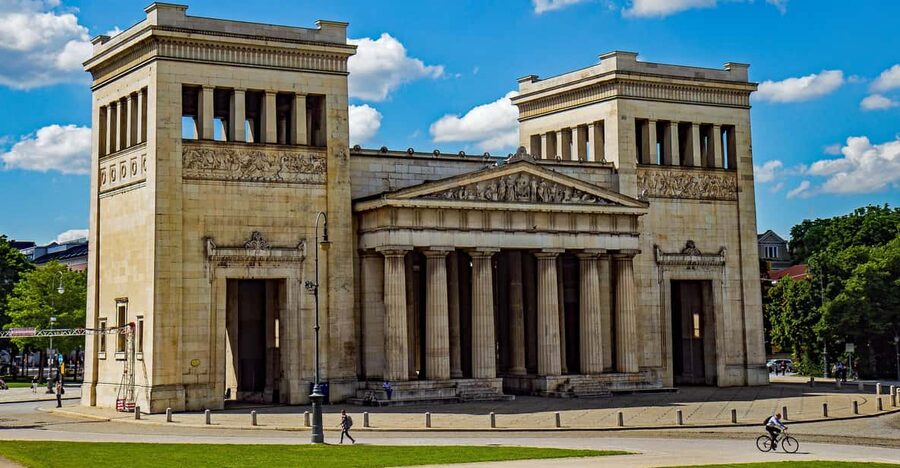
- Königsplatz begins the story: The tour starts at the Staatliche Antikensammlungen, near a square closely linked with Munich’s Nazi-era plans and ceremonies.
- Historic photographs make the stops easier to understand: Your guide carries black-and-white images from the 1920s and 1930s to show how the locations looked during key events.
- The route links major Nazi sites: You walk past the former Führerbau, along Briennerstrasse, by the former Gestapo headquarters, and onward to Feldherrnhalle.
- The tour is conducted in German: You need enough German to follow a serious discussion of political history and historical events.
- Private and group formats are available: This gives you a choice between a more personal walk and a likely more social group setting, though the exact group size is not stated.
- The advertised price is $34 per person: For a focused two-hour city walk with a live guide, that is reasonable if you value explanation and historical context more than museum admission.
Starting at Königsplatz, where the city’s Nazi story takes shape
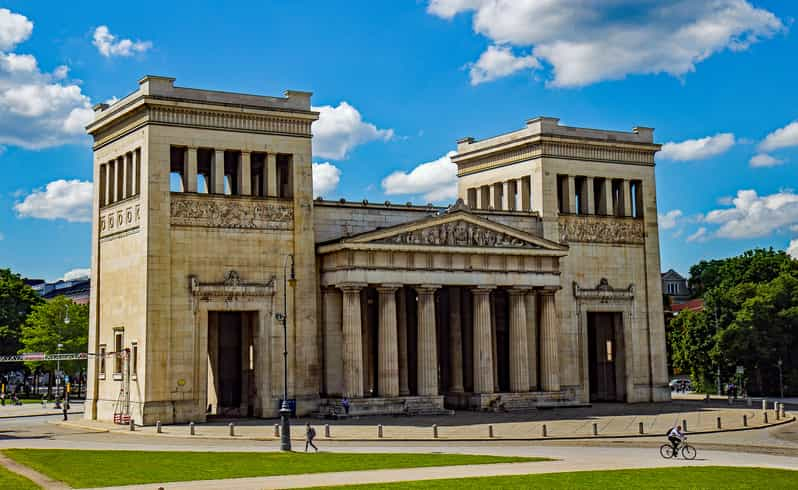
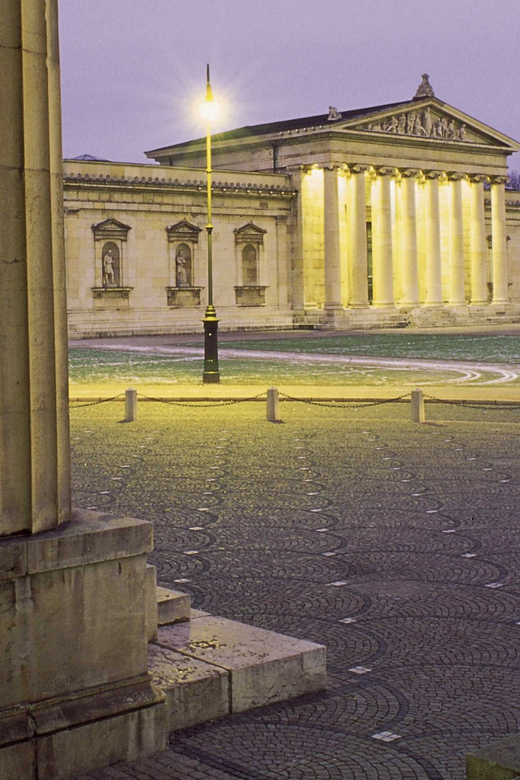
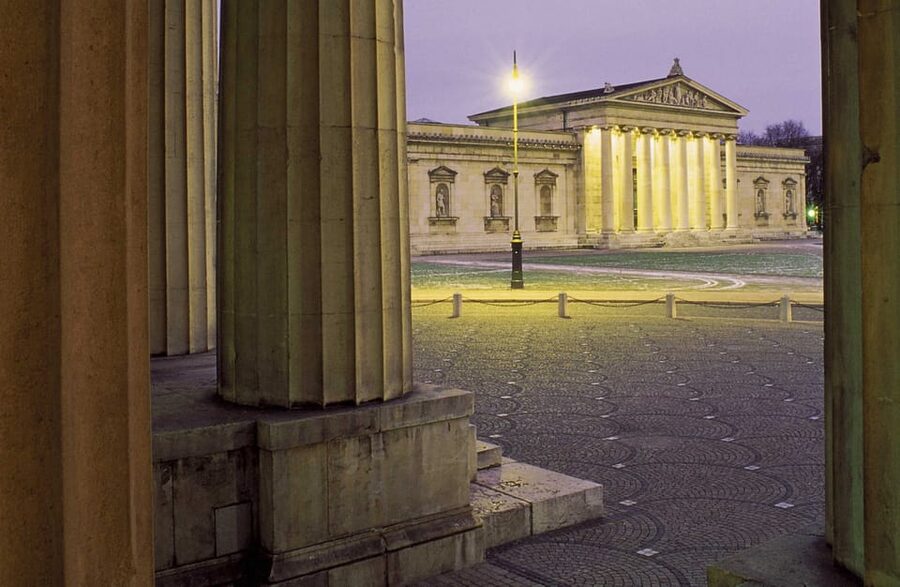
Meet your guide in front of the main entrance of the Staatliche Antikensammlungen at Königsplatz. Look for the big blue bag marked Weis(s)er Stadtvogel in white letters. That is the practical detail that will save you from scanning every passerby at a busy city square.
Königsplatz is a fitting place to begin. The tour presents Munich as the so-called City of the Movement, a place where National Socialism developed political force in the 1920s and 1930s. Rather than treating the subject as a list of dates, the guide uses the setting to explain how public spaces, political organization, and city institutions became tied to the movement.
You should expect an outdoor introduction rather than a museum-style lecture. The guide will discuss Munich’s role in the rise of National Socialism and set up the route ahead. I like this format because the history begins on the pavement, where the city itself becomes part of the evidence.
The meeting point is near major cultural buildings, but this experience is not a general art or architecture tour. You are there to understand political history, propaganda, power, and the effects of National Socialism on Munich and Germany.
Other tours run in German:
- Munich: Old Town & Viktualienmarkt City Walk in German
★ 4.7 · 2,304 reviews - Munich: Night Watchman Torch Tour in German
★ 4.8 · 1,280 reviews - Munich: Spooky Tour of Old Town in German
★ 4.6 · 1,112 reviews
The Führerbau and the Munich Agreement
From Königsplatz, the walk continues to the former Führerbau, or Führer’s Building. The building is especially important because the Munich Agreement was signed there in 1938. That connection gives the stop a direct link to the international politics of the period, not just local Munich events.
Today, the site is associated with the Munich Documentation Centre for the History of National Socialism. The tour information does not include an entrance ticket or promise an indoor visit, so you should treat this as an exterior stop unless your guide says otherwise. That distinction matters if you hoped to spend time inside the documentation center.
I find this part of the walk useful because it places a major political event in a physical location. You hear about the Munich Agreement in schoolbook terms, then see the building connected with its signing. The guide can also explain how Munich’s role extended beyond party meetings and street politics into the workings of government and international diplomacy.
The lack of an included entrance is not automatically a weakness. A two-hour walking tour cannot cover every museum in detail. Still, if you want a fuller museum experience, you may need to plan a separate visit and budget for the admission fee.
Walking Briennerstrasse with photographs from the 1920s and 1930s
The route then follows Briennerstrasse. This section gives the guide room to connect individual buildings and addresses with the wider story of the city during the Nazi period.
The photographs are one of the most useful parts of the experience. A historic image can show uniforms, flags, crowds, building changes, or the way a public space was used. Without that visual aid, an ordinary street can feel disconnected from the events being discussed. With it, you can compare the present view with Munich as it appeared during the 1920s and 1930s.
I like that the guide brings the photographs along rather than asking you to imagine every scene from spoken description alone. You will not simply hear that a location mattered. You will have a visual reference to help connect the past with the street in front of you.
This is also where the pace of the tour matters. Two hours is enough for a focused route, but not enough for long stops at every address. If you want to ask detailed questions, a private tour may give you more room to shape the discussion. In a group, you should expect the guide to keep the walk moving so the full route fits the scheduled time.
Passing the former Gestapo headquarters
The walk continues past the former Gestapo headquarters. This stop brings the subject closer to the machinery of repression. The tour is not only about Hitler’s rise or party rallies. It also addresses how National Socialism operated through institutions connected with surveillance, intimidation, and control.
The word former is important here. You are seeing a present-day city street, not a preserved prison or a complete memorial complex. The guide’s explanation and photographs provide the historical frame that the building alone cannot provide.
For me, this is one of the strongest reasons to take a guided route instead of walking alone with a map. A map can show you where a headquarters once stood. A guide can explain how that place fits into the larger development of Nazi rule and how Munich functioned within it.
The subject can be difficult, and the tour should be approached with care. This is not a light city stroll with a few dramatic anecdotes added for atmosphere. You will hear about Germany during National Socialism and the forces that helped the NSDAP rise to power. The tone is best suited to people who want an honest historical account.
Other history to see in Munich:
- Munich: Guided Tour of the historic Town Hall on Marienplatz
★ 4.8 · 63 reviews - Munich and Nazi History Combination Day Tour Small Group
★ 5.0 · 31 reviews - Munich: Nazi History 2-Hour Small Group Walking Tour
★ 5.0 · 30 reviews - Munich: Historical Walking Tour on the Rise of Hitler
★ 5.0 · 13 reviews
Feldherrnhalle and the Beer Hall Putsch
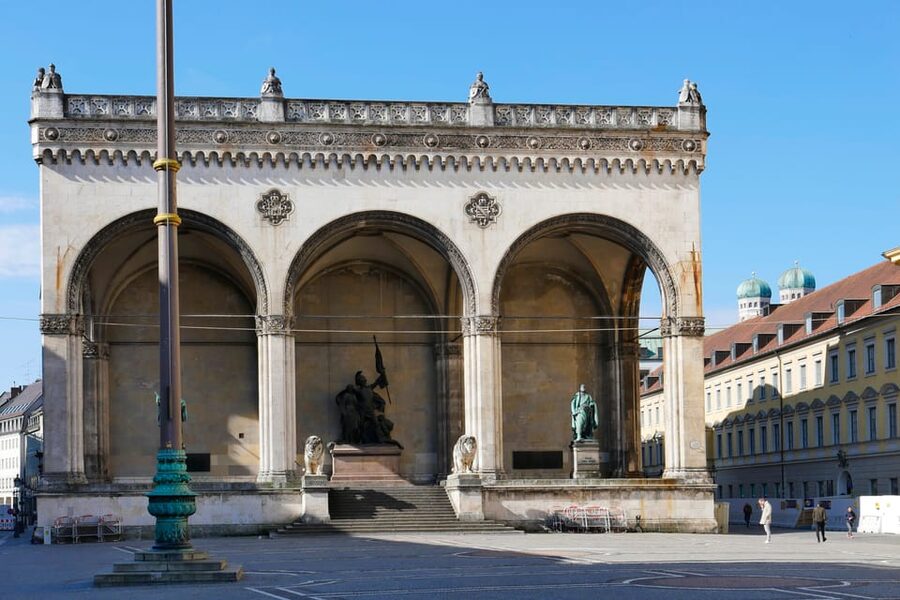
The final major stop is Feldherrnhalle at Odeonsplatz. This is the location linked with Hitler’s Beer Hall Putsch, the failed attempt to seize power in Bavaria and begin a national takeover.
The supplied tour details contain a date inconsistency. The highlights refer to November 9, 1923, while the itinerary text gives November 9, 1933. The Beer Hall Putsch took place in 1923, so you should ask the guide to clarify the date at the stop. That does not change the value of the location, but it is worth knowing before you book a history-focused experience.
Feldherrnhalle works as the closing point because it brings together the tour’s main themes: political ambition, public spectacle, the use of historic spaces, and the path from failed revolt to later power. By this point, the earlier stops should help you see the event as part of a longer process rather than an isolated incident.
The route ends at Odeonsplatz, so you are not being returned to your hotel. Hotel pickup and drop-off are not included. You should plan your onward route from central Munich after the tour, which is simple in principle but worth remembering if you have a tight reservation or train departure.
Why the German-language format matters
This tour is conducted in German. That is not a small detail. The subject involves political terms, historical names, dates, and complex cause-and-effect. If you only understand basic German, you may miss the points that make the route worthwhile.
If German is your strongest language, this format may be a clear advantage. You can hear the explanations directly and ask questions in the language used by the guide. If you need an English tour, this is not the right booking.
The guide is described as a professional city guide, but no individual guide name is provided. The experience provider is Weis(s)er Stadtvogel GmbH. Since the guide’s presentation will shape how much you take away, you may want to confirm the guide language and meeting details shortly before the walk.
Private or group tour, which works better?
You can choose between a private tour and a group tour. The information does not give a maximum group size, so you should not assume a small group.
A private tour is the better choice if you want to ask many questions, move at your own pace, or focus on a particular part of Munich’s Nazi history. It may also suit you if you are traveling with family or friends who already have some background and want a more tailored discussion.
A group tour can offer good value at $34 per person, especially if you want a clear introduction without arranging a longer private visit. The tradeoff is less control over the pace and fewer chances for extended questions. Either way, the route remains a walking tour with outdoor stops.
Is $34 a fair price for two hours?
At $34 per person, the tour sits in a sensible range for a two-hour guided history walk. You are paying for a live guide, a planned route, historical photographs, and interpretation at several significant locations. You are not paying for food, drinks, hotel transfers, or entrance fees.
The value depends on what you want from Munich. If you simply want to see famous buildings, you can walk through central Munich on your own. If you want to understand why these locations matter and how they fit together, the guide adds the main value.
The photographs strengthen the price argument. They are a small but meaningful tool that helps turn the walk from a sequence of addresses into a visual lesson. I would consider the price fair for a visitor with a serious interest in 20th-century German history.
The tour is also only two hours, which makes it easier to fit into a full Munich day. You can schedule it without giving up an entire afternoon. Just remember that any museum entrance or follow-up visit will cost extra and require additional time.
Practical details for the walk
Wear comfortable shoes. The route covers several central locations, and the experience takes place outdoors. It runs rain or shine, so check the forecast and bring suitable protection.
The meeting point is in front of the Staatliche Antikensammlungen’s main entrance. The blue Weis(s)er Stadtvogel bag is the clearest way to identify the guide.
The supplied details give mixed information about access. The activity is marked wheelchair accessible, but it is also described as not suitable for people with mobility impairments. Since this is a walking route with multiple outdoor stops, you should confirm the exact conditions with the provider before booking if accessibility is important to you.
Free cancellation is available up to 24 hours before the start time, and you can reserve now and pay later. Those policies are useful if your Munich plans are still changing, but the main booking decision should be your comfort with the German language and the serious subject.
Who should book this Munich history walk?
I would recommend this tour to you if you want a focused introduction to Munich’s role in National Socialism, prefer learning in the city streets, and can follow German-language explanations. It is also a good choice if you want to visit several related locations without researching and connecting them yourself.
The tour is less suitable if you want a broad overview of Munich, a museum visit included in the price, or a relaxed sightseeing walk with light commentary. It is also not a substitute for a longer visit to the Munich Documentation Centre for the History of National Socialism.
Book it if the route and the historical subject match your interests. The combination of Königsplatz, the former Führerbau, the Gestapo site, and Feldherrnhalle gives you a compact way to understand how Munich became central to the rise of National Socialism. Just confirm the historical date detail, assess your German, and arrive ready for a serious walk rather than a casual city tour.
FAQ
Where does the Munich National Socialism tour begin?
The tour begins in front of the main entrance of the Staatliche Antikensammlungen at Königsplatz. Look for the guide carrying a big blue bag with the white words Weis(s)er Stadtvogel.
How long does the tour last?
The walking tour lasts two hours.
What language is the tour conducted in?
The live tour guide conducts the experience in German.
Is the Munich Documentation Centre entrance included?
No entrance fees are included. The route goes to the former Führerbau, which is associated today with the Munich Documentation Centre for the History of National Socialism, but an indoor visit is not listed as included.
What should I bring?
Bring comfortable shoes. The tour takes place outdoors and runs rain or shine.
Can I cancel the booking?
You can cancel up to 24 hours in advance for a full refund. Reserve now and pay later is also available.
Just added in Munich
- Pub crawl incl. Oktoberfest museum guided tour with beer tasting (private)★ 5.0 · 5 reviews
- South Tyrolean specialties and wine tasting★ 5.0 · 5 reviews
- Size Matters Beer Tour Munich★ 4.6 · 105 reviews
- Short & sweet: Tasting the Viktualienmarkt★ 4.8 · 37 reviews
- Secret Food Tours Munich★ 4.8 · 5 reviews
- Munich: Romantic Wine Experience for Two at Viktualienmarkt★ 4.2 · 14 reviews
- Munich: Resistance against Hitler – Historical Walking Tour★ 5.0 · 5 reviews
- Residence of Munich private tour with skip the line ticket★ 5.0 · 4 reviews
German-Language Tours, compared.
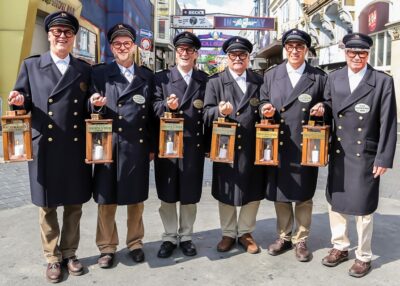
Old Town & Viktualienmarkt City Walk in German
Read our review →
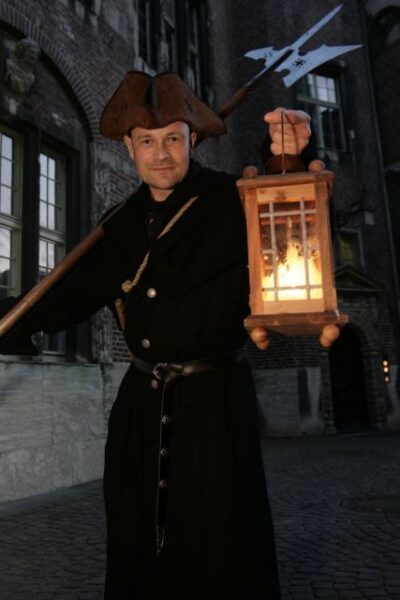
The Night Watchman Old Town Walking Tour in German
Read our review →

Browse the lists this tour appears in