
Reviewed · NIGHT WATCHMAN TOURS
Mannheim: Public Night Watchman Tour with Night Watchwoman Marie
Mannheim’s past comes alive after dark, when Night Watchwoman Marie leads you by lantern through the former old town. Her costume, halberd, and tales of thieves, drunken rabble, dishonest professions, and the tormented night watchman’s life give the city a human scale. I especially like the mix of comic stories and grim details, plus the way the tour reaches beyond medieval folklore into Mannheim’s 19th-century world of inventions and changing city life.
I also like the clear 90-minute route, which begins and ends at the Baroque Palace and links major historic places without asking you to commit to a long evening. Marie’s warm, energetic delivery has earned especially strong praise, including praise for keeping the story engaging in bitter cold. The main consideration is language: the tour is in German, so some of the wordplay and local detail may be hard to catch if you do not understand German.
Key points to know before you go
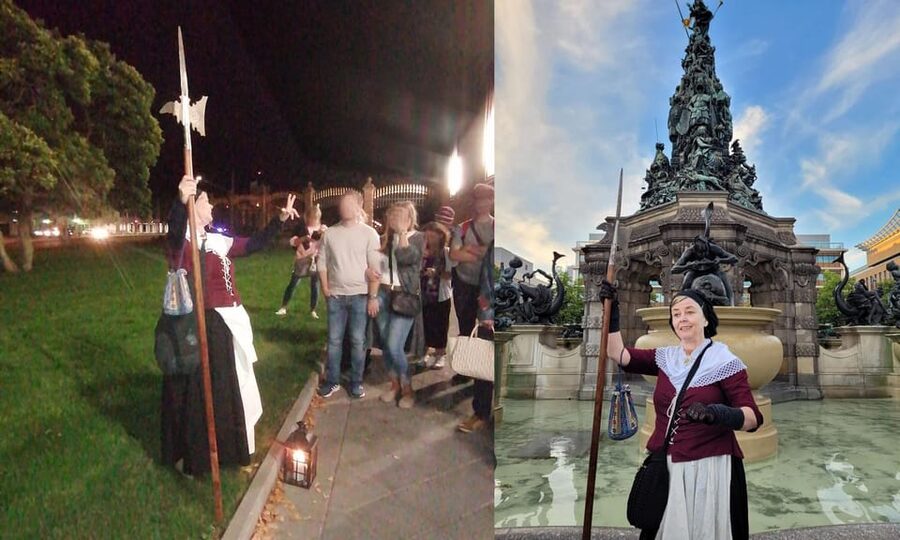
- Marie leads in period costume: Her lantern and halberd make the character more than a standard city guide.
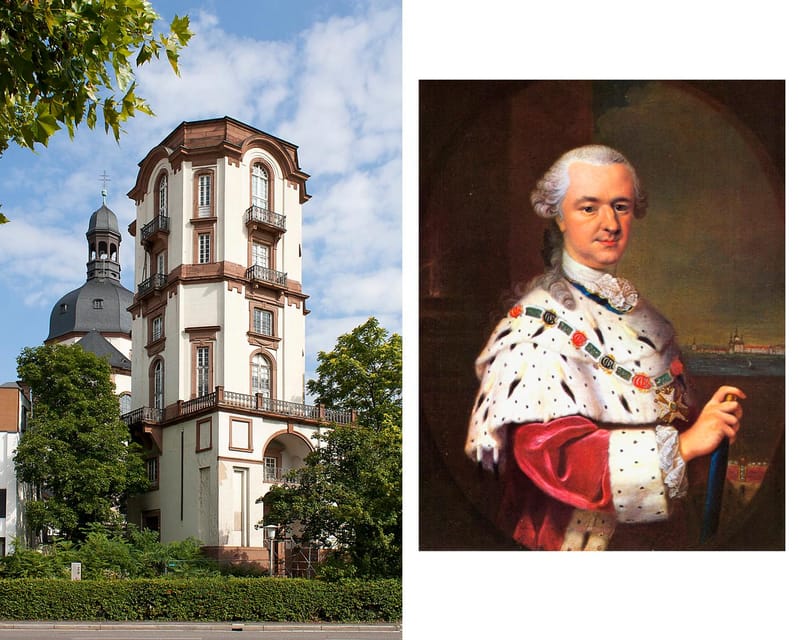
- The stories range beyond old legends: Expect Carl Theodor, the Musenhof, the lightning rod, the automobile, bad smells, and life around 1875.
- The route covers nine historic points: You walk from Mannheim Baroque Palace through the former old town and return to the palace.
- The tone is both funny and dark: Tales of dishonest trades sit beside stories of thieves, drunken crowds, and the difficult work of a night watchman.
- The tour lasts 1.5 hours: That is long enough for a real sense of place without taking over your evening.
- The price is $17 per person: For a costumed, live-guided city walk, I consider that a fair price, especially for first-time visitors to Mannheim.
Meeting Marie at Mannheim Baroque Palace
Your evening begins in the Court of Honor at Mannheim Baroque Palace, an easy place to identify and a fitting starting point for a tour about power, order, and city life. Arrive with enough time to find the courtyard and settle in before the group moves off.
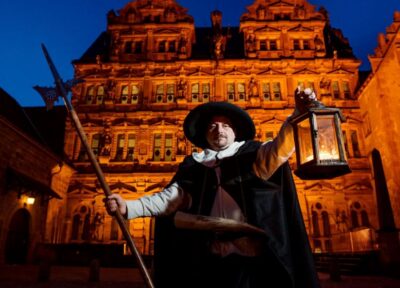
Marie appears as a night watchwoman rather than as a modern guide in ordinary clothes. The lantern and halberd help set the mood, but they also explain the job she is presenting. A night watchman was not simply there to tell the hour. He watched the streets, helped keep order, and faced thieves and drunken troublemakers while most residents slept.
That framing matters. You are not getting a broad survey of every era in Mannheim. You are seeing the city through one working person’s eyes. The result should feel closer to a guided character performance than to a formal museum lecture, with historical information folded into anecdotes and small human details.
The tour is conducted in German. If you understand the language, you can expect the full effect of Marie’s humor, timing, and period phrasing. If you do not, the setting and costume will still be clear, but the jokes and wordplay may not travel as well.
More Night Watchman Tours across Germany
- Dresden: The Original Night Watchman Tour in Lantern Light
★ 4.6 · 6,653 reviews - Hamburg: Night Watchman’s Tour of St. Pauli in German
★ 4.7 · 4,818 reviews - Leipzig: 1.5-Hour Public Tour with Night Watchman Bremme
★ 4.6 · 3,116 reviews
Mannheim’s Baroque Palace and the Elector’s world
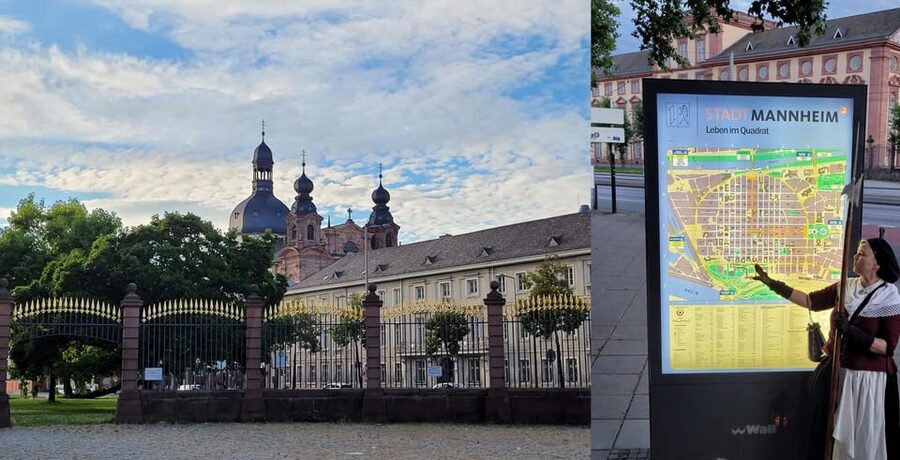
The first guided stop is Mannheim Baroque Palace, where the tour begins and later ends. The palace connects the night watchwoman’s street-level duties with the city’s ruling class and the age of Elector Carl Theodor.
Marie’s stories include the Elector’s Musenhof, or court of the Muses. That subject adds a useful contrast to the practical night watchman’s work. While court life represented culture, status, and refined entertainment, the watchwoman’s world was one of dark streets, public order, smells, noise, and ordinary people trying to get through the night.
This contrast is one of the tour’s best ideas. Mannheim’s past was not only palace life. It was also the labor of people who patrolled, cleaned, carried, sold, repaired, and guarded. By moving between grand names and less polished parts of city life, Marie gives you a broader picture of how Mannheim functioned.
The palace is also the safest place to orient yourself before the walk. Since the route returns here, you do not need to arrange transport at the end. The tour stays within a compact central area, making it a practical first evening activity.
Palais Bretzenheim and the city’s social contrasts
The route continues to Palais Bretzenheim, another stop connected to Mannheim’s formal and elite past. Here, the tour’s discussion of rank, reputation, and work can take on more weight.
One of the advertised subjects is the old category of dishonest professions. This phrase refers to trades that earlier societies treated as disreputable or socially suspect. Marie uses the idea as a doorway into the rules and prejudices of past city life.
That is useful because it shows that history is not only a list of dates and grand buildings. It is also about who was trusted, who was pushed aside, and which jobs carried shame. You may hear these topics with a humorous touch, but the underlying point is serious: a city’s social order affected ordinary work and daily survival.
Do not expect a full academic study of every trade. This is a short city tour, and the material is presented through a character’s stories. Still, this stop helps widen the experience beyond a simple procession of landmarks.
The Alte Sternwarte and Mannheim’s appetite for new ideas
At the Alte Sternwarte, Marie’s storytelling reaches toward science and discovery. The route’s themes include the lightning rod and the horseless carriage, or automobile, subjects that show Mannheim as a place where new ideas changed how people understood safety, travel, and modern life.
The lightning rod is a particularly good fit for a night watchman’s tale. It links fear of storms and fire with practical attempts to control danger. The automobile points in another direction, toward the shock of a machine that could move without a horse. Together, these topics help you see a city not frozen in the past, but adapting to inventions that changed streets and routines.
The tour also includes the idea of stinking air. That detail may sound funny, and Marie reportedly uses humor well, but it points to a basic fact of historic urban life. Before modern systems for waste and sanitation, unpleasant smells were part of the public environment. A night watchwoman would have known the city by more than its buildings and street names.
This is where the tour can appeal to visitors who usually find costume tours too narrow. The stories are not limited to ghosts or old crimes. They touch on technology, public health, work, and the changing feel of the city.
Other trips that run after dark in Germany:
- Hamburg: 90-Minute Evening Lights Harbor Cruise
★ 4.5 · 7,728 reviews - Hamburg: 1-Hour Harbor Evening Lights Cruise
★ 4.4 · 4,861 reviews - Bremen: Walking Tour in German with Night Guard
★ 4.7 · 2,922 reviews - Munich: Night Watchman Walking Tour
★ 4.7 · 2,092 reviews
Schillerhaus and the literary side of Mannheim
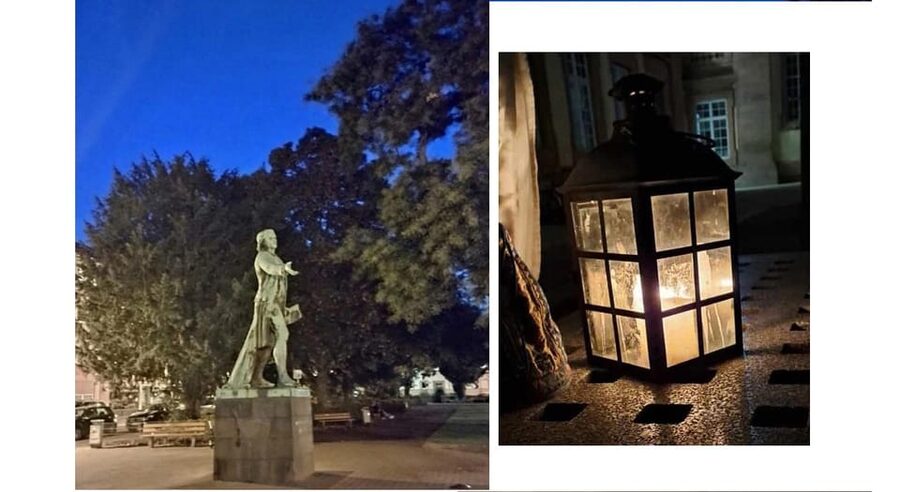
The next stop is Schillerhaus Mannheim, followed by Schillerplatz. These places bring literature and memory into the route, while keeping the focus on the people and events that shaped Mannheim’s old town.
The supplied tour details do not promise a full literary lecture, so you should not book this experience as a dedicated Schiller study tour. Instead, expect Schillerhaus and Schillerplatz to fit into the wider story of the city’s cultural life, alongside the Elector’s court and the people who worked after dark.
That balance suits a 90-minute walk. You get enough context to understand why these locations matter, but the night watchwoman’s voice remains the main thread. The stop also gives the tour a change of mood. Palace politics, difficult jobs, and bad smells are set beside artistic and intellectual life.
For me, that variety is more valuable than a narrow list of facts. You are more likely to remember the city when the route connects buildings with characters, arguments, inventions, and habits.
Jesuit Church and the city’s powerful institutions
At the Jesuit Church, Marie continues the guided walk through Mannheim’s historic center. The church adds another layer to the city’s public life, one shaped by religion, ceremony, and institutions.
The available information does not specify a particular story told at this stop, so it would be unfair to promise a detailed account of the church’s interior or artwork. What you can count on is that it forms part of the historical setting through which Marie explains Mannheim’s past.
This is a useful point to remember about the experience. You are not booking a sequence of separate building tours. The places work as stages for the night watchwoman’s larger story. Some stops may receive more attention than others, depending on the group and Marie’s pacing.
If you want a close, room-by-room look at the church, a separate visit may suit you better. If you want to understand how religious, political, cultural, and everyday spaces sat together in the old town, this stop supports that goal.
Paradeplatz and the public face of Mannheim
The route then reaches Paradeplatz, one of Mannheim’s central public spaces. It provides a natural setting for stories about movement, order, commerce, and public behavior.
A night watchwoman’s work depended on knowing where people gathered and where trouble might begin. A major square makes the role easier to imagine than a quiet side street. Marie’s halberd is not just a costume prop here. It represents the authority, or at least the appearance of authority, needed to patrol public space.
The tour’s references to thieves and drunken rabble add a little theatrical danger without turning the walk into a ghost hunt. The strongest part of the concept is the practical view of nighttime city life. You are encouraged to think about who was awake, who was vulnerable, and who was responsible for keeping watch.
Paradeplatz also helps break up the route with a broad civic setting after the more focused palace, church, and cultural stops. The walk remains varied without losing its central character.
Dalberghaus and the return to the palace
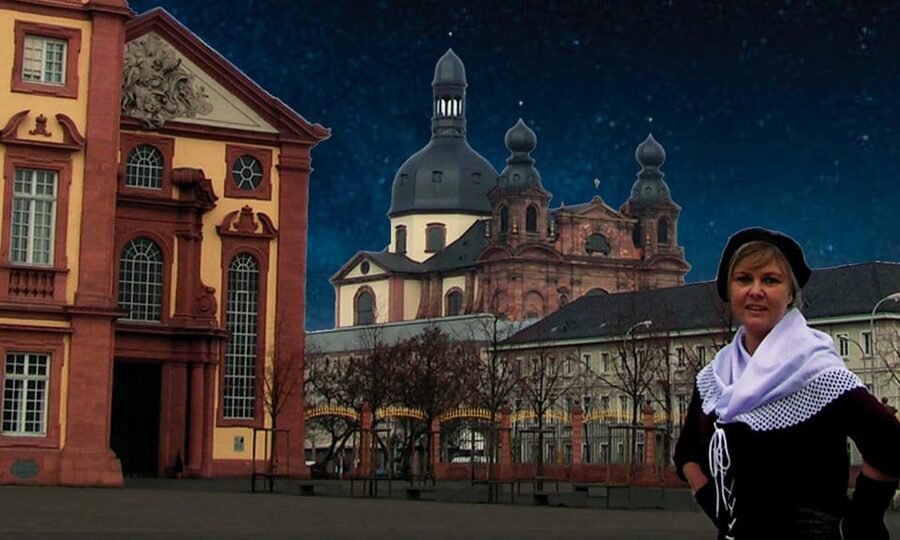
The final named stop is Dalberghaus, after which the group returns to Mannheim Baroque Palace. This loop is convenient and keeps the experience centered on the former old town.
By the final section, the separate topics should begin to connect. Carl Theodor’s court, cultural places, inventions, suspect trades, poor air, and night patrols all show different sides of a city changing over time. Marie’s story is rooted in older night watchman traditions, but one account places her perspective around Mannheim in 1875, giving the tour a more recent historical edge than you might expect.
The return to the palace is practical, especially in winter. You finish where you began rather than needing to find an unfamiliar street or public transport stop late at night. It also gives the tour a tidy shape: royal setting, old-town walk, then back to the palace.
A warm performance in cold weather
Marie’s delivery is the key reason to choose this experience. The available feedback repeatedly emphasizes that she tells the stories with care, energy, and humor. One winter group specifically noted that she kept the tour interesting despite biting cold, while another described the presentation as lively and full of affection.
That matters because a night walk depends on the guide’s voice. Buildings can look different under lantern light, but the experience will fall flat if the narration is dull or hard to follow. Marie’s role gives the walk momentum and makes the historical material easier to remember.
The tone is not solemn throughout. You can expect amusing anecdotes alongside grim subjects. The combination helps prevent the tour from feeling like a string of dates. It also suits families and mixed-age groups better than a very formal lecture, provided everyone can follow German.
Dress for the weather. The tour lasts 90 minutes and takes place outdoors, and the strongest praise includes a reference to a very cold evening. Comfortable shoes also make sense because the route moves through the former old town on foot.
Is $17 a fair price for 90 minutes?
At $17 per person, this is a reasonably priced way to add a focused evening activity in Mannheim. You are paying for a live guide, a costume character, a structured route, and storytelling that links nine historic points.
The value is strongest if you are new to Mannheim or want an introduction before exploring the center on your own. The tour gives you names and themes to notice later, from the palace and Jesuit Church to Schillerplatz and the old observatory. It also offers something a basic daytime walk may not: a consistent point of view.
The value is weaker if you want a long, detailed architectural tour or an English-language experience. The walk is in German, and the costume format places as much weight on delivery and atmosphere as on exhaustive facts. You should choose it for character, stories, and a compact route rather than for a scholarly survey.
Free cancellation up to 24 hours before the start and the option to reserve now and pay later make the booking less rigid. The tour is listed as wheelchair accessible, which is helpful, though the supplied information does not describe the exact street surfaces or any route limitations.
Who will enjoy Night Watchwoman Marie?
I would recommend this tour to you if you like local history told through people rather than through a long list of dates. It is also a good fit for anyone who enjoys costume interpretation, unusual social history, and a little theatrical humor.
You will get the most from it if you understand German. That is especially important because the experience depends on anecdotes and delivery, not just on seeing the landmarks. Some content is presented in its original language, and German is the stated tour language.
Families may like the clear character and the stories about guards, thieves, inventions, and city life. History-minded visitors will appreciate the subjects of work, social reputation, public order, and sanitation. Returning Mannheim residents can also find fresh angles in familiar streets, since the tour presents the city from the night watchwoman’s viewpoint.
I would hesitate only if you dislike outdoor evening walks, need a fully English tour, or want detailed access inside every building on the route. This is a guided street experience, not a series of indoor admissions.
Should you book this Mannheim night watch tour?
Book it if you want a short, memorable introduction to Mannheim with a strong sense of character. Marie’s costume, halberd, lantern, and lively storytelling give the walk more shape than a routine city orientation, while the subjects reach from Carl Theodor’s court to automobiles, lightning rods, bad smells, and socially suspect trades.
The best reason to go is the unusual mix. You get the Baroque Palace, Palais Bretzenheim, Alte Sternwarte, Schillerhaus, Schillerplatz, Jesuit Church, Paradeplatz, and Dalberghaus, but you see them through the working life of a night patrol. At $17 and 90 minutes, that is a fair exchange for a compact evening of history and atmosphere.
Skip it if German will block most of the story or if you are looking for a detailed English architecture tour. Otherwise, this is an easy, good-value way to meet Mannheim after sunset.
FAQ
Where does the Mannheim night watchman tour begin?
The tour begins at Mannheim Baroque Palace, in the Court of Honor.
Where does the tour end?
The route returns to Mannheim Baroque Palace after visiting the listed historic stops.
How long does the tour last?
The tour lasts 1.5 hours, or 90 minutes.
What language is the tour in?
The live tour guide speaks German. Some content is shown in its original language.
Who leads the tour?
Night Watchwoman Marie leads the experience in costume.
What does the tour include?
It includes a costume-guided tour of Mannheim with Night Watchwoman Marie.
Is the tour wheelchair accessible?
Yes, the activity is listed as wheelchair accessible.
How much does the tour cost?
The stated price is $17 per person.
Can you cancel the booking?
Yes. You can cancel up to 24 hours in advance for a full refund.
Just added in Germany
- Berlin: Thrilling E-Scooter Adventure Tour★ 4.4 · 66 reviews
- Berchtesgaden: Via Ferrata Beginner Tour of Schützensteig★ 4.7 · 15 reviews
- Berlin: Energizing 2-Hour Morning Segway Tour★ 4.7 · 35 reviews
- Bayreuth: German City Walking Tour (Tourist Info)★ 4.7 · 202 reviews
- Beelitz-Heilstätten: Baum&Zeit Tree Top Walk Entry Ticket★ 4.9 · 7 reviews
- Beer Bike & Party Bike: Unforgettable Berlin City Tour incl. pickup★ 5.0 · 5 reviews
- Bavaria: Beginner Canyoning Tour★ 4.5 · 10 reviews
- Bayreuth: Christmas city tour in German★ 4.9 · 12 reviews
Night Watchman Tours, compared.
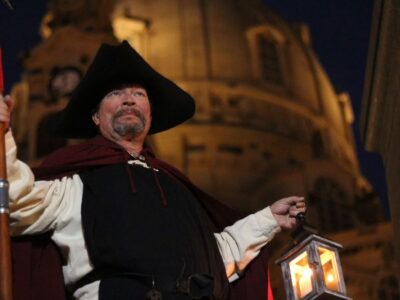
The Original Night Watchman Tour in Lantern Light
Read our review →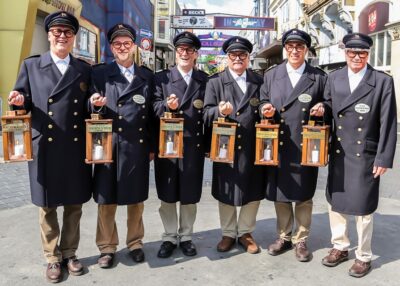
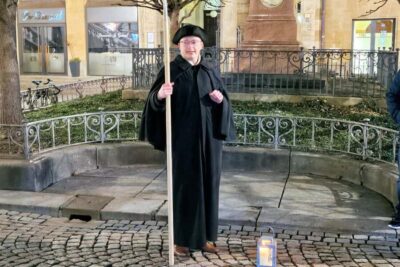
1.5-Hour Public Tour with Night Watchman Bremme
Read our review →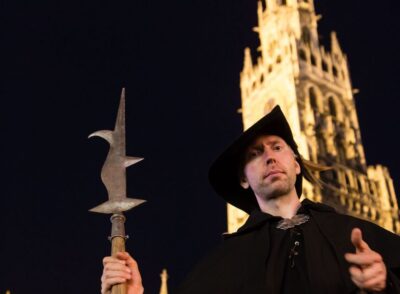

The Night Watchman Old Town Walking Tour in German
Read our review →
Browse the lists this tour appears in