
Reviewed · HISTORICAL TOURS
Lübeck: Private Historical and Architectural Walking Tour
Lübeck’s best story is written in brick. This private walk takes you from the heavy Holsten Gate through merchant streets, church towers, writers’ homes, and a marzipan bakery, showing how Baltic trade made this northern port wealthy. I especially like the private format, which lets your guide adjust the pace, and the marzipan tasting, a tasty way to connect food with local history.
The 90-minute route packs in several major sights, but it moves quickly. Entry tickets are not included, and the tour is not suitable for wheelchair users or people with mobility impairments. One practical tip: ask your guide to identify themselves clearly at the meeting point, since this has been a small issue before.
Key points to know before you book
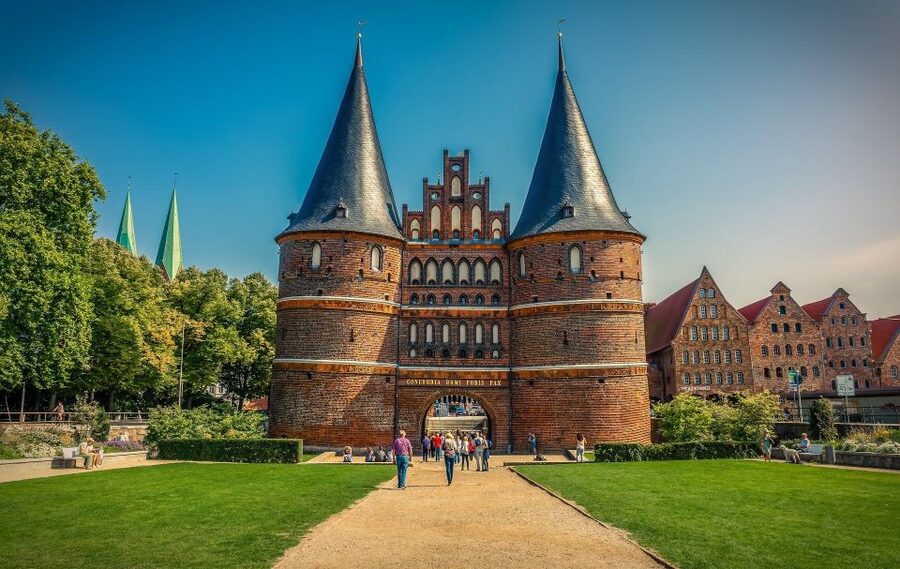
- Holsten Gate sets the scene: Begin beside Lübeck’s famous late 15th-century city gate and hear why it came to represent freedom.
- Baltic trade explains the city: Merchant wealth shaped the brick houses, churches, salt storehouses, and public buildings you see along the route.
- Five churches frame the skyline: The city’s famous spires and brick Gothic design become easier to understand from the panoramic viewpoints.
- Buddenbrook House links Lübeck to literature: Learn about brothers Thomas and Heinrich Mann and their connection to the city.
- Marzipan is part of the local story: Taste freshly baked varieties while hearing why this sweet became so closely tied to Lübeck.
- Private does not mean slow: At 90 minutes, the walk gives you a strong introduction, not a full museum visit or extended church tour.
Why Lübeck works so well on foot
Lübeck is compact enough to understand by walking, yet its streets carry several different stories at once. The city was a major trading center on the Baltic Sea, and its merchants used their wealth to build large brick homes, churches, warehouses, and civic buildings.
That connection between money and architecture is the heart of this tour. You are not simply ticking off a gate, a church, and a town hall. You are learning why these buildings look the way they do, and how shipping routes helped shape the city’s fortunes.
The route takes place in the historic center, a UNESCO World Heritage Site. Expect cobbled streets and historic buildings rather than a flat, modern pavement route. Comfortable shoes matter, especially if the weather is wet.
The private setup is useful here. With a group of up to 15, you can ask about a detail that catches your eye instead of following a fixed script in a large crowd. The tour is offered in German or English, so confirm your preferred language when booking.
Other history to see in Lubeck:
- Lübeck: Hanseatic League History Walking Tour
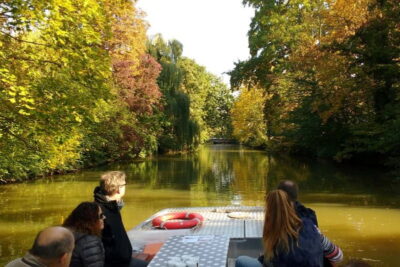
★ 4.9 · 57 reviews - Leipzig: City History Canal Sightseeing Tour on a Motorboat
★ 4.7 · 6,232 reviews - Berlin: Natural History Museum Entrance Ticket
★ 4.6 · 3,382 reviews
Starting at Holsten Gate
Meet your guide in front of Holsten Gate near Museum Holstentor. This is an easy place to recognize, but look for the guide carefully. A previous participant found that the guide could have made their identity clearer at the meeting point, so arriving a few minutes early and checking for the tour contact is sensible.
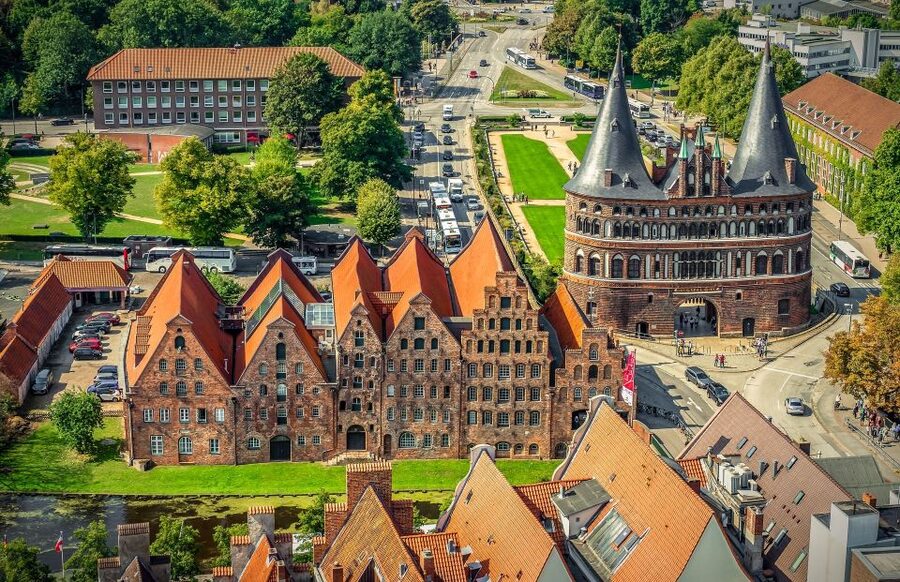
Holsten Gate is more than a photogenic entrance. Built in 1464, it is one of the last surviving Gothic remains of Lübeck’s medieval fortifications and one of only two remaining city gates. Its thick brick construction gives you an immediate sense of the city’s defensive past.
Your guide explains how the gate came to symbolize freedom. That idea may sound surprising when you are looking at a fortified entrance, but it reflects Lübeck’s civic identity and its long role as an important commercial city.
The gate also makes a useful first stop because it shows Lübeck’s signature building material up close. Brick was practical in northern Germany, where good building stone was less available, but it also became a powerful architectural language. As you walk farther into town, you will see that same material used for churches, homes, storehouses, and government buildings.
Reading the skyline from the Merchants’ Quarter
After Holsten Gate, the walk continues into the old city. One of the pleasures here is looking up. Lübeck is often called the City of Seven Spires, and the skyline includes five churches, historic salt storehouses, and large brick houses once built by wealthy merchants.
The views help you understand the scale of medieval Lübeck. A church tower was not only a religious marker. It was part of the city’s public identity, while a merchant’s grand home signaled commercial success and social position.
The Merchants’ Quarter adds an important economic layer to the tour. Baltic Sea trade routes brought goods, money, and outside connections into Lübeck. Your guide explains how merchants shaped the city’s growth, giving context to the buildings instead of treating them as decorative backdrops.
This is one of the strongest parts of the experience for curious visitors. You begin to notice details in the brickwork and street plan, then connect them to trade and civic power. The stop is less useful if you want long periods for photography, since the whole route lasts only 90 minutes.
Buddenbrook House and the Mann family
The next major story belongs to literature. At Buddenbrook House, you learn about Thomas Mann and Heinrich Mann, two important German writers associated with Lübeck.
Thomas Mann’s novel Buddenbrooks made the name famous, and the house gives the tour a change of pace. Until this point, the focus is mainly on fortifications, trade, churches, and architecture. Here, the city becomes a setting for family life, social class, and literature.
The available information does not promise a separate admission to the house, and entry tickets are not included in the price. Treat this as a guided stop connected with the building and the Mann family rather than assuming you will have time for a full museum visit. If entering is important to you, check the arrangements before booking.
I like this part because it shows that Lübeck is not only a medieval trading center. Its identity also reaches into German literature. The stop is brief, but it gives you a cultural link that many basic city walks leave out.
Other walks around Lubeck:
- Lübeck: Express Walk with a Local
★ 4.9 · 10 reviews - Lübeck: Old Town Highlights Private Walking Tour
★ 4.8 · 8 reviews - Discover Berlin Half-Day Walking Tour
★ 5.0 · 9,624 reviews - Berlin: Third Reich and Cold War 2 Hour Walking Tour
★ 4.9 · 6,830 reviews
St. Mary’s Church and the little devil
The route then reaches St. Mary’s Church, the third-largest brick Gothic church in Germany. Even from outside, its size helps explain the confidence and wealth of medieval Lübeck.
Your guide tells the story of the little devil located outside the church. This is exactly the kind of small local tale that can make a walking tour feel personal. It gives you something specific to look for and adds a touch of humor to a building that might otherwise seem formal and imposing.
The church also brings together several themes from the walk. Brick construction, religious influence, merchant wealth, and the city’s skyline all meet here. If church interiors matter to you, remember that entry tickets are not included. The tour information does not guarantee interior access, so ask about this ahead of time.
St. Mary’s is likely to be one of the most visually impressive stops, but the short duration limits how long you can linger. You will get the story and the main architectural context. You may not get an extended examination of the interior, side chapels, or art.
Lübeck’s marzipan tradition
The food stop is a traditional marzipan bakery, where you taste different varieties and learn why the sweet is important to Lübeck. Freshly baked marzipan gives the walk a welcome sensory break after several architectural stops.
This is not just a snack added for decoration. Marzipan has become one of Lübeck’s best-known local specialties, and the tasting helps connect the city’s past to something you can enjoy in the present. Sampling several varieties also gives you a clearer sense of how the flavor and texture can differ.
I would not expect a full pastry workshop or a long bakery visit. The information promises a taste test and an explanation of marzipan’s significance. That is enough to make the stop memorable, especially for families and anyone who likes local food with a story attached.
If you have food allergies or dietary restrictions, check the ingredients before tasting. No special dietary information is provided for the experience.
Lübeck Town Hall closes the walk
The final stop is Lübeck’s Town Hall, considered one of Germany’s most beautiful town halls and part of the UNESCO-listed historic center. It is a fitting place to finish because the building represents civic power rather than military defense, religious authority, private wealth, or literary life.
By this point, the route has introduced you to several forces that shaped Lübeck: trade, religion, city government, architecture, and culture. Town Hall brings those threads together in one public building.
The tour ends after 90 minutes, so you should plan your day around it rather than expect a full morning or afternoon program. You will leave with a useful map of the old center and enough background to decide which buildings you want to revisit on your own.
What the $265 group price really means
The price is $265 for a private group of up to 15 people. For one or two people, that is a significant cost compared with a shared group walk. For a larger family or group, the per-person price becomes much more reasonable.
The value comes from the private guide rather than from included admissions. You receive a focused city introduction in German or English, with the chance to ask questions and set a comfortable pace within the fixed 90-minute window. The tour also includes a marzipan tasting, though entry tickets are separate.
For a group of 10, the cost works out to $26.50 per person. For 15 people, it is about $17.67 each. That makes the tour particularly appealing for family groups, school groups, friends, or cruise parties who want their own guide.
For a couple, the price is harder to justify unless you strongly prefer a private experience. A shared walking tour would likely offer a lower cost, but this private option gives you more control and avoids joining strangers.
The tour also includes free cancellation up to 24 hours before the start time, and you can reserve now and pay later. Those terms help if your schedule in Lübeck is still taking shape.
Who should book this walk
I would recommend this tour to you if you want a quick but meaningful introduction to Lübeck’s old center. It suits first-time visitors who want the main landmarks explained in plain language rather than simply photographed.
It is also a good match for:
- Families and private groups who want their own guide
- Visitors interested in brick Gothic architecture
- Readers curious about Thomas and Heinrich Mann
- People who enjoy connecting food with local culture
- Cruise passengers or day visitors with limited time
- English- or German-speaking groups
The tour is less suitable if you need step-free access, use a wheelchair, or have difficulty walking on cobbled streets. It also may not satisfy you if your priority is spending a long time inside museums or churches, since entry tickets are not included and the schedule is compact.
The guide quality is an important part of the value. The available feedback includes very strong praise for a guide who knew Lübeck in extraordinary detail and could explain the city with confidence. That suggests you may get more than a basic list of dates and buildings. Still, no guide name is provided, and the meeting-point identification issue is worth keeping in mind.
Practical ways to get more from the 90 minutes
Wear comfortable shoes and clothing. The route is on foot through historic streets, and the cobbled surfaces make thin soles or uncomfortable footwear a poor choice.
Arrive at Holsten Gate a little early. The meeting point is in front of the gate near Museum Holstentor, but make sure you can identify your guide before the start.
Keep your expectations realistic. In 90 minutes, you can cover the central story of Lübeck, see several major sights, taste marzipan, and get useful orientation. You cannot study every church, enter every building, or spend long periods at each stop.
Bring questions. A private tour earns its price when you use the guide’s attention. Ask about the merchant houses, the salt storehouses, the Mann family, the little devil at St. Mary’s, or the city’s Baltic trade connections.
If you want to visit Buddenbrook House or St. Mary’s Church inside, check admission arrangements separately. Tickets are not included, and the tour details do not promise full interior visits.
Should you book it?
Book this Lübeck walk if you value a private guide, want to connect the city’s buildings with trade and literature, and appreciate a small food tasting along the way. The route covers an unusually broad mix of sights for 90 minutes, from Holsten Gate and the Merchants’ Quarter to St. Mary’s, Buddenbrook House, marzipan, and Town Hall.
Skip it if you want a low-cost shared walk, need wheelchair access, or prefer slow museum visits. For a group of several people, the $265 price can be fair value. For just two people, the decision rests on how much you value having your own guide and a flexible conversation.
FAQ
How long does the Lübeck walking tour last?
The tour lasts 90 minutes.
How much does the private tour cost?
The price is $265 per group of up to 15 people.
Where does the tour meet?
Meet your guide in front of Holsten Gate near Museum Holstentor.
Is the tour private?
Yes. It is offered as a private group experience.
Which languages are available?
The live guide speaks German or English.
Are entry tickets included?
No. Entry tickets are not included in the tour price.
Does the tour include a marzipan tasting?
Yes. You taste different varieties of marzipan at a traditional bakery and learn about its significance in Lübeck.
Which major sights are included?
The route includes Holsten Gate, Buddenbrook House, St. Mary’s Church, the Merchants’ Quarter, and Lübeck Town Hall.
Is the tour suitable for wheelchair users?
No. The activity is not suitable for wheelchair users or people with mobility impairments.
Can I cancel for a full refund?
Yes. You can cancel up to 24 hours in advance for a full refund. You can also reserve now and pay later.
Just added in Lubeck
- Timmendorfer Strand: SEA LIFE Behind the Scenes Tour★ 4.9 · 15 reviews
- Lübeck Day Pass – Day ticket for Lübeck museums★ 4.0 · 15 reviews
- Lübeck zwischen Grusel und Geschichte Truecrime zu Halloween★ 4.9 · 35 reviews
- Lübeck: Old Town Highlights Private Walking Tour★ 4.8 · 8 reviews
- Lübeck: Hanseatic League History Walking Tour★ 4.9 · 57 reviews
- Lübeck: Architecture and Local Craft Private Guided Tour★ 4.0 · 6 reviews
- Lübeck: Classic Tour of the Hanseatic City★ 4.8 · 64 reviews
- Lübeck: Express Walk with a Local★ 4.9 · 10 reviews
Historical Tours, compared.
City History Canal Sightseeing Tour on a Motorboat
Read our review →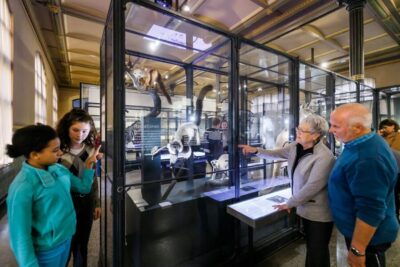

Browse the lists this tour appears in