
Reviewed · HISTORICAL TOURS
Lübeck: Hanseatic League History Walking Tour
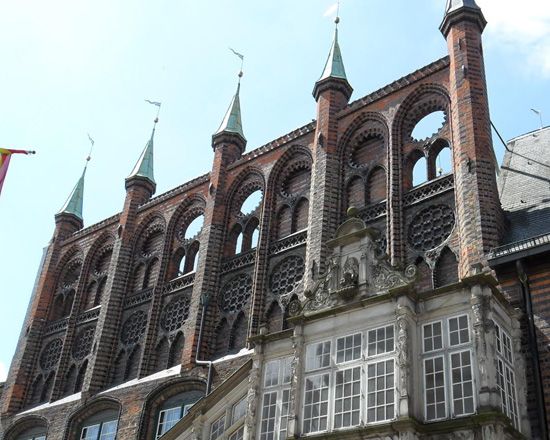
Lübeck’s Hanseatic past comes alive best on foot, where grand brick churches give way to cramped lanes, old courtyards, and the Trave waterfront. This private 90-minute tour follows that story from the Holsten Gate to the Hospital of the Holy Spirit, with stops at the City Hall, St. Mary’s Church, Buddenbrook House, and the Schiffergesellschaft guild hall.
I like the private format, which lets your guide adjust the pace and spend more time on details your group cares about. I also like the compact route: you see major landmarks and smaller architectural corners without giving up half a day. The main consideration is price. At $259 for up to six people, it can be fair for a full group, but expensive for one or two guests.
Key points to know before booking
- The story begins at the Holsten Gate, one of Lübeck’s best-known city gates and the tour’s meeting point.
- The route links trade, religion, architecture, and daily life, rather than treating Lübeck as a string of unrelated sights.
- A private group of up to six gives you room to ask questions and request stops such as old courtyards.
- The walk lasts 90 minutes, enough for a strong introduction but not a complete tour of every Lübeck sight.
- Guides speak German or English, with Bernd, Chris, and Karin specifically praised in recent bookings.
- The tour ends at the Hospital of the Holy Spirit, where you may look into one or two of Lübeck’s atmospheric backyards.
Why Lübeck makes a fine Hanseatic history lesson
The Hanseatic League was not a single kingdom or a tidy political union. It grew from working arrangements between North German merchants who wanted safer, more reliable sea links and trade routes. At its height, the association connected roughly 300 maritime and inland cities across Northern Europe, from Riga to Bruges.
That scale can be hard to picture from a textbook. Lübeck makes it easier. Its streets, churches, harbor, guild buildings, and storehouses show how trade shaped a city over several centuries, from the 12th through the 17th century.
You will not simply hear dates as you walk. You will see the kind of buildings and public spaces that made a trading city function. Merchants needed warehouses, ships needed a harbor, sailors needed meeting places, and city leaders needed imposing civic buildings. The route ties those pieces together in a practical way.
This is especially useful if Lübeck is your first Hanseatic city. The guide can give you a framework for understanding other Baltic and North Sea towns, where similar brick churches, merchant houses, and port facilities appear in different forms.
Other history to see in Lubeck:
- Lübeck: Private Historical and Architectural Walking Tour
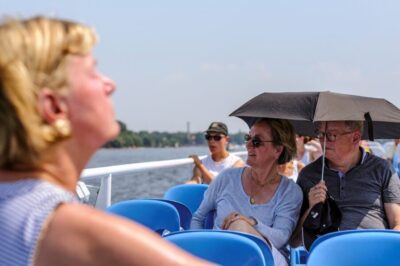
★ 4.5 · 6 reviews - Leipzig: City History Canal Sightseeing Tour on a Motorboat
★ 4.7 · 6,232 reviews - Berlin: Natural History Museum Entrance Ticket
★ 4.6 · 3,382 reviews
Starting beneath the Holsten Gate
Meet your guide at the Holsten Gate, the landmark most closely associated with Lübeck. The gate once formed part of the city’s defenses, and this wall passage contained four city fortification gates alone. That detail immediately gives you a sense of how carefully Lübeck guarded its entrances.
The gate is a strong starting point because it is more than a photo stop. It introduces Lübeck as a wealthy city that needed protection, control of movement, and a clear connection between its commercial center and the water. Your guide can use the structure to set up the larger story of merchants, ships, and city power.
From here, the route moves toward the salt storehouses and the Trave Harbour. This part of the walk helps explain the practical side of Hanseatic trade. Salt was an important commodity, and storehouses made it possible to handle goods before they moved onward by water or land.
The harbor section is also a useful change of mood. After the solid walls of the gate and the formal shape of the old town, the waterfront opens the story toward the wider Baltic and North Sea world. You begin to see why Lübeck’s position mattered.
The Trave Harbour and the working city
The Trave Harbour connects Lübeck’s old town to the commercial network that made the city prosperous. A guide can help you picture the movement of goods and people through this area without reducing the Hanseatic League to a list of member cities.
You should expect historical explanation rather than a harbor cruise or a long stop inside a museum. The experience is a walking tour, so the value comes from seeing the setting while the guide explains how it fit into Lübeck’s trade system.
This is one reason the 90-minute length works well. You get enough time to connect the gate, storehouses, and harbor, then move into the streets where merchants and guilds shaped the city. If you want an in-depth port history or time inside several buildings, you will need additional sightseeing after the tour.
Große Petersgrube and Lübeck’s brick architecture
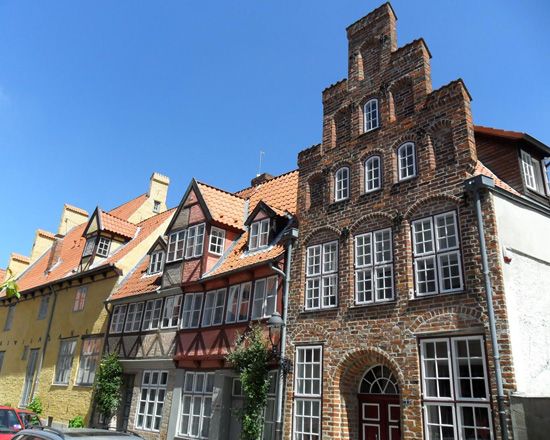
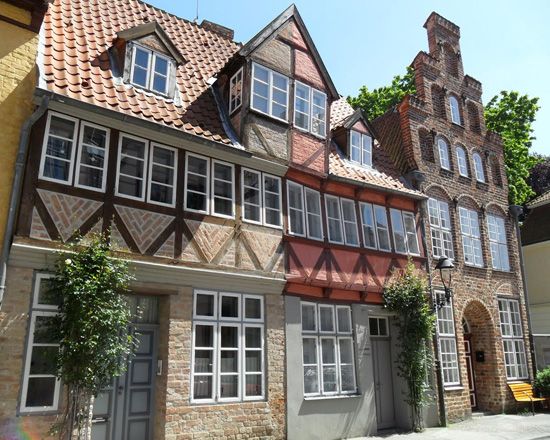
One of the most appealing sections is Große Petersgrube, one of Lübeck’s oldest streets. Its old brick buildings and stepped gables show the architectural style that many people come to Lübeck hoping to see.
The narrow street gives you a better feel for the city than a broad square alone. Stepped gables are not just decorative details. They reflect the building traditions of northern Europe and the way merchant cities developed a distinct visual identity through brick construction.
This is also where you should pay attention to scale. Lübeck’s public buildings can feel grand, but its side streets and lanes bring the story back to ordinary urban life. A private guide can point out architectural details that are easy to miss when you are walking alone with a map.
Several recent bookings specifically praised guides for responding to requests about courtyards. If you enjoy small architectural details, ask about alleys and backyards at the start. The guide may be able to give those features more attention within the fixed 90-minute route.
Other walks around Lubeck:
- Lübeck: Express Walk with a Local
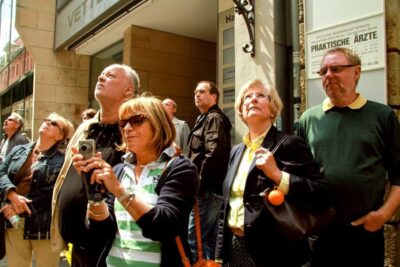
★ 4.9 · 10 reviews - Lübeck: Old Town Highlights Private Walking Tour
★ 4.8 · 8 reviews - Discover Berlin Half-Day Walking Tour
★ 5.0 · 9,624 reviews - Berlin: Third Reich and Cold War 2 Hour Walking Tour
★ 4.9 · 6,830 reviews
St. Mary’s Church and the Hanseatic model
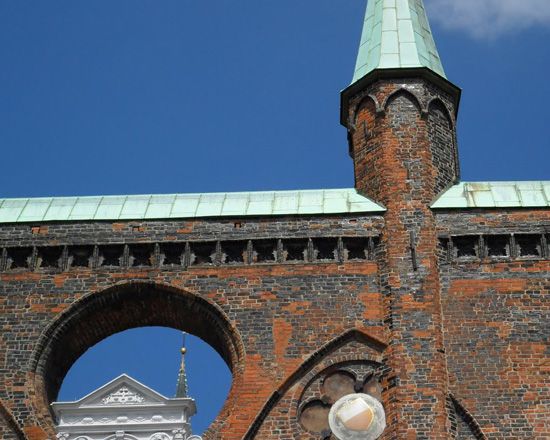
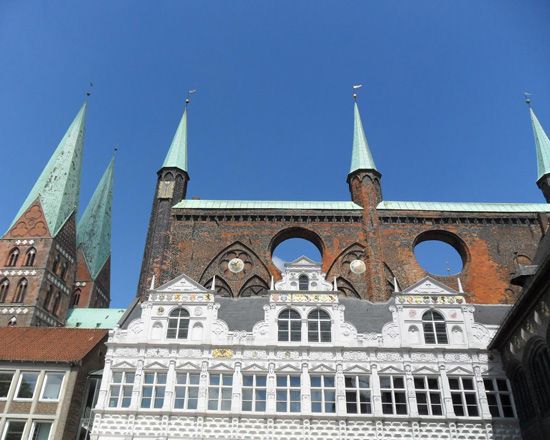
St. Mary’s Church is one of the tour’s major landmarks. It served as a model for numerous churches in Hanseatic cities around the Baltic region, so it represents more than Lübeck’s local religious life.
The church helps show how influence traveled along trade routes. Goods were not the only things moving between cities. Architectural ideas, building methods, religious practices, and civic ambitions traveled too. A church modeled on St. Mary’s tells you that Lübeck carried weight beyond its own walls.
The tour focuses on the exterior route and city context as described, so do not assume that an extended interior visit is part of the 90 minutes. If you want to see the church inside, ask your guide how much time is available or plan a separate visit.
For many people, this is the point when the Hanseatic story becomes more than commerce. The league’s network helped shape public buildings and city identity, not just waterfront business.
Rathausmarkt and the civic center
The walk also reaches Rathausmarkt, the square associated with Lübeck’s City Hall. This is where the city’s commercial success met its political structure.
The City Hall gives the Hanseatic story a civic angle. Merchants could trade, but city authorities had to manage laws, taxes, contracts, defenses, and relationships with other towns. A stop here helps you think about the Hanseatic League as a confederation of cities, not merely a loose club of individual merchants.
You may find the square more formal than the narrow streets nearby. That contrast is useful. The lanes show how people lived and worked in the old town, while the square shows how the city presented its authority.
Because the route covers several major sights in a short time, expect an introduction rather than a long architectural examination of every Rathausmarkt feature. The guide’s explanation is the main attraction here.
Buddenbrook House and the Mann family connection
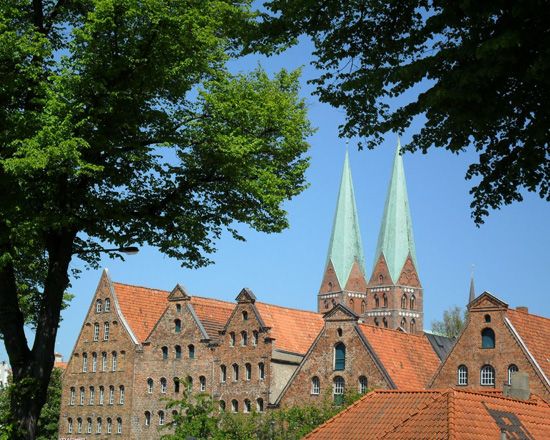
The tour passes Buddenbrook House, connected with the Mann family. This stop adds a literary layer to a route otherwise centered on medieval and early modern trade.
The building helps remind you that Lübeck’s identity did not end when Hanseatic power declined. The old city continued to produce stories, families, businesses, and cultural associations. Linking Buddenbrook House with the medieval core gives you a broader sense of Lübeck across time.
The stop is primarily a passing point on the walking route, not a full literary museum visit. If the Mann family or Buddenbrook House is a main reason for your visit, plan separate time to explore it in greater depth.
Still, it is a smart inclusion. A city is not only its oldest walls and trade records. Lübeck’s later cultural life belongs in the picture too.
The Schiffergesellschaft guild hall
Near the end of the walk, you pass the Schiffergesellschaft guild hall, where sailors associated with the Hanseatic League once stopped. This is one of the route’s most human-scale locations.
The guild hall brings the story down from city governments and merchant networks to the people who worked at sea. Sailors needed places to meet, eat, rest, and maintain professional ties. That makes the Hanseatic League feel less abstract.
You should not expect food or drinks to be included. The tour price covers the professional guide only, and the experience does not include meals, beverages, or transfers. If the guild hall inspires you to stop for a meal, you will need to arrange that separately.
Its position late in the walk is effective. By this stage, you have seen the harbor, the commercial streets, the religious center, and the civic buildings. The guild hall provides a final reminder that all those grand systems depended on working people.
Ending at the Hospital of the Holy Spirit
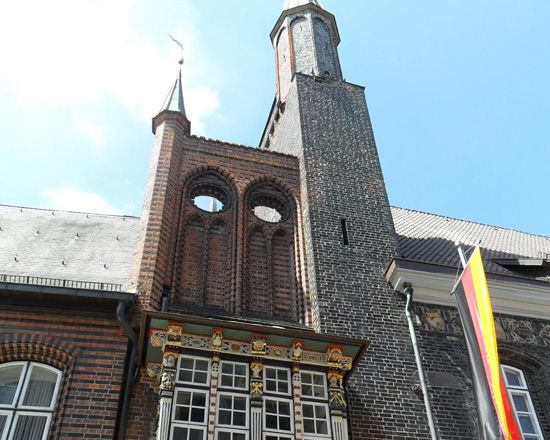
The tour ends at the Hospital of the Holy Spirit, one of Lübeck’s oldest social institutions. This gives the route a welcome final turn toward care and community.
The Hanseatic world was built on trade and profit, but cities also needed institutions that supported people who were poor, sick, elderly, or otherwise in need. The hospital adds that social dimension to the tour.
You may be able to look into one or two romantic backyards here. These small spaces are among the most appealing details of the experience because they are easy to miss on a standard sightseeing route. They also give you a glimpse of Lübeck beyond its famous monuments.
The ending is practical, too. Since the tour finishes in the old town, you can continue exploring on foot. You might return to a church, find a café, visit a museum, or spend more time in the lanes and courtyards that caught your attention.
What the private format is worth at $259
The price is $259 per group of up to six people, not $259 per person. With six participants, that works out to roughly $43 per person for a 90-minute private tour. With three people, it is about $86 per person, and for two people it is about $130 per person.
That makes the group size the key value question. A family, small company group, or circle of friends can get a reasonable per-person rate while keeping the advantages of a private guide. A solo visitor or couple may find the cost harder to justify compared with a shared walking tour.
The private setup has real benefits. You can ask questions without waiting for a large group, request more attention to courtyards or architecture, and set a comfortable pace within the route. One recent booking used the tour to round out a business meeting, which shows how well the format can work for a small professional group.
The limitation is time. Ninety minutes passes quickly when the route includes the Holsten Gate, harbor, old streets, St. Mary’s Church, City Hall, Buddenbrook House, Schiffergesellschaft, and the Hospital of the Holy Spirit. You will get a clear overview, not a slow inspection of every stop.
The guides and the tone of the walk
The available languages are German and English. Recent bookings specifically identify guides named Bernd, Chris, and Karin, although you should not assume that one particular guide will be assigned unless the booking process confirms it.
The guide style appears flexible and lively. Bernd was praised for adapting to requests and fitting a great deal into a short period. Karin was noted for explaining the city clearly and suggesting things to do after the tour. Chris was praised for helping an English-speaking group learn about Lübeck.
That matters because the route contains a lot of material. A flat recital of dates would make the Hanseatic League feel remote. You will get more from the walk if your guide connects each site to the next and responds to your questions.
If you have special interests, say so early. You might ask for more on merchant guilds, architecture, courtyards, the harbor, church design, or Lübeck’s later literary life. The private format gives you a better chance of shaping the emphasis than a large scheduled group would.
Who will enjoy this tour most
I would recommend this walk to you if:
- You are visiting Lübeck for the first time and want a clear orientation.
- You like history best when it is tied to streets and buildings.
- You are traveling with up to six people and can share the fixed group price.
- You want a German or English guide rather than a self-guided route.
- You enjoy old lanes, brick architecture, stepped gables, and courtyards.
- You need a compact introduction before exploring Lübeck on your own.
It may be less suitable if you want extensive interior visits, a food experience, or a full-day historical program. The route moves at a purposeful pace, and the price is less attractive for one or two people.
Wear comfortable shoes, since the experience is entirely on foot. Transfers are not included, and you will need to arrange any food or drinks separately.
You can cancel up to 24 hours before the start for a full refund, and the reserve-now, pay-later option keeps payment flexible while your plans take shape.
Should you book the Lübeck Hanseatic League walking tour?
Book it if you want a private, well-structured introduction to Lübeck and can divide the $259 cost among several people. The route gives you the city’s key Hanseatic themes in a sensible order, from defensive gate to harbor, merchant streets, church, civic center, guild hall, and social institution.
I especially like it for a first morning in Lübeck. You can learn how the old town fits together, ask your guide what deserves a longer visit, and then continue independently after the 90 minutes.
For a couple on a tight budget, compare the group price with other walking options before committing. For a family, small company group, or group of friends, the private format and flexible attention make the price easier to defend.
FAQ
How long does the Lübeck Hanseatic League walking tour last?
The tour lasts 90 minutes.
Where does the tour meet?
Meet your guide at the Holsten Gate.
Where does the tour end?
The tour ends at the Hospital of the Holy Spirit.
Is the tour private?
Yes. It is offered as a private group experience for up to six people.
What languages are available?
The live guide can conduct the tour in German or English.
Are food, drinks, and transfers included?
No. The price includes a professional city guide, but not transfers, food, or drinks.
Can I cancel for a refund?
Yes. You can cancel up to 24 hours in advance for a full refund.
Just added in Lubeck
- Timmendorfer Strand: SEA LIFE Behind the Scenes Tour★ 4.9 · 15 reviews
- Lübeck Day Pass – Day ticket for Lübeck museums★ 4.0 · 15 reviews
- Lübeck zwischen Grusel und Geschichte Truecrime zu Halloween★ 4.9 · 35 reviews
- Lübeck: Old Town Highlights Private Walking Tour★ 4.8 · 8 reviews
- Lübeck: Private Historical and Architectural Walking Tour★ 4.5 · 6 reviews
- Lübeck: Architecture and Local Craft Private Guided Tour★ 4.0 · 6 reviews
- Lübeck: Classic Tour of the Hanseatic City★ 4.8 · 64 reviews
- Lübeck: Express Walk with a Local★ 4.9 · 10 reviews
Historical Tours, compared.
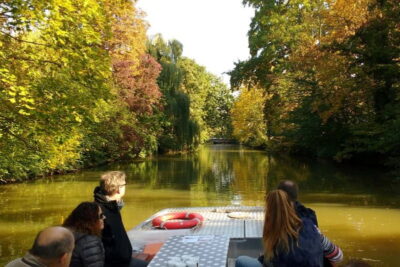
City History Canal Sightseeing Tour on a Motorboat
Read our review →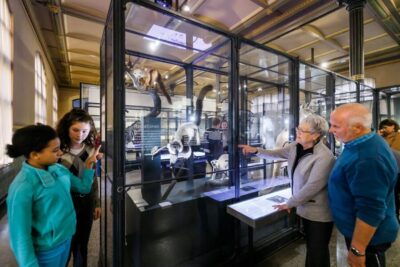
Browse the lists this tour appears in