

Reviewed · FOOD TOURS
Kreuzberg: Culinary Food Tour
Kreuzberg is best understood one bite and one street at a time, and this three-hour tour does just that. I like the mix of five small food stops and sharp local stories, from crowded working-class housing to SO36, GDR escape attempts, and Berlin’s famous traffic-light men. The food has included döner, currywurst, flammkuchen, baklava, vegetarian sushi, and roasted nuts.
I also like that this is a private group option, priced at $589 for up to 10 people, which works out to $58.90 per person when full. The drawback is that drinks cost extra, vegan food is not available, and in unusual cases you may eat standing outside a restaurant.
Key points at a glance
- Five food tastings: Try several small portions instead of giving up the whole afternoon to one meal.
- Kreuzberg’s past and present: Hear about its working-class roots, left-wing politics, demonstrations, nightlife, and changing social mix.
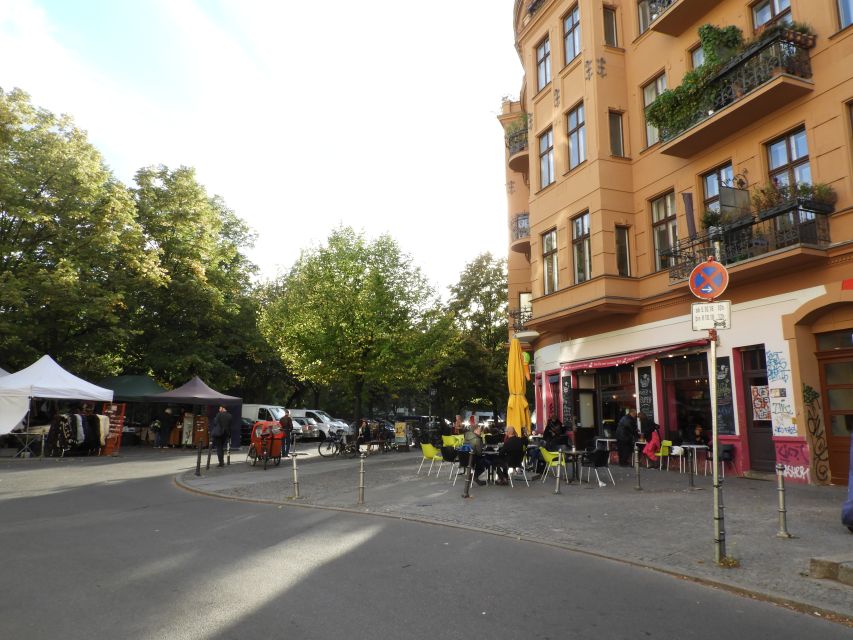
- A walk through SO36: The route reaches Kottbusser Tor, Oranienstraße, Mariannenstraße, Oranienplatz, Dresdener Straße, and Admiralstraße.
- Local and international dishes: Food can range from Berlin staples to intercultural creations and vegetarian options.
- Private group value: The $589 rate makes the most sense for a group of 8 to 10 people.
- English or German guiding: Guides such as Niclas and Nike have led dates of this tour, but the guide is not fixed.
Why Kreuzberg makes a good food tour
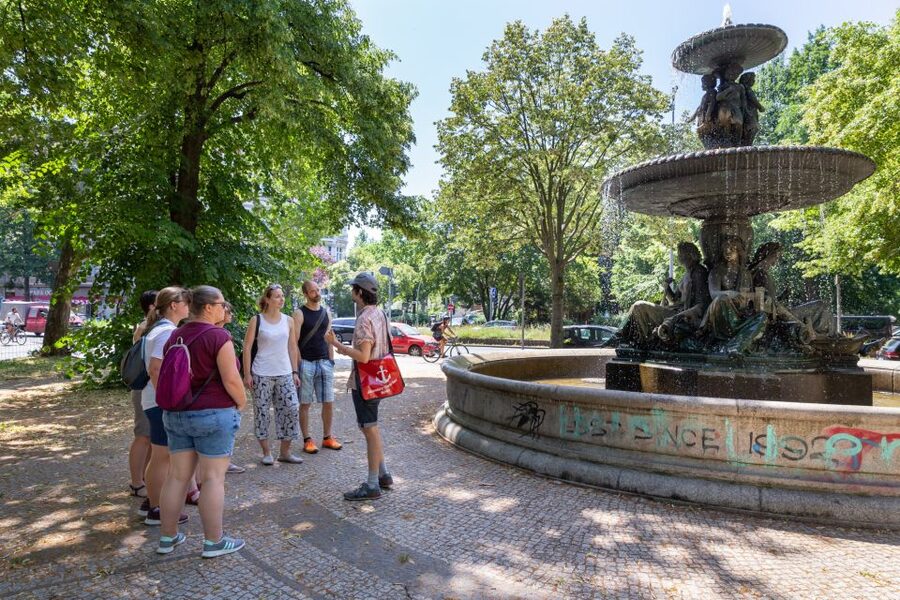
Kreuzberg is not a polished postcard district. Its appeal comes from friction: old working-class streets beside immigrant-run restaurants, political murals beside fashionable businesses, and everyday Berlin life unfolding around major historical events.
The tour begins at Kotti, the familiar nickname for Kottbusser Tor. Depending on the booking option, the meeting point may be listed at FightClub Casino, so check your confirmation carefully before setting out. After a short introduction, the guide gives you the basic shape of the neighborhood and explains how Kreuzberg grew as a working-class district in the mid-19th century.
That background matters. You are not simply being led from snack to snack. The food helps explain the district’s present-day character, while the buildings and streets point to earlier lives. Kreuzberg became home to workers, migrants, political activists, artists, and people living outside conventional social rules. The guide connects those layers without turning the walk into a dry lecture.
I especially like the way the route uses food as a reason to keep moving. A small serving at one restaurant gives you a taste, then the street becomes the next part of the story. You get variety without sitting down for three hours at one table.
More Food Tours in Berlin
- Berlin Center Food Tour with 8+ Authentic Local Tastings
★ 5.0 · 1,227 reviews - Berlin: Mitte Culinary Food Tour
★ 4.5 · 447 reviews - Berlin: 3-Hour Secret Food Tour
★ 4.8 · 269 reviews
Kottbusser Tor and the Neues Kreuzberger Zentrum
The first substantial stop is around the Neues Kreuzberger Zentrum at Kottbusser Tor. You spend about 40 minutes here on a guided walk, photo stop, and food tasting.
This is a useful opening because Kottbusser Tor shows Kreuzberg in its most immediate form. The area brings together heavy traffic, local businesses, housing, and the many cultures that shape the district. Your guide sets up the contrast between Kreuzberg’s older working-class identity and its modern reputation as a place for many backgrounds, opinions, incomes, lifestyles, and sexualities.
The first tasting helps set the tone. Expect one of the selected restaurants rather than a formal meal, and remember that the exact food can vary. The point is to sample the neighborhood as you walk, not to follow a fixed restaurant menu with a long list of courses.
This part can feel busy and urban. If you prefer quiet lanes and grand monuments, Kottbusser Tor may seem rough around the edges. That is also why it works as an introduction. You see the district’s daily life before the tour moves into smaller streets and more focused historical stops.
Oranienstraße and the working-class story

Oranienstraße receives the longest section of the walk, about an hour. It combines sightseeing, stories, walking, and food, making it the tour’s main body.
The guide explains how people once lived in much tighter conditions. One striking detail concerns short mattress rentals, where a person could pay for an eight-hour stay rather than rent a full room or apartment. It is a grim but useful reminder that working-class housing was not simply small. For some people, even a full night’s private space was out of reach.
Oranienstraße also opens the door to Kreuzberg’s left-wing political past. You hear about demonstrations and the role of the district in protest culture. The stories help explain why Kreuzberg is still linked with alternative politics, street action, and a refusal to fit neatly into Berlin’s official image.
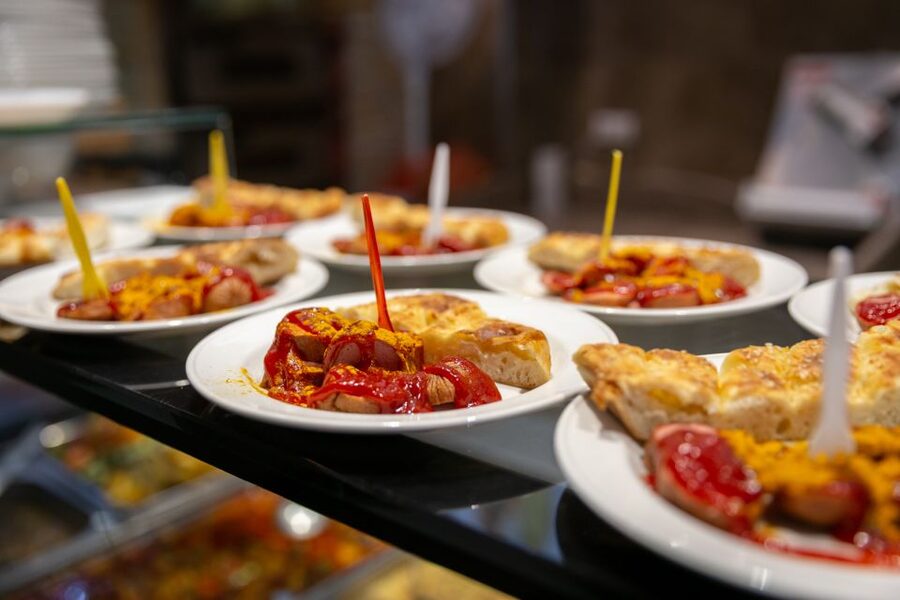
This is also likely to be one of the strongest food sections. Past tastings have included Berlin staples such as currywurst, along with döner or dürüm, flammkuchen, baklava, and other international dishes. Do not assume every item appears on every date, but the selection is designed to move between local recipes, international specialties, and crossover cooking.
The five tastings are portions, not a single large lunch. That is a strength if you like trying several foods. You can compare styles and ingredients while learning how migration and new ideas have shaped Berlin’s eating habits. If you arrive hungry, however, keep your expectations in check. This is a progressive tasting walk, not an all-you-can-eat outing.
Rio-Reiser-Platz and Kreuzberg’s creative side
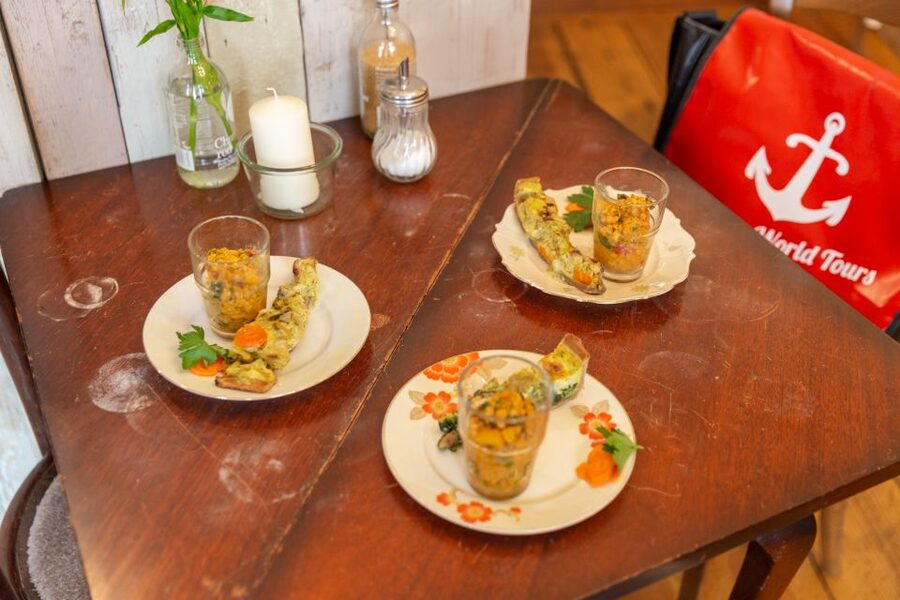
The walk continues to Rio-Reiser-Platz for about 15 minutes, including another tasting and a photo stop. The stop is brief, but it adds a cultural note to the route.
The place is associated with Rio Reiser, a major figure in German music and protest culture. Here the guide helps link Kreuzberg’s political identity with its creative life. The district’s story is not only about housing and demonstrations. Music, performance, nightlife, and independent culture are part of the same picture.
A short stop like this works well in a three-hour tour because it keeps the pace moving. You get a name, a place, and a story without spending too long in one location. The trade-off is that you should not expect a full biography or a long visit devoted to the square.
Other eating walks in Berlin:
- Hamburg: Schanzenviertel Culinary Tour
★ 4.6 · 2,051 reviews - Hamburg: Elbphilharmonie Plaza and HafenCity Food Tour
★ 4.7 · 1,711 reviews - Munich: Viktualienmarkt Food Tour
★ 4.5 · 1,127 reviews - Munich: Beer and Food Tour with Dinner & Oktoberfest Museum
★ 4.7 · 1,086 reviews
Mariannenstraße and SO36
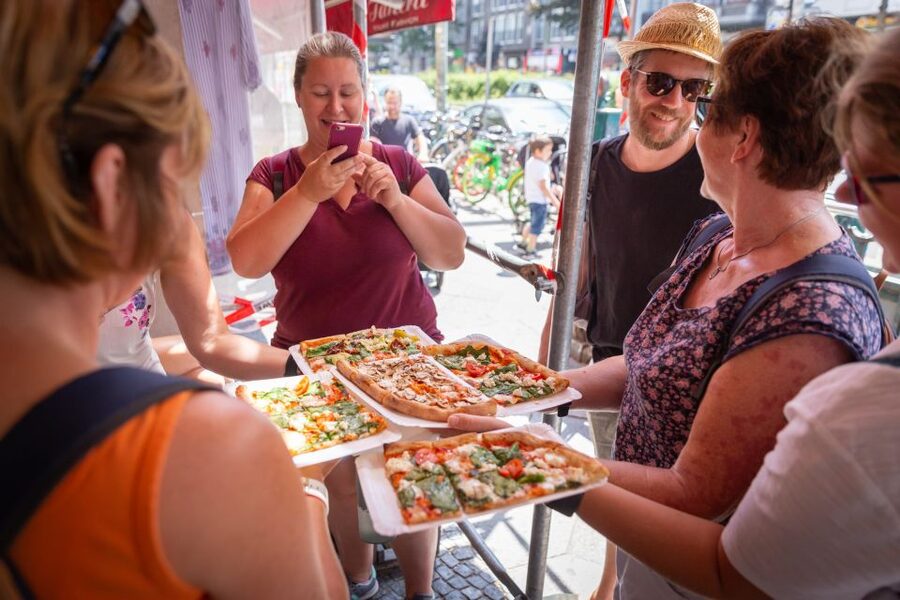
Mariannenstraße brings another photo stop, short walk, food tasting, and guided explanation. The listed timing is about 20 minutes.
This section connects with SO36, one of Kreuzberg’s best-known cultural references. The name points to the old postal district and is strongly tied to the neighborhood’s alternative music and nightlife scene. It is also linked with May Day demonstrations, which remain part of Kreuzberg’s public identity.
Your guide may also bring up Berlin’s more dramatic stories here, including attempts to escape East Germany. These accounts place Kreuzberg close to the old Berlin Wall divide and show how the neighborhood was shaped by its position in a divided city.
The tour also includes stories about Martin Luther King’s visit to Berlin in 1964 and Berlin’s version of Jack the Ripper. These details add color, though the quality of the storytelling depends on the individual guide. On one date, the explanation was considered less consistent even though the guide worked hard to entertain the group. That is a fair warning: the food stops are a more dependable part of the experience than the exact style of historical narration.
Oranienplatz and Dresdener Straße
Oranienplatz receives a quick five-minute stop, followed by about 10 minutes around Dresdener Straße. These are short sections, used mainly to connect the larger themes.
Oranienplatz helps you see how Kreuzberg’s streets function as public spaces as well as transport routes and commercial areas. Dresdener Straße continues the historical walk and keeps the focus on the quarter’s older streets and changing daily life.
Do not expect a major monument at every point. This tour is about linking ordinary streets to stories. The reward comes from knowing what happened in places you might otherwise pass without a second thought.
The guide may also point out the former East German traffic-light men, known as Ampelmännchen. They are a small but memorable reminder of Berlin’s divided past, now turned into a familiar city symbol.
Admiralstraße and the final food stop
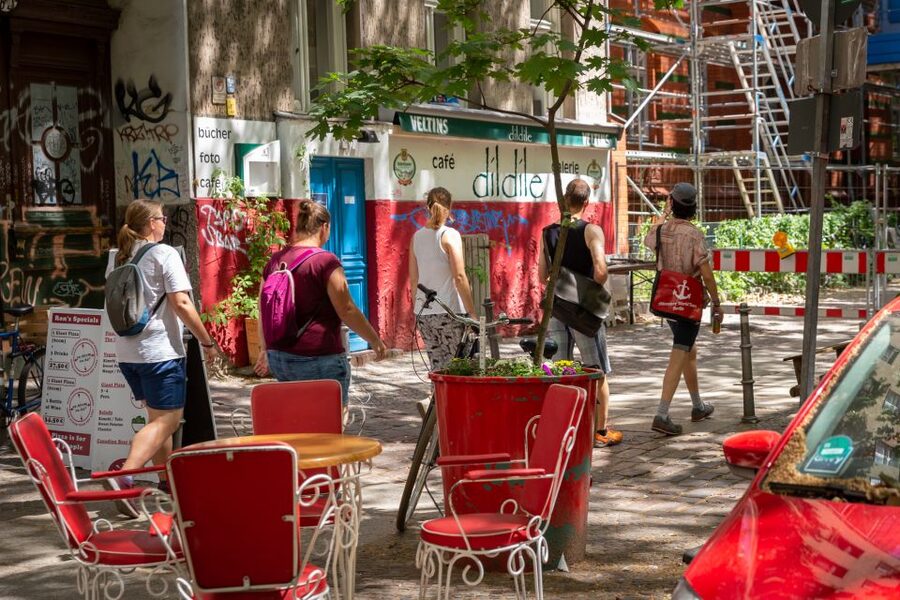
Admiralstraße takes about 40 minutes and includes the final photo stop, guided walk, sightseeing, and tasting. By this stage, the food has given you a good sense of the tour’s range.
A vegetarian option is available, and one past selection included excellent vegetarian sushi. Other reported tasting choices included roasted nuts in sweet and savory forms. These examples show the broad approach: Berlin classics sit beside international delicatessen and dishes shaped by several food traditions.
The route ends at Grimmstraße 23, in the 10967 Berlin area. That finish is not at the starting point, so you should plan your next move from there rather than assume you will return to Kottbusser Tor.
The guide frames the end of the walk as a lead-in to Kreuzberg nightlife. That makes sense geographically and culturally. You finish in a district known for evening activity, restaurants, bars, and clubs, although the tour itself does not include a nightlife visit.
How good is the food?
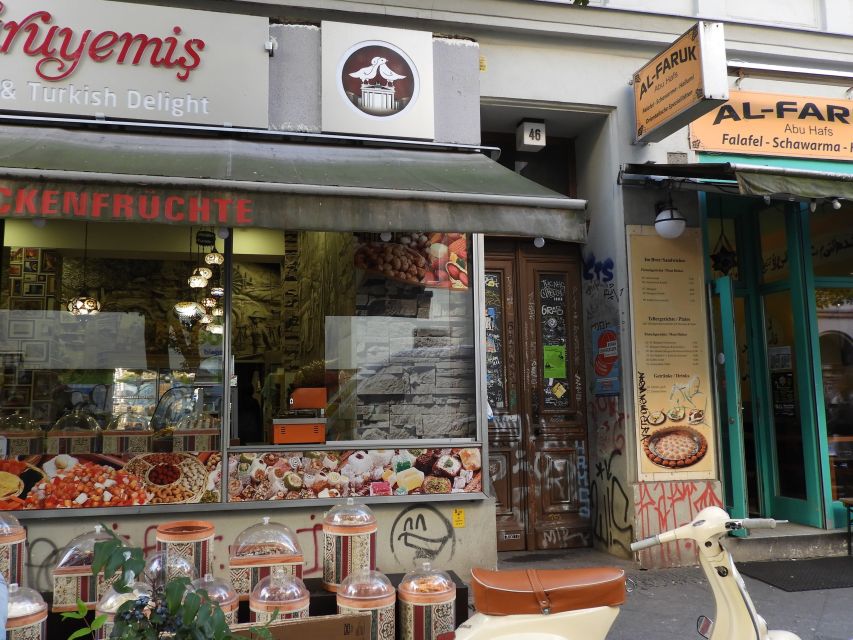
The food is one of the strongest reasons to book this experience. You receive five tastings in five different restaurants, which gives you a much wider sample than a standard restaurant meal.
The selection aims to show three sides of Kreuzberg:
- Berlin standards such as currywurst
- Familiar immigrant-influenced foods such as döner, dürüm, and baklava
- Modern or crossover choices such as vegetarian sushi and varied roasted nuts
That range suits curious eaters who want context with their meal. You learn not only what to taste, but why a neighborhood shaped by migration and political change has such a mixed food culture.
There are two limits. Drinks are not included, so budget for them separately. Vegan food is unavailable, which makes this a poor choice for strict vegans. Vegetarian participants can be accommodated, but you should state that need when booking.
Food may occasionally be served outside the restaurant and eaten standing up. That is not a problem for a casual street-food sampler, but it matters if you expect a seated tasting in every location. Wear comfortable shoes and dress for the weather.
Price, group size, and overall value
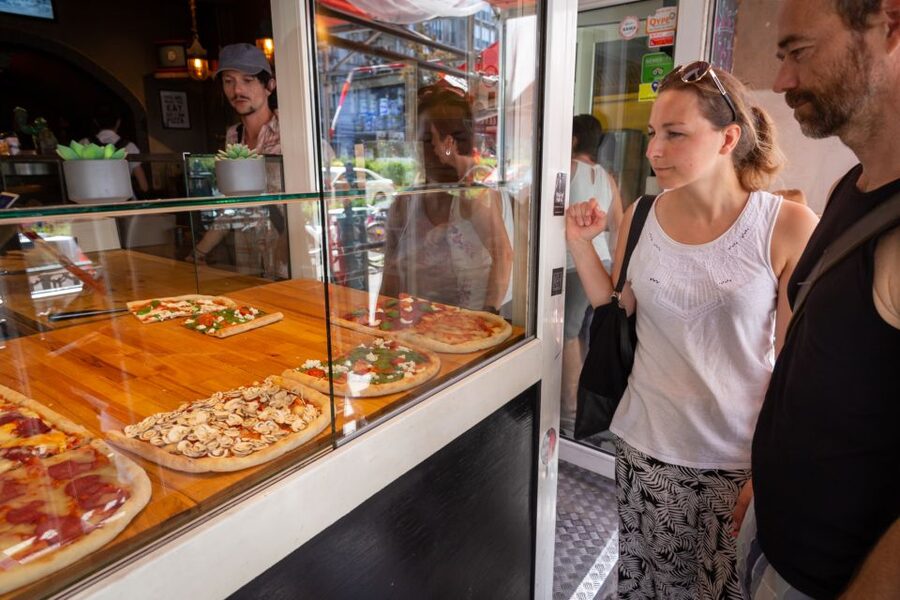
The total price is $589 for a private group of up to 10 people. At the maximum group size, that is $58.90 per person before drinks. For a private three-hour walk with a professional guide and five tastings, that is a reasonable group price.
For two people, however, the same total becomes expensive. The value improves sharply as more friends or family members join. A group of six pays about $98.17 each, while a full group of 10 pays $58.90 each.
The private format gives you a more personal experience than a large public walk. You can ask questions and keep the pace tied to your group. The guide is available in English or German, and names such as Niclas and Nike have led particular tours. Your guide will depend on the date.
The tour has a 4.5 rating from 770 reviews, and the most praised points are clear: guides who provide many historical anecdotes, strong food selections, and a good introduction to Kreuzberg. The main caution is that the historical explanations may feel uneven with some guides. If you care most about food and a broad neighborhood overview, that should not be a major issue. If you want a tightly researched academic history walk, set your expectations lower.
Who should book this Kreuzberg walk?
I would recommend it to you if you want to combine eating with urban history and prefer small samples over one long restaurant stop. It suits first-time Berlin visitors who want a quick understanding of Kreuzberg, as well as repeat visitors who normally see only the nightlife.
It is also a good fit for groups. The private price makes more sense when divided among eight to 10 people, and the mix of food preferences can work well for a group with vegetarian diners.
You may want to skip it if you need vegan food, dislike eating outdoors, or want a relaxed seated lunch. You should also choose another tour if you are looking for a monument-heavy route. Much of the value here comes from ordinary streets, social history, and the guide’s ability to connect small details to larger events.
Free cancellation is available up to 24 hours before the start, and you can reserve now and pay later. Those policies make it easier to fit the walk into a changing Berlin schedule.
Should you book it?
Book this tour if you want Kreuzberg explained through both its food and its people. The strongest parts are the five varied tastings, the route through SO36 and Oranienstraße, and the stories about housing, protest, division, and modern Berlin life.
For the best value, bring a group and arrive ready to walk and snack rather than sit down to a full meal. Check the meeting point, ask for the vegetarian option if needed, and budget extra for drinks. If that sounds like your kind of afternoon, this is a practical and flavorful way to get your bearings in Kreuzberg before exploring its nightlife on your own.
FAQ
How long is the Kreuzberg culinary tour?
The tour lasts three hours and is conducted as a walking tour through Kreuzberg.
How many food tastings are included?
Five food tastings are included, served at five different restaurants in the neighborhood.
Is a vegetarian option available?
Yes, a vegetarian option is available. Vegan food is not available.
Are drinks included in the price?
No. Drinks are not included.
What languages are offered?
The live tour guide speaks English or German.
Where does the tour start and finish?
The meeting point can vary by booking option, with FightClub Casino listed as a starting location and Kotti described as the central meeting area. The tour finishes at Grimmstraße 23, 10967 Berlin, Germany.
More eating and drinking in Berlin
- Berlin City Bike Tour with Beer Garden Stop
★ 5.0 · 917 reviews - Berlin: BRLO BRWHOUSE Tour and Craft Beer Tasting
★ 4.4 · 654 reviews - Berlin Craft Beer & Cultural Tour With Snack
★ 5.0 · 343 reviews - Berlin City Bike Tour with Beer Garden Stop
★ 4.9 · 308 reviews
Just added in Berlin
- Berlin: Energizing 2-Hour Morning Segway Tour★ 4.7 · 35 reviews
- Berlin: Thrilling E-Scooter Adventure Tour★ 4.4 · 66 reviews
- Beer Bike & Party Bike: Unforgettable Berlin City Tour incl. pickup★ 5.0 · 5 reviews
- Beelitz-Heilstätten: Baum&Zeit Tree Top Walk Entry Ticket★ 4.9 · 7 reviews
- AXE THROWING EXPERIENCE IN BERLIN★ 4.7 · 24 reviews
- Alternative Berlin / Street art tour – Private group★ 5.0 · 6 reviews
- Berlin: Alternative & Street Art Tour★ 4.5 · 6 reviews
- Berlin: 2.5-Hour Beer & Sunset Sightseeing Boat Cruise★ 4.6 · 61 reviews
Food Tours, compared.
Elbphilharmonie Plaza and HafenCity Food Tour
Read our review →
Berlin Center Food Tour with 8+ Authentic Local Tastings
Read our review →
Beer and Food Tour with Dinner & Oktoberfest Museum
Read our review →
Lunch Like a Local: Munich’s ORIGINAL Viktualienmarkt Food Tour
Read our review →Browse the lists this tour appears in