
Reviewed · MUSEUMS
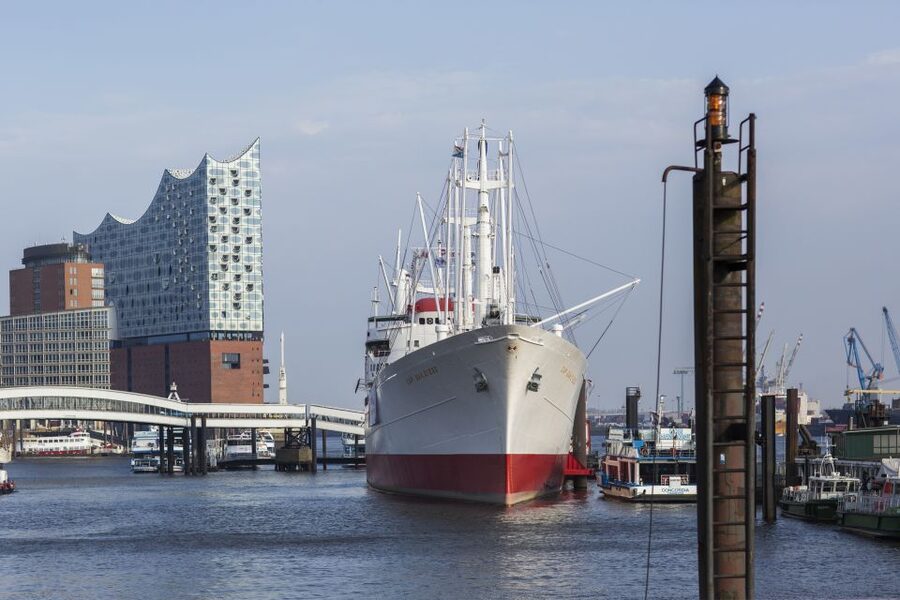
Hamburg: Entrance to the Museum Ship Cap San Diego
Cap San Diego is not a replica or a static waterfront display. It is a working-size 1961 cargo ship that lets you wander from the bridge down into the engine room, then picture a long Atlantic run to Rio de Janeiro and Buenos Aires. The ship’s preserved spaces make maritime history feel close, noisy, and practical.
I like two things especially: you can explore at your own pace, and the ship covers more than one story. You get the romance of a South American cargo route, but also the harder story of emigrants leaving Europe and the shift from general cargo to containers. The friendly onboard staff add useful information when you need a little help finding your way.
The trade-off is clear: this is a self-guided visit, not a live tour with a guide leading you from room to room. Stairs, narrow passages, and a maze-like layout make it a poor choice for wheelchair users, people with limited mobility, or anyone uncomfortable in confined spaces.
Key things to know before boarding
- A genuine 1961 cargo ship: Cap San Diego is the last surviving vessel in a series of six fast general cargo ships built for Hamburg South.
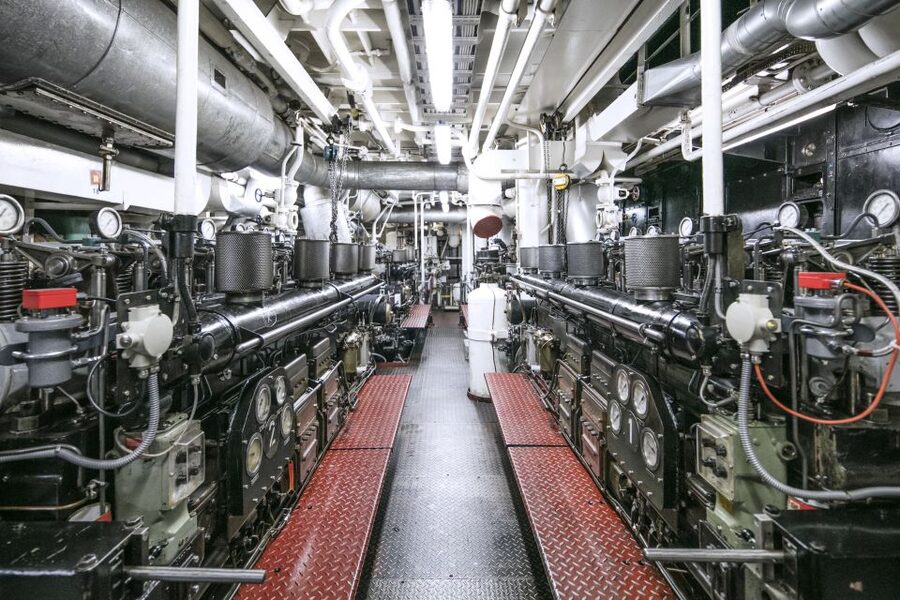
- A ship you can explore almost from top to bottom: Visit the bridge, passenger areas, hatches, and machine room on a self-guided route.
- South America is the imagined destination: The ship once sailed between Hamburg, Rio de Janeiro, and Buenos Aires until the end of 1981.
- Two strong historical displays: Watch A Suitcase Full of Hope about Hamburg emigration, then visit the freight-handling exhibition in hatch 2.
- Good value at $14: The ticket is valid for one day, giving you time to explore without rushing through the ship.
- Plan for stairs: The ship is not wheelchair accessible and is not recommended for people with mobility impairments or claustrophobia.
A cargo ship with a real working life
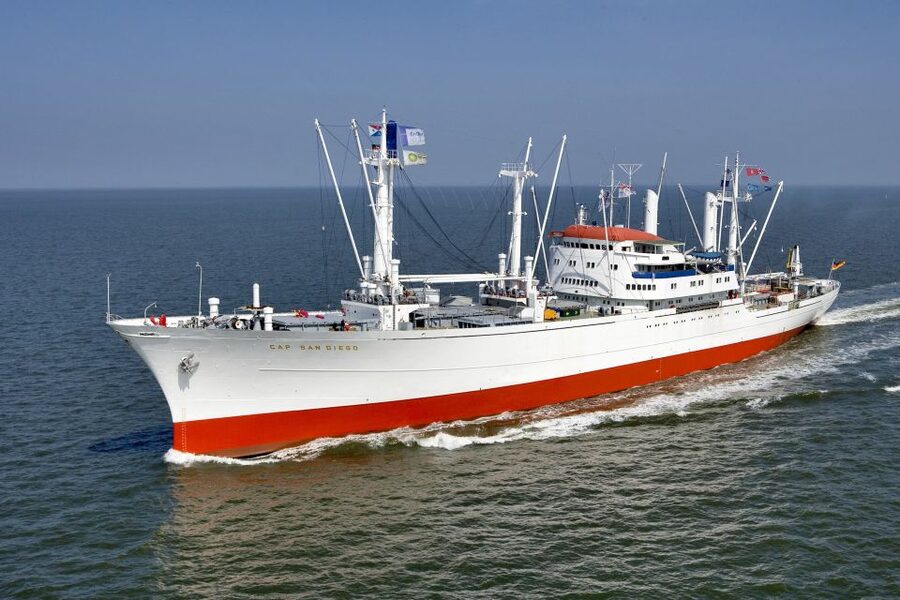
Cap San Diego was built in 1961 as one of six fast general cargo ships for the Hamburg South shipping company. These vessels carried goods between Hamburg and South America, a route that linked northern Europe with ports such as Rio de Janeiro and Buenos Aires.
That detail matters because the ship does not feel like a purpose-built museum. Its size, layout, and machinery were designed for work. You are not simply looking at a model of a freighter. You are walking through the kind of ship that carried cargo, crew, and a small number of passengers across the Atlantic.
The ship sailed to South America until the end of 1981. Since 1988, it has served as a museum ship in Hamburg. The vessel is also described as the largest civil museum ship in the world, an impressive claim that makes more sense once you begin moving through its many levels.
At the end of Überseebrücke, go directly to the ship entrance. The museum is open daily from 10 AM to 6 PM, and your ticket is valid for one day. That gives you useful freedom: you can visit slowly, pause in the passenger areas, and return to a section if you missed something the first time.
Other museums and galleries in Hamburg:
- Hamburg: International Maritime Museum Entrance Ticket
★ 4.7 · 547 reviews - Berlin: Jewish Museum Berlin Entrance Ticket
★ 4.5 · 8,393 reviews - Berlin: DDR Museum Tickets
★ 4.3 · 3,443 reviews
Start on the bridge and picture the Atlantic
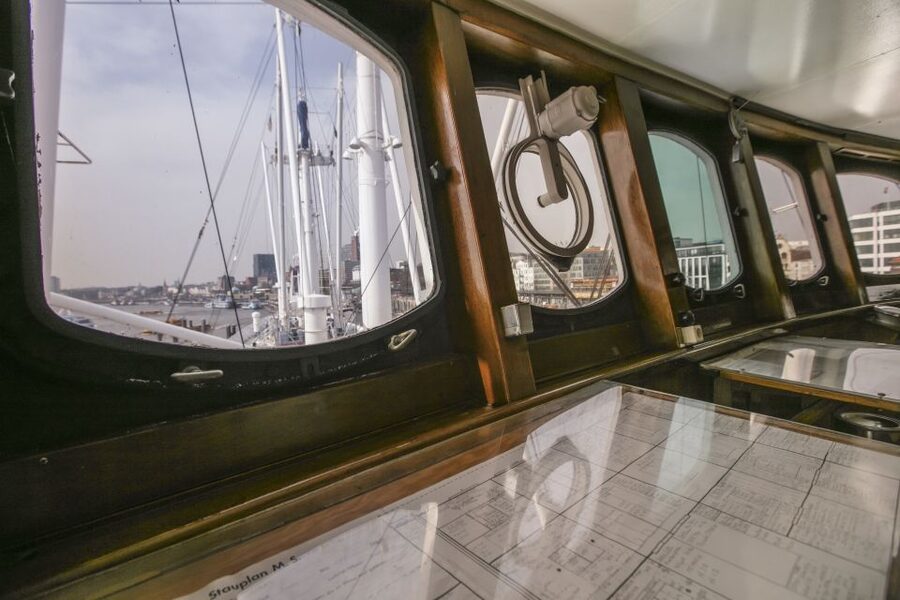
The bridge is a natural place to begin. Here, you can imagine taking a lookout’s position during a long crossing. The experience is less about a scripted performance and more about using the ship’s spaces to build the story yourself.
From the bridge, the route takes you through the ship’s working areas and passenger spaces. The contrast is part of the appeal. One moment you are thinking about navigation and open ocean. The next, you are standing among machinery or examining how freight was handled below deck.
I like this kind of museum because it gives you room to set your own pace. If you enjoy ships, you can spend longer with the controls and working areas. If you are more interested in social history, you can move toward the film and exhibitions without being held to a fixed group schedule.
The route is not perfectly obvious at first. You may need a few minutes to get your bearings fast, especially because a large ship naturally has corridors, staircases, and several possible directions. The onboard staff can help, and once you understand the flow, the layout becomes easier to follow.
Feel the pulse of the machine room
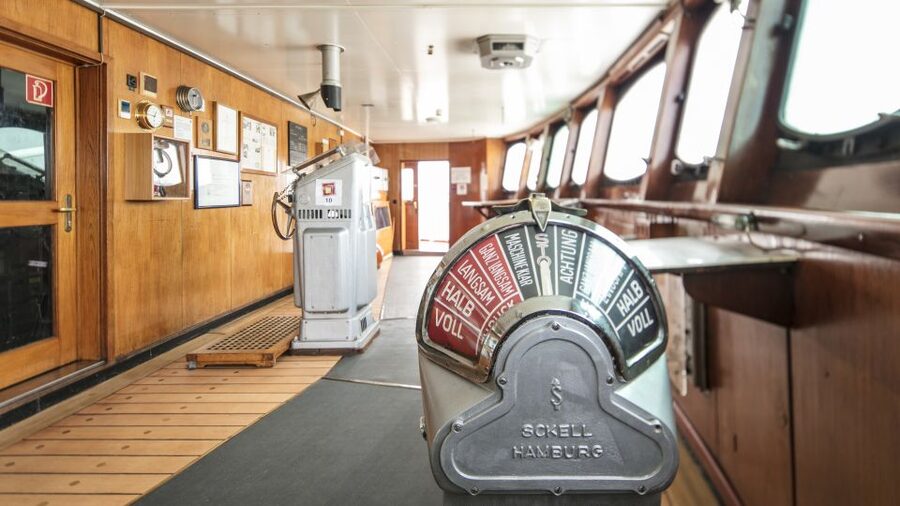
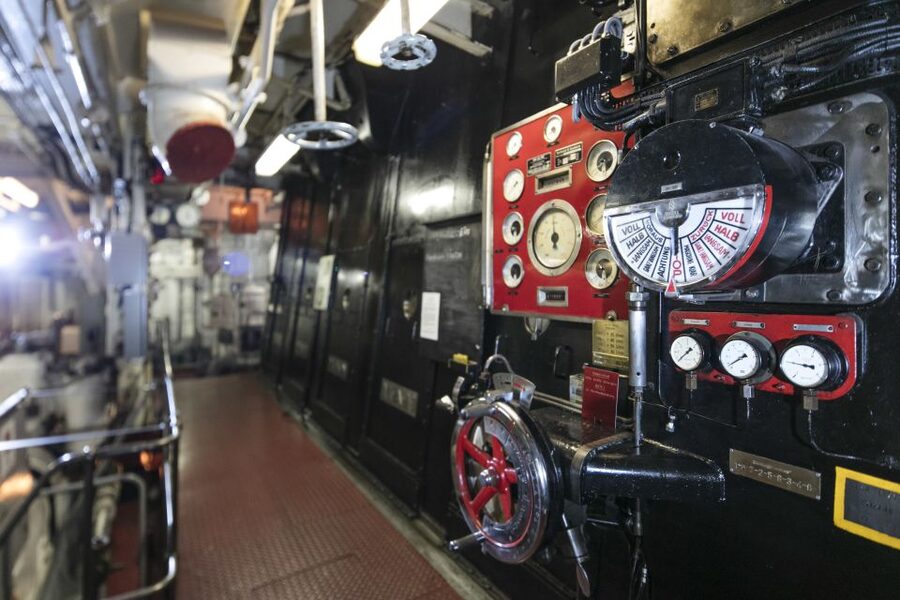
The engine room is one of the strongest parts of the visit. The description of the experience invites you to stand deep within the machine room and feel the steady pulse of the engines. Even without a live demonstration, the space explains what made a long cargo voyage possible.
This is where the ship stops feeling like a polished object and starts feeling like a machine. The engine room places the scale of ocean travel in front of you. A voyage from Hamburg to South America was not powered by a simple motor hidden behind a panel. It depended on a large, complex mechanical heart that needed constant care.
You do not need to be an engineering enthusiast to appreciate this area. The engine room helps answer basic questions that a photograph cannot: How much space did the machinery require? How did the crew work around it? How could a ship this large keep moving for days across the Atlantic?
It can also be one of the less comfortable areas for visitors who dislike enclosed spaces. The ship is not recommended for people with claustrophobia or mazeophobia, and the engine-room visit is one reason for that warning. If tight corridors make you uneasy, you may prefer to spend more time in the larger passenger spaces and open areas.
Visit the saloon and imagine a South American voyage
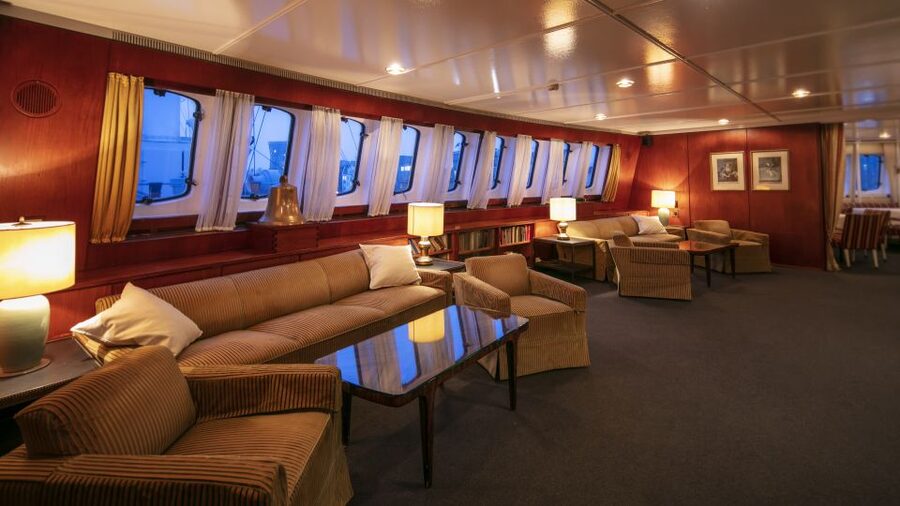
The saloon offers a different mood. Here, you can picture passengers relaxing to light music during a crossing. The setting helps you imagine the social side of a voyage, when the ocean trip itself was part of the experience rather than a short interval between airports.
The ship’s story reaches back to the 1960s and 70s, and the imagined journey runs across the Atlantic to Rio de Janeiro and Buenos Aires and then back to Hamburg. That framing gives the visit a clear sense of place. You are not wandering through an unnamed old vessel. You are following a route tied to Hamburg’s commercial and maritime life.
The saloon is also a useful pause between the more technical areas. You can take a break from stairs and machinery, then return to the rest of the ship when you are ready. Because the visit is self-guided, you do not have to keep up with a group or follow a fixed timetable.
Do not expect a full live interpretation of daily life onboard. There is no live guide, and the ticket itself includes entrance rather than a guided tour. If you want additional explanation, choose the audio guide option when booking.
Same base, a different kind of day out:
- Hamburg: Sex and Crime in St. Pauli Tour for Ages 18+
★ 4.7 · 15,447 reviews - Hamburg: 1.5-Hour Harbor and Speicherstadt Day Cruise
★ 4.6 · 14,200 reviews - Hamburg: 90-Minute Evening Lights Harbor Cruise
★ 4.5 · 7,728 reviews - Hamburg: 2-Hour XXL Port of Hamburg Cruise Tour
★ 4.7 · 6,979 reviews
The emigrant story in A Suitcase Full of Hope
One of the most important parts of the visit is the documentary A Suitcase Full of Hope: Emigration Port of Hamburg. It examines the fate of emigrants between 1850 and 1930.
This subject adds needed weight to the ship visit. It is easy to focus on engines, cargo, and the romance of an Atlantic crossing. The film shifts attention to people who left Europe under very different conditions, carrying their hopes and belongings through Hamburg before setting out for another life.
The documentary also connects the ship to the wider role of Hamburg as a port. Cap San Diego served a later period, mainly the 1960s and 70s, but the emigration story reaches back to the nineteenth century. Together, the two parts show that Hamburg’s port was not only a place where goods moved. It was also a departure point for people facing major changes in their lives.
Set aside time for this film rather than treating it as a quick extra. It gives the rest of the ship more human meaning. Afterward, the passenger spaces and Atlantic route may feel less like a period fantasy and more like part of a much longer story about movement, work, and departure.
Hatch 2 explains the container revolution
In hatch 2, the permanent exhibition General Cargo and Container Handling explains how sea freight changed from 1960 to the present. Historical images and explanatory texts show the move from older general cargo methods toward container transport.
This is a valuable stop because Cap San Diego belongs to the transition period. It was built as a fast general cargo ship, while the shipping industry was moving toward containerization. The exhibition lets you see why that change mattered.
General cargo required goods to be loaded and handled as separate pieces or batches. Container transport created a more standardized system. You can use the exhibition to place the ship in that industrial timeline: it represents a type of vessel that was still important in the early 1960s but would soon face major changes in how cargo was moved around the world.
The display is especially useful if you are interested in ports, trade, or industrial design but do not know much about shipping. You do not need specialist knowledge to follow the basic story. The images and explanatory texts provide enough structure to understand why cargo handling shaped ship design and port operations.
How much time should you allow?
The ticket is valid for one day, not just a narrow entry slot. That is helpful because the ship has several distinct sections and the route includes stairs. You can move at a comfortable pace instead of trying to race from the bridge to the engine room.
The exact visit length is not fixed. Your time will depend on how much attention you give to the documentary, hatch 2, the machinery, and the passenger areas. Someone making a quick circuit will have a different experience from someone who reads the exhibition texts and studies the ship’s working spaces.
I would plan this as a substantial Hamburg stop rather than a quick photo opportunity. The $14 price is reasonable because it gives you access to a large museum ship, several levels, historical displays, and a full day of validity. The value is strongest if you enjoy exploring independently and are willing to read and look closely.
The ticket is less useful for someone who wants a short, guided overview. There is no live guide, and the scale of the ship means you must manage your own route. An audio guide is available if you select that option, which can add structure to the visit.
Accessibility and comfort matter here
This is not a good choice for wheelchair users. The museum ship is not wheelchair accessible, and the multiple flights of stairs make it unsuitable for people with limited mobility.
You should also think honestly about confined spaces before booking. Corridors, stairways, and machinery areas are part of what makes the ship interesting, but they can feel tight. The experience is specifically not recommended for people with claustrophobia or mazeophobia.
Wear comfortable shoes and expect to use stairs throughout the visit. That advice follows directly from the ship’s layout, not from a need to cover a large outdoor site. You are moving through a working vessel, where vertical access is part of the design.
If you prefer a calm, open museum with wide galleries and an obvious route, this may feel demanding. If you enjoy finding your way through an authentic ship, the same layout becomes part of the fun. The choice depends on how comfortable you are with self-directed exploration.
What makes the experience memorable
The best feature is the combination of scale and access. You can see the ship from the bridge down to the hatch areas and engine room, rather than viewing only a few preserved cabins behind glass.
I also like the balance between imagination and documentation. The Rio and Buenos Aires route gives the visit a strong sense of adventure, while the emigrant film and freight exhibition keep it grounded in real social and industrial change.
The onboard staff are another practical plus. They are notably friendly and ready to give useful information, which matters when the route is not perfectly marked. You may need a little help at the start, but the ship becomes easier to navigate once you understand the layout.
The main weakness is the same feature that gives Cap San Diego its character: it is a real ship-shaped museum. The route can feel less clear than a standard gallery, and there is no guide making every stop easy to understand. Bring curiosity, allow time, and use the audio guide if you want more direction.
Should you book Cap San Diego?
Book it if you like maritime history, machinery, port cities, or hands-on museums. It is especially good for visitors who want to move at their own pace and who enjoy connecting a physical place with larger stories about emigration, freight, and Atlantic trade.
The $14 admission offers solid value, particularly because the ticket is valid for one day. You can take your time with the bridge, saloon, machine room, documentary, and hatch 2 exhibition instead of squeezing everything into a short guided circuit.
Skip it if you need step-free access, dislike narrow passages, or want a live guide to lead you through each section. For everyone else, Cap San Diego offers a rare chance to explore an intact civil cargo ship and picture the working life behind Hamburg’s connection with South America.
FAQ
Where is the entrance to Cap San Diego?
Go directly to the ship entrance at the end of Überseebrücke in Hamburg.
How much does admission cost?
The listed price is $14 per person.
How long is the ticket valid?
The entrance ticket is valid for one day.
What are the museum’s opening hours?
The museum is open daily from 10 AM to 6 PM.
Is this a guided tour?
No. The visit is self-guided, and there is no live guide. An audio guide is available if you select that option.
Is the ship wheelchair accessible?
No. The museum ship is not wheelchair accessible and is not recommended for people with mobility impairments.
What can I see inside the ship?
You can visit the bridge, passenger saloon, machine room, and hatch areas. Hatch 2 contains the permanent General Cargo and Container Handling exhibition, and you can watch A Suitcase Full of Hope: Emigration Port of Hamburg about emigration from 1850 to 1930.
Just added in Hamburg
- Alternative Hamburg / Street Art Private Tour★ 4.7 · 8 reviews
- 3 Hours Hamburg E-Scooter Tour★ 4.3 · 9 reviews
- 3 Hours Hamburg Segway Tour★ 4.1 · 68 reviews
- 2 Hours Hamburg E-scooter Tour★ 4.2 · 103 reviews
- 2 Hours Hamburg Segway Tour★ 4.5 · 164 reviews
- Hamburg: Private – Town Hall, Speicherstadt, Elbphilharmonie★ 4.8 · 27 reviews
- 1-Day Hop-on/Hop-off Bus Tour of Hamburg Line D★ 4.0 · 256 reviews
- “After Work” – Sailing-Yacht Cruising Event, Hamburg/Elbe★ 5.0 · 5 reviews
Museums, compared.


Skip-the-Line: Berlin Wall Museum at Checkpoint Charlie
Read our review →
Browse the lists this tour appears in