

Reviewed · HISTORICAL TOURS
Hamburg: Historical Tour of the St. Pauli Sex Work District
St. Pauli’s sex work district is not just a row of neon signs and late-night clubs. This two-hour walking tour uses the Reeperbahn and the streets around the Davidwache to explain how sex work shaped Hamburg’s public life, laws, clothing, and popular stories. I like the wide historical sweep, from ancient Babylon and the Church’s official position to the working lives of former sex workers in modern St. Pauli. I also like that the guide leaves room for questions, something Jenny did especially well.
The main drawback is clear: the tour is German only. You also need to be at least 18, and the $39 price is non-refundable. If you understand German and want context rather than a quick look at nightlife, this is a focused way to read the district with sharper eyes.
Key points about the St. Pauli tour
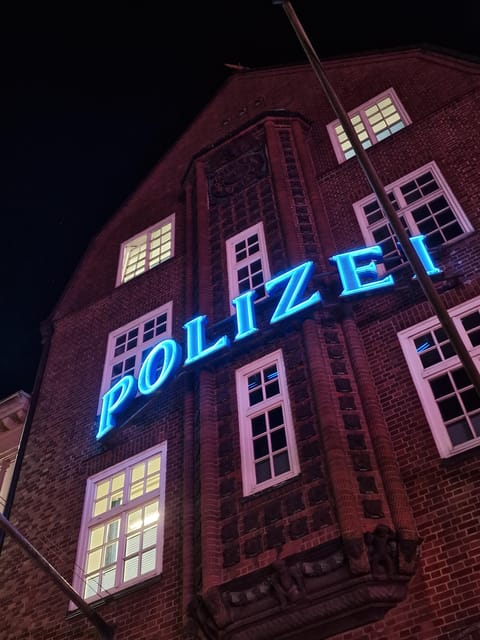
- Start at the Davidwache: Meet in front of Hamburg’s well-known Police Station 15, a useful and easy-to-find point in St. Pauli.
- Follow the Reeperbahn’s adult history: The route passes through the heart of Hamburg’s red light district.
- Travel from Babylon to modern Hamburg: The talk connects ancient temple practices, Church policy, sexual taboos, and contemporary sex work.
- Hear distinctive local details: Learn why a red-and-yellow winged hat was once required clothing for sex workers in Hamburg.
- Expect a lively, question-friendly guide: Jenny is one named guide praised for making the subject interesting and answering questions fully.
- Plan for adults only: The tour is German-language, wheelchair accessible, and limited to people 18 and older.
Starting at the Davidwache in St. Pauli
Your meeting point is in front of the Davidwache, officially Polizeirevier 15. From there, the guide sets the scene for St. Pauli and explains why this part of Hamburg became linked so strongly with sex work.
Starting at a police station is fitting. It places the subject in a real civic setting, not just a nightlife one. Sex work has always been shaped by policing, rules, public tolerance, and attempts at control. You get that framework at the beginning rather than treating the district as a collection of colorful anecdotes.
The meeting point also keeps the tour grounded in the neighborhood itself. You are not sitting in a museum hearing about a vanished past. You are walking through the streets where the district’s reputation was made and where its adult entertainment scene still forms part of St. Pauli’s identity.
You should arrive ready to walk for two hours. The activity ends back at the same meeting point, so you do not need to plan a separate pickup or work out where the tour finishes.
Other history to see in Hamburg:
- The Local Tour of Hamburg Historic Centre
★ 5.0 · 1,058 reviews - Hamburg: UNESCO-World Heritage Sites Tour
★ 4.7 · 137 reviews - German Hamburg Historic City Center Pay-What-You-Want Tour
★ 4.8 · 80 reviews
Walking through the Reeperbahn’s red light district
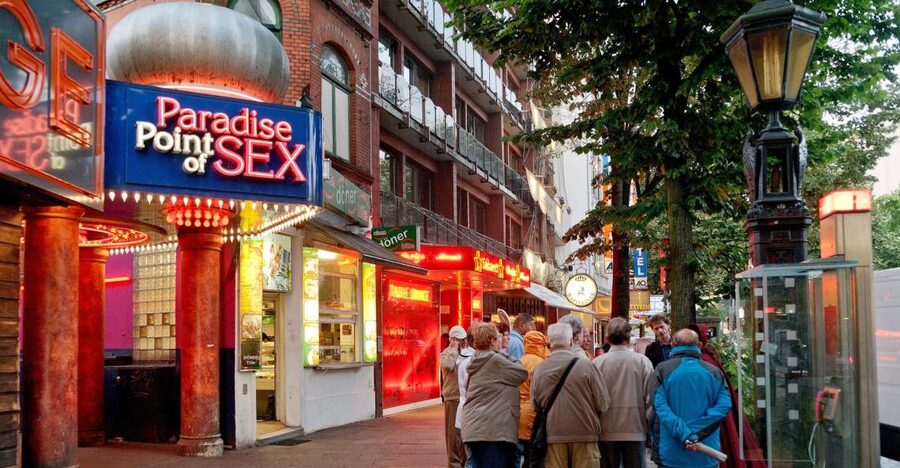
The Reeperbahn is the center of this experience. The guide leads you through the heart of St. Pauli’s red light district while explaining how sex work developed in Hamburg and how the area’s public image changed over time.
This is not presented as a simple parade of famous nightlife spots. The useful part is the link between place and story. As you pass through the district, the guide can explain why certain streets, rules, clothes, and habits mattered. The result is less about looking at a notorious area from the outside and more about understanding the forces that shaped it.
You will hear stories about beautiful women, famous figures, and the working lives connected with St. Pauli. The tone is lively, but the subject is broader than entertainment. Sex work touches questions of privacy, public morality, law, religion, and money. A good guide helps you see those connections without turning the walk into a lecture.
This is also where the tour’s adult focus matters. The subject includes sexual practices, clothing, and articles that have been treated as taboo. It is not a suitable activity for children, and the minimum age is 18.
The red-and-yellow winged hat story
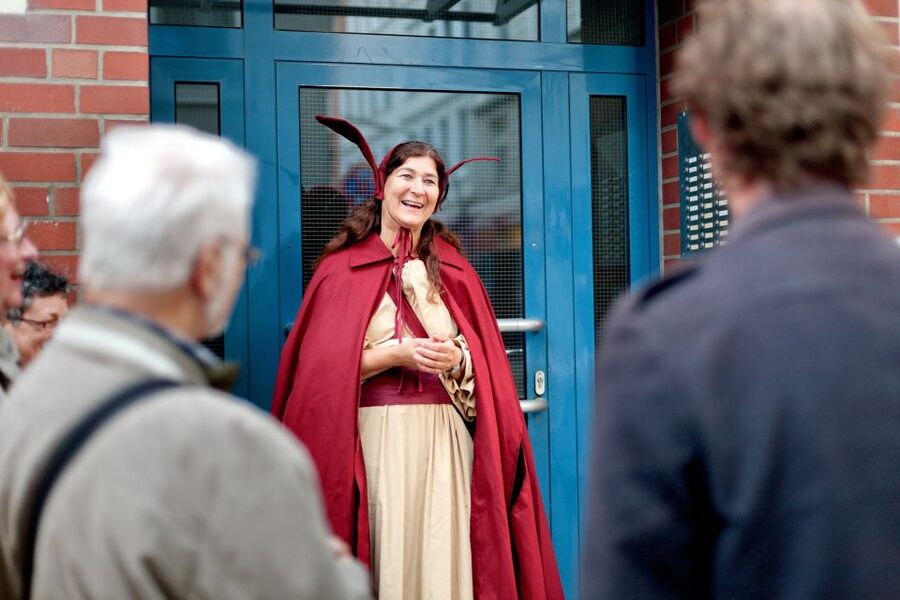
One of the tour’s most memorable details is the red-and-yellow winged hat once required apparel for sex workers in Hamburg. It is the sort of small, concrete detail that makes a social history easier to picture.
Clothing tells you a lot about how authorities and communities tried to label people. A required hat could make a person identifiable in public, turning private work into something marked and visible. The detail also shows how sex work was not only a private transaction. It was regulated, watched, and woven into the daily life of the city.
This story gives the walk a human scale. Instead of hearing only about institutions and rules, you can picture the person wearing the hat and the public meaning attached to it. The guide uses details like this to make St. Pauli’s past easier to remember.
You should not expect every stop to be a preserved historic site. Much of the value comes from the interpretation provided while you walk. The streets are the setting, while the guide supplies the historical links and local anecdotes.
From ancient Babylon to the Church
The tour reaches far beyond Hamburg. It discusses sex work in the temple of ancient Babylon and then considers the official position of the Church. That long view helps you understand that debates about sex, morality, and public order did not begin in St. Pauli.
This part is useful because it gives the neighborhood a wider frame. Hamburg’s red light district is not an isolated oddity. The practices, rules, and taboos surrounding sex work have appeared in many societies, though they have taken different forms.
The Church’s role adds another layer. Religious institutions helped define what was acceptable, sinful, public, or hidden. Those ideas influenced how people talked about sexual behavior and how communities treated those who worked in the sex trade.
You may find this section more analytical than the Reeperbahn stories. That is a benefit if you want context, but it may feel less immediate if you only want local gossip. The tour works best when you enjoy both kinds of information: broad background and sharply local details.
Same base, a different kind of day out:
- Hamburg: Sex and Crime in St. Pauli Tour for Ages 18+
★ 4.7 · 15,447 reviews - Hamburg: 1.5-Hour Harbor and Speicherstadt Day Cruise
★ 4.6 · 14,200 reviews - Hamburg: 90-Minute Evening Lights Harbor Cruise
★ 4.5 · 7,728 reviews - Hamburg: 2-Hour XXL Port of Hamburg Cruise Tour
★ 4.7 · 6,979 reviews
Former sex workers and the human side of St. Pauli

The walk also focuses on former sex workers in the center of St. Pauli. This shifts the subject away from the district’s reputation and toward individual lives and working experiences.
That matters. A red light district can easily become a backdrop for jokes, stereotypes, and tourist curiosity. Hearing about the people who worked there gives the area more weight. You begin to consider how sex work affected daily life, identity, relationships, and the way people were treated by the wider community.
The information provided for this tour does not promise a particular former worker will appear in person, so you should expect stories and historical explanation from the guide, not a personal meeting. Even so, this part can give the walk a more respectful balance.
The guide’s role is important here. A lively presentation can keep difficult material accessible, while room for questions lets you follow the points that interest you most. Jenny, one named guide, received especially strong praise for making the history of St. Pauli interesting and answering questions in detail.
Taboos, clothing, and sexual practices
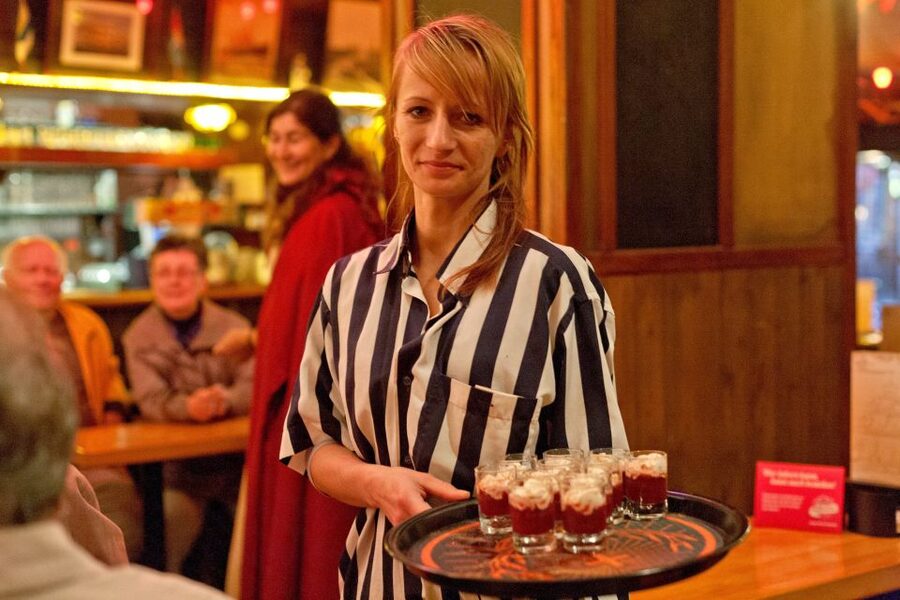
The tour takes on subjects that many city walks avoid: sexual practices, clothing, and articles considered taboo. These topics are treated as part of the social history of St. Pauli, not as a list of sensational sights.
I like this approach because taboos reveal what a society wants to hide, regulate, or define as respectable. Clothing can signal occupation or status. Objects can become symbols of shame or desire. Sexual practices can be judged very differently depending on the time, the institution, and the people involved.
You should still expect frank discussion. This is not a general sightseeing walk with one passing reference to the red light district. The sex work theme runs through the full two hours, so book it only if you are comfortable with direct adult subject matter.
The German-only format is especially important here. Nuance can disappear quickly when a tour depends on specialized terms, historical explanation, and jokes. If you do not understand German well, you will miss much of what makes the experience worthwhile.
Why the guide makes or breaks this walk
A walking tour of this kind depends heavily on the guide. The route itself is concentrated in St. Pauli, but the stories cover centuries, institutions, personal lives, and local customs. The guide has to connect those pieces without losing the group in academic detail.
The best sign here is the specific praise for Jenny. Her presentation was described as interesting and entertaining, and she answered questions at length. That tells you what to look for from the experience: not just facts, but a guide who can explain them clearly and respond to curiosity.
You may hear plenty of anecdotes about famous stories and notable women. The lively style keeps the subject from becoming dry, but the tour still has an educational purpose. It is a good fit if you want your guide to talk with you rather than simply recite a route.
Guide names can change, so Jenny may not lead every departure. The consistent point is that the tour is guided live in German, with background information and time for questions built into the walk.
Is $39 a fair price for two hours?
At $39 per person, this is not the cheapest way to see St. Pauli. The value depends on what you want from a walk through the Reeperbahn.
If you only want to stroll through the district and take in its nightlife atmosphere, you can do that without paying for a guide. If you want historical context, connections between local customs and wider European ideas, and an explanation of the district’s sex work past and present, the price is easier to justify.
The tour covers more than a single famous street. It connects the police, the Reeperbahn, clothing rules, religious attitudes, ancient examples, sexual taboos, and former workers. That range gives you a framework you would be unlikely to build from a casual walk alone.
There are two financial cautions. The activity is non-refundable, so make sure your German ability, age, and interest in the topic are a good match before booking. Also remember that the price covers the guided tour itself, not a meal, drinks, or another listed extra.
Who will get the most from this experience?
I would recommend this tour to adults who want the story behind St. Pauli, not simply a look at its most famous signs. It suits you if you enjoy urban history, changing social rules, and the way ordinary streets carry difficult or complicated memories.
It is also a good choice if you speak German comfortably. The guide provides all information in German, and the material is detailed enough that basic language skills may not be enough. You need to follow historical explanations, anecdotes, and answers to questions.
The tour may suit visitors who have already seen the Reeperbahn and want to understand it better. It can also work as an introduction to St. Pauli, provided you are comfortable with adult subject matter and a history-focused walk.
I would skip it if you want a family activity, a general Hamburg highlights tour, or a nightlife outing with no historical discussion. Children under 18 cannot join, and the subject is too specific for anyone hoping for a broad tour of the city.
Accessibility, timing, and practical planning
The tour lasts two hours, with starting times that vary according to availability. Check the departure time carefully, since the activity does not list an open-ended schedule.
The route is wheelchair accessible, which makes this adult walking tour more usable than many older-city walks. You should still consider your own comfort with a two-hour outing, since the experience takes place on foot through St. Pauli.
Meet in front of the Davidwache, or Polizeirevier 15. The walk returns to that same meeting point, which makes it easier to connect with your next plan in the district.
The tour is offered only in German and is restricted to ages 18 and up. Those are not minor footnotes. They are the two main booking checks, along with the non-refundable policy.
Should you book the St. Pauli sex work history tour?
Book it if you speak German, are at least 18, and want a thoughtful look at why St. Pauli became associated with sex work. The strongest parts are the unusual historical scope, the Reeperbahn setting, the red-and-yellow winged hat detail, and the chance to ask a lively guide about the subjects that catch your attention.
The $39 cost is reasonable for a focused two-hour guided walk, but only if you value explanation over simply seeing the district. I would not choose it for children, for a general city introduction, or if you cannot comfortably follow German.
For the right audience, this tour gives St. Pauli more meaning than its nightlife reputation alone. You leave with a clearer sense of how law, religion, clothing, public morality, and personal lives shaped Hamburg’s most famous adult district.
FAQ
Where does the tour start?
The tour starts in front of the Davidwache, also known as Polizeirevier 15, in St. Pauli.
Where does the tour end?
The activity ends back at the meeting point in front of the Davidwache.
How long does the tour last?
The walking tour lasts two hours. Starting times vary, so check availability for the date you want.
Is the tour offered in English?
No. The live tour guide speaks German, and the activity is offered exclusively in German.
What is the minimum age?
The minimum age is 18. The activity is not suitable for children under 18.
Is the tour wheelchair accessible?
Yes. The activity is listed as wheelchair accessible.
Can I cancel for a refund?
No. The activity is non-refundable, so confirm the language, age requirement, date, and subject matter before booking.
Just added in Hamburg
- Hamburg: St. Pauli Food and Bier Tour★ 4.7 · 5 reviews
- St. Pauli Tour: Drag-Attack with Barbie Stupid & Lee Jackson★ 4.8 · 280 reviews
- Hamburg: Private Tour Red Light District Walking Tour★ 4.7 · 227 reviews
- St. Michael’s, Elbe Tunnel & Harbor 2-Hour Hamburg Tour★ 4.9 · 21 reviews
- Satt Pauli – der kulinarische Rundgang durch St. Pauli★ 4.8 · 12 reviews
- Hamburg: Safari tour in St. Pauli★ 4.9 · 11 reviews
- Radtour um die Alster & durch traumhafte Alsterviertel★ 4.9 · 34 reviews
- Hamburg: Reeperbahn Comedy Club★ 4.3 · 53 reviews
Historical Tours, compared.
City History Canal Sightseeing Tour on a Motorboat
Read our review →






Browse the lists this tour appears in