
Reviewed · WALKING TOURS
Dresden: Private Guided Walking Tour
Dresden’s old town is a compact lesson in power, destruction, art, and rebuilding. In two hours, this private walk connects the grand Baroque sights with the harder stories behind them, including the Middle Ages, the former East and West Germany, and the Peaceful Revolution of 1989.
I like the private format, since your guide can adjust the pace and explain things to your group rather than to a large crowd. I also like the range of stops, from the Frauenkirche and Semperoper to the Procession of Princes and Brühl’s Terrace. The main drawback is time: two hours gives you a strong orientation, but not enough for a detailed interior visit at every major sight.
Key points to know
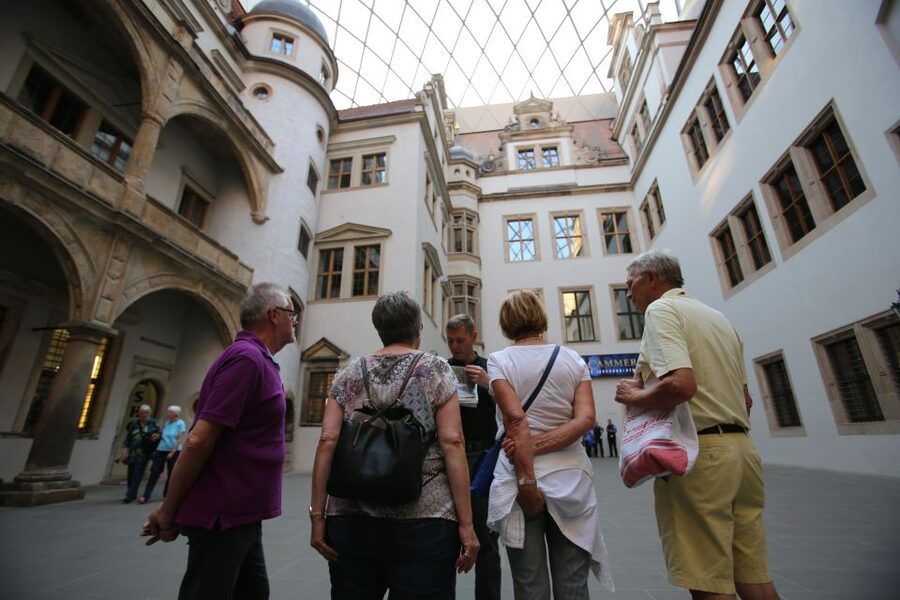
- A private walk through Dresden’s historic center: Your group follows one guide rather than joining a general public tour.
- Major Baroque sights in one route: The itinerary includes the Zwinger, Dresden Castle, Semperoper, Frauenkirche, and Dresden Cathedral.
- History from the Middle Ages to 1989: Expect stories about Dresden’s changing rulers, Baroque grandeur, wartime destruction, division, and peaceful protest.
- English or German only: The tour is offered in these two languages, with another language possible only by special request.
- A guide-led introduction to local life: You can ask for tips about restaurants and events at the end of the walk.
- Good value for a full private group: At $212 for up to 25 people, the per-person cost drops sharply when the group is close to capacity.
Why Dresden works so well on foot
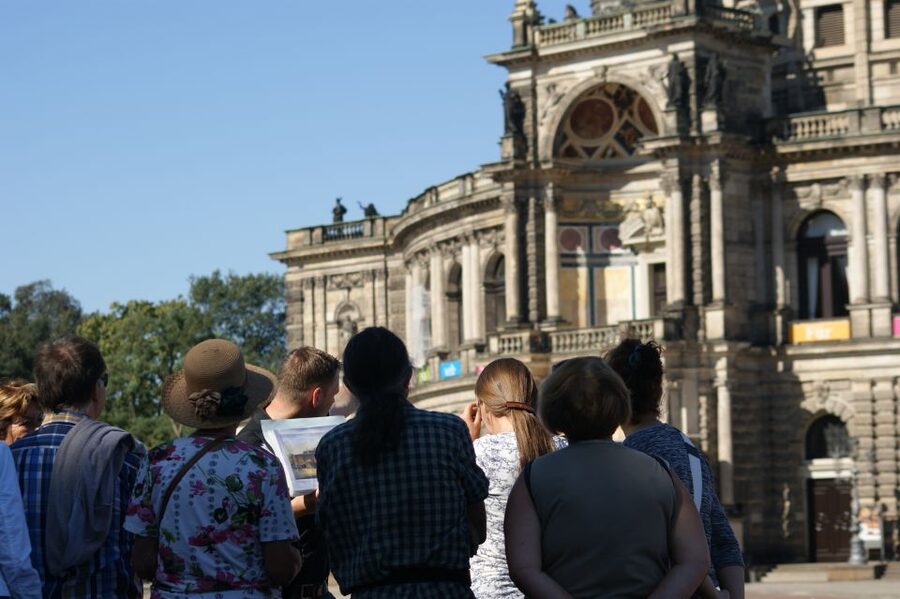
Dresden’s central sights are close together, which makes a walking tour a sensible first activity. You are not spending your two hours waiting for transport or crossing large distances. Instead, the route moves through a concentrated historic center where each square, palace, church, and terrace adds another piece to the story.
The city is especially rewarding if you want to understand how a place can look old while carrying a very modern past. Dresden’s Baroque center was shaped by royal ambition and artistic display, but the city also carries the marks of wartime destruction, East German rule, reunification, and restoration.
A private guide can help you read those layers. A grand facade is not just a pretty backdrop. It may point to the ambitions of Augustus the Strong, the power of the Saxon court, the role of religion, or the effort to rebuild Dresden’s identity in the years after 1989.
The tone also seems important here. The guide is expected to mix large historical events with small anecdotes and humor. That can make a two-hour walk easier to follow, especially if your group includes different ages. One highly praised guide, Frau Schulz, was noted for keeping both younger and older members interested. Another guide named Idiko received especially strong praise for her tour.
Other walks around Dresden:
- Dresden: City & Semperoper Guided Walking Tour
★ 4.8 · 2,293 reviews - Dresden: Guided City Walk with a Cup of Coffee
★ 4.7 · 1,568 reviews - Görlitz: Old Town Guided Walking Tour
★ 4.7 · 723 reviews
Starting at Neumarkt and the Frauenkirche
The meeting point is Dresden Information at Neumarkt 2, inside the QF Passage on the basement level. This is a useful central starting point, but allow enough time to find the information office and the correct level.
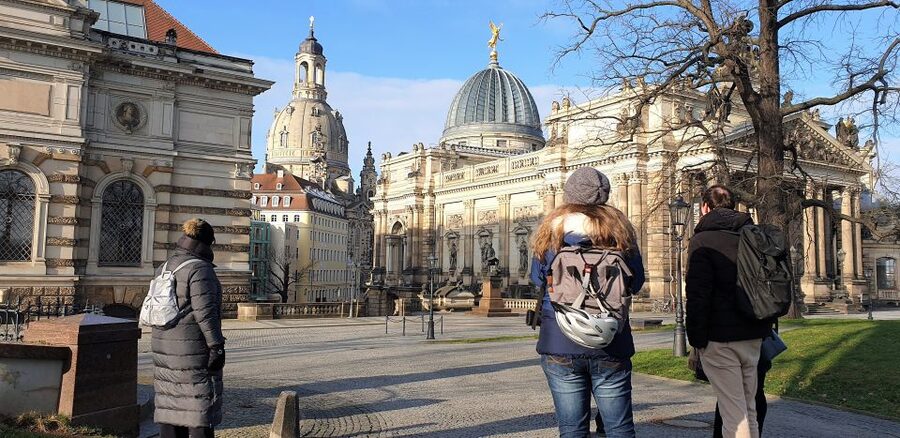
Neumarkt is the natural place to begin because it puts Dresden’s best-known church directly in front of you. The Frauenkirche is the visual anchor of the square and one of the city’s clearest examples of postwar rebuilding. Your guide can explain how the church fits into Dresden’s Baroque story and why it carries such strong meaning in the modern city.
You should expect to view the main sights from the outside as the group moves along. The activity is a walking tour, not a church admission tour, so do not plan on an extended interior visit at every stop. If entering the Frauenkirche is important to you, ask the guide about timing and current access during the walk.
Neumarkt also gives your guide a good place to explain Dresden’s broad timeline before the route becomes more detailed. From here, you can hear about the city’s medieval beginnings, its Renaissance period, its Baroque transformation, and its later political history.
Semperoper and the power of Baroque Dresden
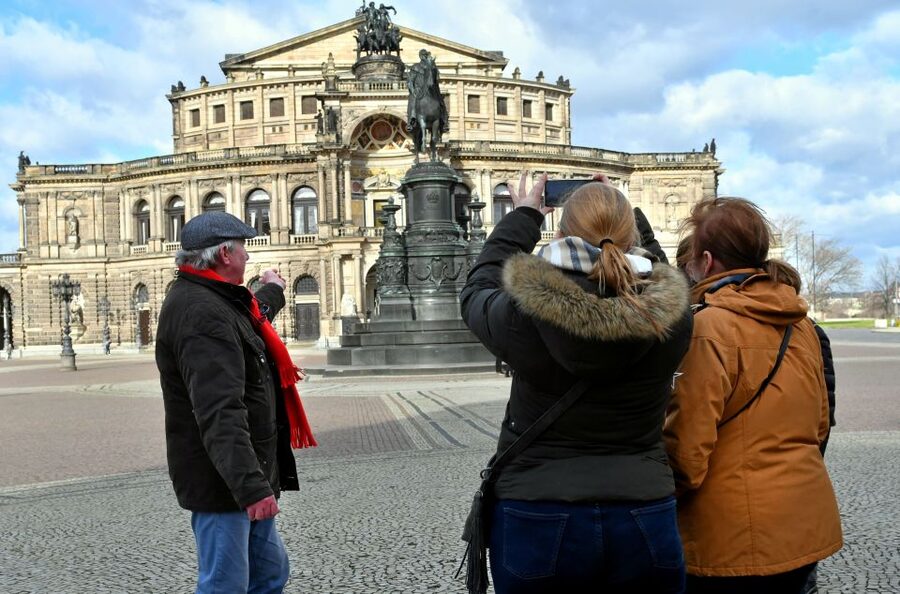
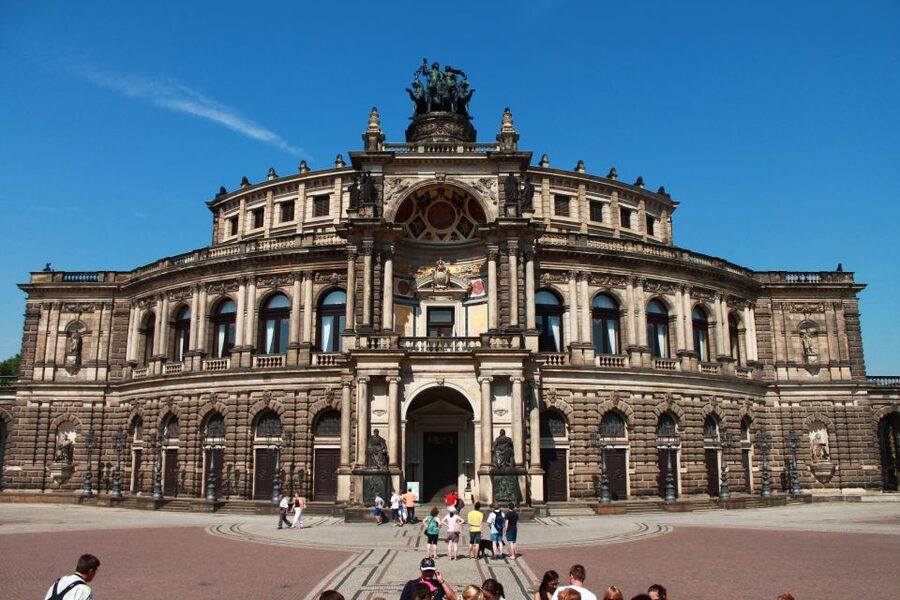
The route includes the Semperoper, Dresden’s famous opera house. Its presence helps show how strongly music, court culture, and architecture shaped the city’s public image.
The building is part of the larger story of Dresden as a royal capital. Here, your guide can connect architecture with the ambitions of rulers who wanted Dresden to rival other European courts. The point is not simply that the building is ornate. It shows how rulers used grand cultural projects to display status and control.
This is where a live guide adds value over a map or audio app. You can ask which details matter, how the opera house relates to the surrounding buildings, and what changed over time. A guide may also add an anecdote that helps you remember the place after the tour ends.
The Semperoper is also a reminder that Dresden’s historic center is not only about churches and palaces. Theater, music, art, and court ceremony all played a role in the city’s development.
The Zwinger: Baroque drama in stone
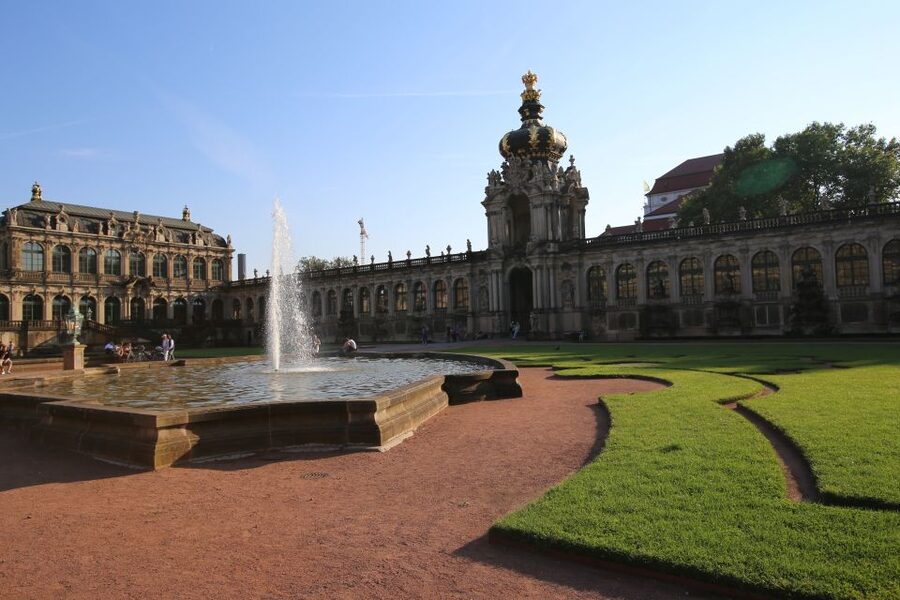
The Baroque Zwinger is one of the most visually dramatic stops. Its elaborate forms and open spaces were designed to impress, and they still do the job.
Your guide can help you understand the Zwinger as more than decoration. It was part of the court’s display of wealth, taste, and political reach. The architecture communicates abundance at every turn, with sculptural detail and carefully arranged views.
The advantage of seeing the Zwinger on a walking tour is that you get the larger setting before deciding if you want to return for more time. Two hours is not enough to study every detail or visit every museum connected with the complex. Still, the stop gives you a clear sense of why Dresden is often associated with Baroque architecture.
If you enjoy buildings that reward close looking, pay attention here. Ask your guide which features are original, restored, or especially meaningful. The exact amount of detail will depend on the guide and the interests of your group, but this is one of the places where questions can make the walk much better.
A few more things to do in Dresden worth a look
- Dresden: Private Inflatable Boat Tour with Beer Garden Stop
★ 4.9 · 62 reviews - Dresden: Private custom tour with a local guide
★ 4.4 · 20 reviews - Berlin: Private Reichstag and Glass Dome Tour
★ 4.8 · 2,226 reviews - Berlin Private Complete History All Day Walking Tour
★ 5.0 · 474 reviews
Dresden Castle and the royal center
From the Zwinger, the route continues toward Dresden Castle. The castle helps connect the city’s monuments to the ruling family and the wider story of Saxony.
This is a useful contrast with the Zwinger. The Zwinger feels open, theatrical, and ceremonial. The castle feels more like the center of government and royal life. Together, they show how Dresden’s historic core was organized around authority, display, religion, and culture.
The guide’s historical range matters here. You are not only hearing about a single Baroque period. The walk reaches back to the Middle Ages, moves through the Renaissance, and then explains the growth of Baroque Dresden. That long view prevents the city from becoming a collection of disconnected photo stops.
Dresden Castle also helps prepare you for the Procession of Princes and Stallhof. These sites are close by, but each tells a different part of the story.
The Procession of Princes and Stallhof
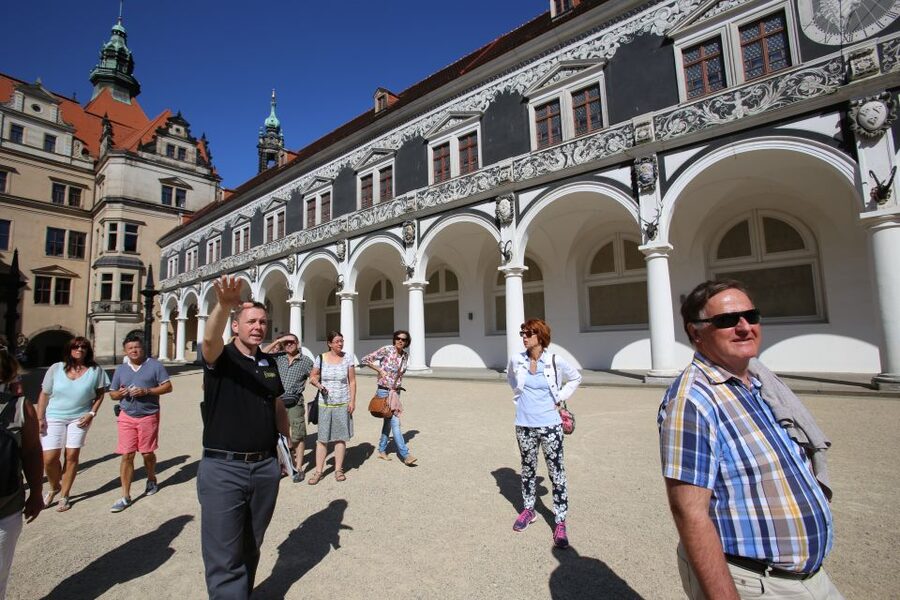
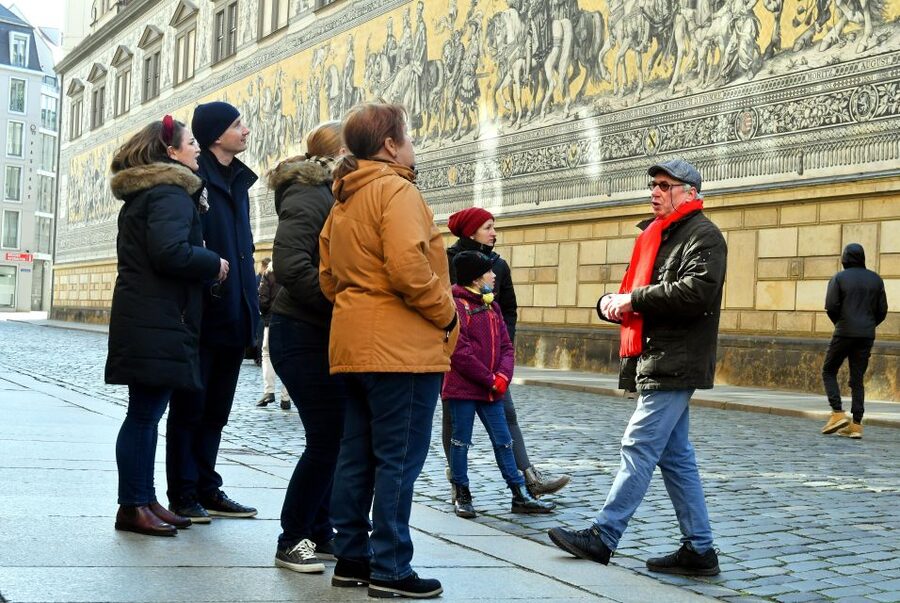
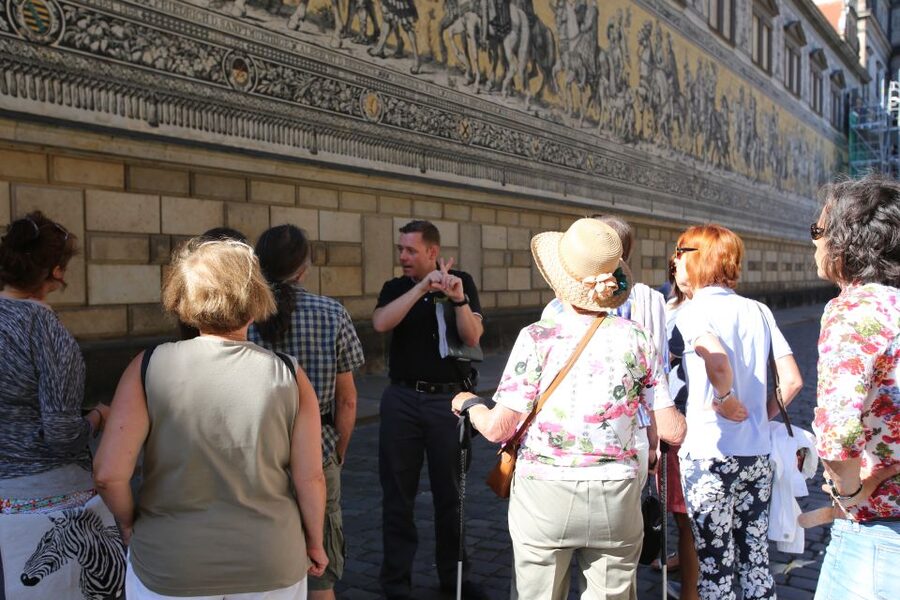
The Procession of Princes is one of the most memorable details on the route. This long wall image presents the rulers of Saxony in a format that links art, genealogy, and political memory.
It is the sort of stop that is easy to pass without a guide. You may notice the length of the artwork, but miss why a procession of rulers was placed here or how it fits with the nearby royal buildings. Your guide can point out the sequence and explain the message behind it.
Nearby Stallhof adds another view of court life. Its setting gives you a better feel for the daily and ceremonial world around the castle. This is a place where a short anecdote can do a lot. Rather than only hearing dates, you get a sense of how people used the spaces.
The route is at its best when it combines these smaller details with the major landmarks. You see the famous Dresden, but you also get clues about how the city functioned.
Dresden Cathedral and Brühl’s Terrace
Dresden Cathedral is another major stop, and it helps round out the religious and royal story of the old town. Its position among the palace buildings shows how closely faith and political power were connected in the historic center.
After the castle area, the route follows your guide toward Brühl’s Terrace. The terrace offers a different kind of experience. Instead of looking closely at one facade, you get a broader view of the city and its river setting.
The route then continues toward Augustus Bridge. This gives the walk a natural change of pace after the dense group of palace and church sights. You move from close-up architecture to a wider view, then return toward the Frauenkirche area to finish.
Do not expect a long scenic break here. The tour lasts two hours, and the guide still has a lot of ground to cover. But even a short stop at Brühl’s Terrace can help you understand how Dresden’s central monuments relate to one another.
Taschenbergpalais and Augustus Bridge
Taschenbergpalais adds another royal building to the route. Its inclusion helps fill in the spaces between Dresden’s biggest attractions and keeps the walk from becoming only a greatest-hits circuit.
Augustus Bridge gives you a clear sense of Dresden’s position along the river. It is also a good place to look back toward the historic center and see how the buildings work together as one urban scene.
The guide can use this part of the route to connect architecture with movement through the city. Dresden’s monuments were not built as isolated attractions. They were arranged along important paths, squares, and river crossings, creating a ceremonial center that still shapes your visit today.
The walk concludes near the Frauenkirche. That is convenient if you want to continue exploring Neumarkt, find a restaurant, or return to a sight that deserves more time.
The history beyond the pretty facades

The strongest reason to book this walk is its stated reach beyond Baroque architecture. You will hear about the darker periods of the Middle Ages, the energy of the Renaissance, and the grandeur of the Baroque age. The route also addresses the Peaceful Revolution of 1989 and life in former East and West Germany.
That modern section is important. Without it, Dresden can seem frozen in palace-and-church history. A good explanation of 1989 shows that the city’s story did not end with royal rule or wartime destruction.
The discussion of East and West Germany can also help you understand how political division affected ordinary people. The exact stories will depend on your guide, but the tour is designed to connect national events with personal experience.
This is also where the licensed local guide matters most. Dates and building names are easy to find. Context is harder. You want someone who can explain why a site matters, what changed, and how Dresden’s past still affects the city you see now.
Private group size, price, and pace
The maximum group size is 25 people. That is private, but it is not necessarily intimate. A group of 25 can still feel fairly large on a busy square, especially when everyone gathers around one guide.
The format works best for families, friends, school groups, company outings, or several couples traveling together. The guide can adjust explanations to the group, and you can ask for restaurant or event suggestions that suit your plans.
At $212 for the whole group, the value depends heavily on attendance. For 25 people, it works out to about $8.48 per person. For 10 people, it is about $21.20 each. For only two people, it becomes a much more expensive private introduction.
That price includes a professional licensed guide and insider tips about restaurants and events. It does not describe museum admission or a meal, so budget separately if you plan to visit interiors afterward.
The two-hour length is another value question. It is long enough to orient yourself and see the core old town. It is short enough to fit on arrival day or before another booking. But it is not a full-day historical tour, and you will need extra time for museums, church interiors, and a slower look at the architecture.
The activity is wheelchair accessible, which makes the route useful for more visitors. Still, historic centers can involve crowded public spaces and uneven conditions, so it is sensible to confirm any specific mobility needs when booking.
Language, booking flexibility, and practical details
The tour is offered in English or German. If you need another language or a different meeting point, you must send a request rather than assume it will be available.
You can cancel up to 24 hours before the tour for a full refund. You can also reserve now and pay later, which helps if your Dresden plans are still shifting. Starting times vary, so check availability for your chosen date.
The activity includes skip-the-ticket-line access, though the tour itself is primarily an outdoor walking route. Ask the guide how that benefit applies to any specific sight you hope to enter.
At the end, use the local advice. Ask for restaurants, events, or a good next stop. This simple feature can be more useful than a printed list because your guide knows what kind of evening you want.
Who should book this Dresden walk?
I would choose this tour for a first visit, especially if you want the main old-town sights explained in one clear sequence. It is also a good fit for families and mixed-age groups, since the guide can balance serious history with anecdotes and humor.
It suits visitors who want context but do not want to spend half a day inside a museum. The route gives you a framework, then lets you decide which buildings deserve a return visit.
I would think twice if you want a very small, quiet tour for just two people. The price is harder to justify for a tiny group, and a maximum of 25 means private does not always mean personal. I would also choose another option if your main goal is detailed access to interiors rather than an overview of the historic center.
Should you book it?
Book this private Dresden walking tour if you want a well-organized introduction to the old town, strong Baroque architecture, and a history lesson that reaches from the Middle Ages to 1989. The best value comes when you fill much of the 25-person capacity, or when flexible pacing and private attention matter more than the lowest price.
The strongest signs are the repeated praise for friendly, entertaining guides, including Frau Schulz and Idiko, and the ability to adapt the walk to different ages and interests. Just keep your expectations clear: this is a two-hour orientation with major sights and local explanation, not a detailed tour of every interior.
FAQ
Where does the tour start?
Meet your guide at Dresden Information, Neumarkt 2, 01067 Dresden, in the QF Passage on the basement floor.
How long does the walking tour last?
The tour lasts two hours.
What languages are available?
The tour is available in English or German. Another language may be possible by request.
How many people can join the private group?
The maximum group size is 25 people.
What sights are included on the route?
The walk includes Frauenkirche, Semperoper, the Baroque Zwinger, Dresden Castle, Brühl’s Terrace, the Procession of Princes, Stallhof, Dresden Cathedral, Taschenbergpalais, and Augustus Bridge.
Does the tour cover Dresden’s modern history?
Yes. The guide discusses Dresden’s history from the Middle Ages to the present, including the Peaceful Revolution of 1989 and life in former East and West Germany.
Is the tour wheelchair accessible?
Yes, the activity is listed as wheelchair accessible.
Can I cancel for a full refund?
Yes. You can cancel up to 24 hours in advance for a full refund.
Just added in Dresden
- Test Drive Electric Vehicles from the VW brand (ID. model)★ 4.8 · 190 reviews
- SRF CoBi | City Tour by ConferenceBike★ 4.7 · 38 reviews
- Dresden: Scavenger Hunt to Elbe River & Castles★ 4.7 · 15 reviews
- Dresden: Bike Rental – City Bike with Option Children Seat★ 4.5 · 13 reviews
- Moritzburg: Scavenger Hunt Self-Guided Walking Tour★ 4.8 · 12 reviews
- Historical tour of the old town including a Saxon dinner★ 4.7 · 23 reviews
- Görlitz: Scavenger Hunt Self-Guided Tour★ 4.6 · 22 reviews
- Görlitz: Ghosts and Spooky Historical Night Walking Tour★ 4.8 · 197 reviews
Walking Tours, compared.


Third Reich Berlin: Hitler and WWII Walking Tour
Read our review →
Browse the lists this tour appears in