
Reviewed · OLD TOWN WALKING TOURS
Dresden Old Town – Guided Walking Tour in English
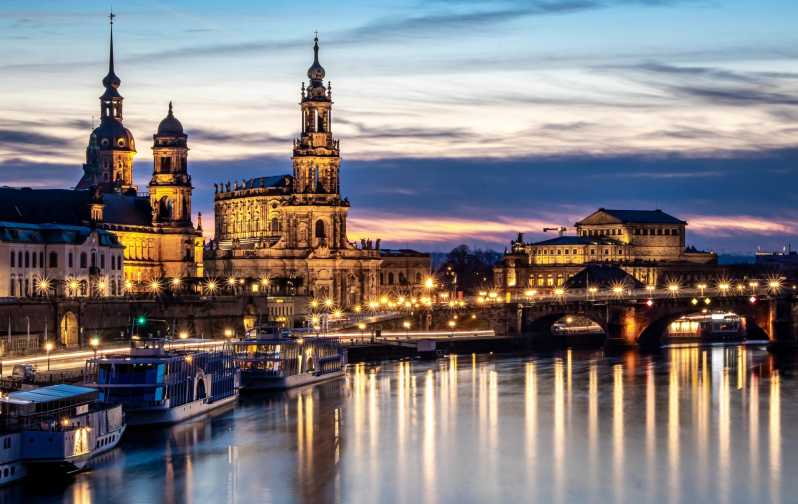
Dresden’s Old Town is a remarkable lesson in how a city can be destroyed and then rebuilt so carefully that the new stonework feels centuries old. This walk connects the grand Baroque center with the harder story of Nazi rule, World War II, and postwar reconstruction, rather than treating Dresden as a pretty collection of palaces.
I like the strong historical thread, which runs from a small Slavic settlement to a royal capital and then through the ruins of 1945. I also like the guides’ personal style. Nicolo, Nikolai, James, and Dominica are praised for clear English, humor, and stories that place Dresden within wider European history.
The main consideration is the pace and length. The walk can run beyond two hours, and one participant wished for a toilet stop. You will also see the outside of several major sights, so arrange separate interior visits if you want to explore the Frauenkirche, Dresden Castle, or the Semperoper in detail.
Key points to know before booking
- Meet at Neumarkt: Find the guide beside Martin Luther’s statue near the Frauenkirche, marked by a yellow umbrella.
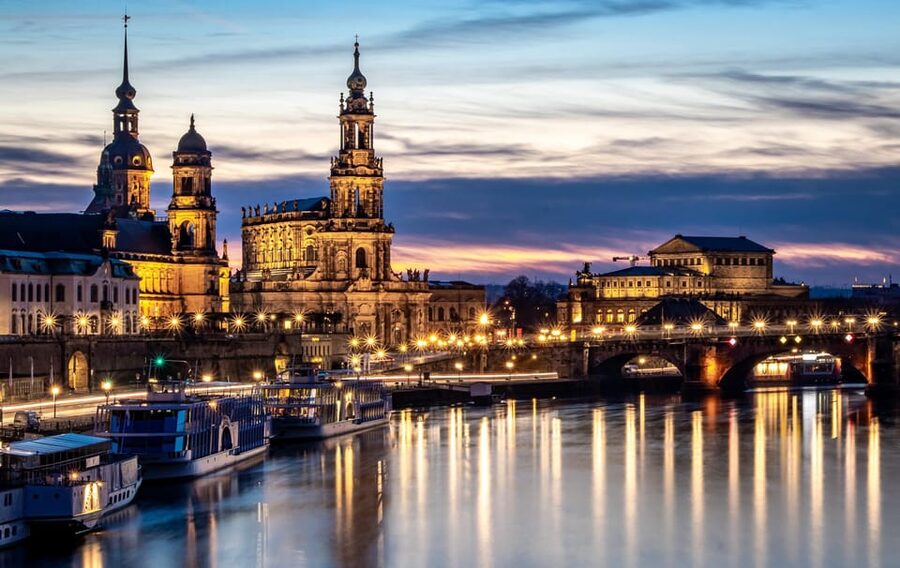
- A full Old Town circuit: The route covers Neumarkt, Fürstenzug, Dresden Castle, Altmarkt, Brühlsche Terrasse, Hofkirche, Semperoper, and Zwinger Palace.
- History beyond Baroque beauty: The walk explains Dresden’s Slavic roots, royal power, wartime destruction, and reconstruction.
- Strong guide-led storytelling: Nicolo, Nikolai, James, Dominica, and other guides have been praised for humor, clear English, and European context.
- Budget-friendly format: The $35 booking price covers the reservation and guide payment within Walkative’s pay-as-you-wish format.
- Plan for a long outdoor walk: The tour lasts 2.5 hours, uses no transportation, and is listed as wheelchair accessible.
Starting at Neumarkt beside Martin Luther
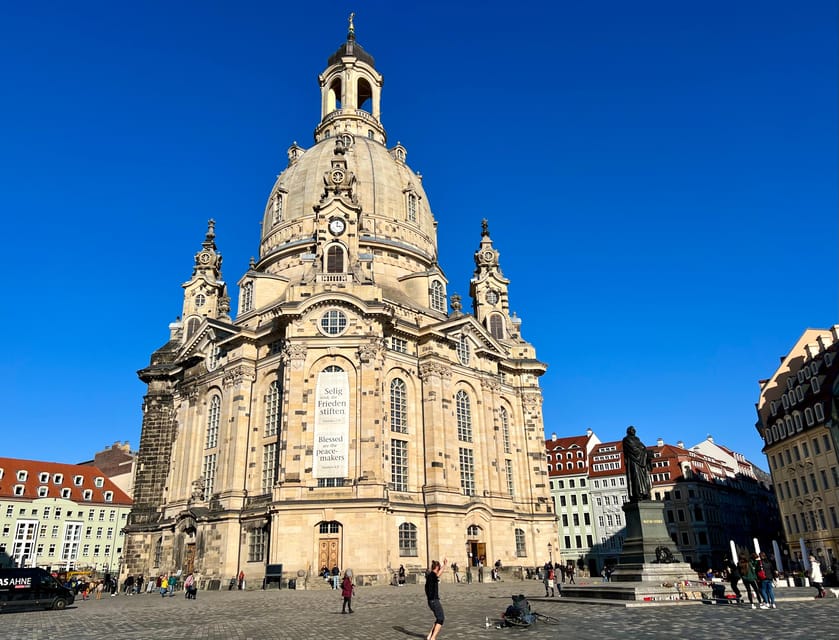
The tour begins at Neumarkt, one of Dresden’s most important public squares. Look for the Martin Luther statue beside the Frauenkirche and the guide with the yellow umbrella. Arriving 10 minutes early matters here, since the square can be busy and the route begins on foot.
Neumarkt gives you Dresden in one view. The Frauenkirche rises at the center, while reconstructed façades frame the square. This is the right place to begin because the city’s story is already visible around you: religious power, royal ambition, wartime destruction, and a modern effort to restore the old town’s appearance.
The Frauenkirche is especially important to Dresden’s identity. Its great dome collapsed after the 1945 bombing, leaving a huge pile of stones in the center of town. The church was rebuilt with old stones where possible and reopened decades later. If you visited Dresden in the early 1990s, you would have seen a very different square, which makes the reconstruction story more than a footnote.
The tour focuses on the outside, so do not assume that the walk includes a church visit. One family specifically wished they had arranged a separate Frauenkirche tour. I would make that booking independently if the interior matters to you.
More Old Town Walking Tours in Dresden
- Dresden: Semperoper and Old Town Tour
★ 4.8 · 5,735 reviews - Görlitz: Old Town Guided Walking Tour
★ 4.7 · 723 reviews - Dresden: Segway Tour Along the Elbe and Old Town
★ 4.9 · 392 reviews
From Slavic settlement to Saxon power
A good city walk should explain why the place exists, not just point at attractive buildings. Here, the guide traces Dresden back to a small Slavic settlement. The city’s name still sounds familiar to people who speak Czech, Slovak, Polish, or Sorbian, a useful reminder that the Elbe did not simply divide Germanic and Slavic worlds.
The river worked as a connection as much as a border. Dresden grew around a castle in the 13th century and became a major trading center by the end of the Middle Ages. Nearby mining in the Rudavy mountains brought silver and lead, helping fund the city’s growth.
That economic base mattered. Dresden was not decorated on a whim. Trade, mining wealth, dynastic marriage, and political power all helped create the city you see today.
By the late 15th century, Dresden had become the seat of the prince-electors of Saxony. The city gained still greater importance when Saxon rulers from the Wettin family became Kings of Poland and Grand Dukes of Lithuania in the early 18th century.
This is where the walk’s broader European setting helps. Dresden’s palaces and churches were built to express the power of a court with influence well beyond Saxony. You get more from the architecture when you understand that political background.
Fürstenzug and the long wall of Saxon rulers
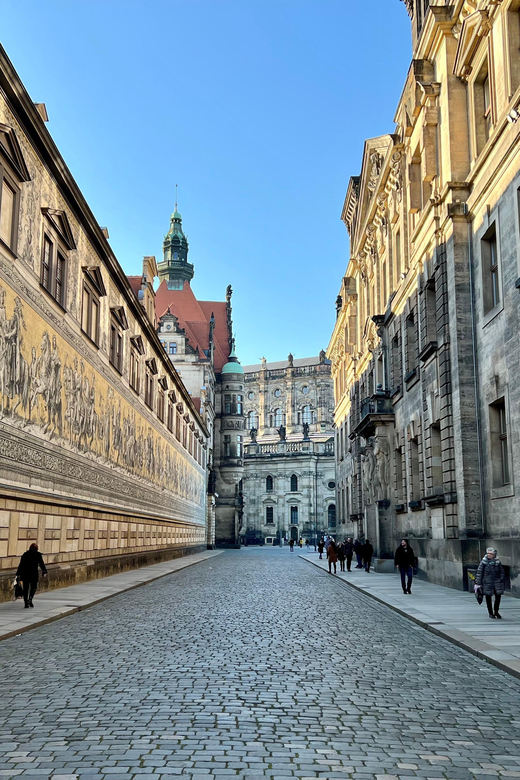
The Fürstenzug is one of Dresden’s most memorable outdoor sights. This long mural presents the rulers of Saxony in a procession, creating a visual timeline along the wall.
The work is made from porcelain tiles, a fitting material for a city closely linked with Meissen porcelain. The important point on this walk is not only the craftsmanship. The mural shows how Saxony wanted to present its past: continuous, ordered, and tied to a powerful ruling family.
Your guide can use the artwork to introduce the prince-electors and explain how Dresden became a court city. This is one of the places where a short stop with context is far better than a quick photograph. Without the background, it is simply a long wall covered in figures. With the story, it becomes a statement about dynastic power.
The mural also leads naturally toward the Dresden Castle complex. That continuity makes the route feel planned rather than like a list of disconnected monuments.
Dresden Castle and the royal center
Dresden Castle grew from a medieval stronghold into a major royal residence. Its changing forms reflect the city’s own development, from fortified settlement to court capital.
The castle area is useful for understanding the difference between old Dresden and the Dresden rebuilt after 1945. Many sections were restored over a long period, and the surrounding streets can look older than they are. The result is visually convincing, but the guide does not let the reconstruction hide the difficult history.
Expect an explanation of how the city center was reduced to ruins during World War II and how Dresden later rebuilt its historic core. The tour is especially useful if you want more than the familiar story of a beautiful Baroque city. It places the buildings within the choices made after the war, including the decision to recover historic forms and materials.
The castle’s museums and interiors are not part of the walking ticket. If you want to see royal collections, plan another visit and allow extra time.
Other walks through the old centre of Dresden:
- Dresden: Old Town Self-Guided Scavenger Hunt Tour
★ 4.5 · 151 reviews - Dresden: Old Town Scavenger Hunt for Children
★ 4.6 · 117 reviews - Dresden: Classic Old Town Tour
★ 4.4 · 33 reviews - Historical tour of the old town including a Saxon dinner
★ 4.7 · 23 reviews
Altmarkt, Kreuzkirche, and the city’s public life
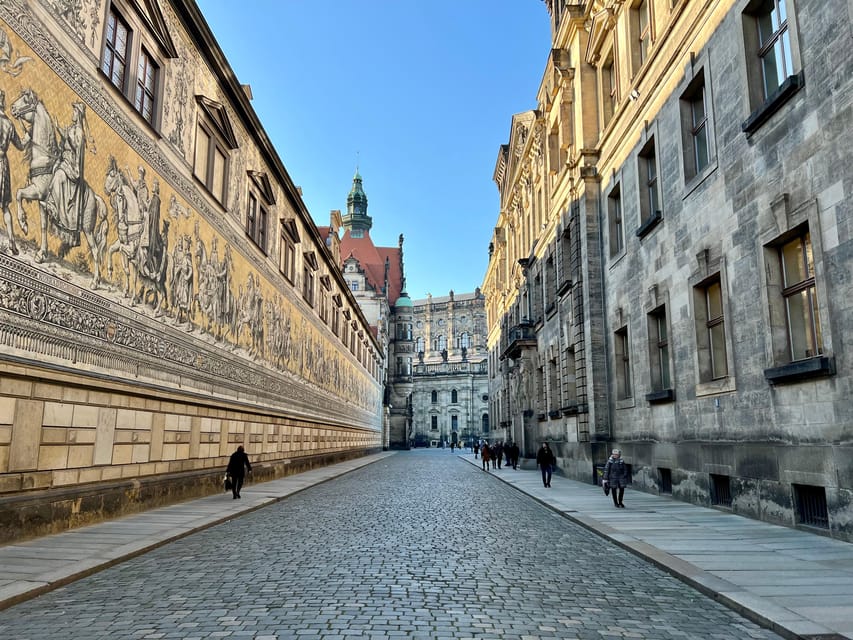
From the royal quarter, the walk continues toward Altmarkt. This broad square offers a different view of Dresden. It is less about court ceremony and more about civic life, public events, and the city’s changing role over time.
Nearby Kreuzkirche adds a religious and musical dimension. Dresden’s churches were not only places of worship. They helped shape the city’s public identity and cultural life.
The Palace of Culture brings the 20th century into the route. Its presence helps show that Dresden is not a preserved Baroque stage set. The city center contains royal buildings, reconstructed churches, socialist-era architecture, and modern urban life side by side.
This mixture is one reason the walk works well as an orientation. You are not only seeing the most polished monuments. You are learning how different periods left their mark on the same compact center.
Brühlsche Terrasse and the Elbe view
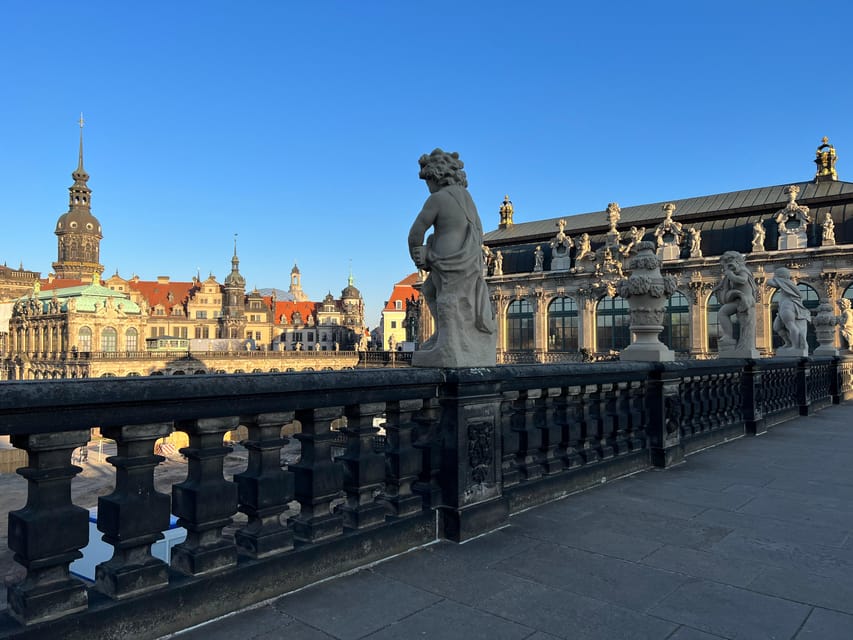
Brühlsche Terrasse stretches above the Elbe and is often called the Balcony of Europe. The promenade gives you a chance to step away from the tight streets and see the river setting that helped Dresden grow.
The Elbe is central to the city’s identity. It carried goods, linked regions, and connected Dresden to wider Central Europe. From the terrace, you can better understand why a settlement here developed into a major trading and political center.
This part of the walk also offers a welcome change of pace. Much of the route focuses on façades, squares, and monuments. Here, you get open air and a broader view.
The terrace is still part of a walking tour, not a sightseeing stop with a long rest period. Wear comfortable shoes and be ready to keep moving. If you need regular breaks, tell the guide early.
Hofkirche and the Catholic mark on Protestant Dresden
The Hofkirche is one of Dresden’s most striking churches. Its presence is particularly interesting in Saxony, a region strongly associated with Protestant history.
The church reflects the influence of the ruling family and the links between Saxony and Poland. It also helps explain why Dresden’s Baroque center is more varied than it first appears. You are not looking at one single style or one simple religious story.
The church’s position near the river and royal buildings makes it a useful part of the route. It connects court power, faith, architecture, and the city’s international role.
Again, the tour concentrates on the exterior and historical explanation. If you want to go inside, check opening arrangements separately rather than expecting the walking group to wait.
Semperoper and Dresden’s cultural ambition
The Semperoper represents Dresden’s long interest in music, performance, and court culture. Its architecture is grand, but the guide’s explanation gives the building more meaning than its façade alone.
The opera house is linked to Gottfried Semper and to the city’s effort to present itself as a leading cultural capital. Its location near the Zwinger and the royal center shows how closely art, politics, and public display were tied together.
The building also fits the tour’s wider story of damage and repair. Dresden’s major cultural monuments were affected by the destruction of World War II, and the city later rebuilt them as part of the larger return of the historic center.
If you want a performance or an extended interior visit, that requires a separate plan. The walking tour gives you orientation and context, not a theater visit.
Zwinger Palace and the Baroque finish
The Zwinger Palace is the visual high point for many people on this route. Its courtyards, pavilions, and ornamental details show the ambition of Dresden’s early 18th-century court.
The setting near the Elbe bridge makes a fitting end to the main sightseeing circuit. By this stage, the guide can connect the palace to everything that came before: mining wealth, dynastic power, royal titles, art, and Dresden’s desire to look like a major European capital.
The Zwinger is also a reminder that the city’s beauty was planned. This was not accidental decoration. It was a public display of wealth and authority.
As with the other major monuments, the walk does not replace a museum visit. You will learn why the palace matters and see its main exterior spaces, but you should set aside extra time if you want the collections inside.
How the guides shape the experience
The strongest part of this tour is the guide’s ability to turn a large amount of history into an understandable story. Nicolo has been praised for linking Dresden to wider European events, adding suitable jokes, and keeping the explanation moving. Nikolai is also noted for clear English and strong knowledge of the old town.
James has been described as a good guide for orientation and historical insight. Dominica is praised for storytelling, energy, and passion. Other guides may lead your departure, so you should expect a shared Walkative style rather than one fixed personality.
English ability appears strong overall, but accents and speaking speed can vary. One participant found that a Spanish guide spoke quickly and needed a few minutes to adjust. If you sometimes struggle with fast speech, stand near the guide and ask for a repeat when needed.
The group format can also change the feel of the walk. One booking ended up as a very small tour after cancellations, while other departures may have a larger group. A small group can feel personal, but the standard format is still a public walking tour rather than a private experience.
Price, timing, and practical value
At $35 per person, the tour offers good value if you want a clear introduction to Dresden in one morning or afternoon. You cover the central sights without paying for transportation, and the guide adds the historical links that are easy to miss when you walk alone.
The payment structure needs a little attention. This is presented as a general pay-as-you-wish tour, with the booking amount covering the reservation fee and the guide’s payment. In practical terms, you are not booking a fully private guide for $35. You are reserving a place on a public walk whose format is built around that payment model.
The 2.5-hour duration is long enough to reach the main monuments but short enough to fit around a museum visit or meal. Some walks have run closer to three hours, so do not schedule an immediate train, tour, or restaurant reservation afterward.
There is no transportation. That is an advantage in Dresden’s compact Old Town, since walking keeps you close to the buildings and lets the guide point out details from street level. It also means comfortable shoes, weather protection, and a little stamina are important.
The tour is listed as wheelchair accessible. Since it uses city streets and historic public spaces, you may still want to confirm the day’s route if you have specific mobility needs.
Who should book this Dresden walk?
I would choose this tour for a first visit to Dresden, especially if you want the city explained rather than simply photographed. It suits history-minded visitors, architecture fans, families with adults, and anyone who wants a quick sense of how the city fits into Central European history.
It is also useful on a return visit. One participant already knew Dresden but still found the wider European context and detailed explanations worthwhile. That is a fair description of the tour’s strength: it gives familiar buildings a clearer meaning.
You may want another option if you prefer a very slow pace, frequent indoor stops, or long visits inside museums. The route is outdoor-focused and can continue without a planned toilet break.
Should you book it?
Book this walk if you want Dresden’s restored center explained through both beauty and loss. The route covers the city’s essential monuments, while the guides bring in the Slavic beginnings, Saxon rulers, royal ambition, wartime destruction, and careful rebuilding.
I would book it early in your stay, then return to the Frauenkirche, castle, Zwinger museums, or Semperoper on your own. Arrive 10 minutes early, bring good shoes, and leave extra time after the tour. For $35, it is a sensible way to get your bearings and understand what you are seeing.
FAQ
Where does the Dresden Old Town walking tour meet?
Meet beside the Martin Luther statue at Neumarkt, next to the Frauenkirche. Look for the guide carrying a yellow umbrella.
How long does the walking tour last?
The stated duration is 2.5 hours. Some walks may run longer, so leave extra time after the scheduled finish.
What language is the tour conducted in?
The tour is conducted in English with a live English-speaking guide.
Which Dresden sights are included?
The route includes Neumarkt and the Frauenkirche, Fürstenzug, Dresden Castle, Altmarkt, Kreuzkirche, the Palace of Culture, Brühlsche Terrasse, Hofkirche, Semperoper, and Zwinger Palace near the Elbe bridge.
Is transportation included?
No. This is a walking tour, and transportation is not included.
Does the tour go inside the Frauenkirche or other buildings?
The supplied tour details list the main sights as part of the walking route but do not include interior visits. Arrange separate visits if you want to explore the Frauenkirche, Dresden Castle, or other buildings inside.
Is the tour wheelchair accessible?
Yes. The activity is listed as wheelchair accessible.
What does the $35 price cover?
The $35 booking price covers the reservation fee and the guide’s payment within Walkative’s general pay-as-you-wish tour format.
Can I cancel the booking?
Yes. You can cancel up to 24 hours before the activity for a full refund. The reserve-now-and-pay-later option lets you hold a place without paying immediately.
More walking tours in Dresden
- Dresden: City & Semperoper Guided Walking Tour
★ 4.8 · 2,293 reviews - Dresden: Guided City Walk with a Cup of Coffee
★ 4.7 · 1,568 reviews - Dresden: Complete Walking Tour with Frauenkirche Visit
★ 4.8 · 700 reviews - Dresden: Walking Tour with a Night Watchman and Meal
★ 4.4 · 487 reviews
Just added in Dresden
- Test Drive Electric Vehicles from the VW brand (ID. model)★ 4.8 · 190 reviews
- SRF CoBi | City Tour by ConferenceBike★ 4.7 · 38 reviews
- Dresden: Scavenger Hunt to Elbe River & Castles★ 4.7 · 15 reviews
- Dresden: Bike Rental – City Bike with Option Children Seat★ 4.5 · 13 reviews
- Moritzburg: Scavenger Hunt Self-Guided Walking Tour★ 4.8 · 12 reviews
- Historical tour of the old town including a Saxon dinner★ 4.7 · 23 reviews
- Görlitz: Scavenger Hunt Self-Guided Tour★ 4.6 · 22 reviews
- Görlitz: Ghosts and Spooky Historical Night Walking Tour★ 4.8 · 197 reviews
Old Town Walking Tours, compared.

Old Town & Viktualienmarkt City Walk in German
Read our review →

The Night Watchman Old Town Walking Tour in German
Read our review →
New Old Town and Highlights German-Language Tour
Read our review →

Browse the lists this tour appears in