
Reviewed · WALKING TOURS
Dresden: Complete Walking Tour with Frauenkirche Visit
Dresden’s Frauenkirche is the emotional center of this walk, but the tour gives you far more than a quick church visit. In two hours, you move through royal squares, court buildings, river views, and the Zwinger, with a guide connecting grand architecture to Saxon rulers, wartime destruction, and modern Dresden.
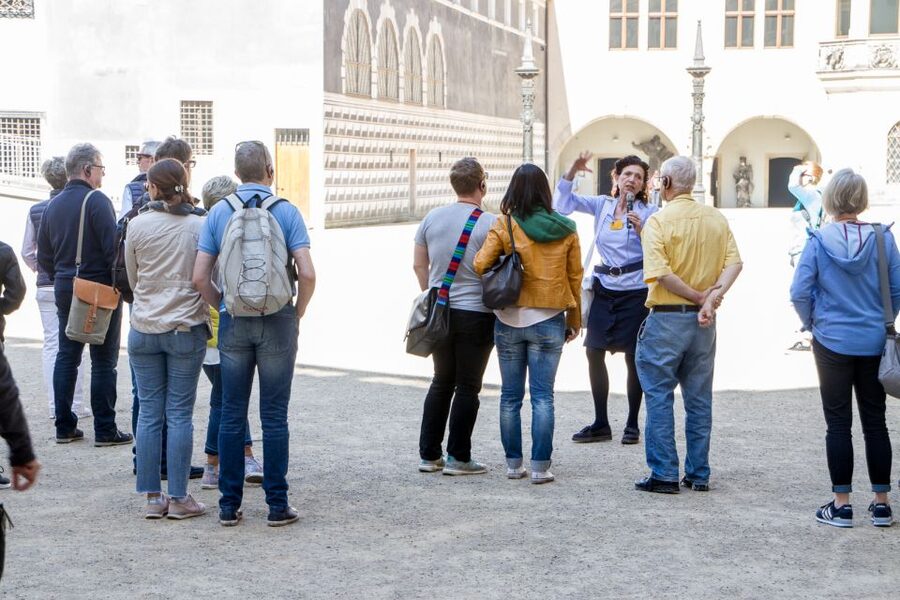
I like the small group of up to 10 and the headsets, which make it easier to hear without crowding around the guide. I also like the route itself: it gathers the old town’s major sights into a sensible walk, including a rare look inside the Frauenkirche and its crypt. The main consideration is that the tour is in German, and the church visit can occasionally be affected by special events or preparations.
Key points to know before booking
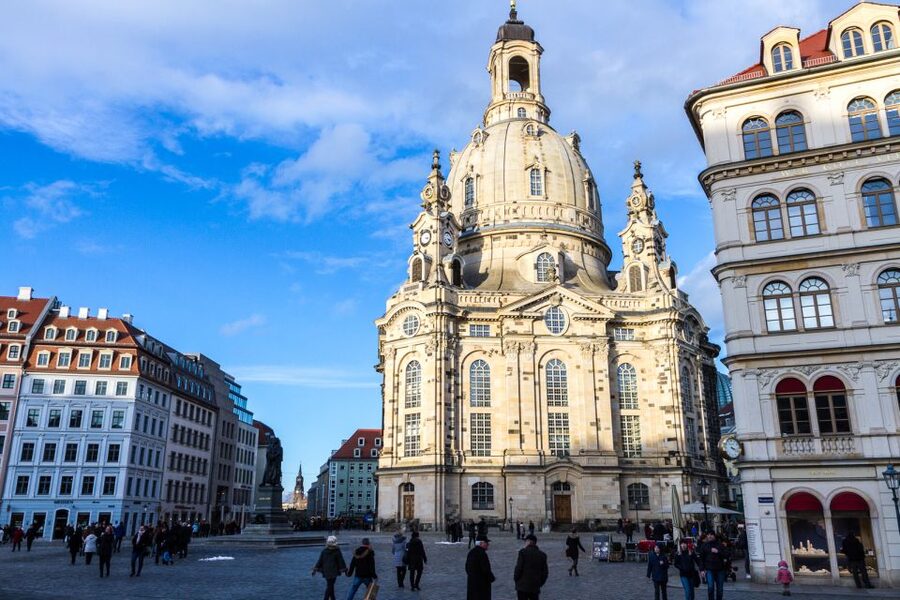
- Frauenkirche visit included: See the altar, murals, unusual nave, and historic crypt during the church portion of the tour.
- A compact old-town route: Cover Neumarkt, Stallhof, Fürstenzug, Schlossplatz, Hofkirche, Theaterplatz, Brühl’s Terrace, and the Zwinger district.
- Small group, clear sound: The group is limited to 10 people, and headsets help you follow the guide in busy public spaces.
- German-language experience: The live guide and audio support are offered in German.
- Strong value at $16: You get a personal guide, headsets, a postcard, and a two-hour introduction to Dresden’s major sights.
- Museum entries are separate: The tour shows you the outside of the Royal Palace, Zwinger, and Semper Opera, but does not include their museum admission.
Why this Dresden walking tour works
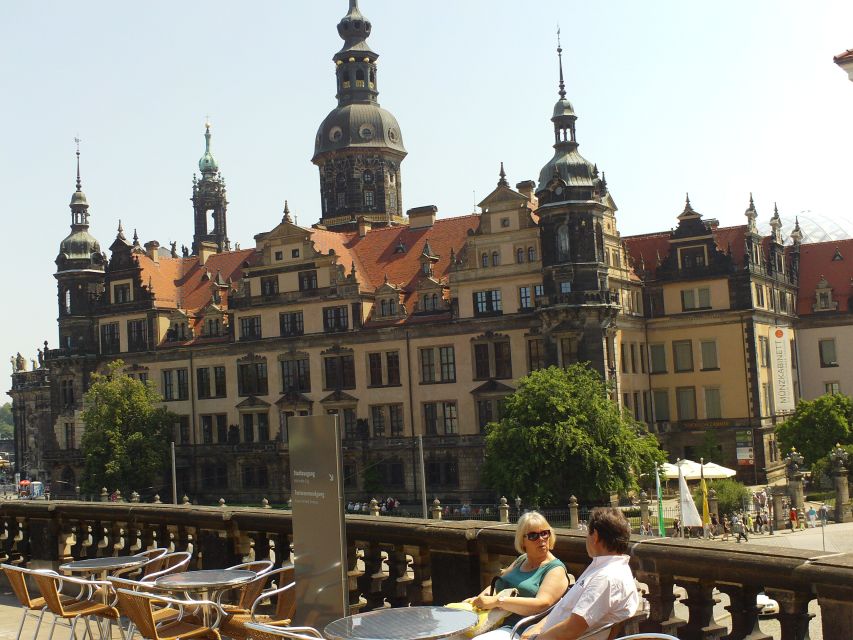
Dresden can feel like a collection of handsome buildings at first glance. This walking tour helps you see how the buildings relate to one another. The route moves through the historic center in a steady sequence, so you are not simply checking off monuments. You hear how the city’s royal court shaped its architecture, how Augustus the Strong used spectacle and festivals, and how Dresden rebuilt key landmarks.
The two-hour length is well judged for a first look. You get enough context to understand the city, but the tour does not try to turn every building into a lecture. The guide’s style is meant to be lively and humorous, with stories about both Saxony’s grand period and current events.
The headsets are a practical advantage. Dresden’s old town has open squares and busy streets, and a guide speaking at normal volume can be hard to follow. With the provided equipment, you can look at a façade or walk a few steps behind the group without losing the explanation.
You should come ready to walk and stand. The tour is listed as wheelchair accessible, but it still takes place across historic streets and large public squares. If you have specific mobility needs, it is sensible to confirm the current route before booking.
Other walks around Dresden:
- Dresden: City & Semperoper Guided Walking Tour
★ 4.8 · 2,293 reviews - Dresden: Guided City Walk with a Cup of Coffee
★ 4.7 · 1,568 reviews - Görlitz: Old Town Guided Walking Tour
★ 4.7 · 723 reviews
Starting at Neumarkt and meeting the guide
The meeting point is Neumarkt 2, in front of the tourist information office on the sub-level floor of the QF Passage. Look for the guide holding a sign marked Glanzlichter Dresdens.
Arrive five to 10 minutes early. That gives you time to find the tourist information office, meet the guide, and receive your headset before the group sets off at 10:30 AM. This is not a tour where you want to arrive at the last second, especially if you do not know the QF Passage.
The group size is capped at 10. That matters in Dresden, where the route moves between broad squares and narrower areas around historic buildings. A small group gives you a better chance to ask questions and stay close to the guide without blocking other pedestrians.
The live tour is in German. The audio guide support is also in German, so this experience is best suited to German-speaking visitors. The guide is the main source of information, rather than a recorded commentary that you simply follow from one stop to the next.
Neumarkt, Stallhof, and Fürstenzug
The route begins among the most recognizable parts of Dresden’s old town. Neumarkt is anchored by the Frauenkirche and surrounded by buildings that help frame the city’s Baroque character.
From there, the tour takes in Stallhof and Fürstenzug. Stallhof, the former courtyard area, connects the city to the world of the Saxon court. Fürstenzug is the long decorative procession of rulers, an ideal stop for understanding the succession of Saxon princes and kings through art rather than a dry list of names.
This is where a good guide can make a major difference. You are not only looking at stone and painted tiles. You are hearing how power was displayed, how the court presented itself, and why these spaces mattered in Dresden’s public image.
The guide also brings in the city’s difficult modern story. Dresden’s grand center was heavily damaged during the Second World War, and the old town you see today reflects both surviving structures and careful reconstruction. The tour’s value is in explaining that distinction instead of presenting the center as if every building has remained untouched.
Inside the Frauenkirche
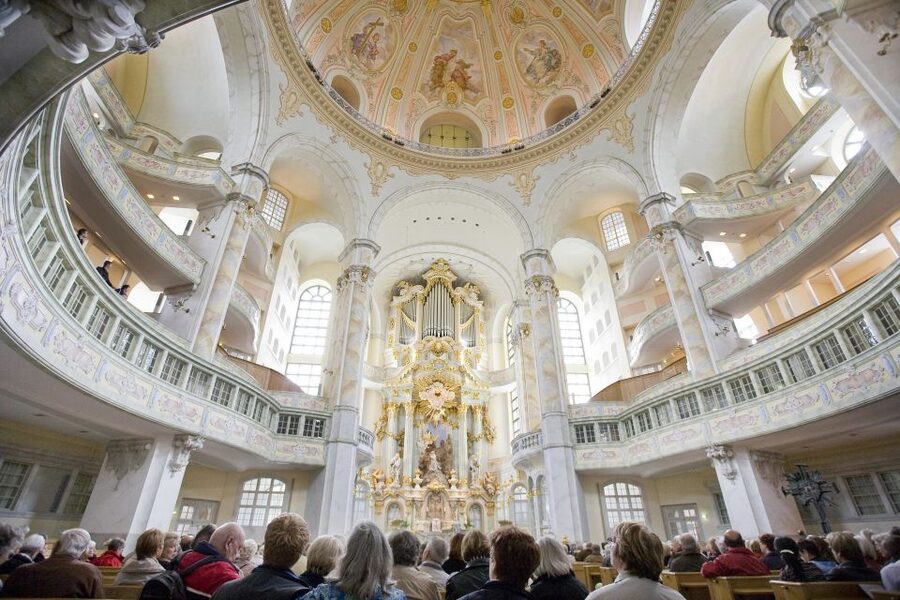
The Frauenkirche is the tour’s key interior stop. Inside, you see the altar, colorful murals, the historic crypt, and the unusual arrangement of the nave. The church’s lower section adds another layer to the visit, taking you below the bright Baroque interior and into an older, more solemn setting.
The church is especially important because it carries both architectural and civic meaning. Its Baroque form reflects Dresden’s royal ambitions, while its reconstruction became a major symbol of the city’s return after wartime destruction.
The guide’s explanation helps you notice details you might otherwise miss. Look at the murals and the altar, but also pay attention to the way the nave is arranged. The interior does not feel like a plain rectangular hall. Its form creates a more theatrical setting, fitting for a church shaped by the artistic world of the Saxon court.
There is one important caveat. The Frauenkirche is an active religious and public building, so access can sometimes be interrupted by events or preparations. A recent tour was unable to enter because of ZDF preparations, and the participant felt that advance notice would have helped. Treat the interior visit as a central feature, but not an absolute guarantee on every date.
If the church interior is especially important to you, check for current access information before booking. Even without entry, the guide can still explain the building from the surrounding Neumarkt area, but the experience is clearly better when you can see the murals and crypt.
Same base, a different kind of day out:
- Dresden: Semperoper Tickets and Guided Tour
★ 4.7 · 12,102 reviews - Dresden: The Original Night Watchman Tour in Lantern Light
★ 4.6 · 6,653 reviews - Dresden: Semperoper and Old Town Tour
★ 4.8 · 5,735 reviews - Dresden: River Sightseeing Boat Cruise
★ 4.3 · 5,323 reviews
Schlossplatz and the Catholic Hofkirche
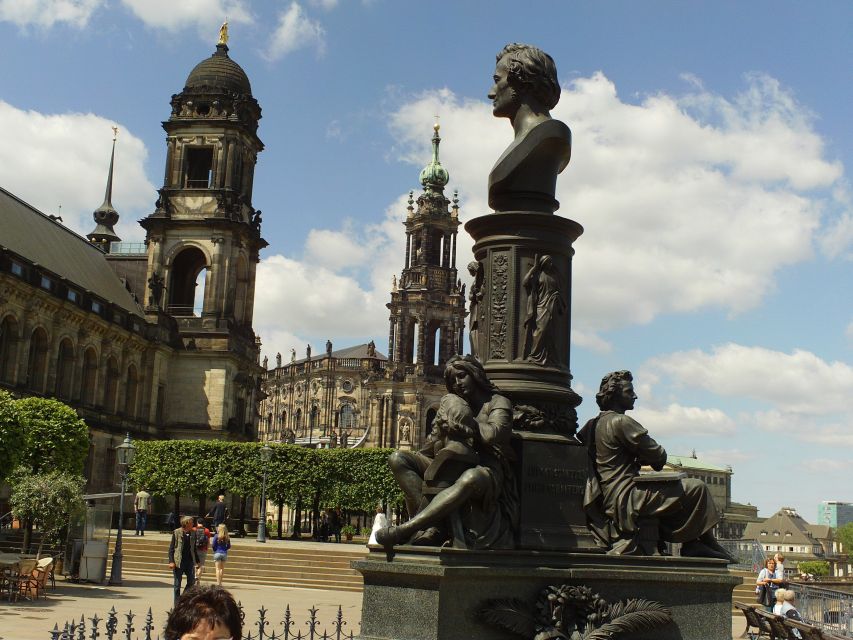
Next, the walk continues to Schlossplatz, one of Dresden’s main historic spaces. This area brings together royal and religious power in a compact setting, making it one of the best places on the route for seeing how the city was organized around the court.
The Catholic Hofkirche is another major sight. Its presence is a useful reminder that Saxony’s political and religious story was not simple. The church adds contrast to the Protestant Frauenkirche and helps place Dresden within the wider history of European courts and dynasties.
You will not be going through every building in depth. That is a good thing on a two-hour walk. The guide gives you enough background to understand the role of the square, then keeps you moving toward the next major cluster of sights.
Theaterplatz and the Semper Opera
The route then reaches Theaterplatz, home to the Semper Opera and the Royal Palace area. This is one of Dresden’s grandest urban spaces, designed to be seen as a whole rather than as a single monument.
The Semper Opera is one of the city’s best-known buildings, but this walking tour does not include entry. You see it from the outside and hear about its place in Dresden’s cultural life. If you want an opera performance or a full interior visit, that requires a separate plan.
The same applies to the Royal Palace. The tour introduces the building and its setting, but admission to the museums inside the palace is not included. This is worth remembering when comparing the $16 tour with a full museum day. The walking tour is an orientation and storytelling experience, not an all-access ticket.
I like this division. You get a clear sense of where the main museums and performance buildings are, then you can decide later which ones deserve your time and money. A guide can help you understand what you are seeing before you commit several hours to an indoor collection.
Brühl’s Terrace and the Elbe view
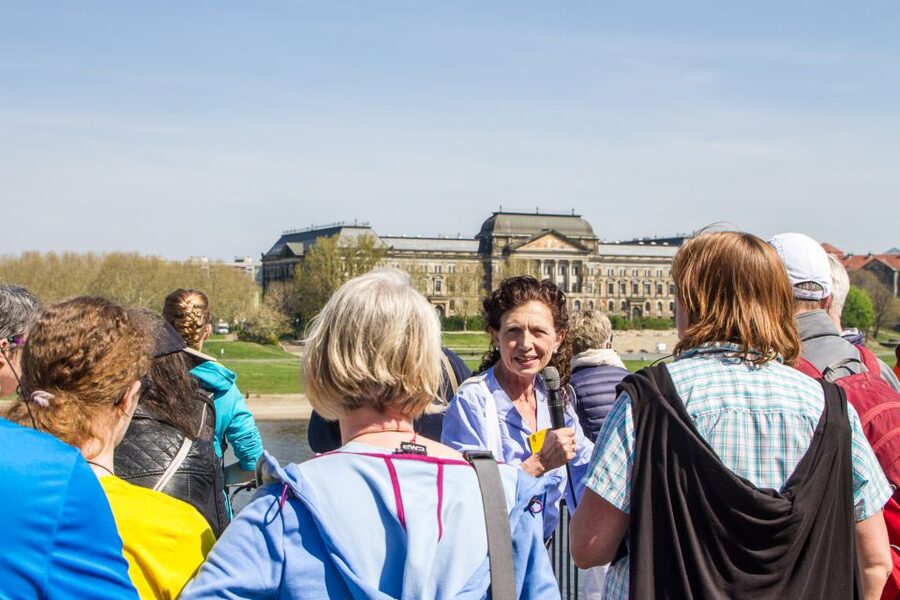
From Theaterplatz, the route continues across Brühl’s Terrace, the broad riverside promenade often linked with Dresden’s elegant public image. Here, the focus shifts from royal buildings to the city’s position beside the Elbe.
The view gives the walking tour a welcome change of pace. After several dense architectural stops, you get open space and a chance to look outward across the river. The Elbe view also helps explain Dresden’s physical setting, rather than leaving you with only a picture of the old town’s monuments.
This stop is more than a photo break. It helps you understand the relationship between Dresden’s court center and the riverfront. The terrace offers a clear sense of how the city presents itself: formal, scenic, and closely tied to the Elbe.
Because this is a walking tour, the view depends on the weather and visibility on the day. The route still works in less-than-perfect conditions, but Brühl’s Terrace is more rewarding when the river and surrounding scenery are easy to see.
The Zwinger and Saxon Baroque
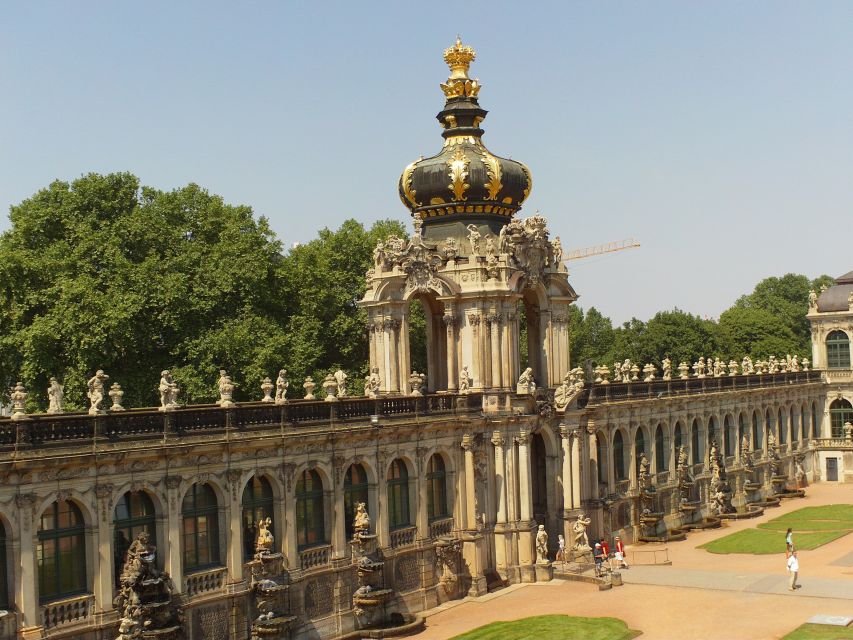
The final major section takes you into the Zwinger district. This is where the tour puts the strongest emphasis on Saxon Baroque and court spectacle.
The Zwinger’s sandstone sculptures are worth seeing up close. They are not simply decorative flourishes added to a palace complex. The guide explains their former purpose, the court festivals associated with Augustus the Strong, and the way the site is used today as a museum.
That background changes how you read the building. The Zwinger was designed for display, celebration, and royal theater. Its sculptures and open spaces helped create an environment where the court could stage its power and taste.
You also learn how the Zwinger functions now. Museum admission is not included, so you will see the architecture and sculpture from the walking route rather than touring the collections inside. If you plan to return for the museums, this first look can help you decide how much time to set aside.
The sandstone details reward a slower gaze. Look for the way figures, ornaments, and architectural elements work together. The guide’s stories about court festivals give the complex a human purpose, so it does not feel like a beautiful but distant shell.
The guide’s style and what the reviews tell me
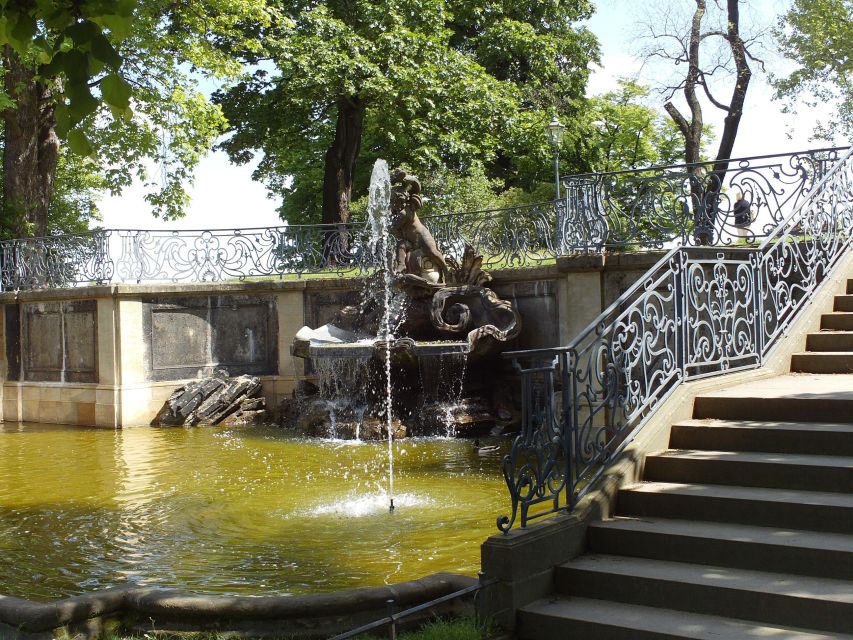
The strongest pattern in the feedback is the quality of the guiding. Several recent comments praise the tours as informative without becoming dull, and Dagmar Renger is singled out for answering questions, using humor, and showing real feeling for Dresden.
That matters because this route contains a lot of names and dates. A flat delivery could make the Frauenkirche, Hofkirche, Fürstenzug, Royal Palace, and Zwinger blur together. The best version of this tour gives each place a clear role in the city’s story.
Dagmar Renger is described as bringing genuine enthusiasm for her home city. If she is your guide, expect a personal, energetic style rather than a formal museum recital. The tour provider may use more than one guide, so her presence should not be treated as guaranteed for every departure.
The comments also support the tour’s balance of information and pace. You get history, but the presentation is intended to stay light and entertaining. That suits anyone who wants useful context without spending two hours listening to a long academic talk.
Is $16 a fair price?
At $16 per person, this is a strong-value introduction to Dresden. The price includes a personal guide, headset, and postcard, while the route covers many of the city center’s key sights in two hours.
The value is highest if this is your first time in Dresden or if you have limited time. A self-guided walk costs less, of course, but you would need to research the buildings, work out the route, and find answers to the questions that arise along the way. The guide gives you the city’s main framework in one sitting.
The price does not include the museums in the Royal Palace, Zwinger, or Semper Opera. If you want interior collections, performances, or extended visits, budget separately. Think of this tour as a well-priced city introduction, not a substitute for a full museum ticket.
The free cancellation up to 24 hours before the start and the option to reserve now and pay later make it easier to fit into a changing schedule. Those are useful booking terms, but the main reason to choose the tour is the concentrated route and personal explanation.
Who should book this walk?
I would choose this tour if you want to understand Dresden before exploring it on your own. It suits first-time visitors, short-break guests, and anyone who prefers a guide to explain the city’s complicated past while pointing out what deserves a closer look later.
It is also a good fit for German-speaking families or couples who want a small group rather than a large city procession. The headsets help if you prefer to look around rather than keep your eyes fixed on the guide.
You may want a different plan if your priority is museum time, an English-language tour, or a long visit inside the Frauenkirche. The experience is in German, the museums are not included, and the church entry can occasionally be interrupted.
Should you book the Dresden Complete Walking Tour?
Book it if you want a short, affordable, German-language overview of Dresden’s most important central sights. The route is well packed, the group is small, and the combination of Frauenkirche, royal squares, Brühl’s Terrace, and the Zwinger gives you a useful first map of the city.
The best reason to book is the guide-led context. Dresden’s rebuilt center can look polished and self-explanatory, but its meaning is not always obvious from the façades. A lively guide, especially someone with Dagmar Renger’s reported warmth and humor, can turn a two-hour walk into a much clearer understanding of the city.
Just confirm the language and, if possible, the current Frauenkirche access before paying. If those points work for you, $16 is a sensible price for a focused introduction.
FAQ
Where does the Dresden walking tour meet?
Meet at Neumarkt 2, 01067 Dresden, in front of the tourist information office on the sub-level floor of the QF Passage.
What time should I arrive?
The meeting time is 10:30 AM. Arrive five to 10 minutes early so you can find the meeting point and receive your headset.
How do I identify the guide?
The guide holds a sign marked Glanzlichter Dresdens.
How long does the tour last?
The walking tour lasts two hours.
Is the tour offered in English?
The live tour guide and audio guide are listed as German-language services. No English option is provided in the tour details.
Is entry to the Frauenkirche included?
The itinerary includes a visit inside the Frauenkirche, including the altar, murals, nave, and historic crypt. Access can occasionally be unavailable because of church events or preparations.
Are museum tickets included?
No. Entry to the museums in the Royal Palace, Zwinger, and Semper Opera is not included.
How large is the group?
The tour is a small-group experience limited to 10 participants.
Is the tour wheelchair accessible?
Yes, the activity is listed as wheelchair accessible.
Just added in Dresden
- Bastei Bridge & Gorge Boat Ride – Day Trip from Dresden★ 5.0 · 8 reviews
- Bad Schandau: Scavenger Hunt through Saxon Switzerland★ 4.4 · 36 reviews
- Dresden: Old Town Self-Guided Scavenger Hunt Tour★ 4.5 · 151 reviews
- Dresden: Old Town Scavenger Hunt for Children★ 4.6 · 117 reviews
- Dresden Sightseeing Treasure Hunt★ 5.0 · 57 reviews
- Big city tour hop on hop off 22 stops★ 3.5 · 100 reviews
- Dresden: Zwinger Skip-the-Line & 2-Day Hop-On Hop-Off Bus★ 4.5 · 160 reviews
- Dresden: Taste of Dresden Food Walk★ 4.6 · 348 reviews
Walking Tours, compared.



Third Reich Berlin: Hitler and WWII Walking Tour
Read our review →
Browse the lists this tour appears in