
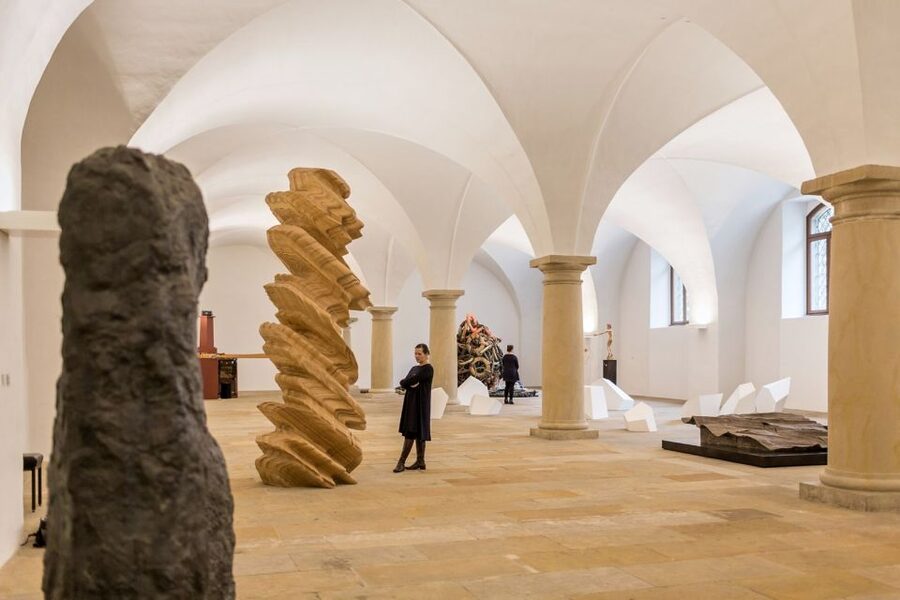
Reviewed · MUSEUMS
Dresden: Albertinum Museum Entry Ticket
The Albertinum puts painting and sculpture under one roof, beginning with Auguste Rodin’s famous The Thinker. From there, the collection moves through German Romanticism, modern art, and contemporary works, so you can watch artistic ideas change across more than two centuries.
I like two things right away: the chance to see major works by Caspar David Friedrich, and the way the museum pairs familiar names with less predictable modern pieces. The one drawback is that this is a self-guided museum visit, not a guided tour, so you need to set your own pace and bring your own context.
Key points
- Rodin’s The Thinker opens the visit: You encounter one of the museum’s best-known sculptures at the start.
- Caspar David Friedrich gives the visit its Romantic heart: His paintings provide a strong link to Dresden’s artistic identity.
- The collections span 1800 to today: You move from 19th-century painting and sculpture into contemporary work.
- The Albertinum mixes East and West: The displays connect different artistic traditions instead of keeping every period in a separate box.
- A one-day ticket lets you choose your pace: You can make a short art stop or give the museum a longer part of your day.
- Under-17s enter free with a child ticket: This makes the visit more practical for families.
Why the Albertinum is more than a picture gallery

The Albertinum is a good choice when you want a museum visit with range. It is not limited to one artist, one movement, or one century. Its Galerie Neue Meister presents painting from the 19th century to the present, while the Skulpturensammlung focuses on sculpture from 1800 onward.
That combination matters. You do not simply look at paintings in one room and statues in another. The visit asks you to compare how artists handle the human body, nature, emotion, movement, and abstract form in different materials.
The museum also connects East and West, older art and newer work. That makes the experience less predictable than a single-period collection. You might begin with the serious inward gaze of Rodin’s The Thinker, then move toward the elongated human form of Wilhelm Lehmbruck’s Kneeling Woman, and later encounter contemporary pieces made from unusual materials.
You should come with an open mind rather than a checklist. The Albertinum includes famous names, but its interest comes from the changes between them.
Other museums and galleries in Dresden:
- Dresden: Church of Our Lady Guided Tour of Gallery
★ 4.7 · 2,421 reviews - Dresden: Guided Walking Tour and Chocolate Museum Ticket
★ 4.5 · 385 reviews - Dresden: Dresden Transport Museum Entrance Ticket
★ 4.6 · 189 reviews
Starting with Rodin’s famous Thinker
Your first major encounter is Auguste Rodin’s The Thinker. This is a useful opening because the sculpture introduces a key idea running through much of the visit: the human figure can carry thought, tension, doubt, and emotion without a single spoken word.
Rodin helped shape many artistic directions that became important in the 20th century. His work does not treat sculpture as a polished object meant only to look perfect. The figure feels physically present, but the pose also suggests mental struggle.
Take a moment before moving on. It is easy to hurry past a famous work because you already know its name. Here, the better approach is to look at the posture, the compact force of the body, and the way the sculpture asks you to read a thought through physical form.
This first stop also gives you a point of comparison for the other sculptures. As you continue, notice how later artists make the body thinner, more abstract, more fragmented, or less recognizable. Rodin’s figure helps you see the older model before the collection begins to stretch it.
Caspar David Friedrich and the Romantic imagination
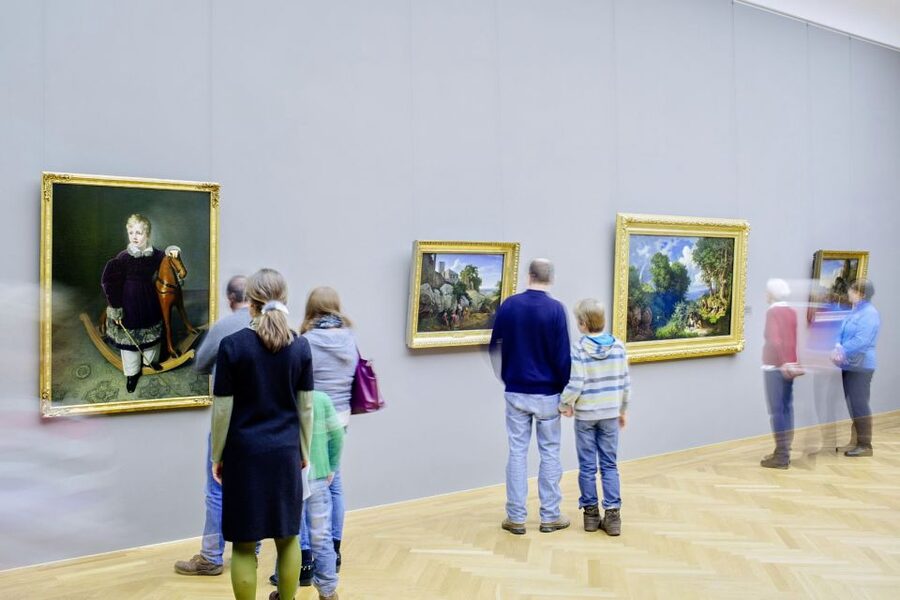
Caspar David Friedrich is one of the main reasons many people will choose the Albertinum. The German Romantic artist is represented by important works, and his paintings offer a very different experience from Rodin’s physical sculpture.
Friedrich’s art often invites you to think about the relationship between people and the natural world. His paintings are not simply scenic views. They create a mood and leave space for your own thoughts. You may find yourself looking at the setting first, then asking what the human figure, distant horizon, or changing light might mean.
This is where the Albertinum becomes especially valuable for anyone interested in German art. Friedrich is not presented as an isolated name in a textbook. His work sits within a larger story of changing attitudes toward feeling, nature, solitude, and the inner life.
Give these paintings time. You do not need to know every detail about German Romanticism to respond to them. Start with the basic questions: Where is the person in the picture? What can the person see? What remains hidden? How does the setting affect your sense of scale?
The museum’s wider collection helps you see how far later artists move from Friedrich’s approach. That contrast is part of the pleasure. A visit can begin with the silent drama of a Romantic painting and end with work that looks openly constructed, mathematical, or playful.
Wilhelm Lehmbruck’s Kneeling Woman
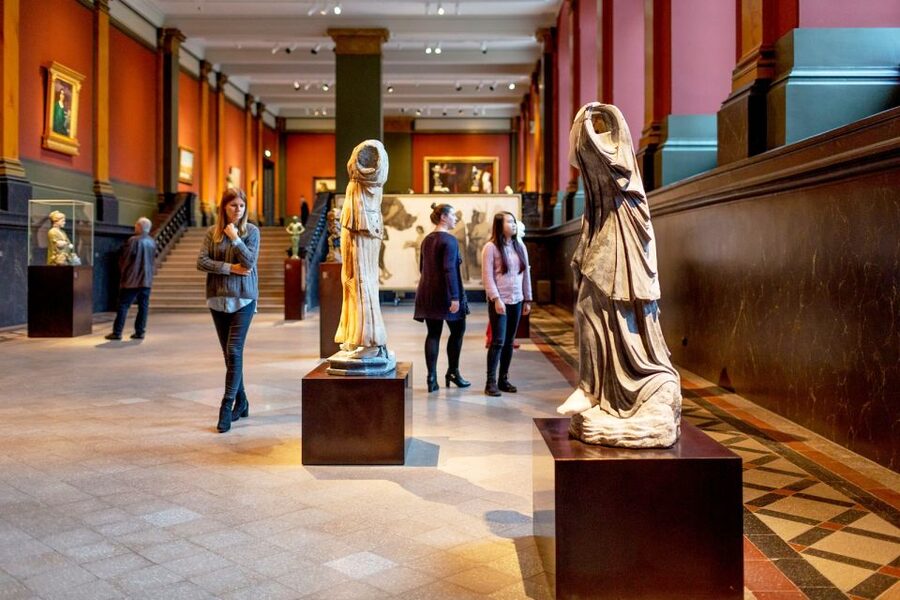
Wilhelm Lehmbruck’s 1911 Kneeling Woman brings the human figure back into focus, but not in the sturdy, naturalistic manner you might expect from an earlier sculpture.
The title sounds simple. The form is not. Lehmbruck stretches and simplifies the body, giving it an unusual sense of fragility and height. The pose suggests a person, yet the proportions push the figure toward something more symbolic.
This is a good place to compare sculpture with painting. Friedrich can use distance, sky, and land to create emotional space. Lehmbruck uses the body itself. The long shape and quiet pose can make the figure seem vulnerable, solemn, or removed from everyday life.
You do not need to decide on one correct meaning. Instead, look at how the sculpture changes your sense of a human body. It is recognizable, but it does not feel like a straightforward portrait. That tension between the real and the altered is one of the museum’s strongest themes.
A few more things to do in Dresden worth a look
- Dresden: Semperoper Tickets and Guided Tour
★ 4.7 · 12,102 reviews - Dresden Castle General Admission Ticket
★ 4.6 · 1,328 reviews - Dresden: Hop-On Hop-Off Sightseeing Bus Tickets
★ 4.5 · 1,036 reviews - Dresden: Virtual Reality Time Travel Experience Ticket
★ 4.5 · 748 reviews
From 19th-century art to contemporary materials
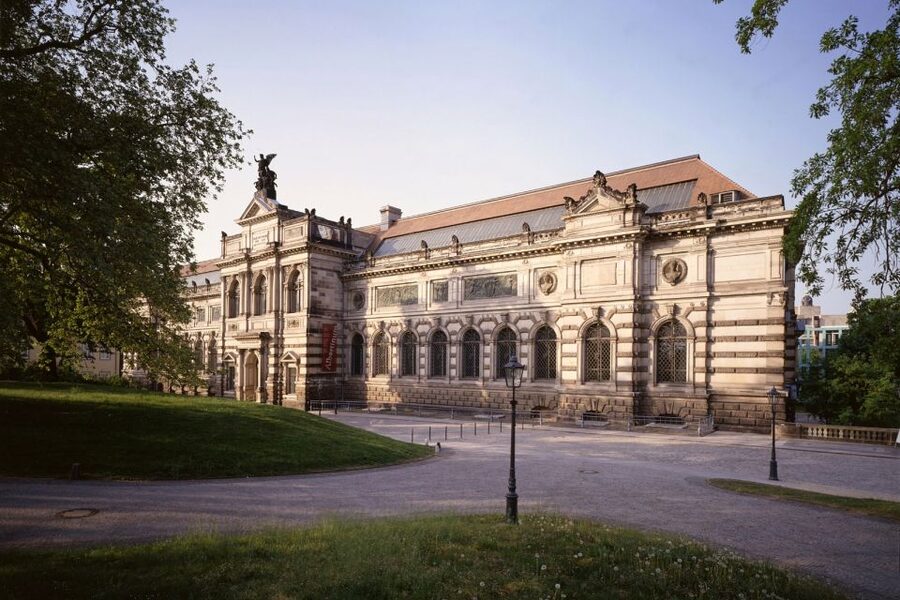
The Albertinum does not stop with the major figures of the 19th and early 20th centuries. Its displays continue into modern and contemporary art, where artists question what a painting or sculpture must be made of.
Birgit Diecker’s Seelenfänger is one example. The work belongs to the later part of the collection and gives you a chance to see how contemporary artists can approach the body, identity, and material in a less familiar way.
Tony Cragg’s mathematically stacked cube takes another route. It is made from wood, fabric scraps, and loose-leaf binders, materials that would normally belong to ordinary life rather than a traditional sculpture gallery. Their arrangement gives the work an ordered structure, but the materials keep it tactile and slightly unruly.
This is a useful reminder that contemporary sculpture is not just about unusual shapes. It can also be about the things objects are made from, how they are arranged, and how familiar materials change when placed in an art museum.
If you prefer clearly recognizable subjects, these works may take more effort than Friedrich or Rodin. That is a fair consideration. You will get more from this part of the visit if you are willing to look at construction, texture, balance, and material instead of waiting for a clear scene or story.
A visit built around contrasts
The best way to understand the Albertinum is through its contrasts. Paintings and sculpture share the same broad artistic conversation, but they solve problems in different ways.
A painter can create depth with color and perspective. A sculptor has to deal with weight, surface, and the viewer’s movement around the work. A Romantic painting may suggest a private mood through atmosphere. A contemporary sculpture may create a response through rough fabric, stacked forms, or an unexpected combination of objects.
The museum’s range also lets you compare the treatment of the human figure. Rodin gives thought a strong physical body. Lehmbruck makes the body elongated and vulnerable. Later artists may reduce the figure, alter it, or replace it with materials and structures that only hint at human experience.
I recommend resisting the urge to see every room at the same speed. Spend longer with the artists you already care about, then give yourself time to find one unfamiliar work that catches your attention. You do not need to appreciate every piece for the visit to be worthwhile.
How much time should you allow?
The ticket is valid for one day, but the information does not set a fixed visit length or guided schedule. That flexibility is useful. You can fit the Albertinum into a larger Dresden day, or make it a central stop for several hours.
Your ideal timing depends on how you look at art. If you mainly want Rodin and Friedrich, a shorter visit may be enough. If you want to follow the movement from Romanticism through modern and contemporary work, allow more time and take breaks as needed.
The one-day validity also removes pressure to race through the rooms. You can plan a visit around your own energy. That is especially helpful if you are seeing several museums or historic sights in Dresden on the same day.
There is no stated guided commentary or named guide included, so do not book this expecting a tour leader to explain each gallery. You are paying for entry to the museum and its collections. If you enjoy choosing your own route, that is a strength. If you prefer a structured lecture, you may need to arrange separate information elsewhere.
The $16 ticket and its value
At $16 per person, the ticket is reasonably priced for access to two major collections covering art from 1800 to the present. The value is strongest if you plan to see both painting and sculpture rather than making a quick stop for one famous work.
Rodin and Friedrich alone may be the main draw for some people, but the broader collection justifies the ticket better. You are not buying access to a single room. You are getting a wide view of how artists worked across Romantic, modern, and contemporary periods.
The price also works well for families because children under 17 can enter the exhibition free when accompanied by an adult. You still need to book a child ticket, so do not assume that a child can simply enter without one.
For visitors who do not usually spend hours in museums, the ticket can still make sense because you control the length of the visit. You can see the major works, enjoy the building and displays, and leave before art fatigue takes over.
Practical details before you go
Wear comfortable shoes. The visit involves walking through gallery spaces, and you will enjoy it more if you are not distracted by tired feet.
A camera is listed as something to bring. Follow the museum’s instructions about photography once inside, since permission can vary by artwork or exhibition area.
The Albertinum is wheelchair accessible, which makes this a more practical museum choice for visitors who need step-free access. The ticket is valid for one day, and you should check current opening hours on the local partner’s official website before setting your schedule.
There is one important temporary restriction. Due to technical construction work, the second floor is scheduled to be closed from April 7 through April 17. Check whether your visit falls during that period, since the closure may limit the portion of the collection you can see.
The activity information does not provide a meeting point, transport arrangement, group size, or a fixed starting time. Treat this as an independent museum entry, not a city tour with transportation or a guide.
You can cancel up to 24 hours in advance for a full refund, and the reserve-now-pay-later option keeps your plans flexible. Those terms are useful if your Dresden schedule may change, though you should still check the exact conditions at booking.
Who will enjoy the Albertinum most?
I would recommend this museum to anyone who wants more than a single famous painting. It suits art lovers interested in German Romanticism, sculpture, modern art, or the way museums connect older and newer work.
It is also a good fit for mixed-interest groups. One person can focus on Friedrich, another on Rodin, and someone else can spend time with contemporary materials. The range gives you several ways into the collection.
Families may find the free admission for children under 17 helpful. The one-day ticket lets you keep the visit flexible, although younger children may not want to spend a long stretch moving through galleries.
You may want to choose another activity if you need a guide, a clear tour route, or live explanations throughout the visit. Nothing here indicates that a guide is included. This is best for independent museumgoers who like to stop, compare, and move at their own speed.
Should you book the Albertinum ticket?
Book it if Rodin, Caspar David Friedrich, German art, or the meeting of painting and sculpture interests you. The $16 price gives you access to a wide period range, and the visit can be short or substantial because the ticket is valid for one day.
The strongest reason to go is the combination of familiar masterpieces and less expected contemporary work. You can begin with The Thinker, spend time with Friedrich and Lehmbruck, then see how artists such as Birgit Diecker and Tony Cragg use modern ideas and materials.
Skip it only if you want a guided experience or have little interest in art beyond one quick landmark. For everyone else, the Albertinum offers a thoughtful, flexible museum stop in Dresden, with enough variety to reward both first-time art visitors and people who already know the major names.
FAQ
Where is the Albertinum museum?
The Albertinum is in Dresden, Saxony, Germany.
What does the ticket include?
The ticket includes entry to the Albertinum, access to artworks from the Romanticism to Contemporary periods, and the sculpture collection from 1800 onward.
How long is the ticket valid?
The ticket is valid for one day.
Is a guided tour included?
No guide or guided tour is specified. The activity is an entry ticket for independent museum access.
Which famous artist can I see at the Albertinum?
You can see works by Caspar David Friedrich, Auguste Rodin, Wilhelm Lehmbruck, Birgit Diecker, and Tony Cragg.
Is Auguste Rodin’s The Thinker on display?
Yes. The visit begins with Auguste Rodin’s famous sculpture The Thinker.
Are children admitted free?
Children under 17 can enter the exhibition free when accompanied by an adult. You should book a child ticket.
Is the Albertinum wheelchair accessible?
Yes. The activity is wheelchair accessible.
What should I bring?
Comfortable shoes and a camera are recommended.
Is any part of the museum temporarily closed?
The second floor is scheduled to be closed for technical construction work from April 7 through April 17. Check the official website for current information before visiting.
Just added in Dresden
- Test Drive Electric Vehicles from the VW brand (ID. model)★ 4.8 · 190 reviews
- SRF CoBi | City Tour by ConferenceBike★ 4.7 · 38 reviews
- Dresden: Scavenger Hunt to Elbe River & Castles★ 4.7 · 15 reviews
- Dresden: Bike Rental – City Bike with Option Children Seat★ 4.5 · 13 reviews
- Moritzburg: Scavenger Hunt Self-Guided Walking Tour★ 4.8 · 12 reviews
- Historical tour of the old town including a Saxon dinner★ 4.7 · 23 reviews
- Görlitz: Scavenger Hunt Self-Guided Tour★ 4.6 · 22 reviews
- Görlitz: Ghosts and Spooky Historical Night Walking Tour★ 4.8 · 197 reviews
Museums, compared.


Skip-the-Line: Berlin Wall Museum at Checkpoint Charlie
Read our review →
Browse the lists this tour appears in