
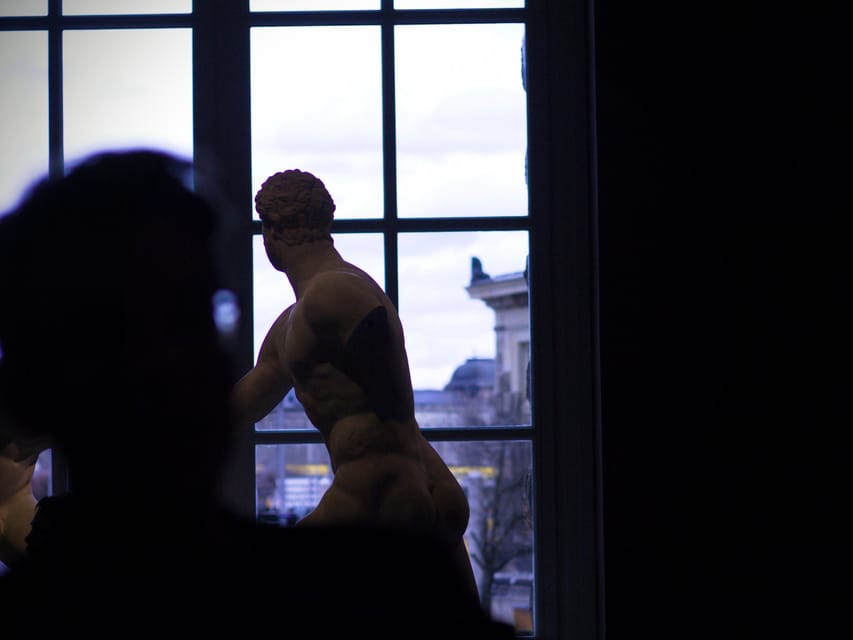
Reviewed · MUSEUMS
Dresden: Ticket + Tour Gallery Old Masters
The best part of this Dresden tour is that it shows you what paintings hide. You will not simply walk past Raphael, Titian, or Rembrandt and hear a few dates. You will study X-rays, pigments, and painting methods, then return to famous works with a sharper eye.
I like the focused two-hour format, especially the way it begins with five quick examples before spending more time on major works. I also like the mix of science and storytelling: rare colour samples, digital images, and videos make old paintings feel less remote. The main consideration is simple: the tour is in German only, and the exact paintings can change if a work is being restored or loaned elsewhere.
Key points to know before booking
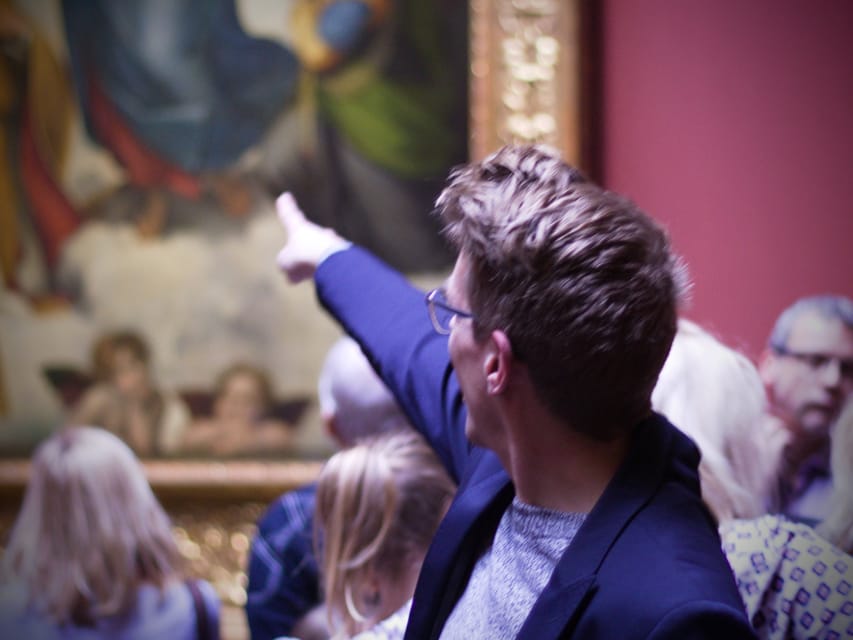
- The tour starts in the Old Masters Picture Gallery cloakroom, downstairs from the ticket point, and returns there at the end.
- Raphael’s Madonna, Titian and Giorgione’s Sleeping Venus, and works by Rembrandt and Vermeer are among the planned subjects, though no individual painting is guaranteed.
- X-ray images reveal hidden layers beneath the surface of selected paintings.
- Historic colour pigments can be touched, giving the technical side of art a physical connection.
- The German-speaking guide explains art history, science, and symbolism in a lively two-hour format.
- Admission and ticket-line access are included in the $44 price, with free cancellation up to 24 hours before the start.
Why this tour changes the way you see Dresden’s Old Masters
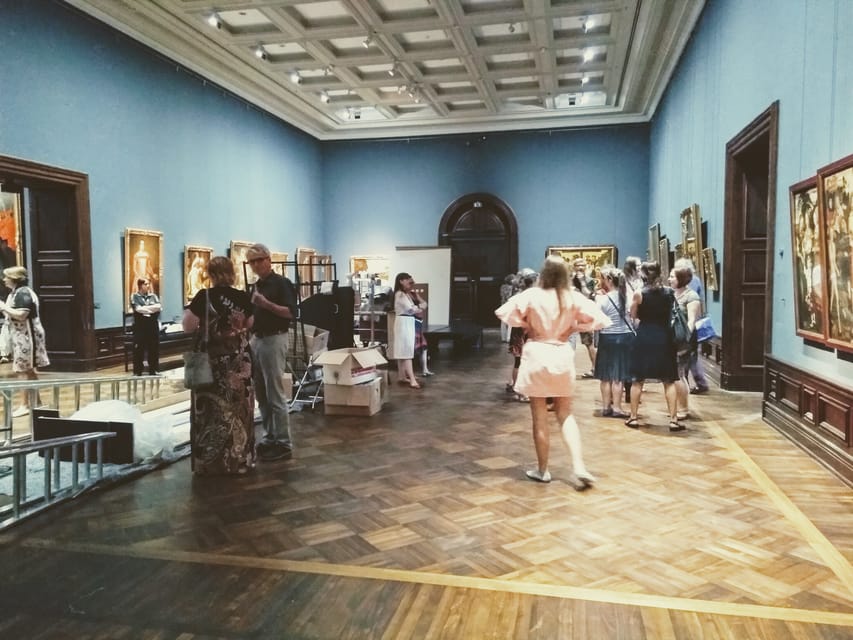
The Old Masters Picture Gallery is filled with paintings that can overwhelm you. There are famous names, polished surfaces, religious scenes, mythological figures, and centuries of European art packed into one visit. Without a plan, you may admire the room, recognize a few names, and miss the clever details.
This tour gives you a method. You begin by looking at five paintings for only a couple of minutes each. That quick pace is useful because it introduces several types of art without asking you to absorb a long lecture at the start. One work may show a different approach to religious painting, another may reveal the early use of oil, and another may demonstrate gold as part of the picture surface.
I like this opening because it helps you compare instead of treating every painting as an isolated masterpiece. You learn to ask what materials were used, why a scene was created, how a painter guided your eye, and what technical choices survive beneath the visible image.
The tour then slows down. Once you have the basic tools, you look more closely at religious paintings and learn how to spot details that may otherwise seem decorative or confusing. That shift, from a quick survey to concentrated looking, is the central strength of the experience.
Other museums and galleries in Dresden:
- Dresden: Church of Our Lady Guided Tour of Gallery
★ 4.7 · 2,421 reviews - Dresden: Guided Walking Tour and Chocolate Museum Ticket
★ 4.5 · 385 reviews - Dresden: Dresden Transport Museum Entrance Ticket
★ 4.6 · 189 reviews
Starting downstairs in the gallery cloakroom
The meeting point is inside the Old Masters Picture Gallery. From the ticket point, go downstairs, take a right through the door, and then use the stairs on the right-hand side. Your guide waits in the cloakroom, so allow about 10 minutes before the scheduled start.
This is worth noting because the meeting point is not described as a street entrance or a separate office. You need to get inside the gallery and find the cloakroom area. Arriving early gives you time to manage that first step without rushing.
Large bags and luggage are not allowed. Plan to travel light, since the activity does not provide a place for oversized belongings. The tour begins and ends at the same gallery location, which makes it easy to continue exploring Dresden afterward or move on to another nearby plan.
Admission is included, as are the required license fees and access to the tour. You also skip the ticket line, a practical benefit if the gallery is busy. At $44 per person, this is not the cheapest way to see a museum, but the price includes a live specialist-led visit rather than admission alone.
The first five paintings teach you how to look
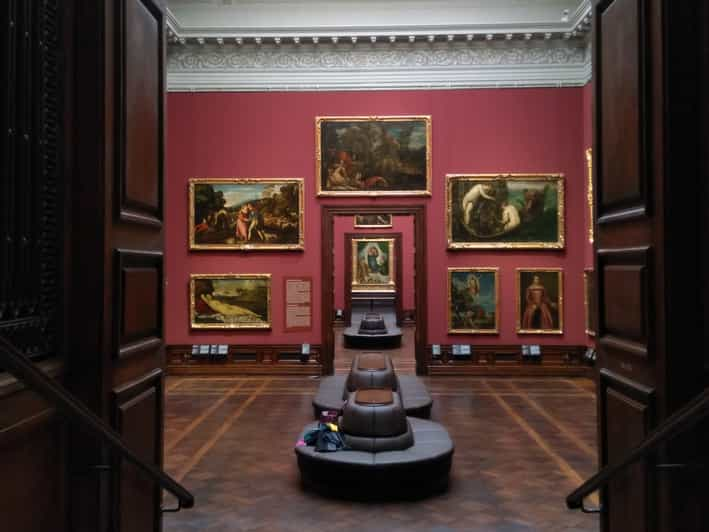
The opening section uses five paintings as a visual primer. Each receives only a couple of minutes, and each represents a different type or category of art. That may sound brief, but the purpose is not to explain five masterpieces in full. It is to build a set of questions you can use during the rest of the visit.
You will encounter early oil paintings, gold-ground works, and examples connected with major European painters. Botticelli, Raphael, Jan van Eyck, Rembrandt, and Vermeer are among the artists included in the planned material. Since museum displays can change, the precise selection may vary.
This part should suit you if you are new to art history or if you usually feel unsure about what you are supposed to notice in a painting. The guide explains the technical basics in plain terms, then adds the historical reasons behind the works. You are not expected to arrive with a vocabulary of art criticism.
The fast rhythm may be less satisfying if you want to spend a long time with every painting. This is a guided introduction, not a slow, solitary museum visit. You are trading extended personal looking for a clear framework that helps the larger collection make sense.
Oil paint, gold, and the mechanics beneath the surface
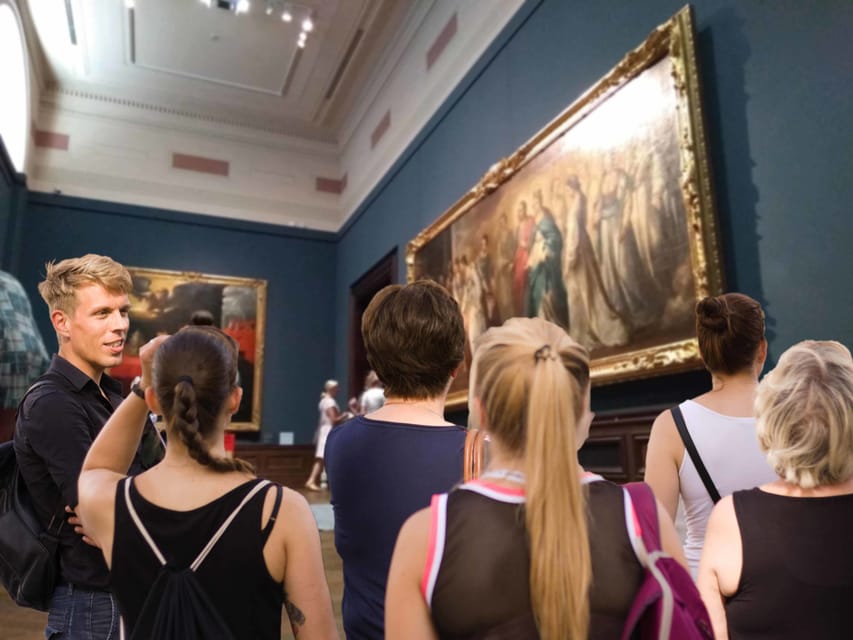
One of the tour’s most useful features is its attention to materials. Oil painting can create fine transitions, rich surfaces, and small details that are hard to achieve with other methods. Seeing some of the earliest paintings made in oil helps place later works in a technical timeline.
The gold paintings offer another useful comparison. Gold is not merely a shiny background. Its presence affects the way a picture catches light and how a sacred scene feels to the viewer. When the guide connects materials with purpose, the artwork becomes more than a flat image on a wall.
You also get to touch samples of rare historic colour pigment. This is a small but memorable detail. Looking at pigment in a painting can feel abstract, but seeing and touching a sample gives you a physical sense of the substances painters once handled.
The tour also brings in scientific ideas without making them feel like a laboratory lesson. Digital images and videos add visual support, which matters when the guide is explaining a layer, a pigment, or a change hidden below the surface.
A few more things to do in Dresden worth a look
- Dresden: Semperoper Tickets and Guided Tour
★ 4.7 · 12,102 reviews - Dresden Castle General Admission Ticket
★ 4.6 · 1,328 reviews - Dresden: Hop-On Hop-Off Sightseeing Bus Tickets
★ 4.5 · 1,036 reviews - Dresden: Virtual Reality Time Travel Experience Ticket
★ 4.5 · 748 reviews
Raphael’s Madonna and the clues in religious art
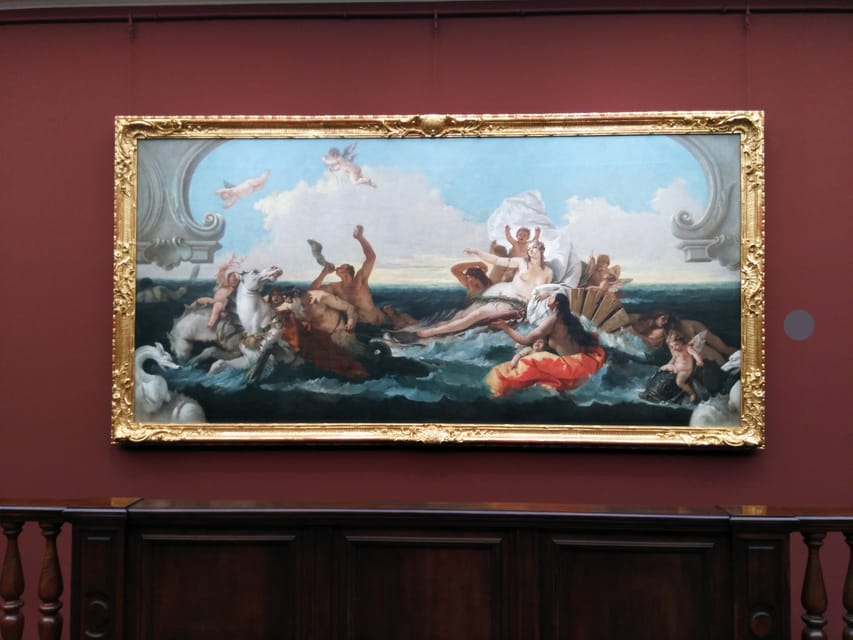
The Raphael section gives the tour a major focal point. His Madonna is one of the works you examine in more detail, after the early orientation has taught you how to approach it.
Religious paintings can confuse modern viewers because they rely on symbols, gestures, clothing, poses, and familiar stories. The guide helps you identify those signals and understand why the work was made. Instead of seeing only a beautiful Madonna, you begin to notice how the composition communicates meaning.
This is where the tour’s structure pays off. The opening examples give you a basic visual vocabulary, and the Raphael discussion lets you apply it to a celebrated work. You are encouraged to look at the painting as both an image and a constructed object.
The guide also draws connections between different old masters. That comparison is valuable because painters did not work in isolation. Ideas about pose, composition, colour, and subject matter moved across regions and generations. Seeing those links can make a familiar name such as Raphael feel part of a larger artistic conversation.
Titian, Giorgione, and the Sleeping Venus
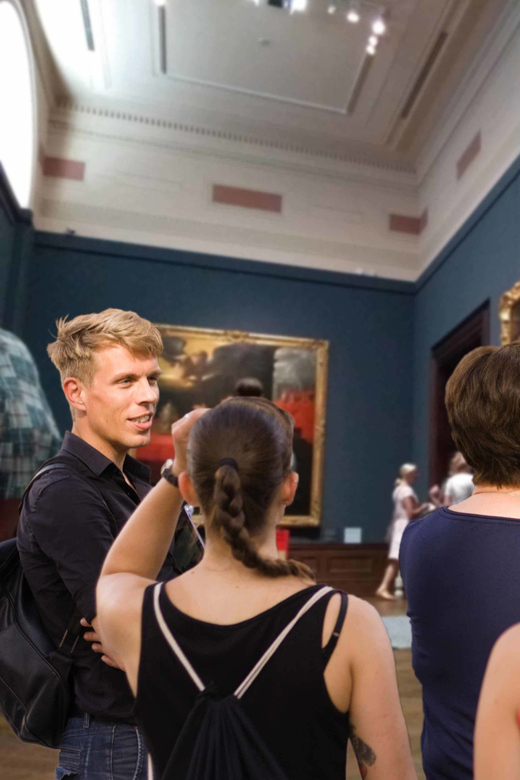
The tour then turns to two major Renaissance painters, Titian and Giorgione. Their work opens a different discussion from the religious paintings, especially through the subject of the female nude.
Dresden’s Sleeping Venus is presented as the first and finest nude painting of a woman in modern art, according to the tour’s description. It is also treated as a work with an unusual background and a technical story beneath its surface. You will hear how the painting fits into its artistic setting and why it matters.
The subject can be approached as a question of beauty, pose, influence, and artistic tradition. The guide does not leave the painting as a famous name to admire from a distance. You are asked to consider how the image works and what you may not see at first glance.
The X-ray material is a strong reason to choose this tour. Seeing the painting from the inside reveals changes and layers hidden beneath the finished surface. X-rays can show that a work was not always fixed from the first brushstroke, and they remind you that a famous painting is also a record of decisions, revisions, and materials.
The exact presentation depends on what is available during the visit, but digital imagery and videos are used to make these hidden details easier to understand. That added material is especially helpful when an important clue cannot be seen directly on the gallery wall.
Rembrandt, Vermeer, Botticelli, and the wider collection
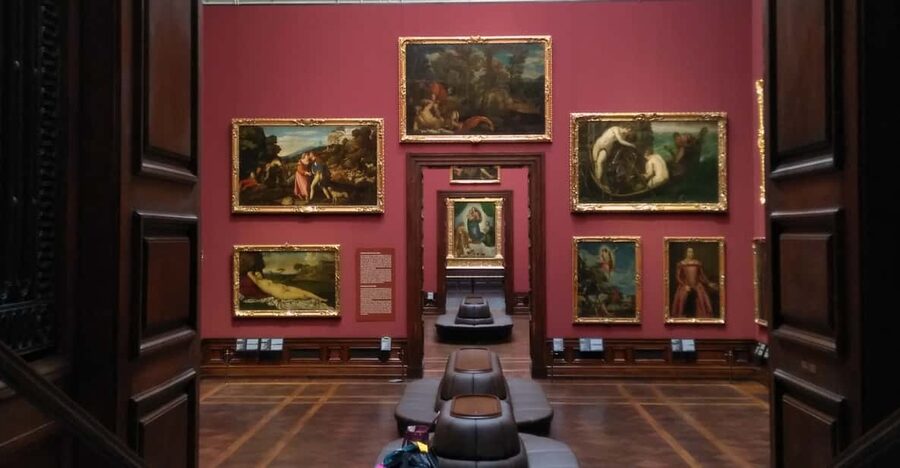
The experience also includes works connected with Rembrandt, Vermeer, Botticelli, and Jan van Eyck. These names cover different places, periods, and artistic approaches, so they help the guide show how varied the Old Masters collection can be.
Rembrandt brings attention to the handling of light, expression, and surface. Vermeer invites closer looking at quiet scenes and carefully controlled detail. Botticelli and Jan van Eyck add further context for the development of European painting. The tour does not promise a full lecture on each artist, but their presence helps establish the collection’s range.
You should think of these works as part of the tour’s teaching plan rather than a guaranteed checklist. The museum may remove a painting for restoration, lend it to another institution, or take it off display for other reasons. The guide can replace unavailable items with equivalent or additional works under the rules of the Saxonian State Art Collection.
That flexibility is sensible, but it matters if you are booking only to see one specific painting. You should choose this activity for the way it teaches you to look at old master art, not as a promise that every famous name will be on the route that day.
A lively guide makes the two hours work
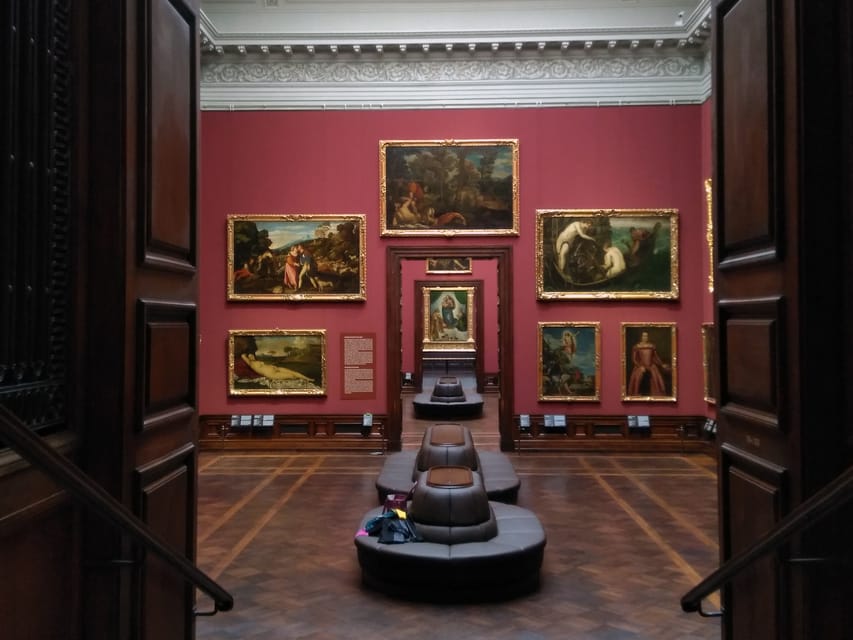
The guide is central to the experience. Thomas is one named guide associated with the tour, and his approach combines art history, museum background, comparisons between painters, and amusing details. The comments about his presentation point to a guide who explains difficult material with energy rather than treating the visit like a formal academic class.
Another guide may lead your departure, so Thomas is not guaranteed. Still, the structure of the tour gives the guide a strong framework: brief orientation, five introductory works, closer study of religious paintings, then major Renaissance examples and technical evidence.
The best part of this format is its balance. You receive enough context to understand why a work matters, but the session also uses digital material and visual examples to keep the pace moving. Two hours is long enough for substance, yet short enough to fit into a day of sightseeing.
Some art lovers may want more time. One especially useful suggestion is that the program could easily fill another two hours for people who enjoy art history. If you already know the gallery well, you may find the selected route too short. If you are visiting Dresden for the first time, the focus is more likely to feel manageable.
Price, timing, and who gets the best value
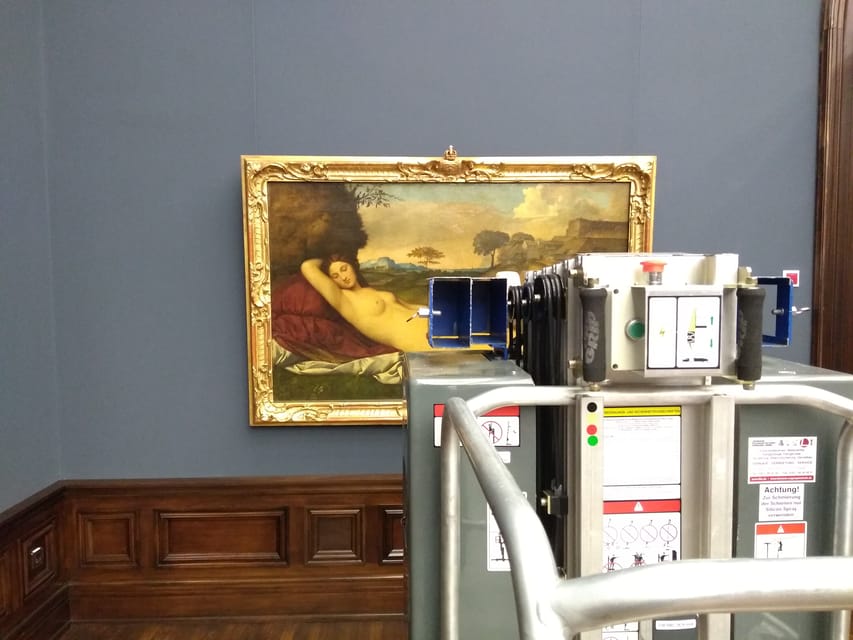
At $44 per person, the tour makes sense for visitors who want more than entry into the gallery. Admission is included, the ticket line is skipped, and you receive two hours with a German-speaking guide who adds technical and historical interpretation.
The value is strongest if you would otherwise wander without knowing where to focus. A large gallery can consume hours while leaving you with a vague memory of famous names. This tour gives you a route, a set of questions, and access to information such as X-rays and pigment samples that you may not encounter during an ordinary visit.
The price is less attractive if you speak no German or prefer to study paintings alone. There is no English-language option listed, and the activity takes place in German only. You may understand some visual material without the language, but the explanations are a central part of what you are paying for.
The duration is two hours, with starting times shown according to availability. You should check the date and time before booking. Free cancellation is available up to 24 hours in advance, and you can reserve now while paying later, which helps if your Dresden schedule is still changing.
The activity is wheelchair accessible. Large bags and luggage are not permitted, so arrive with only what you can carry comfortably.
Who should book this Dresden art tour?
I would choose this tour if you want a smart introduction to the Old Masters Picture Gallery and prefer a guide to help you make sense of what you are seeing. It suits first-time museum visitors, couples with different levels of art knowledge, and anyone curious about how paintings are made rather than only who painted them.
It also fits people who enjoy famous works but want more than a standard biography. Raphael, Titian, Giorgione, Rembrandt, Vermeer, Botticelli, and Jan van Eyck provide the star power, while the pigments, gold, oil paint, and X-rays give the visit its practical edge.
I would hesitate if you need English, want guaranteed access to one particular painting, or prefer a long, unhurried look at each work. The museum can change the selection, and the guide adjusts the route when paintings are unavailable.
Should you book the Old Masters Gallery tour?
Book it if you want to understand how old master paintings work, not just collect a list of famous names. The X-rays, historic pigments, digital material, and connections between painters make the $44 fee reasonable for visitors who value explanation and structure.
Skip it if the German-only format is a problem or if you want complete freedom to choose your own pace. For everyone else, this is a focused way to meet Dresden’s major paintings with better questions in mind, and to leave the gallery seeing more than you did when you entered.
FAQ
Where does the tour start?
The tour starts at the Old Masters Picture Gallery. Your German-speaking guide waits in the cloakroom downstairs from the ticket point.
How do I find the meeting point?
From the ticket point, go downstairs, take a right through the door, and use the stairs on the right-hand side. Arrive about 10 minutes before the activity begins.
Where does the tour finish?
The activity ends back at the Old Masters Picture Gallery meeting point.
How long does the tour last?
The guided tour lasts two hours. Starting times depend on availability.
Is admission to the gallery included?
Yes. Gallery admission and all required license fees are included.
Is the tour available in English?
No. The tour takes place in German only, with a live German-speaking guide.
Which paintings will I see?
The program may include Raphael’s Madonna, Titian and Giorgione’s Sleeping Venus, and works associated with Botticelli, Jan van Eyck, Rembrandt, and Vermeer. Individual paintings are not guaranteed because the museum may remove or loan works.
Will I see X-rays of the paintings?
The tour includes X-ray images of paintings, particularly in connection with the Sleeping Venus discussion, although the exact presentation can depend on the current program.
Can I bring luggage or a large bag?
No. Luggage and large bags are not allowed.
Can I cancel the booking?
Yes. You can cancel up to 24 hours before the activity for a full refund. You can also reserve now and pay later.
Just added in Dresden
- Test Drive Electric Vehicles from the VW brand (ID. model)★ 4.8 · 190 reviews
- SRF CoBi | City Tour by ConferenceBike★ 4.7 · 38 reviews
- Dresden: Scavenger Hunt to Elbe River & Castles★ 4.7 · 15 reviews
- Dresden: Bike Rental – City Bike with Option Children Seat★ 4.5 · 13 reviews
- Moritzburg: Scavenger Hunt Self-Guided Walking Tour★ 4.8 · 12 reviews
- Historical tour of the old town including a Saxon dinner★ 4.7 · 23 reviews
- Görlitz: Scavenger Hunt Self-Guided Tour★ 4.6 · 22 reviews
- Görlitz: Ghosts and Spooky Historical Night Walking Tour★ 4.8 · 197 reviews
Museums, compared.

Skip-the-Line: Berlin Wall Museum at Checkpoint Charlie
Read our review →
Browse the lists this tour appears in