
Reviewed · CRUISES & BOAT TOURS
Discover Rostock: A Guided City Tour for Cruise Guests
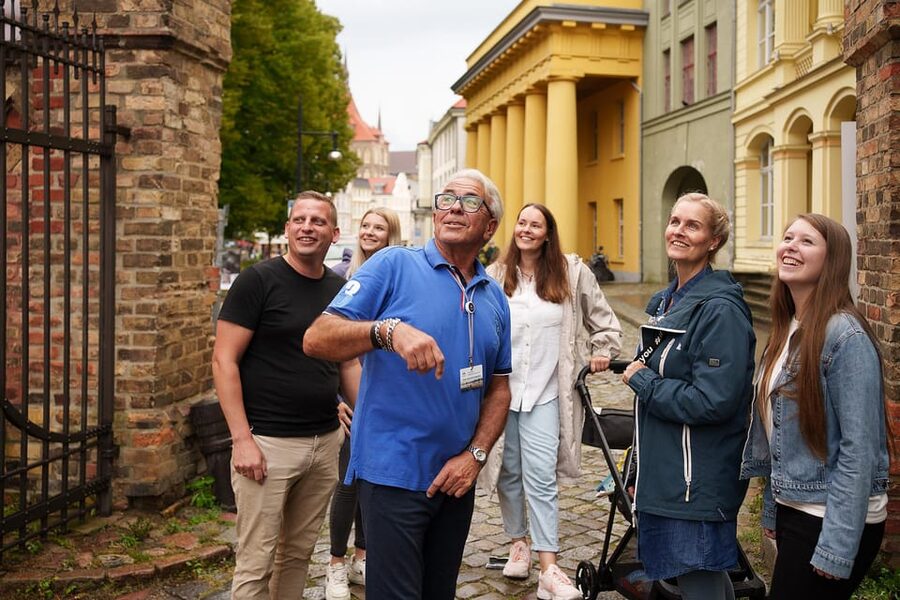
Rostock packs more than 800 years of Hanseatic history into a short walking tour. You ride from Warnemünde to the city center, then follow a licensed guide through medieval streets, past the university and Town Hall, and into St. Mary’s Church to see its remarkable 1472 astronomical clock.
I like the public transport arrangement, which saves you from sorting out a train ticket on your own. I also like the church visit, since the astronomical clock gives the tour one clear, memorable centerpiece instead of a string of quick exterior stops.
The main caution is communication at the start. One booking party lost about 30 minutes because the meeting instructions were unclear, and another found the guide’s voice too quiet and delivery too flat. Arrive early, look carefully for the sign, and stay close enough to hear.
Key points to know before booking
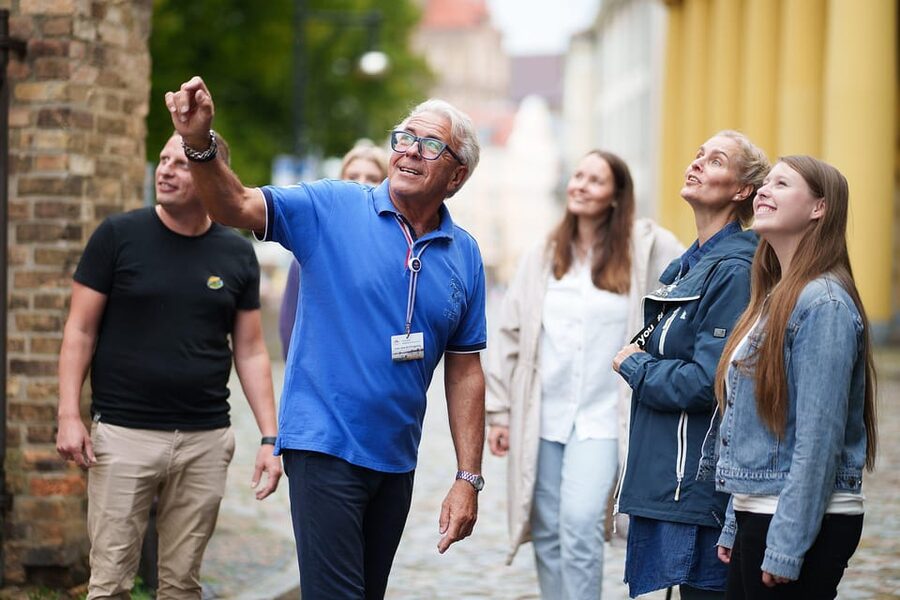
- Warnemünde pickup: Meet at the cruise terminal exit with the guide holding a sign marked Rostock City Tour.
- Train and tram included: The ride to Rostock takes about 30 to 45 minutes, and a return public transport ticket is provided.
- Historic core on foot: The guided walk covers about 1.5 kilometers, with stops at the university, St. Mary’s Church, New Market Square, Kropeliner Strasse, and the old fortifications.
- The astronomical clock is the star: St. Mary’s Church admission is included, with about 45 minutes set aside for the visit.
- Small enough to follow: Groups are limited to 20 people, though you should stay near the guide if hearing a soft voice is difficult.
- Plan your own return: After the tour and free time, you return to Warnemünde independently using the supplied ticket and the guide’s instructions.
Why Rostock is worth the ride from Warnemünde
Warnemünde is the port, but Rostock is where the older story unfolds. The two places are close enough for a practical half-day outing, yet they offer different settings. Warnemünde gives you the harbor and seaside atmosphere. Rostock gives you a proper North German city center shaped by trade, churches, merchants, and medieval defenses.
That difference matters on a cruise stop. If you stay only near the port, you see a pleasant coastal district but miss the larger urban story of Mecklenburg-Vorpommern. This tour takes you inland without requiring you to plan the route yourself.
The transfer by commuter train and tram takes roughly 30 to 45 minutes. Treat that time as part of the experience rather than dead time. You get a look at the local transport system and arrive in the center without paying for a private vehicle. The guide accompanies you on the outward journey, which is useful if you are not familiar with the connections.
The total experience lasts about 3.5 hours, though the detailed schedule describes around three hours including transport. Start times vary, so check the available departure before booking and compare it with your ship’s arrival and all-aboard time.
A few more things to do in Rostock worth a look
- Rostock: Guided tour of the historic city center
★ 4.5 · 311 reviews - Distillery tour with guide!
★ 4.7 · 14 reviews - Brewery tour with guide!
★ 4.8 · 13 reviews
Finding the guide at Warnemünde Cruise Center
The meeting point is the exit of the Warnemünde Cruise Center. Your guide should be holding a sign marked Rostock City Tour. That detail is important because the port can be busy, and several groups may be gathering at the same time.
I would arrive with extra time rather than walking off the ship at the last possible moment. The clearest practical concern with this experience is the meeting arrangement. A group once lost around 30 minutes because people were not sure where to meet, which is a serious loss on a short shore excursion.
Keep your phone charged and have the confirmation details easy to reach. Bring cash as suggested, along with comfortable shoes and weather-appropriate clothing. There is no need to dress formally, but this is a walking tour with outdoor time and public transport, so layers make sense.
The group limit is 20 people. That is not an intimate private tour, but it is small enough for a guide to manage in city streets. You will still need to remain attentive when crossing streets, entering the church, and moving between stops.
The train and tram ride into Rostock
Once the group is together, the guide leads you to public transport. The ticket covers the commuter train and tram, including the return journey. This is one of the better practical features of the tour because you do not have to work out the local fare system during a limited port visit.
The ride takes about half an hour, sometimes closer to 45 minutes depending on the connection. The tour information describes the route as train and tram travel, so you should expect a transfer rather than one direct ride.
There is a tradeoff here. Public transport is cheaper and more local than a private coach, but it is less controlled. You may wait for a connection, stand for part of the trip, or deal with a crowded carriage. For most visitors, that is a fair exchange for the included ticket and central arrival.
The guide handles the outward journey, then explains how to make your own way back. Pay attention at the end of the tour. Your return is self-guided, so you should know which train or tram to use and where to go before separating from the group.
Rostock University and the city’s intellectual side
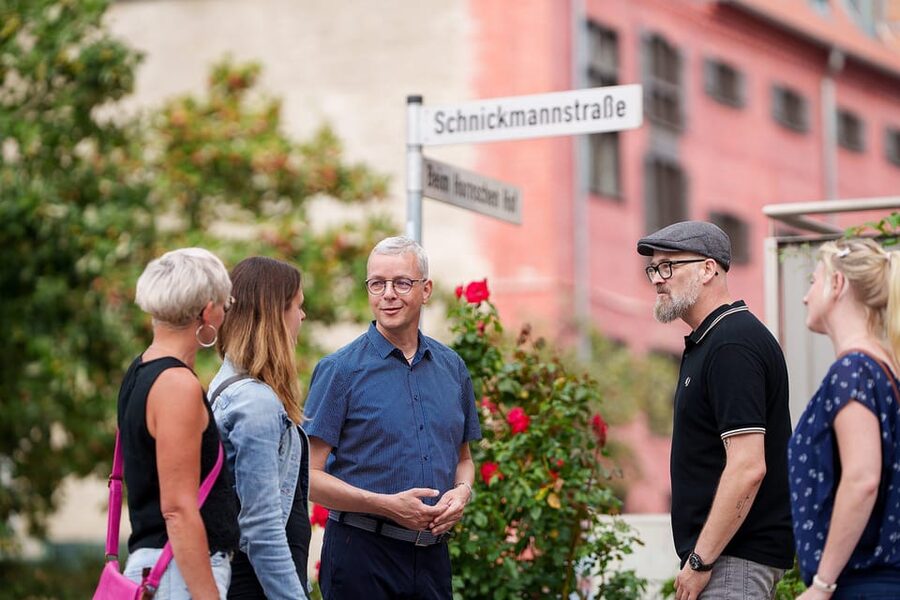
The first major city stop is the University of Rostock, founded in 1419. That date places it among Northern Europe’s oldest universities and gives the city a strong academic identity alongside its commercial past.
You will hear about the university’s role in science and education, not just see an old building. This helps connect Rostock to a wider European network of learning that grew during the Hanseatic period.
Do not expect a long academic lecture. The walking tour has several stops to cover, so the university visit works best as a piece of the larger story. It gives you a reason to look beyond the facades and understand that Rostock was not simply a port for ships and goods.
The tour’s emphasis on anecdotes should also help keep this section grounded. The experience promises stories about the city’s past and present, not only dates and architectural labels. The quality will depend on how clearly the guide delivers them.
Same base, a different kind of day out:
- Best Berlin Shore Excursion from Warnemunde or Rostock Port
★ 4.8 · 200 reviews - Rostock: City Walking Tour
★ 4.9 · 198 reviews - Rostock: Full-Day, Half-Day, or Sunset Sailing Experience
★ 4.7 · 174 reviews - Rostock: Electric Boat Rental on the Warnow River
★ 4.8 · 106 reviews
St. Mary’s Church and the 1472 astronomical clock
St. Mary’s Church, or Marienkirche, is the most important interior stop. The church is a major example of North German Brick Gothic architecture, a style that suits the region’s red-brick cities and towns.
Admission is included, and about 45 minutes are reserved for the visit. That gives you enough time to look around rather than being rushed through the doorway for a quick glance.
The main attraction is the astronomical clock, built in 1472. A clock of this age is interesting not simply because it is old. It reflects the medieval desire to measure and display time, calendars, and the movement of the heavens in one public object.
The guide explains the clock’s construction and the legends connected with it. Those details are likely to make the visit more memorable than a basic church tour. If you enjoy old technology, religious art, or unusual pieces of civic history, this is the part to focus on.
The church visit also provides a pause from walking outdoors. Still, you should remember that this is a shared group visit. You may not have unlimited time for quiet exploration or photography, and church rules may affect what you can do inside.
Town Hall and New Market Square
New Market Square, or Neuer Markt, forms one of Rostock’s central public spaces. The Town Hall faces the square with a Baroque facade, creating a clear contrast between the medieval core and later architectural changes.
This is where the city’s public life comes into view. Markets, municipal power, trade, and daily movement all meet in one place. A guide can help you notice how the square relates to the surrounding streets instead of treating it as a photo stop.
The Town Hall is best understood from outside during this tour. The information provided includes the square and the historic building, but not an interior visit. If you want to see inside, you should use your free time to ask whether that is possible, rather than assuming it is part of the scheduled program.
The square is also a useful place to orient yourself. After a few stops, you begin to see how Rostock’s center fits together, which makes the later free time easier to manage.
Kropeliner Strasse and the old city defenses
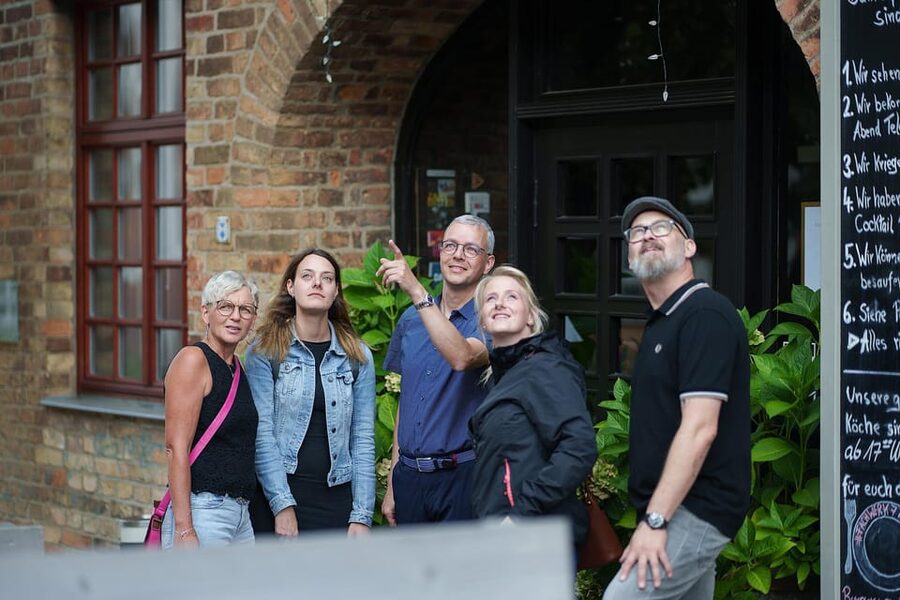
Kropeliner Strasse is a pedestrian street lined with shops, cafes, and historic buildings. It offers a change of pace after the church and civic sights. You can watch the city function in the present while still seeing older facades around you.
This is a good stretch for simple pleasures: a coffee, a small purchase, or a look at local storefronts. Food and drinks are not included, so this is one place where you might spend a little extra if time allows.
The walk also reaches remains of Rostock’s medieval city wall and gates, including Kropeliner Tor. These defenses explain the city in practical terms. Rostock was not only a collection of attractive brick buildings. It needed walls, gates, and controlled entrances to protect its people and commercial wealth.
The walking distance is about 1.5 kilometers in total. That is modest, but the tour notes that you should be able to walk for 15 to 20 minutes at a time. The route is not suitable for wheelchair users or visually impaired people, according to the activity information. Anyone with limited stamina should consider the repeated walking and public transport transfers before booking.
Free time: useful, but keep an eye on the clock
After the guided portion, you get time to explore Rostock on your own. This is a valuable feature because a guide-led walk can show you the city, but personal time lets you choose what matters most.
You might stop at a cafe, browse for souvenirs, take more photographs, or revisit a square that caught your attention. The tour does not include food or drinks, so free time also gives you the chance to buy something independently.
The free period comes with responsibility. Your return to Warnemünde is self-guided, using the public transport ticket supplied by the operator. The guide gives instructions, but you need to leave enough time for the walk to the stop, the ride, and any connection.
For a cruise day, I would not push the free time too far. Rostock is close to Warnemünde, but public transport is still subject to schedules. If your ship has a firm departure time, build in a generous margin rather than trying to squeeze in one last shop.
What the $56 price really covers
At $56 per person, this tour is not just a walking tour. The price includes pickup at the cruise terminal, an English-speaking guide, the outward accompaniment into Rostock, public transport tickets for the train and tram, and admission to St. Mary’s Church.
Those inclusions give the price reasonable value for a cruise visitor who wants a planned route without arranging each piece independently. A self-guided visit could cost less, especially if you already understand German public transport and are comfortable finding Rostock’s sights on your own.
The tour earns its keep through structure. You are moved from the port to the historic center, shown the main sights in a sensible sequence, taken inside the city’s best-known church, and given a return ticket. If you would otherwise spend much of your shore day checking maps and transport schedules, that convenience has real value.
The weak point is that the guide experience matters a lot. The overall rating is 3.7 out of 5 from seven ratings, with praise for the guide’s subject knowledge but criticism of a low voice and a lack of energy. That means the tour is probably a better buy for its route, transport, and church entry than for anyone expecting a polished performance.
Who should book this Rostock tour?
I would recommend it to first-time visitors who want the main historic sights explained in English and prefer not to organize the Warnemünde to Rostock connection alone. It also suits cruise passengers who want a compact outing with a little personal time at the end.
It is a good match if you enjoy architecture, urban history, old clocks, and short guided walks. The 20-person limit keeps the group manageable, and the route is not excessively long for most people who can walk steadily.
I would think twice if you need fully accessible transport and paths, have difficulty hearing a soft-spoken guide, or want a completely flexible day. The tour has a fixed structure, several transport stages, and an independent return.
If you book, arrive early at the terminal exit, confirm the guide’s sign, stay close during explanations, and ask for the return instructions before the group disperses. Those simple steps address the two practical risks: losing time at the start and feeling uncertain at the end.
Should you book it?
Book this tour if you want an efficient introduction to Rostock with the key transport handled for you. The University of Rostock, New Market Square, Kropeliner Strasse, medieval gates, and St. Mary’s astronomical clock give you a solid first look at the city in one half-day.
Skip it if you would rather explore slowly, need guaranteed accessibility, or can easily arrange your own train and tram route. At $56, the value rests on convenience and guidance, not luxury. For a cruise stop, that is often exactly the point, provided you arrive early and are comfortable returning to Warnemünde on your own.
FAQ
Where does the Rostock city tour begin?
It begins at the exit of the Warnemünde Cruise Center. The guide will be holding a sign marked Rostock City Tour.
How do I get from Warnemünde to Rostock?
You travel by public transport, using a commuter train and tram. The journey takes about 30 to 45 minutes.
Is public transport included?
Yes. The price includes public transport tickets for the trip to Rostock and the return journey to Warnemünde.
How long is the tour?
The activity lasts about 3.5 hours. The detailed schedule includes roughly 30 minutes of transport, a 2.25-hour guided city tour, and about 45 minutes at St. Mary’s Church.
What sights are included?
The route includes the University of Rostock, St. Mary’s Church, Rostock Town Hall and New Market Square, Kropeliner Strasse, and parts of the medieval city wall and gates.
Is entry to St. Mary’s Church included?
Yes. Admission to St. Mary’s Church is included, including the visit to its astronomical clock, built in 1472.
Do I return to Warnemünde with the guide?
No. The guide accompanies you into Rostock, but your return is self-guided using the provided public transport ticket. The guide gives instructions for the journey back.
Just added in Rostock
- Rostock: Private Guided Walking Tour★ 5.0 · 4 reviews
- Rostock: Tour with the Rostocker Executioner★ 4.7 · 28 reviews
- Rostock: Hot Rod Harbor City Tour★ 4.9 · 16 reviews
- Rostock: Electric Boat Rental on the Warnow River★ 4.8 · 106 reviews
- Rostock: Hot Rod Sightseeing Tour to Warnemünde★ 5.0 · 19 reviews
- Berlin and Sachsenhausen: Shore Trip from Warnemünde Port★ 4.8 · 40 reviews
- Distillery tour with guide!★ 4.7 · 14 reviews
- Brewery tour with guide!★ 4.8 · 13 reviews
Cruises & Boat Tours, compared.

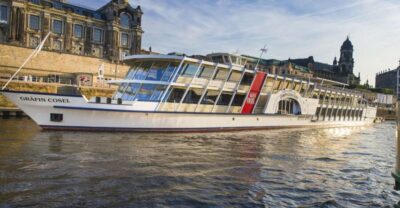
1-Hour City Tour by Boat with Guaranteed Seating
Read our review →
1.5-Hour Harbor and Speicherstadt Day Cruise
Read our review →
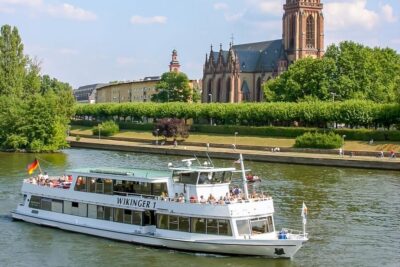
River Main Sightseeing Cruise with Commentary
Read our review →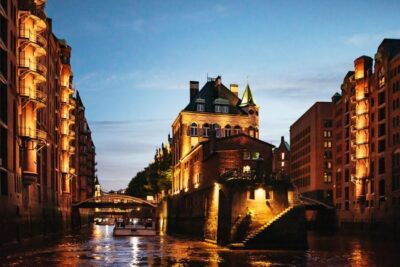
Browse the lists this tour appears in