Reviewed · TOURS IN BERLIN
Private tour of Berlin
Berlin’s story is written across a surprisingly compact central area. In four hours, this private tour connects the Reichstag, Brandenburg Gate, Holocaust Memorial, Checkpoint Charlie, Museum Island, and old Nikolaiviertel, giving you a useful first map of the city.
I like the private format, since your guide can adjust the pace and change the emphasis based on what you already know. I also like the strong focus on history, with guides such as Julia, Helena, Celia, and Juan praised for clear, lively explanations. The main tradeoff is time: eight stops in four hours means short visits rather than long museum sessions.
Key points to know before booking
- Eight major sights in four hours: You cover Berlin’s political center, Cold War landmarks, memorials, museums, and medieval quarter in one outing.
- A truly private group: The booking covers up to 15 people, so your party has the guide to itself.
- Spanish-language guiding: A professional Spanish guide is included, and Catalan may be available with some guides.
- Flexible pacing: The route can be adapted to your previous sightseeing and the subjects you care about most.
- Museum interiors cost extra: Museum entry is not included, so plan this as a city orientation unless you arrange and pay for admissions separately.
- Good value for a group: At $404.49 for up to 15 people, the cost works out to about $27 per person if your group is full.
A fast, thoughtful introduction to Berlin
I see this as a strong opening activity, especially if Berlin is new to you. The route links the city’s most important public spaces with the places where the 20th century left its heaviest marks.
The appeal is not just the number of sights. A private guide can explain how the Reichstag, Brandenburg Gate, Wall crossings, Jewish memorials, and restored historic districts fit into Berlin’s changing identity. You get a narrative instead of a string of photo stops.
The pace matters. The planned stops range from 10 to 15 minutes, and the full tour lasts about four hours. That gives you enough time to orient yourself and ask questions, but not enough time to tour several museums properly. Think of this as a guided city overview with historical interpretation.
The tour is offered at 10 a.m., a useful start for a full sightseeing day. Pickup is offered, and the area is close to public transportation, though the exact meeting arrangements should be confirmed when you book. A mobile ticket is provided, and confirmation arrives at booking.
A few more things to do in Berlin worth a look
- Berlin: Private Reichstag and Glass Dome Tour
★ 4.8 · 2,226 reviews - Berlin Private Complete History All Day Walking Tour
★ 5.0 · 474 reviews - Private Walking Tour Berlin Third Reich Hitler and World War II
★ 5.0 · 360 reviews
Reichstag and Brandenburg Gate: Berlin’s political heart
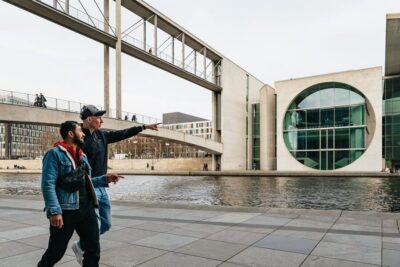
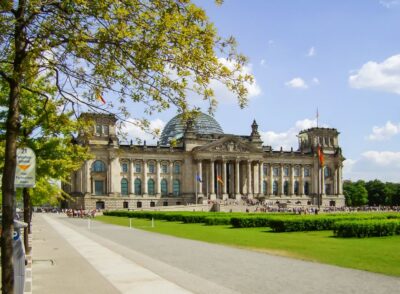
The Reichstag Building is a natural first stop. It sits in the Tiergarten area, opposite the Chancellery, and its renovated design by Norman Foster gives the building a modern glass-and-steel identity while preserving its older political role.
Your guide can help you understand why this building matters beyond its appearance. Since 1999, it has been the meeting place of the German parliament. The site also reflects Berlin’s broader pattern: old institutions, wartime damage, division, and modern reunification all visible in one place.
Admission is listed as free, but that does not automatically mean you will enter every part of the building. If seeing the interior or dome matters to you, ask what access is included before the tour begins. The scheduled visit works best as an exterior stop and orientation point.
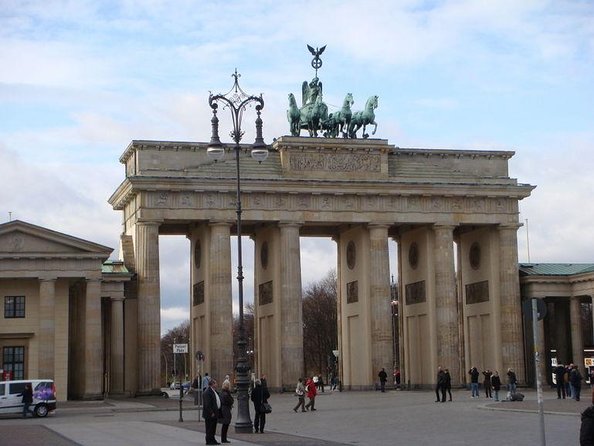
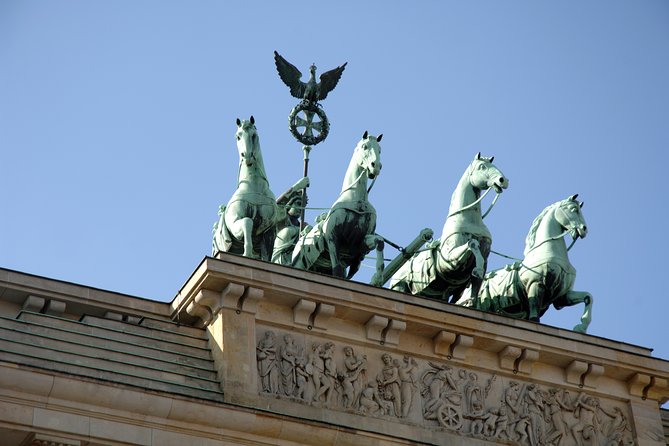
A short distance away, the Brandenburg Gate gives you one of Berlin’s clearest symbols. Once a city gateway, it later became associated with division and then reunification. Today, it is one of the busiest photo stops in central Berlin, so a guide is useful here because the landmark can otherwise seem almost too familiar.
You will have about 10 minutes at the gate. That is enough for photographs and a concise explanation, but not for a long pause. I would listen first, then take your pictures before moving on.
The Holocaust Memorial and the weight of memory
The Memorial to the Murdered Jews of Europe is one of the most serious stops on the route. Its field of concrete blocks creates an austere, unsettling space near the Brandenburg Gate, and it asks you to slow down emotionally even if the schedule remains brisk.
The memorial honors Jewish victims of the Holocaust. A good guide can provide the historical setting and explain how the memorial functions without turning the visit into a rushed lesson or a simple photo opportunity.
You are allotted about 10 minutes here. That is short for a place that rewards quiet thought, so I would treat the stop as an introduction rather than a complete visit. If the memorial is especially important to you, return later with more time.
This is also a point where the private format helps. You can ask a sensitive question without feeling you are holding up a large group. The tour’s strongest theme is the way Berlin presents its difficult past in public spaces, and this memorial makes that theme direct.
Potsdamer Platz and the Sony Center
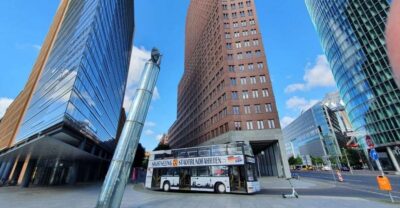
The Sony Center brings a sharp change of mood. Near Potsdamer Platz underground station, it presents a modern architectural statement in glass and steel, with a large roof structure that gives the complex its distinctive look.
After the solemnity of the Holocaust Memorial, this stop shows another side of Berlin: reconstruction, commercial development, and the city’s post-Cold War future. The contrast is useful. Berlin is not a museum frozen in the past. It is a working capital with new architecture layered over a divided city.
The visit lasts about 10 minutes. That is suitable for seeing the architecture and hearing its place in the redevelopment of Potsdamer Platz. It is not a shopping visit or a long break, so do not count on this stop for a meal or extended indoor time.
Same base, a different kind of day out:
- Berlin: Reichstag, Dome and Government District Guided Tour
★ 4.7 · 18,288 reviews - Berlin: 1-Hour City Tour by Boat with Guaranteed Seating
★ 4.3 · 16,993 reviews - Berlin: Boat Tour Along the River Spree
★ 4.4 · 11,252 reviews - Discover Berlin Half-Day Walking Tour
★ 5.0 · 9,624 reviews
Checkpoint Charlie and the Cold War story
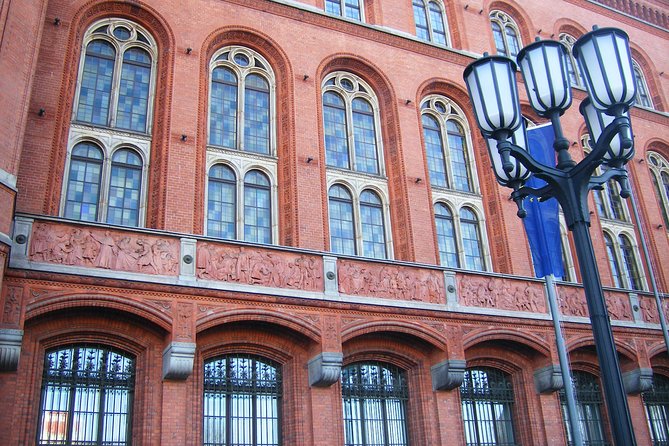
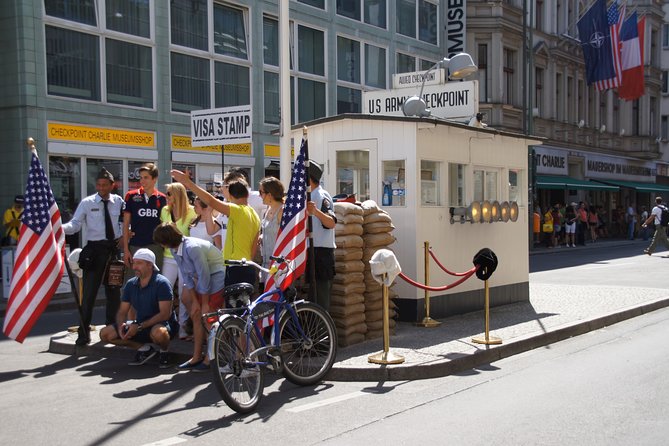
Checkpoint Charlie was the best-known Berlin Wall crossing between 1945 and 1990. The name is familiar around the world, and the location gives you a clear way into Berlin’s divided past.
A short stop here can explain how the crossing operated and why it became such a powerful symbol of the Cold War. The site also raises an important practical point: a famous historic location can become heavily commercialized. Some visitors expect a preserved border post and find a busy tourist setting instead.
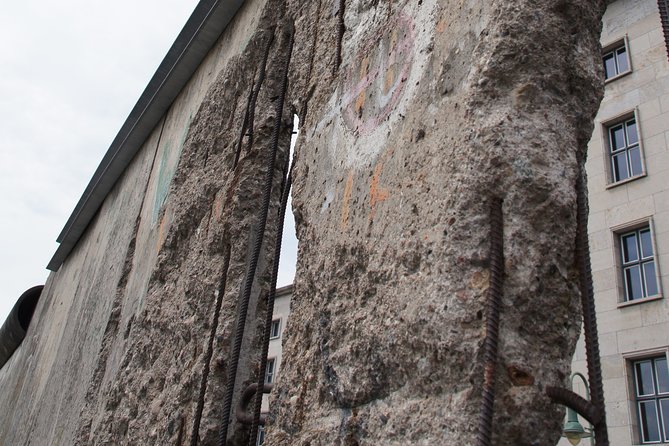
That does not make the stop unimportant. It means you should focus on the explanation rather than expecting a large surviving section of the Wall at this exact point. With about 10 minutes scheduled, the guide’s context is more valuable than a long stay.
If you want a deeper look at Berlin Wall history, use this stop to decide what you want to explore later. The private guide can help you make that choice based on your interests, though the tour data does not promise a separate Wall museum or extended memorial visit.
Gendarmenmarkt and the city’s grand center
Gendarmenmarkt is presented as Berlin’s most beautiful square, and it is easy to see why the space is an important part of a central-city route. Its broad layout and formal architecture offer a calmer contrast to the traffic and crowds around Checkpoint Charlie.
The scheduled 10-minute visit gives you time to take in the square and hear why it matters. This is another place where the tour is more useful for orientation than for a long architectural study. If you enjoy city design, ask the guide to point out the details that make the square different from Berlin’s larger ceremonial spaces.
The private arrangement gives you room to show your preferences. If architecture interests you more than modern commercial areas, you can say so and use the short explanations to shape the rest of the day.
Museum Island: a preview, not a museum day
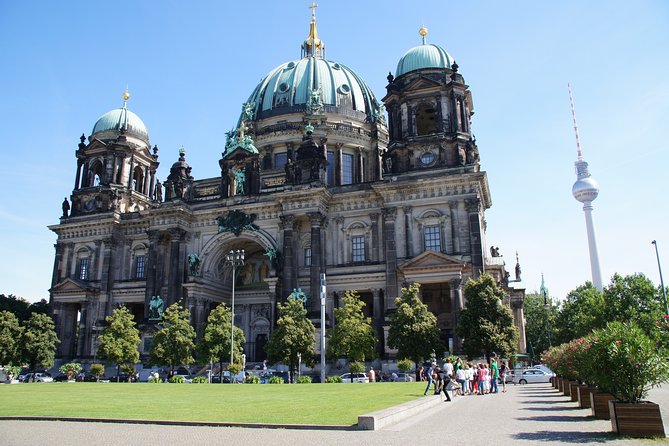
Museum Island occupies the northern half of the Spreeinsel in central Berlin. Five museums are located here, making it one of the city’s major cultural areas.
The tour gives you about 10 minutes on the island. That is enough to understand the setting, identify the museums, and decide where to return. It is not enough to visit the collections, and museum entry is specifically excluded from the price.
This distinction is important when comparing tours. If you want a guided museum experience, you will need to budget for admission and arrange additional time. If you are trying to see Berlin’s main districts first, this stop is useful because it places the museums within the city’s wider story.
I like this approach for a first visit. You see where the museums are before committing several hours to one. You can then return to the institution that best matches your interests instead of guessing.
Nikolaiviertel and the oldest-feeling corner of Berlin
Nikolaiviertel is described as the part of the city that most clearly recalls Berlin’s origins. The quarter gives the tour a different historical frame, moving away from parliament, war, and division toward the city’s earlier beginnings.
It is the longest scheduled stop at 15 minutes. That extra time makes sense, since the area works best as a place to pause and connect the older city with the modern capital around it.
Do not expect a full old-town day here. Berlin was heavily damaged in the Second World War, and this quarter’s appearance reflects later restoration and reconstruction. Still, it provides a useful closing note for a tour that has mostly focused on the 19th and 20th centuries.
The guides and the value of a private format
The guide is the main reason to choose this experience instead of simply following a map. The included guide is a Spanish-speaking professional, and the named guides associated with the experience include Julia, Helena, Celia, Juan, Clara, Romina, Evelyn, and Fran.
The strongest pattern in the guide feedback is clear explanation delivered with warmth and energy. Julia is noted for speaking Catalan as well as Spanish. Helena is praised for museum and city explanations, while Celia is described as flexible and passionate when discussing Berlin’s past and present. Juan is singled out for his strong background in Berlin history.
That does not guarantee which person you will receive. It does tell you what kind of guiding the operator aims to provide: historical context, a friendly tone, and the ability to keep a four-hour route moving.
A private tour also changes the practical experience. You can ask for more detail at the Holocaust Memorial, spend extra attention on architecture at Gendarmenmarkt, or tell the guide that museums matter more to you than shopping districts. The route is intended to adapt to what you have already seen.
Price, group size, and what you actually receive
The price is $404.49 per group of up to 15 people. A full group pays about $27 per person, which is reasonable for a private four-hour tour with a professional guide. For two people, the per-person cost is much higher, so the value depends heavily on how many people share the booking.
The price covers the private Spanish guide. It does not cover museum admission. The main stops themselves are listed with free admission, but the tour schedule suggests that several are outdoor or exterior visits rather than extended indoor entries.
I would book this for a family, group of friends, school party, or Spanish-speaking organization that wants one guide and one adjustable route. A couple can still enjoy it, especially if personal attention matters more than keeping costs low.
The route is also practical for a first full day in Berlin. You can use it to mark places for return visits, then spend the rest of your stay choosing museums, memorials, or neighborhoods with better direction.
Who should book this Berlin tour?
Book it if you want a private historical orientation rather than a single museum visit. It suits you if you prefer Spanish, want to ask questions freely, or are traveling with a group large enough to share the fixed price.
It is especially useful for first-time visitors who want the main landmarks placed in context. The tour also works well for families and students because the guide can adjust explanations and keep the route focused.
Think twice if you want long, unhurried time at each sight. Eight stops in four hours is an ambitious plan. You will see a lot, but you will not have a full museum afternoon, a long meal break, or extended time at every memorial.
The free cancellation policy gives you flexibility if your plans change, provided you cancel at least 24 hours before the 10 a.m. start time. Changes or cancellations made less than 24 hours ahead are not accepted for a refund.
Final recommendation
I would book this tour when you want Berlin’s major sights explained as parts of one connected story. The best features are the private format, the Spanish-language service, the flexible focus, and the guides’ clear, personable approach.
I would not book it as your only detailed look at Berlin. Use it as a smart first pass, then return to Museum Island, the Holocaust Memorial, or Cold War sites that deserve more time. For a group of several people, the price is particularly fair. For a small party, compare the cost with a regular group tour before deciding.
FAQ
How long is the private Berlin tour?
The tour lasts approximately four hours.
What time does the tour start?
The listed start time is 10:00 a.m.
How many people can join the private tour?
The booking is for a private group of up to 15 people.
Is hotel pickup available?
Pickup is offered. The exact meeting details should be confirmed when booking.
What language is the tour conducted in?
The tour includes a private professional Spanish-speaking guide. One named guide, Julia, is also noted as being able to conduct the tour in Catalan.
Are museum tickets included?
No. Museum entry is not included in the tour price.
Which landmarks are included?
The route includes the Reichstag Building, Brandenburg Gate, the Holocaust Memorial, Sony Center, Checkpoint Charlie, Gendarmenmarkt, Museum Island, and Nikolaiviertel.
Are admission fees charged at the main stops?
The listed stops show free admission. Museum entry is separate and not included.
Can the tour be canceled for a full refund?
Yes. You can cancel for a full refund if you do so at least 24 hours before the experience start time. Cancellations or changes made less than 24 hours before the start are not accepted for a refund.
Just added in Berlin
- Romantic Berlin Rickshaw City and Photo Tour – incl. pick-up★ 4.0 · 9 reviews
- Private taxi tour to Potsdam and Sanssouci 6-8h★ 5.0 · 30 reviews
- Moonshine Comedy – English Stand Up Comedy by the bay★ 5.0 · 11 reviews
- Berlin Protest History Tour: Rebels, Resistance, and Revolution★ 5.0 · 7 reviews
- Private Half-Day Berlin Sightseeing Tour with a Minivan Including Short City Walks★ 5.0 · 31 reviews
- One Up to 3 Rickshaws(6 GUESTS)-Taylor Made Rickshaw Berlin Tour★ 5.0 · 20 reviews
- Private City Kickstart Tour: Berlin★ 4.5 · 71 reviews
- Berlin Private Custom Walking Tour With A Guide (Private Tour)★ 4.5 · 8 reviews
Tours in Berlin, compared.
Reichstag, Dome and Government District Guided Tour
Read our review →
1-Hour City Tour by Boat with Guaranteed Seating
Read our review →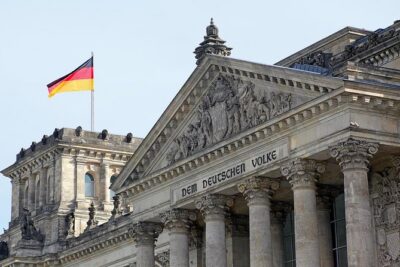
Reichstag, Plenary Chamber, Cupola & Government Tour
Read our review →