
Reviewed · SIMULATORS & VR EXPERIENCES
Munich: Walking Tour Old Town 3D VR Tour in GERMAN
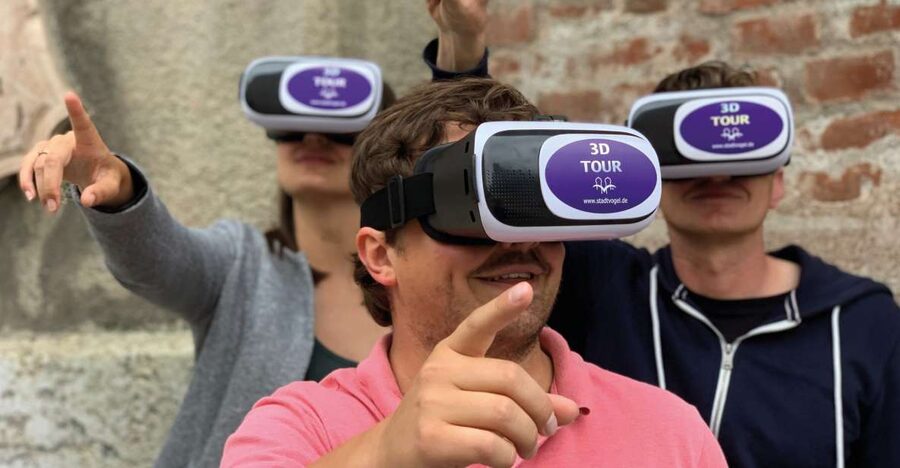
Munich’s Old Town gets a clever time machine on this two-hour walking tour. At four stops, you use a smartphone inside VR glasses to compare present-day streets with earlier versions of the same places, including Marienplatz in 1570 and again around 1870. I like the way the tour makes familiar squares easier to read, and I like the guide’s role in filling in the human details behind the images.
The guide is the strongest part of the experience, bringing history, humor, and local stories to well-known corners. The main caution is the technology: the glasses show still images rather than moving scenes, and some visitors found the phone screen clearer than the headset. At $37, you are paying mainly for the walk and the German-language storytelling, not for cutting-edge virtual reality.
Key points to know before you go
- Marienplatz changes by time period: See the western side as a 1570 medieval grain market, then compare the eastern side with the square around 1870.
- The images are usually still renderings: This is a visual aid for the guide’s stories, not a moving virtual reality film.
- Platzl reveals old Munich life: The 1895 view helps explain how the area became the familiar home of the Hofbräuhaus.
- The guide makes the tour work: Strong delivery, useful context, and good humor matter more here than the headset.
- Bring your own phone: You need a charged smartphone and internet access to download the app at the meeting point.
- The tour is in German: Book it only if you can follow a live German-speaking guide for two hours.
Munich’s Old Town becomes a time machine
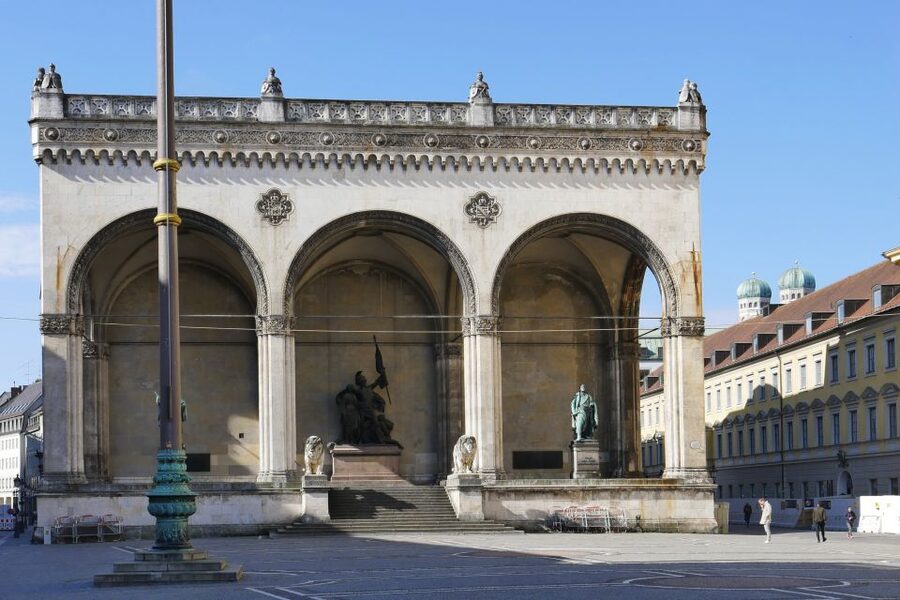
The idea is simple but effective. You walk through central Munich with a guide, stop at four places with specially created 3D images, and use the glasses to see how those locations looked in earlier periods.
This works best when you already know what modern Munich looks like. The current square or street remains under your feet, while the image gives you a second view of what once occupied that space. The contrast can make an ordinary building, open area, or street corner suddenly easier to understand.
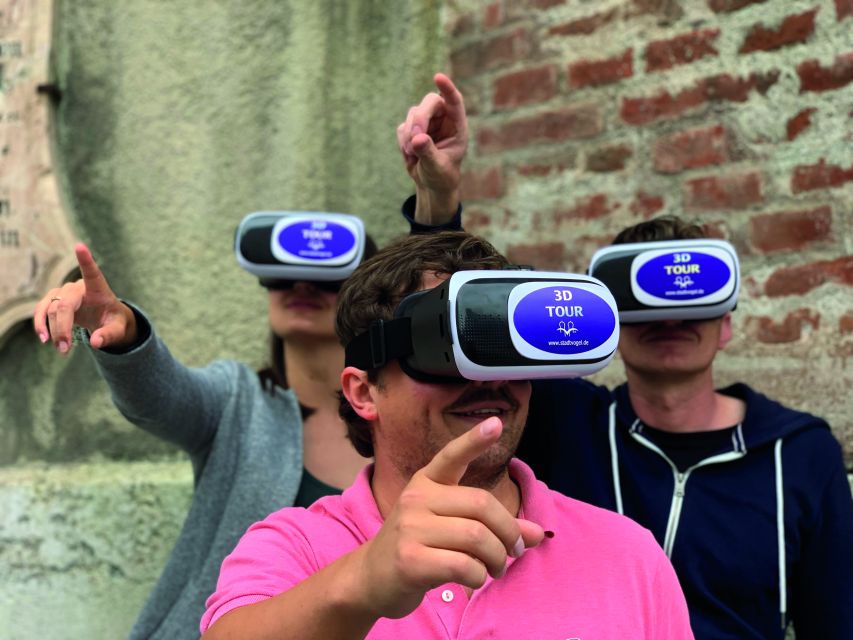
I would think of the glasses as a historical comparison tool rather than a full virtual reality attraction. The supplied equipment uses your smartphone, and the images are still pictures. Two people in one recent group had trouble getting their glasses or phones to work, so it is sensible to expect a little technical fuss rather than a polished digital show.
That is not necessarily bad news. The guide remains central, and the walking format keeps you connected to the actual city. You are not sealed off from Munich while wearing a headset. You still see the square, hear the street around you, and look up at the real buildings.
More Old Town Walking Tours in Munich
- Munich: Old Town & Viktualienmarkt City Walk in German
★ 4.7 · 2,304 reviews - Munich Old Town Walking Tour
★ 4.5 · 1,287 reviews - Munich: Spooky Tour of Old Town in German
★ 4.6 · 1,112 reviews
Meeting at Orlandohaus on Platzl
The meeting point is directly in front of Orlandohaus at Platzl 4. Look for a guide carrying a large blue bag marked with the white words Weis(s)er Stadtvogel and a 3D Tour sign.
Arrive ready to use your phone. At the meeting point, every participant downloads an app, then places the smartphone into the VR glasses. You need internet access for the download and a fully charged phone for the tour.
This is an important practical detail. If your battery is low, charge it before leaving your hotel. The tour provider supplies the guide, walk, and glasses, but your phone is part of the viewing system. Do not assume the headset includes its own screen or device.
The activity is wheelchair accessible. It lasts two hours, and starting times vary, so check the available time before booking.
Marienplatz in 1570: grain, punishment, and public life
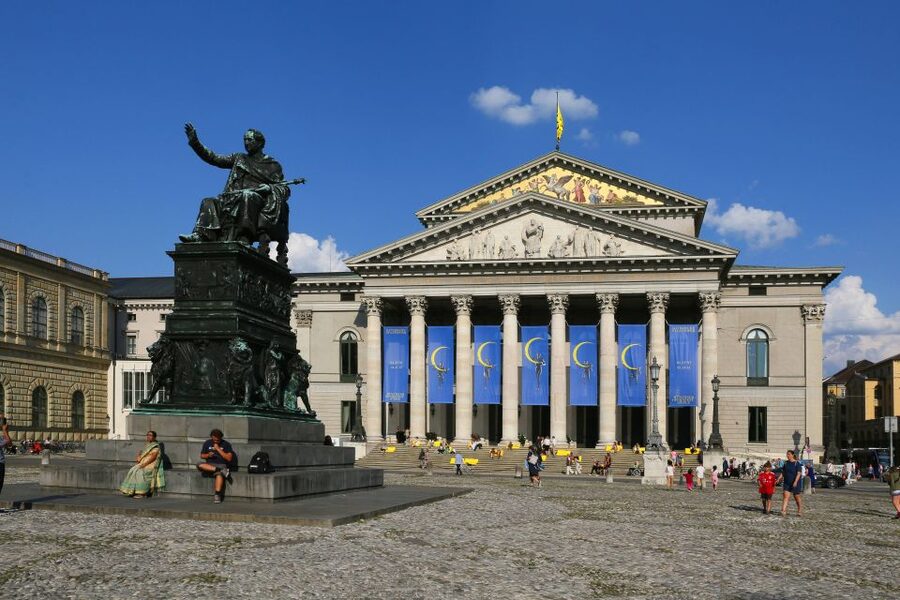
The first major historical comparison takes place at Marienplatz, where the square has been divided into two time zones for the purpose of the tour.
On the western side, you step back to 1570. The image presents the square as a medieval grain market, a much more practical and rough-edged place than the grand civic center you see today. The guide also points out the gallows used for special executions and the so-called disgraceful donkey.
These details may sound grim, but they help explain how public squares once worked. Marienplatz was not simply a place for photographs and city events. It was a market, a stage for authority, and a place where public punishment sent a message to the wider community.
This is where the tour’s method makes sense. A written description of a medieval market can feel abstract. Seeing a reconstruction placed over the modern square gives you a better sense of how crowded, commercial, and public the area once was.
Do not expect a full moving scene with animated figures. The historical rendering is a still image, and the guide supplies the story. If you want high-tech spectacle, this stop may feel modest. If you want help picturing a familiar place in another century, it earns its place on the route.
Marienplatz around 1870: a changing city center
The eastern side of Marienplatz shifts the clock forward by about 300 years. Here, you see what the Old Town Hall looked like around 1870, including the first completed part of the hall.
The image also brings in carriages and people working in old professions. That gives the square a different character from the medieval market. Instead of focusing only on punishment and trade, this section shows a city center shaped by transport, civic buildings, and everyday work.
I like this kind of comparison because it stops Munich’s past from becoming one blurry period called old times. The two sides of the square represent different phases of urban life. The guide can point out what changed, what remained, and why the same open space mattered in different ways.
You will also get a useful present-day orientation. The Old Town is full of famous buildings, but the scale and purpose of those places are not always obvious when you are simply walking through them. The historical image gives you another layer to notice when you return to the square later.
The equipment may not show every participant the same quality of image. Some people found the phone display sharper or easier to use than the VR glasses. Treat the device as a bonus that supports the explanation, not as the whole reason to book.
Other walks through the old centre of Munich:
- Munich: Walking Tour Old Town and Viktualienmarkt
★ 4.7 · 839 reviews - Munich: Old Town Walking Tour
★ 4.7 · 589 reviews - Munich: Old Town Guided Walking Tour
★ 4.6 · 479 reviews - Mystic Munich – Sagas and Legends of the Old Town
★ 4.8 · 208 reviews
Platzl in 1895: how a local corner became iconic
The tour also stops at Platzl, shown in 1895. This section looks at how the area developed and how it changed into the Urmünchner place associated with Munich today.
The historical image helps you compare the old layout and atmosphere with the present-day setting. The guide adds the local story, explaining how the area came to be and why it holds such a strong place in Munich’s identity.
Platzl is a good setting for the tour because it is already full of recognizable sights. The comparison is not happening in an obscure corner with little to see. You can stand in a famous part of the Old Town and consider how its role and appearance shifted over time.
The stop also gives the tour a more social feel. The images are not only about grand buildings. They help you think about how people used the area, what kinds of work took place there, and how a local meeting place became a symbol of Munich.
Hofbräuhaus, then and now
Hofbräuhaus is one of the most familiar names in Munich, so the tour uses it to show a clear contrast between past and present.
You see the famous beer hall in its earlier form and compare it with the building and setting you know today. The guide explains the changes rather than leaving you with a simple before-and-after picture.
This is a useful stop if you plan to visit Hofbräuhaus separately. You can arrive with a little more context about the building instead of treating it only as a popular beer hall. The tour does not include food or drinks, so you are free to return later on your own if you want to eat there.
Keep your expectations in check. The activity does not promise a meal, a tasting, or special entry inside the beer hall. Its purpose is the outdoor walk, the historical comparison, and the guide’s account of how the site developed.
The guide matters more than the gadget
The experience rises or falls with the person leading it. A good guide must manage the walking route, explain the historical image, help with the app, and keep a German-speaking group engaged.
The strongest feedback points to guides who are warm, lively, and committed. One guide was praised for presenting the material with heart, while another was credited with mixing fun, knowledge, and energy even when the glasses did not work properly for everyone.
That tells you how to judge the tour. If you want a short lecture with a device attached, you may be disappointed. If you enjoy asking questions and listening to stories while standing in the actual places under discussion, the format is more rewarding.
The tour is conducted in German. The provider does not list an English option, so you should be comfortable following spoken German for two hours. The historical images may help with visual understanding, but they will not replace the guide’s spoken explanations.
What the 3D glasses really offer
The name 3D VR Tour may create an image of animated buildings, moving crowds, and a highly polished digital world. That is not what you should expect here.
The glasses hold your smartphone and show historical renderings. Based on the available comments, these are still photos or still images rather than moving footage. Some people felt the glasses were more like a toy and that the image looked better directly on the phone.
I would not dismiss the idea because of that. Static images can still be useful when they are placed at the right location and explained well. The value comes from comparing the picture with the real street around you.
Still, the technology affects the price calculation. At $37 per person, the tour costs more than a basic Old Town walk. You are paying for a specialized format, equipment, and a guide who has organized a historical route around four visual reconstructions. If the VR element is your top priority, the price may feel high. If you mainly want a lively, unusual German-language city walk with visual aids, the cost is easier to justify.
Who will enjoy this Munich walk
I would recommend this tour to families, friends, and curious first-time visitors who like seeing familiar places explained in a fresh way. It can also suit people who have already walked through Munich and want a new reason to look carefully at Marienplatz and Platzl.
Children may enjoy the glasses and the idea of time travel, though the amount of benefit will depend on their German comprehension and patience with still images. The two-hour length is long enough to build a story but short enough to fit into a busy Munich day.
This is not the best choice for you if you want a detailed architectural tour, a food experience, or a fully animated virtual reality production. It is also a poor fit if you do not understand German.
You should also consider how you like to learn. I prefer tours that connect the past to the actual streets, and this one does that well. If you learn better through a guide’s narration than through a screen, you will probably get more from the walking route than from the headset itself.
Planning the $37 price
At $37, this is a mid-priced walking tour with a special feature. The guide, two-hour route, and glasses are included. Food, drinks, hotel pickup, and hotel drop-off are not.
The price is reasonable when you value the guide’s local storytelling and want an activity that combines sightseeing with historical reconstruction. It is less compelling if you are mainly paying to try VR technology.
I would compare it with the cost of a standard guided walk, then ask whether the four historical views are worth the extra amount to you. The tour does not cover a huge part of Munich. Its strength is focus: a few central locations examined through different dates and uses.
Free cancellation is available up to 24 hours before the start, and you can reserve now and pay later. Those terms help if your Munich schedule is still changing, but they do not change the basic value question. Book it for the guide-led interpretation, with the glasses as an added attraction.
Should you book the 3D Old Town tour?
Book this tour if you want to see Marienplatz and Platzl through several time periods, can follow German, and enjoy a guide who adds stories to visual comparisons. The medieval grain market, the 1870 view of the Old Town Hall, and the 1895 look at Platzl give the walk a clear structure.
Skip it if you expect moving VR scenes, sharp modern equipment, or a meal at Hofbräuhaus. The technology is basic, and a phone screen may work better than the glasses for some people.
My practical verdict: book it for the human guide and the unusual way the Old Town is explained. Go in expecting still historical images, not a digital theme-park ride, and the experience should feel more useful and entertaining.
FAQ
Where does the Munich 3D VR walking tour meet?
Meet directly in front of Orlandohaus at Platzl 4 in Munich.
How do I identify the guide?
The guide carries a large blue bag with the white words Weis(s)er Stadtvogel and a 3D Tour sign.
How long does the tour last?
The walking tour lasts two hours.
What language is the tour in?
The live tour guide speaks German.
Do I need to bring my own smartphone?
Yes. Each participant needs a charged smartphone with internet access.
What happens with the smartphone?
At the meeting point, you download an app and place your smartphone inside the VR glasses to view the historical 3D images.
Are the images moving videos?
No. The historical material is presented as still photos or still renderings rather than moving images.
Which Munich locations are included?
The route focuses on four places with 3D renderings, including Marienplatz, Platzl, and Hofbräuhaus.
Is the tour wheelchair accessible?
Yes, the activity is listed as wheelchair accessible.
Are food and drinks included?
No. Food and drinks are not included, and hotel pickup and drop-off are also excluded.
More simulators and VR in Munich
- Cologne: Virtual Reality Time Travel Experience Ticket
★ 4.6 · 1,958 reviews - Dresden: Virtual Reality Time Travel Experience Ticket
★ 4.5 · 748 reviews - Frankfurt: Virtual Reality Time Travel Experience Ticket
★ 4.5 · 658 reviews - Cologne Cathedral Walking Tour around the cathedral with VR
★ 4.6 · 216 reviews
More German-language tours in Munich
- Munich: Night Watchman Torch Tour in German
★ 4.8 · 1,280 reviews - Munich: Viktualienmarkt Food Tasting Tour in German
★ 4.7 · 394 reviews - München: Der Nachtwächter für Kinder – Führung auf Deutsch
★ 5.0 · 322 reviews - Munich – Illuminati & other Secret Societies, Tour in German
★ 4.7 · 122 reviews
Just added in Munich
- Pub crawl incl. Oktoberfest museum guided tour with beer tasting (private)★ 5.0 · 5 reviews
- South Tyrolean specialties and wine tasting★ 5.0 · 5 reviews
- Short & sweet: Tasting the Viktualienmarkt★ 4.8 · 37 reviews
- Size Matters Beer Tour Munich★ 4.6 · 105 reviews
- Secret Food Tours Munich★ 4.8 · 5 reviews
- Munich: Romantic Wine Experience for Two at Viktualienmarkt★ 4.2 · 14 reviews
- Munich: Resistance against Hitler – Historical Walking Tour★ 5.0 · 5 reviews
- Residence of Munich private tour with skip the line ticket★ 5.0 · 4 reviews
Simulators & VR Experiences, compared.
Virtual Reality Time Travel Experience Ticket
Read our review →
Cologne Cathedral Walking Tour around the cathedral with VR
Read our review →
Airbus Flightsimulator | Flying Experience | adults&children
Read our review →
Browse the lists this tour appears in