
Reviewed · HARBOUR & ELBE CRUISES
Hamburg: Speicherstadt and Hafencity Guided Tour
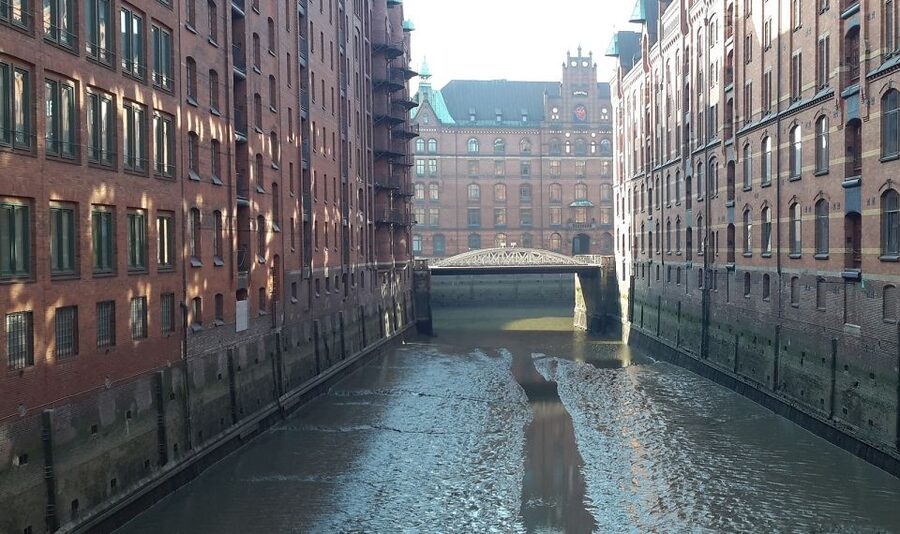
Hamburg’s Speicherstadt is the star here: a maze of red-brick warehouses, narrow waterways, and grand inner courtyards built for trade. This walk gives you the useful backstory, then sets it against the glass, steel, and bold shapes of HafenCity and the Elbphilharmonie.
I like the clear contrast between old and new, and I like that the guide explains how trade shaped everyday Hamburg. The route also passes the coffee roastery, Miniatur Wunderland, Spice Museum, and Magellan Terraces, so you get plenty of visual landmarks in two hours.
The main drawback is that this is an outdoor walk, and Hamburg’s wind can be sharp. A short coffee-roastery stop may also feel too long if you want more guiding and less shopping. The tour is in German, and the Elbphilharmonie is viewed from outside.
Key points at a glance
- See Hamburg’s two faces: Move from the historic Speicherstadt to the modern buildings of HafenCity.
- Learn about Hanseatic trade: Hear how warehouse districts, merchants, coffee, and spices shaped the city.
- Get close to the Elbphilharmonie: Study its wave-like glass exterior and harbor setting from outside.
- Follow a compact two-hour route: Pass Miniatur Wunderland, the old coffee roastery, Spice Museum, and Magellan Terraces.
- Expect a German-language walk: The live guide explains the sights and answers questions in German.
- Pay about $16 per person: That is a fair price for a focused city orientation, especially if Hamburg is new to you.
Starting beside the Elbphilharmonie at Sandtorkai
The meeting point is at Sandtorkai 74, on the corner of Sandtorkai and Kaiserkai. Look for the square in front of the stairs and the white wall with the hole in the middle. That precise landmark matters in HafenCity, where large buildings and open plazas can make a simple street address less helpful.
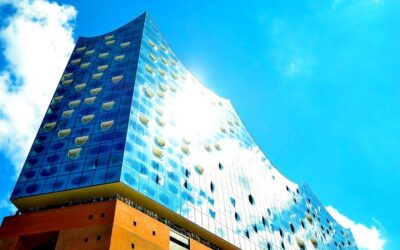
The tour begins near the Elbphilharmonie, Hamburg’s most recognizable modern building. Its abstract glass front rises above the harbor like a crown, and the guide uses it as a starting point for understanding how quickly this part of Hamburg has changed.
You should arrive ready to walk outdoors for two hours. The tour is listed as wheelchair accessible, which is useful for anyone who needs a route that can accommodate a wheelchair. Still, you may want to confirm the exact walking conditions at booking if you have particular mobility needs.
The guide speaks German. That is important to keep in mind before booking. If you understand German well, you can expect explanations about architecture, Hamburg’s past, and the details along the route. If you do not, this is not the right choice simply because the sights are interesting. The live commentary is a central part of the experience.
Other time on the water in Hamburg:
- Hamburg: 1.5-Hour Harbor and Speicherstadt Day Cruise
★ 4.6 · 14,200 reviews - Hamburg: 90-Minute Evening Lights Harbor Cruise
★ 4.5 · 7,728 reviews - Hamburg: Elbphilharmonie Plaza Guided Tour
★ 4.7 · 5,882 reviews
Reading the Elbphilharmonie from the outside
The Elbphilharmonie makes a strong opening because it is easy to see why Hamburg chose this building as a new city symbol. The tour focuses on the exterior, so do not book it expecting a concert hall visit, an inside tour, or entrance to a viewing area.
Instead, you get time to look at the unusual front and understand its place above the harbor. The building’s bold form provides a sharp contrast with the older brick warehouses nearby. That contrast is one of the best reasons to take this particular route rather than a walk limited to the historic center.
I like starting here because it gives you a quick sense of Hamburg’s present-day identity. The building is not treated as an isolated photo stop. It becomes the first half of a visual argument: Hamburg is both an old trading port and a city still trying new architectural ideas.
The outside setting also keeps the tour affordable. At around $16 per person, you are paying for a guided orientation rather than an admission package. If you want to enter major attractions, you will need to pay those fees separately.
Passing Miniatur Wunderland, coffee, and spices
From the Elbphilharmonie, the route continues toward the Kaiser and through the edge of the Speicherstadt area. Along the way, you pass Miniatur Wunderland, known for its world’s largest model railway, as well as an old coffee roasting plant and the Spice Museum.
These stops help connect Hamburg’s buildings to the goods that once moved through the port. Coffee and spices are not random details here. They point to the commercial work carried out in the warehouses and to the international links that made Hamburg prosperous.
The tour includes a coffee-roastery break of about 15 minutes. That pause can work well if you want a moment to warm up, browse, or buy something. It may feel less useful if you would rather keep walking and hear more about Hamburg.
One recent experience of the tour was that the break could have offered more explanation about coffee, such as where the beans come from and how roasting works. That is a fair expectation, given the setting. If coffee interests you, ask the guide directly about the roasting plant, the beans, and the role of coffee in Hamburg’s trade.
This is also a good place to ask questions in general. The guide may have a set route and core explanations, but several details become clearer when you speak up. The strongest part of the guiding comes from asking about the buildings, the goods, and the people connected to them.
Entering the brick courtyards of Speicherstadt
The Speicherstadt is more than a pretty row of red-brick facades. The district was built around storage and trade, and its large warehouses helped Hamburg handle goods moving through the port. The walk explains the district during the time of the Hanseatic League and introduces the merchants sometimes called the Pfeffersäcken, or pepper sacks, a nickname tied to the wealth created by trade.
The architecture tells the story well. Look for the tall walls, arched details, and water beside the buildings. The inner courtyards have an almost cathedral-like scale, but they were shaped by commerce rather than worship. That is one of the most memorable ideas on the route: in this part of Hamburg, money and trade directed daily life.
The Dutch Brook courtyards are especially useful for reading the area. The buildings feel formal and imposing, yet their purpose was practical. They held goods, supported business, and connected Hamburg to wider markets.
I like this section because it gives meaning to details you might otherwise pass without notice. Red brick can look decorative at first glance. Once you understand that these were working warehouses tied to merchants and port trade, the district feels more purposeful.
The route does not turn the Speicherstadt into a museum display. You see it as part of the city, with old commercial buildings beside newer attractions and streets. That mix is one reason the walk works well as an introduction to Hamburg.
A few more things to do in Hamburg worth a look
- Hamburg: Chocoversum Guided Tour with Tastings
★ 4.7 · 2,443 reviews - Hamburg: St. Pauli Highlights Guided Tour with Beer for 18+
★ 4.7 · 2,353 reviews - Hamburg: Guided Walking Tour for Magic Fans
★ 4.8 · 1,992 reviews - Hamburg: Elbphilharmonie Highlights and Plaza Guided Tour
★ 4.7 · 709 reviews
Magellan Terraces and the view across the water
The route reaches the Magellan Terraces, located across from the Speicherstadt. This is a useful point for pausing and taking in the relationship between the historic warehouses and newer HafenCity.
From here, you can compare the regular brick forms of Speicherstadt with the newer urban design nearby. The terrace helps you see the city as a connected port rather than a collection of separate sights.
The walk is not built around long stops at every attraction. You will pass important places and hear their context, but the focus remains on the overall development of the district. If you want detailed interior visits to Miniatur Wunderland, the Spice Museum, or other attractions, plan those separately.
That is both a strength and a limitation. You cover a lot in two hours, but you do not get a full visit inside each place. For a first look at the area, the pace is sensible. For a specialist visit focused on coffee, spices, or model railways, you will want extra time afterward.
Comparing Speicherstadt with modern HafenCity
After the historic warehouses, the route moves into HafenCity, Hamburg’s newer and more ambitious urban district. This change of mood is the heart of the tour.
The older Speicherstadt shows the city’s trading past through brick, water, storage, and merchant courtyards. HafenCity presents a different set of ideas through modern buildings and environmental design. The guide explains what current architecture can do and how the newer district differs from the old warehouse quarter.
I find this contrast more useful than a tour that only lists dates and building names. You can see how Hamburg has changed its relationship with the harbor. The port is not just a place for goods and warehouses. It is also a setting for housing, public spaces, cultural buildings, and new construction.
The modern section may appeal most to people who enjoy architecture. You will see sophisticated and environmentally friendly buildings, but the experience is still an outdoor city walk rather than a technical architecture lecture. If you want detailed information about individual projects, ask questions as you go.
HafenCity also gives the tour a forward-looking finish. The Speicherstadt explains how Hamburg became important through trade. HafenCity shows how the city is using the same waterfront for a different era.
What the guiding is like in practice
The tour has a strong reputation for clear explanations. An overall rating of 4.7 from 1,344 reviews suggests that the guiding is a major reason people book it, and the most consistent praise centers on useful information, Hamburg’s story, and the Elbphilharmonie.
You can expect a professional city guide rather than an audio guide or self-guided route. The guide answers questions in a friendly and well-grounded way, which helps when you want more than the standard talk.
Still, the quality of a walking tour depends partly on how active you are as a listener. Some interesting details may only come out when someone asks. I would use the tour as a conversation, not simply as a moving lecture.
Prepare a few questions before you arrive. You might ask about the Hanseatic League, the merchants behind the Speicherstadt, the warehouse system, the coffee trade, the Elbphilharmonie’s exterior, or the design goals of HafenCity.
Because the language is German, your comfort with German will shape the value. Strong German speakers can get the full benefit of the commentary. Those with only basic German may still enjoy the buildings, but they may miss the historical explanations that make the route worthwhile.
Is $16 a fair price for two hours?
At about $16 per person, this is a good-value orientation tour if you want context for Hamburg’s waterfront districts. You see several major areas in one outing, and a professional guide ties them together.
The price does not include entrance fees. That keeps the base cost low, but it also means you should budget separately if you plan to visit attractions along the way. The tour itself is best understood as an outdoor introduction, not a ticket bundle.
I would especially recommend it early in a Hamburg visit. After two hours, you will know which places deserve a longer return visit. You may decide to go back to Miniatur Wunderland, spend more time around the Speicherstadt, or explore HafenCity on your own.
The value is lower if you already know these districts well or want to enter several attractions during the walk. In that case, a visit built around one specific museum or building may suit you better.
Weather, footwear, and the pace of the walk
Hamburg’s waterfront weather can change your impression of the tour. In very cold conditions, standing outside for explanations becomes tiring, and the route can feel less enjoyable even when the content is strong.
Wear warm layers in winter and shoes suited to a two-hour city walk. The route is wheelchair accessible, but practical comfort still matters, especially when the temperature is low.
The coffee-roastery stop offers a short break, though it is not a replacement for an indoor tour. If the forecast is harsh, consider booking for a milder part of the day when starting times allow. Availability and start times vary, so check them before booking.
The walk is long enough to give you a real sense of the districts without taking an entire day. It is short enough to fit beside other Hamburg plans, provided you allow extra time for attractions you want to enter.
Who should book this Hamburg walking tour?
I would choose this tour if you want a clear first look at Hamburg’s waterfront, especially the connection between trade, warehouses, and modern city planning.
It suits you best if:
- You understand German and want live commentary.
- You enjoy architecture and city history.
- You want to see both Speicherstadt and HafenCity in one route.
- You prefer a guided walk to reading signs on your own.
- You want to decide later which attractions deserve an admission ticket.
- You have two hours and want a compact introduction to central waterfront sights.
I would think twice if you want an English-language tour, an interior visit to the Elbphilharmonie, or extended time inside Miniatur Wunderland and the museums. The tour passes important places, but it does not include their entrance fees.
Should you book it?
Book this tour if you want the story behind Hamburg’s most photogenic waterfront districts. The best parts are the explanation of the Speicherstadt’s merchant past, the contrast with HafenCity, and the chance to see the Elbphilharmonie in context rather than as a quick standalone photo.
The main cautions are simple: the tour is in German, the Elbphilharmonie is viewed from outside, and cold weather can make an outdoor walk less pleasant. At $16, it offers solid value for a two-hour introduction, especially near the start of your stay.
FAQ
Where does the tour meet?
The meeting point is at Sandtorkai 74, on the corner of Sandtorkai and Kaiserkai. Meet on the square in front of the stairs by the white wall with the hole in the middle.
How long does the tour last?
The tour lasts two hours.
What language is the tour in?
The live tour guide speaks German. The listed tour language is German.
Is the tour wheelchair accessible?
Yes, the activity is listed as wheelchair accessible.
Does the tour go inside the Elbphilharmonie?
No. The experience includes seeing and learning about the Elbphilharmonie from outside. Entrance fees are not included.
Are entrance fees included?
No. Entrance fees are not included in the tour price.
What places does the route pass?
The route passes the Elbphilharmonie, Miniatur Wunderland, an old coffee roasting plant, the Spice Museum, Magellan Terraces, Speicherstadt, and HafenCity.
Is there a break during the tour?
Yes. The route includes a coffee-roastery stop of about 15 minutes. The tour information does not list additional breaks.
Just added in Hamburg
- Alternative Hamburg / Street Art Private Tour★ 4.7 · 8 reviews
- 3 Hours Hamburg E-Scooter Tour★ 4.3 · 9 reviews
- 3 Hours Hamburg Segway Tour★ 4.1 · 68 reviews
- 2 Hours Hamburg E-scooter Tour★ 4.2 · 103 reviews
- 2 Hours Hamburg Segway Tour★ 4.5 · 164 reviews
- Hamburg: Private – Town Hall, Speicherstadt, Elbphilharmonie★ 4.8 · 27 reviews
- 1-Day Hop-on/Hop-off Bus Tour of Hamburg Line D★ 4.0 · 256 reviews
- “After Work” – Sailing-Yacht Cruising Event, Hamburg/Elbe★ 5.0 · 5 reviews
Harbour & Elbe Cruises, compared.
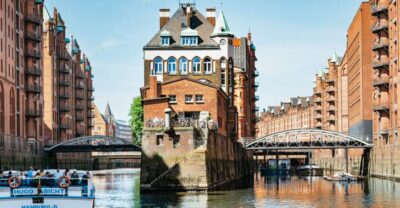
1.5-Hour Harbor and Speicherstadt Day Cruise
Read our review →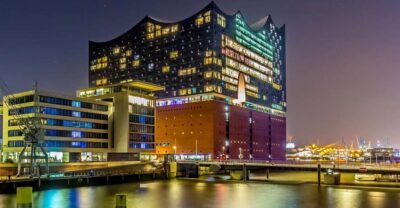
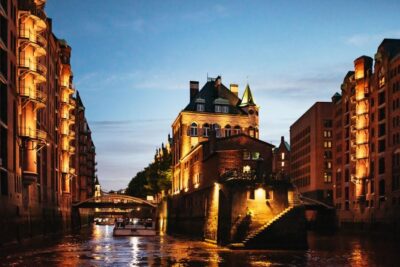
1-Hour Harbor Sightseeing Cruise with HafenCity
Read our review →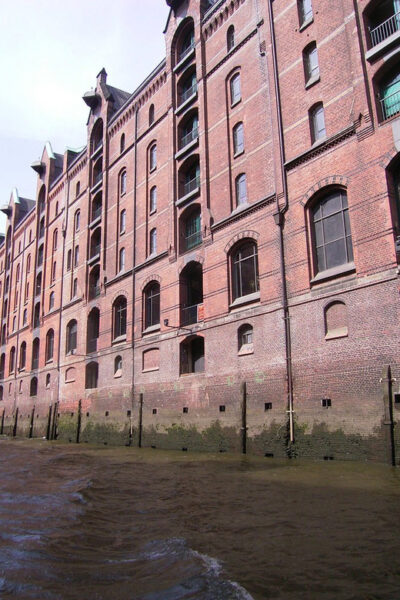
Elbphilharmonie Plaza, Highlights & Surroundings
Read our review →
Elbphilharmonie Plaza and HafenCity Food Tour
Read our review →
Browse the lists this tour appears in