
Reviewed · HISTORICAL TOURS
Berlin Protest History Tour: Rebels, Resistance, and Revolution
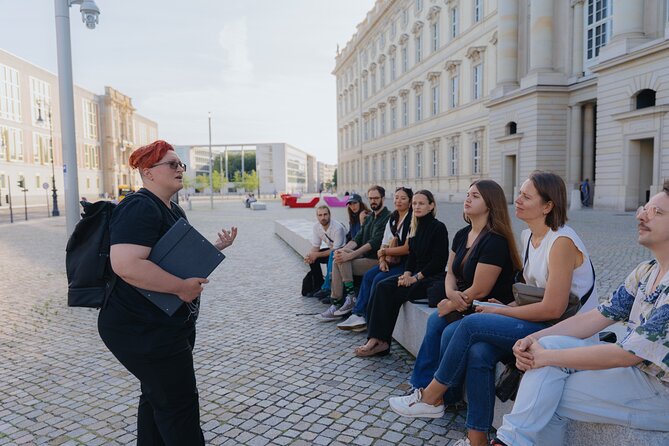
Berlin’s protest story unfolds in public squares, churchyards, memorials, and even on the faces of old buildings. This 2-kilometer walk from the Red Town Hall to Alexanderplatz links medieval unrest, the 1848 revolution, Nazi-era resistance, East German censorship, and the fall of the Berlin Wall.
I like two things right away: the route connects both halves of Berlin’s political past, and it pays attention to small details that are easy to miss on a standard city tour. The short format and 15-person limit should also make it easier to ask questions. The trade-off is that two hours moves fast, and several stops are brief.
Key points to know before booking
- The route crosses centuries of protest: You move from Berlin’s medieval beginnings to the 1989 Peaceful Revolution.
- Rosenstraße is a major stop: The monument recalls a courageous 1943 protest by German women on behalf of Jewish men.
- East German history gets careful treatment: The tour examines official symbols, missing stories, and acts of quiet dissent.
- You finish at Alexanderplatz: The World Time Clock was East Berlin’s best-known meeting point.
- Every stop is free to enter: This is an outdoor walking experience, not a ticketed museum tour.
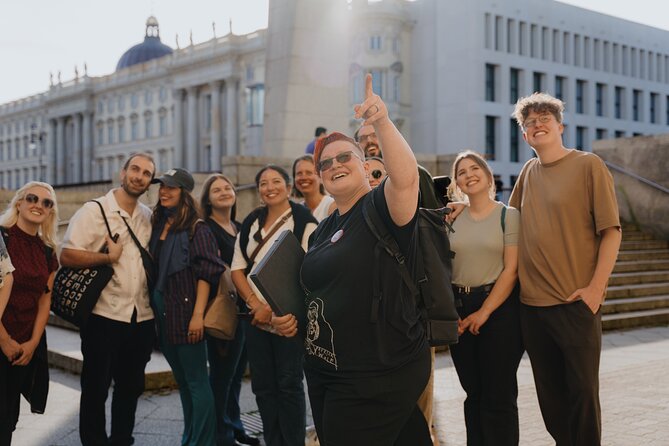
- The walk is small and practical: It is offered in English, lasts about two hours, and accepts a maximum of 15 people.
Why Berlin’s protest story works on foot
Berlin can feel like a city of isolated monuments. One square recalls Prussia, another recalls socialism, and a third points to the Cold War. This tour gives those places a shared thread: people challenging power in public.
That thread is useful because the route does not treat revolution as one single event. You see different forms of resistance. Some are open uprisings. Some are religious or political protests. Others are small acts of courage carried out under frightening conditions.
The walk also helps you read official architecture with a more critical eye. A sculpture, a reconstructed palace, a restaurant wall, and a clock can all reveal what a government wanted people to remember. Just as important, they can show what it preferred to leave out.
The price is $30.04 per person. For a two-hour guided walk, that is a fair cost if you want interpretation rather than a simple stroll between famous sights. Since admission is free at every stop, you are paying mainly for the guide’s research, storytelling, and route planning.
Other history to see in Berlin:
- Berlin: Natural History Museum Entrance Ticket
★ 4.6 · 3,382 reviews - Berlin: World Heritage Cruise to Potsdam
★ 4.5 · 1,435 reviews - Berlin Historical Highlights Walking Tour
★ 4.9 · 657 reviews
Starting beside the Red Town Hall
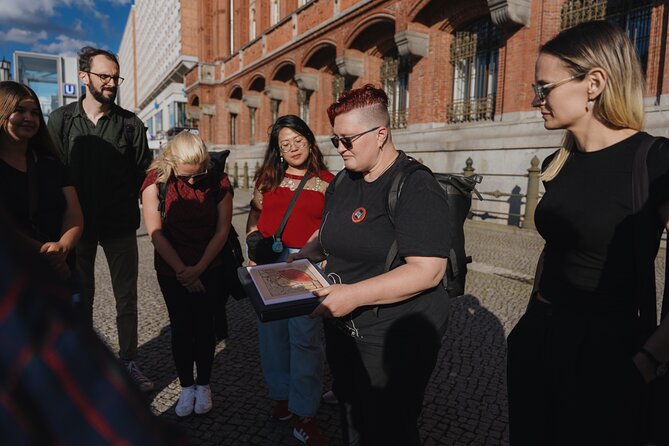
The meeting point is the Sculpture Aufbauhelferin near Rotes Rathaus on Jüdenstraße. The Red Town Hall is a strong place to begin because its terracotta decoration offers a visual timeline of Berlin’s past.
You start with the city’s origins and the cause of one of Berlin’s most important early uprisings. The building gives you something concrete to look at while the guide explains the political setting. That is more useful than beginning with a broad lecture about Berlin and asking you to picture a vanished city.
The opening stop lasts about 15 minutes. Admission is free, and you remain outside. Wear shoes that can handle walking on city streets, since the route continues through several central districts rather than staying around one monument.
Nikolaiviertel and the remains of socialist Berlin
Nikolaiviertel offers a sharp change in tone. It is known here as a prime example of socialist kitsch built for Berlin’s 750th anniversary, a phrase that tells you plenty about the area’s staged historic charm.
You also see the last remains of the Palace of the Republic. The building once housed the East German parliament, but it was also a famous entertainment venue in the socialist half of Berlin. That mixture matters. Governments are not only built through laws and speeches. They also use restaurants, theaters, public events, and leisure spaces to shape daily life.
This stop takes about 10 minutes. It is short, but it gives you a useful question to carry through the rest of the walk: what is genuine, what is reconstructed, and what is designed to make a political system feel normal?
Gasthaus Mutter Hoppe and the history left out
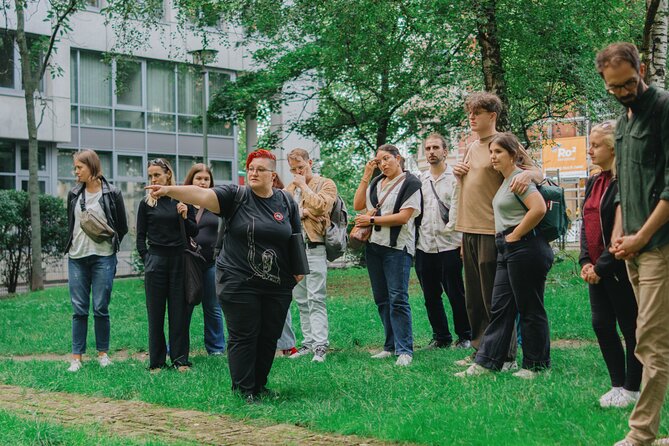
At Gasthaus Mutter Hoppe, you see an East German answer to the Red Town Hall’s terracotta timeline. This display presents important moments in the history of the socialist country.
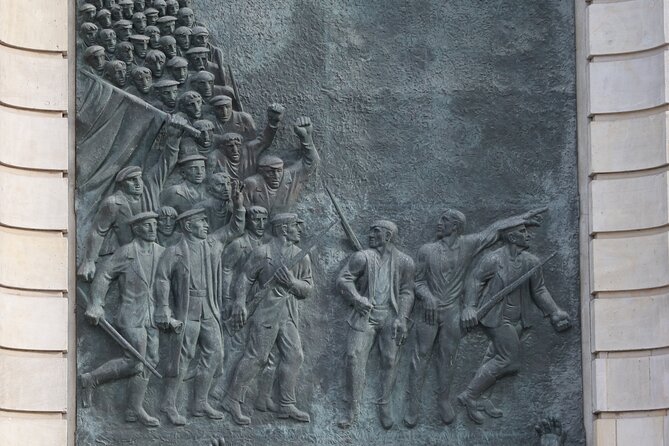
The most revealing detail is what is missing: the building of the Berlin Wall does not appear. That omission gives the guide a clear way to discuss state-controlled memory without needing a long abstract explanation.
The stop lasts only about five minutes, so expect a quick look rather than a full historical presentation. Still, it is one of the more useful moments on the route because it teaches you to notice silence as well as information. A public timeline can tell you what a government values, but it can also expose what it avoids.
Same base, a different kind of day out:
- Berlin: Reichstag, Dome and Government District Guided Tour
★ 4.7 · 18,288 reviews - Berlin: 1-Hour City Tour by Boat with Guaranteed Seating
★ 4.3 · 16,993 reviews - Berlin: Boat Tour Along the River Spree
★ 4.4 · 11,252 reviews - Discover Berlin Half-Day Walking Tour
★ 5.0 · 9,624 reviews
Marx and Engels in the middle of the city
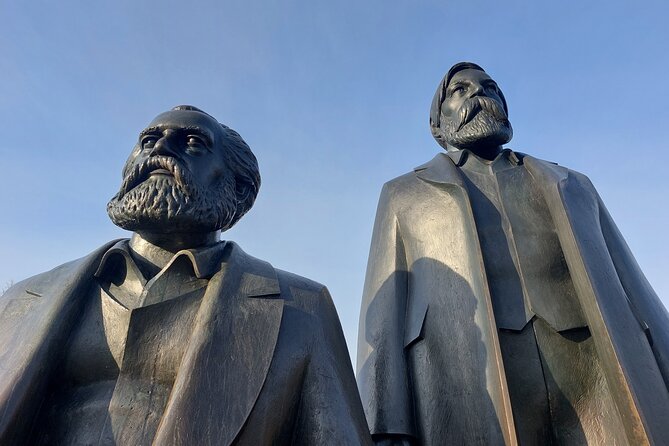
At Marx-Engels-Forum, the large statue of Karl Marx and Friedrich Engels brings the intellectual foundation of East German rule into view. The two men wrote The Communist Manifesto, and their monument has been debated for years.
The guide uses the statue to discuss how public symbols change meaning. For some people, it represents political theory and social equality. For others, it recalls authoritarian rule and a divided Europe. The point is not to force one answer, but to show why the statue remains politically charged.
You spend about 15 minutes here. This is also a good place to ask questions if you want to connect the monument to the other East German sites on the route. The tour’s small maximum group of 15 should help keep that exchange manageable.
The Humboldt Forum and the March Revolution of 1848
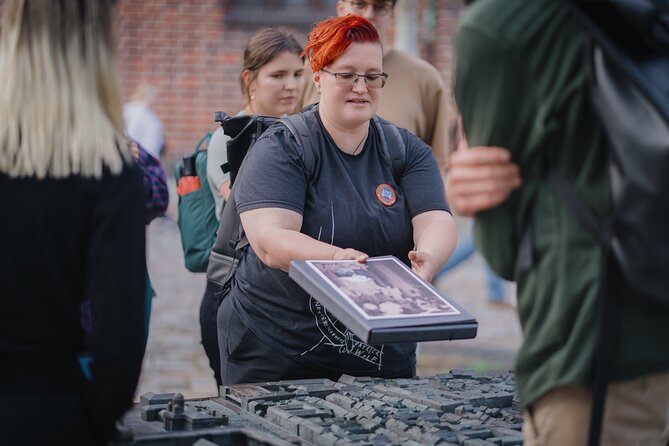
The Humboldt Forum occupies the site of the reconstructed Berlin Palace. The palace itself witnessed several protests and revolutions, including the March Revolution of 1848.
This is one of the tour’s best examples of Berlin’s layered appearance. You are looking at a reconstructed palace, but the guide points you toward events connected to the original building. That distinction matters. A rebuilt facade can still mark a place where real political pressure once gathered.
The 1848 revolution helped sow the seeds of democracy in Germany. You do not need to know every detail beforehand to follow the story, but you should expect the guide to connect the local event to the wider struggle over representation and political rights.
The stop lasts about 20 minutes, the longest pause on the route. That gives the guide room to explain why this site matters before the walk turns toward Nazi-era history.
Rosenstraße and an act of civil disobedience in 1943
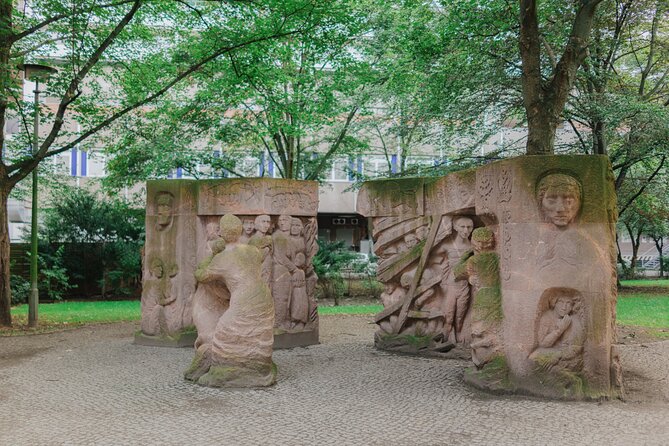
Rosenstraße is likely to be the emotional center of the tour. Here you see a monument honoring women who staged a courageous protest during the cold winter of 1943.
Their protest concerned Jewish men held by the Nazi regime. The story is presented as the only protest by Germans against the Final Solution, and it opens a difficult discussion about Jewish life under Nazi rule, public pressure, and the risks of speaking out under dictatorship.
You also see the foundations of Berlin’s oldest synagogue. That physical trace is important. It places Jewish life in the city before and during Nazi persecution, rather than reducing the subject to a single memorial or date.
The stop lasts about 15 minutes. Give it your full attention. It is not simply another monument on a walking route. It asks how ordinary people responded when state violence entered their families and neighborhoods.
St. Mary’s Church and the city’s religious voice
St. Mary’s Church is one of Berlin’s oldest churches. The visit also recalls Martin Luther King’s sermon there in 1964, delivered to a huge crowd.
That detail widens the tour beyond German political history. King’s presence connects Berlin to international civil rights struggles and to the symbolic importance of speaking publicly in a divided city. The church becomes more than an old building. It becomes a place where faith, public speech, and political hope met.
The stop is about 10 minutes. As with several points on the route, you should expect an explanation from outside rather than a long interior visit. The tour data does not promise a church entrance, so dress for an outdoor walk and treat the building itself as the main setting.
The Television Tower and the image of communist power
As you continue toward Alexanderplatz, you catch sight of Berlin’s Television Tower. It is one of the city’s best-known landmarks and a symbol of communist power.
The tower works well in this context because it is both a practical city marker and a political statement. It helped project the strength and modernity of East Berlin. From the street, you can read it as part of the city’s skyline, but the guide encourages you to see the political message built into that skyline.
This is a brief wayfinding moment rather than a separately timed stop. It helps link the earlier East German sites to the final section of the walk, where the story turns to 1989.
The fountain and the T-shirt protest of 1989
At the Brunnen der Völkerfreundschaft, the tour follows the events that led to the fall of the Berlin Wall. You hear about young East German oppositionists who staged a T-shirt protest by the fountain in autumn 1989.
This is exactly the kind of small story that can disappear beneath the larger headline of the Wall coming down. Political change did not arrive from nowhere. It grew through pressure, public courage, religious opposition, youth activism, and many ordinary people testing the limits of the state.
The stop lasts about 15 minutes. The fountain also gives you a useful sense of place. You are no longer discussing the Peaceful Revolution as a distant national event. You are standing at one of the public sites where East German dissent became visible.
Ending at the World Time Clock
The tour finishes at the Weltzeituhr, or World Time Clock, at Alexanderplatz. The rotating clock shows the time in 148 cities around the world and was the most popular meeting spot in East Berlin.
That ending is well chosen. The clock presents an international, outward-looking image, while Alexanderplatz carries strong associations with East German public life and the demonstrations of 1989. It gives the tour a final contrast between official symbols and the people who gathered beneath them.
The endpoint is convenient for continuing your day because it is in central Alexanderplatz and close to public transportation. The experience does not include entry to the Television Tower or other paid attractions, so plan separate tickets if you want to visit them afterward.
Pace, group size, and practical comfort
The advertised duration is about two hours, and the route covers roughly 2 kilometers. The listed stop times add up to about 105 minutes, leaving room for walking between locations, transitions, and questions.
That is a sensible pace for a history walk, but it will not feel leisurely at every stop. You move through nine main points, plus the Television Tower view, and some talks last only five or 10 minutes. If you like a brisk route with many connections, that is a strength. If you prefer long time at each place, you may want a slower museum visit afterward.
The tour is offered in English and uses a mobile ticket. It is near public transportation, accepts service animals, and most people can participate. The group is capped at 15, which is small enough to keep the guide’s voice and the discussion close to the group without making the walk private.
The experience requires good weather. If poor weather cancels it, you are offered another date or a full refund. You can cancel for a full refund up to 24 hours before the start time, but changes or cancellations inside that window are not accepted.
Who will get the most from this walk
I would choose this tour if you want Berlin history told through places rather than a list of dates. It suits first-time visitors who want a focused introduction to the city’s protest past, and it should also reward people living in Berlin who have already passed these sites without knowing their stories.
The tour is especially useful for anyone interested in:
- The East German state and the Peaceful Revolution
- Jewish life and resistance under Nazi rule
- The 1848 revolution and early democratic movements
- Political monuments and official memory
- Small acts of protest that do not appear in standard sightseeing routes
It is less suitable if you want museum interiors, long visits at one monument, or a general tour of Berlin’s main attractions. You will not get a broad overview of food, art, neighborhoods, or shopping. This is a focused history walk.
Should you book the Berlin Protest History Tour?
Book it if you want the stories behind Berlin’s facades, especially if the East German period and the events of 1989 interest you. The route is compact, the entry costs are already covered because the stops are free, and the $30.04 price is reasonable for a researched, English-language walk with a maximum of 15 people.
The strongest reason to go is the range of stories: a medieval uprising, the March Revolution, Rosenstraße, socialist propaganda, the T-shirt protest, and the World Time Clock all fit into one clear route. Just allow for a brisk pace and outdoor conditions. If those details suit you, this is a smart way to see central Berlin with fresh eyes.
FAQ
How long does the Berlin Protest History Tour last?
The tour lasts approximately two hours.
Where does the tour begin?
It begins at the Sculpture Aufbauhelferin near the Red Town Hall on Jüdenstraße, 10178 Berlin.
Where does the tour end?
It ends at the World Time Clock, or Weltzeituhr, at Alexanderplatz.
What language is the tour offered in?
The tour is offered in English.
How much does the tour cost?
The listed price is $30.04 per person.
How many people can join the tour?
The group has a maximum of 15 participants.
What happens if bad weather cancels the tour?
You will be offered a different date or a full refund.
Just added in Berlin
- Romantic Berlin Rickshaw City and Photo Tour – incl. pick-up★ 4.0 · 9 reviews
- Private taxi tour to Potsdam and Sanssouci 6-8h★ 5.0 · 30 reviews
- Moonshine Comedy – English Stand Up Comedy by the bay★ 5.0 · 11 reviews
- Private Half-Day Berlin Sightseeing Tour with a Minivan Including Short City Walks★ 5.0 · 31 reviews
- One Up to 3 Rickshaws(6 GUESTS)-Taylor Made Rickshaw Berlin Tour★ 5.0 · 20 reviews
- Private City Kickstart Tour: Berlin★ 4.5 · 71 reviews
- Berlin Private Custom Walking Tour With A Guide (Private Tour)★ 4.5 · 8 reviews
- Private tour of Berlin★ 5.0 · 15 reviews
Historical Tours, compared.
City History Canal Sightseeing Tour on a Motorboat
Read our review →

Browse the lists this tour appears in