Reviewed · TOURS IN LUBECK
Lübeck: Entertaining Tour Through Hidden Courtyards
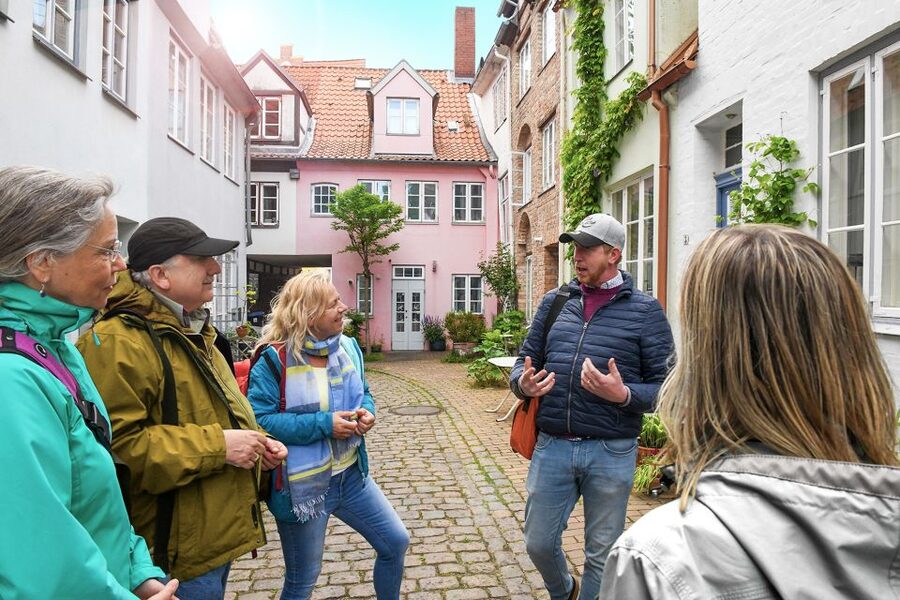
Lübeck’s most revealing sights are often behind its grand front doors. This 90-minute walk leads you from the Burgtor into narrow corridors, tucked-away courtyards, former workers’ stalls, and monastery courtyards that show how ordinary people lived in the Hanseatic city. The old town feels different from the postcard version once you see the cramped spaces created when Lübeck’s population grew.
I like the way the tour connects architecture with daily life, especially the explanation of why crooked passageways and tiny homes were built behind the main street buildings. I also like the private-group format, which can make it easier to ask questions and focus on details that a larger walk might pass by. The main consideration is language: the tour is held in German, so you need enough German to follow the guide’s explanations.
Key points to know before booking
- See Lübeck from the inside: The route focuses on courtyards and corridors that are easy to miss from the street.
- Learn why the lanes are so tight: Population growth in the Middle Ages pushed builders to create extra housing behind front buildings.
- Connect history to real lives: The tour covers workers, monastery residents, and merchant and shipper widows.
- Start at the Burgtor: Meet outside the old town at Burgtorbrücke 2, with the guide carrying an orange bag marked k3.
- Plan for German: The live guide speaks German, and no other language is listed.
- Allow 90 minutes: At $20 per person, the price is reasonable for a focused walking tour with a private group and a live guide.
Why Lübeck’s back courtyards tell the better story
Lübeck is famous for its Hanseatic buildings, churches, and brick Gothic streets. Those sights matter, but they mostly show the city from the public side. This walk takes you through the spaces behind the main facades, where the pressures of city life become much easier to understand.
The key idea is simple. Lübeck grew sharply during the Middle Ages, helped by its role in the Hanseatic League. More merchants, workers, sailors, and families needed somewhere to live, yet the medieval city had limited space within its walls. Instead of spreading outward in the modern way, builders used the land behind existing houses.
That led to narrow corridors and small courtyards. A grand building facing the street might have a tight passage beside it, leading to modest housing at the rear. These spaces were not designed for grand views. They were practical answers to a crowded city.
I find this kind of history more useful than a list of dates. You can look at a crooked corridor and understand why it exists. You can enter a small courtyard and picture how workers once lived there. The physical setting gives the story a clear shape.
Other trips people book in Germany:
- Berlin: Reichstag, Dome and Government District Guided Tour
★ 4.7 · 18,288 reviews - Berlin: 1-Hour City Tour by Boat with Guaranteed Seating
★ 4.3 · 16,993 reviews - Hamburg: Sex and Crime in St. Pauli Tour for Ages 18+
★ 4.7 · 15,447 reviews
Starting at the Burgtor outside the old town
The meeting point is in front of the Burgtor at Burgtorbrücke 2, on the outside of the city. Look for the guide with an orange bag carrying the k3 logo. This detail matters because the Burgtor area can feel like a transition point between the modern approach and the historic center.
You should arrive with enough time to find the meeting spot. The directions are specific, but the meeting point is not described as being inside a ticket office or a named museum. You are looking for the guide in an open public area.
From here, the tour moves toward Lübeck’s old town and its narrower paths. The Burgtor also gives you a useful sense of the city’s old boundaries. As you leave the open area and reach the historic streets, the contrast helps explain why space became such a serious problem inside the medieval city.
The walk is 1.5 hours, so this is not a full-day historical program. It is a compact introduction to one particular side of Lübeck. If you have just arrived, it can help you understand the old town before exploring on your own. If you have already seen the major churches and market areas, it gives you a fresh angle rather than repeating the standard sights.
Narrow corridors and the hidden homes behind the street
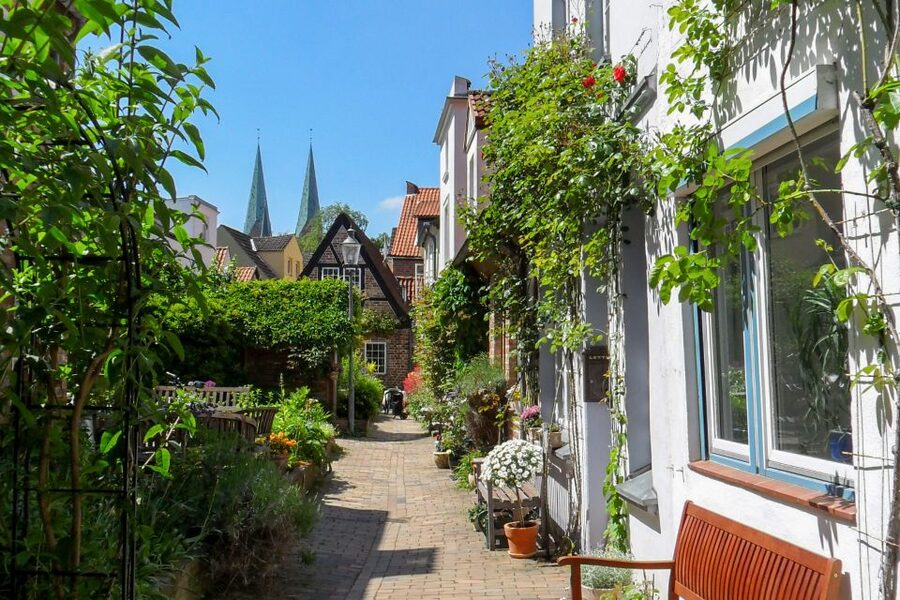
The central part of the tour takes you along narrow paths into small courtyards. These passages are among the most interesting features because they show how little space was available for housing. The lanes can be crooked rather than neatly planned, a reminder that they developed from practical need instead of a modern street grid.
The tour explains the small stalls where workers once lived. The word small is important here. You are not touring spacious merchant homes. You are seeing the modest structures created behind larger front buildings, where people lived close to the work and trade of the city.
I like this contrast. Lübeck’s wealth came from shipping and commerce, but the city also needed laborers to keep that system running. Courtyard housing makes that social structure visible. The grand Hanseatic story is still present, but you encounter it through the people who occupied the less impressive rooms behind the main facades.
The courtyards also help you notice details you might otherwise pass without thought. A passageway is no longer just a shortcut. A cramped rear building is no longer just an old wall. Each space becomes part of the city’s answer to overcrowding.
The route is described as entertaining as well as informative. That balance matters on a walking tour. A long lecture about urban growth can become tiring, but stories tied to the places around you are easier to follow. The strongest part of this experience is likely the combination of movement, architecture, and explanation.
Monastery courtyards and housing for widows
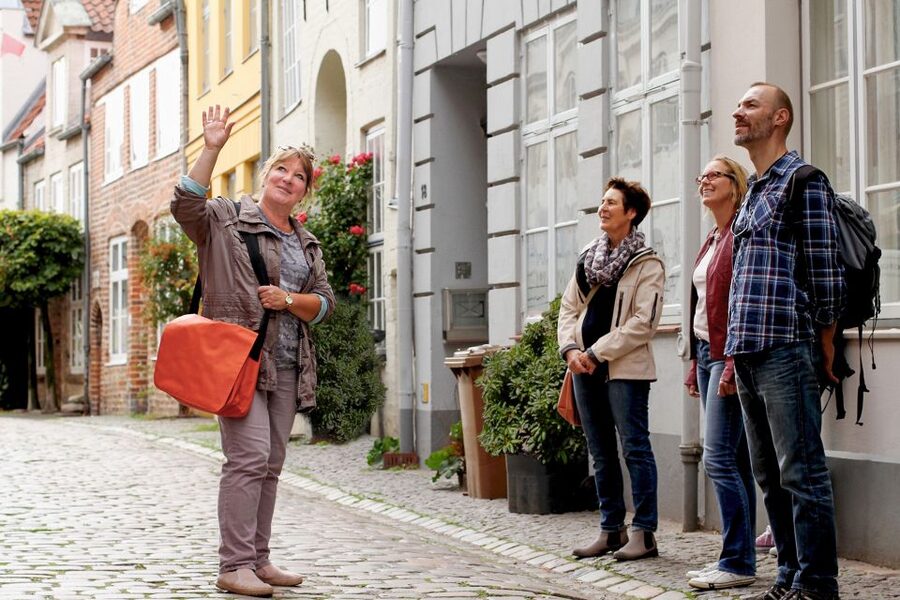
The walk also includes monastery courtyards, which add a different layer to the story. These places take you away from the simple idea that every courtyard was workers’ housing. They show that enclosed urban spaces served several social purposes over time.
You will hear about housing for merchant and shipper widows. That detail gives the tour a human focus. Lübeck’s trade depended on men who sailed or worked in commerce, and their widows needed a place to live. The courtyards offered a form of housing connected to the city’s religious and charitable institutions.
This is one of the tour’s most useful subjects because it broadens the usual Hanseatic story. Trade is often presented through ships, cargo, and wealthy merchants. Here, you also consider what happened to families when a merchant or shipper died. The buildings become evidence of how the city dealt with social needs.
The monastery courtyards may be especially rewarding if you enjoy quiet architectural details. Their value is not simply visual. They help you see how shared courtyards could provide shelter and order within a crowded city. The tour’s focus on these spaces keeps the visit grounded in everyday life.
Do not expect every courtyard to be presented as a grand monument. Their appeal is their scale and setting. Some are valuable precisely because they are modest, tucked behind the busy parts of town, and tied to people whose names may not appear in the main history books.
Same base, a different kind of day out:
- Hamburg: 1.5-Hour Harbor and Speicherstadt Day Cruise
★ 4.6 · 14,200 reviews - From Munich: Neuschwanstein & Linderhof Castle Full-Day Trip
★ 4.5 · 12,494 reviews - Dresden: Semperoper Tickets and Guided Tour
★ 4.7 · 12,102 reviews - Berlin: Boat Tour Along the River Spree
★ 4.4 · 11,252 reviews
The Hanseatic League without a dry lecture
The Hanseatic League is part of the tour because it explains why Lübeck became so crowded and important. The guide connects the city’s growth to the wider trading network rather than treating the old town as a collection of unrelated buildings.
You will hear how the population increased sharply during the Middle Ages. That information gives you a reason for the corridors and rear housing. Without it, the narrow spaces might seem like curious architectural leftovers. With it, they become signs of economic success and urban pressure.
The tour does not appear to be a broad survey of every period in Lübeck’s past. Its focus is tighter: the Hanseatic city, its growth, and the living spaces created in response. I see that as a strength if you want a clear theme. It may be less suitable if you want a complete introduction to Lübeck’s churches, museums, politics, and later history in one outing.
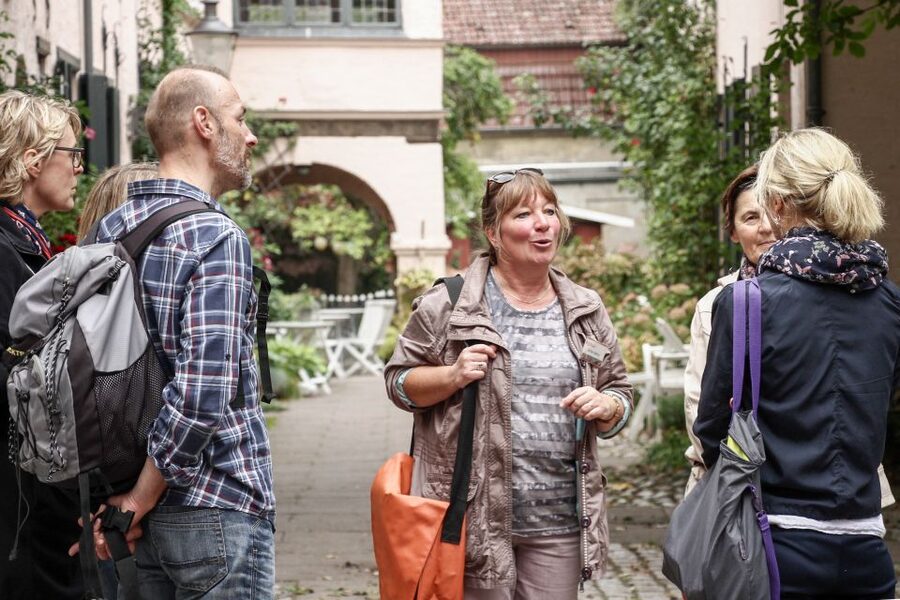
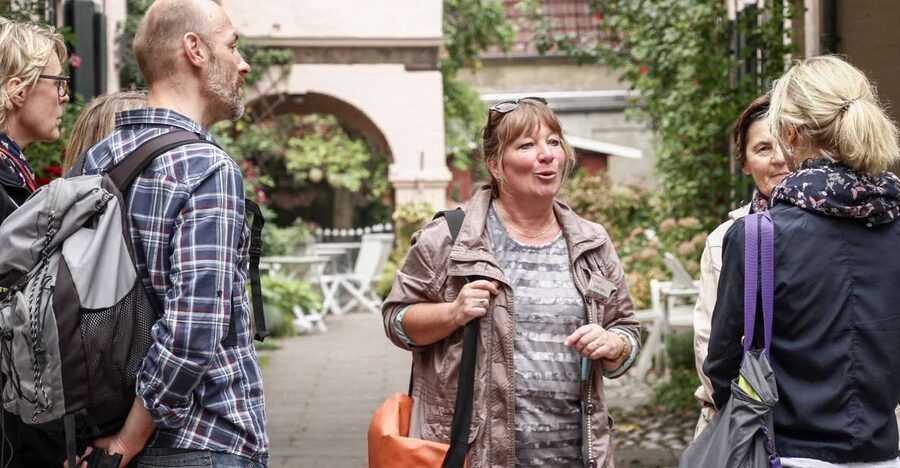
The guide’s role is important here. The experience includes a live guide rather than an audio recording, and the tour is arranged as a private group. That setup can support follow-up questions. You can ask for clarification about a corridor, a courtyard, or the people who lived there instead of simply listening while the group moves on.
The available feedback points to exactly this strength. A small group, sometimes only two people, allowed for individual questions and detailed answers. The praise also repeatedly focuses on the background information, the special features pointed out by the guide, and the entertaining pace.
What the private-group format means for you
This is listed as a private group, which is a useful feature for a subject built around small spaces. Narrow corridors and compact courtyards are easier to appreciate when you are not part of a large crowd.
A private format can also make the experience more responsive. If you are curious about the social role of the monastery courtyards, you can ask. If you want more detail on Hanseatic trade or the workers’ stalls, the guide can address that interest. The available feedback describes the small group as pleasant and well suited to personal questions.
You should still keep your expectations realistic. Private group does not mean you will receive a named specialist or a custom route designed around your personal interests. No guide name is provided, and the tour follows a set theme. What you do get is a live German-speaking guide and a setting where questions are more practical than they might be on a large public walk.
The language is the most important limitation. This tour will be held in German. If you understand conversational German, the visual setting will help you follow the story. If you do not speak German, the courtyards may still be interesting to see, but much of the tour’s value comes from the explanations about population growth, housing, the Hanseatic League, and widows’ accommodation.
Is $20 a fair price for 90 minutes?
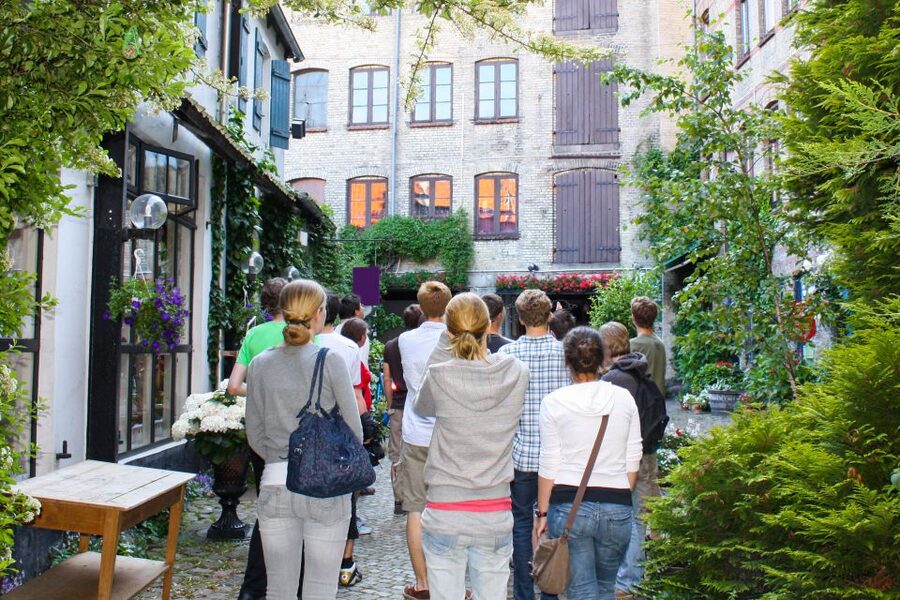
At $20 per person, the tour offers fair value if you want a focused look at Lübeck’s less obvious spaces. You are paying for a 1.5-hour walk, a live guide, and access to an organized route through courtyards and corridors that you might not find on your own.
The value is not based on the number of major monuments. This is not a ticket bundle or a full city sightseeing program. It is a thematic walk. You are paying for context and access to a side of the old town that is easy to overlook.
I would compare it with the cost of spending an hour and a half wandering without a plan. You might find a few courtyards yourself, but you would not necessarily know why the corridors were built, how the city’s population changed, or how merchant and shipper widows fit into the story. The guide turns scattered details into a clear explanation.
The private-group arrangement also improves the value for couples, families, or small parties who want to ask questions. Children up to age five can join free, which helps families with very young children. Still, the German language and the walking format mean you should decide based on your child’s ability to follow a guided explanation rather than price alone.
Free cancellation up to 24 hours before the start and the option to reserve now and pay later add flexibility. Those terms are useful if your plans around Lübeck are still changing, but the main reason to book is the focused content.
Who will enjoy this Lübeck walk most?
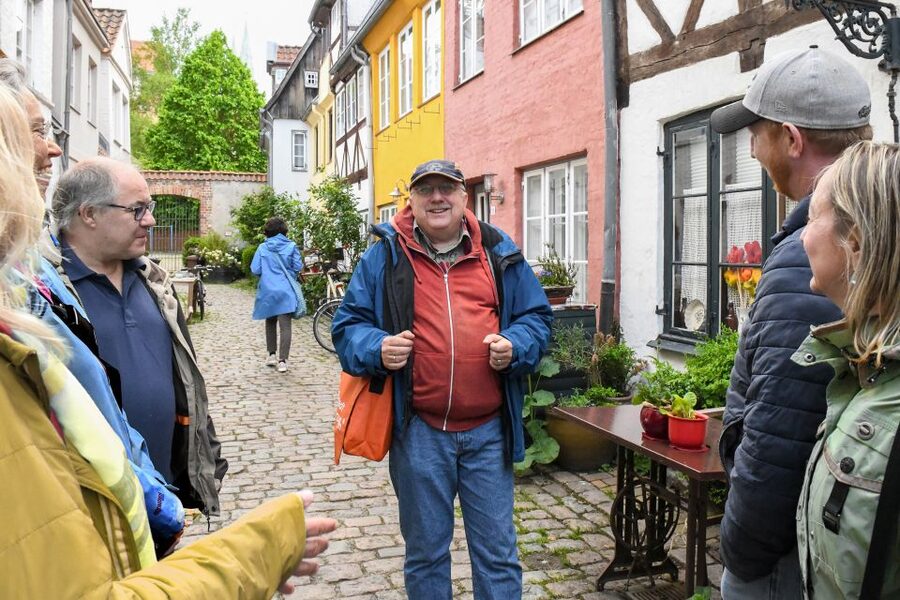
I would choose this tour for you if you like urban history at a human scale. You will get the most from it if you want to know how people lived, not just which building was built in which century.
It also suits anyone who has already seen Lübeck’s main sights and wants a different route. The tour highlights old town features, but it does not follow only the standard tourist path. The focus on back courtyards gives repeat visitors a reason to look again at familiar streets.
Couples and small private groups are a natural fit because the route rewards questions. German-speaking families can also enjoy it, with free admission for children up to age five. Anyone interested in medieval city planning, housing, trade, or social history should find plenty to consider.
You may want to skip it if you need an English tour. You may also prefer a broader city tour if this is your only short visit to Lübeck and you want a survey of the main churches, squares, and museums. This experience is narrower by design.
Practical details that shape the experience
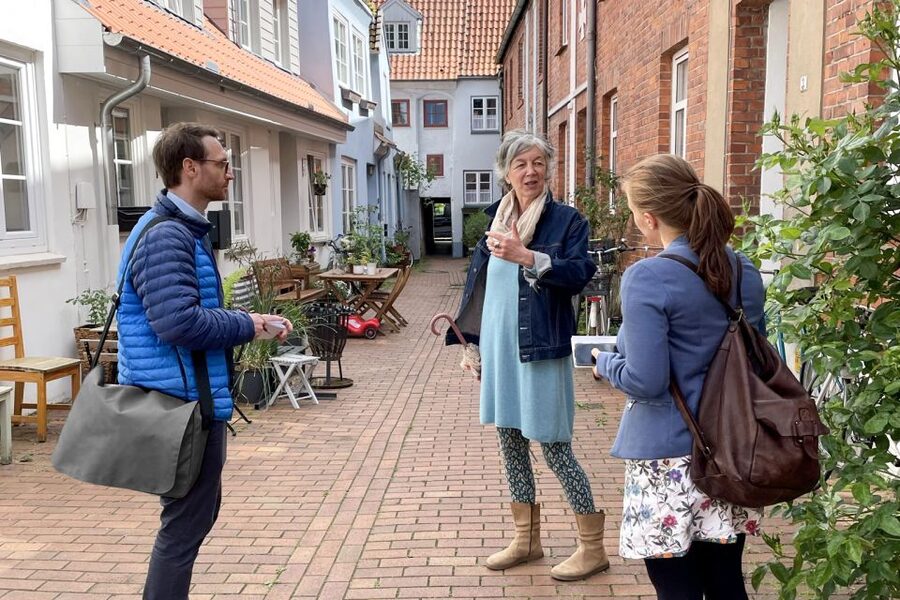
The tour lasts 90 minutes, which is long enough to develop its theme without taking over your day. You can pair it with other old town sightseeing before or after, but no transport is included or needed because this is a walking tour.
Meet at the Burgtor, Burgtorbrücke 2, outside the city. The guide carries an orange k3 bag, so keep an eye out for that marker. The meeting point is not described as being inside a building, so plan to identify the guide in the open area.
The only listed tour language is German. The group type is private, and the included services are the walking tour and live guide. No meal, museum admission, or transport is included in the stated package.
The rating is 4.8 from 483 reviews, and the strongest themes are consistent: an entertaining pace, useful background information, unusual corners, friendly care, and room for individual questions. The most repeated praise is not about a single spectacular sight. It is about seeing places that would otherwise remain unnoticed and understanding what those places meant.
Should you book the hidden courtyards tour?
Book it if you want Lübeck’s old town explained through its small spaces. The tour is a good value for $20 when you care about the story behind the corridors, workers’ stalls, monastery courtyards, and widow housing.
I would make this a priority for German-speaking visitors, repeat visitors, and anyone who prefers social history to a checklist of famous buildings. The private-group setup and 90-minute length make it easy to fit into a day.
Think twice if you need English or want a full overview of Lübeck in one walk. For the right audience, though, this is a smart way to see how Hanseatic wealth, population growth, and ordinary housing shaped the city from the inside.
FAQ
Where does the Lübeck courtyards tour meet?
Meet your guide in front of the Burgtor at Burgtorbrücke 2, outside the city.
How can I identify the guide?
Look for a guide carrying an orange bag with the k3 logo.
How long does the tour last?
The walking tour lasts 1.5 hours.
What language is the tour held in?
The tour is held in German, and the live guide speaks German.
What is included in the price?
The price includes the walking tour and a live guide.
How much does the tour cost?
The listed price is $20 per person.
Is this a private tour?
Yes. The activity is described as a private group tour.
What will I see on the walk?
You will see courtyards, corridors, narrow paths, small former workers’ stalls, and monastery courtyards in Lübeck’s old town.
What historical subjects does the guide explain?
The tour covers the Hanseatic League, Lübeck’s population growth during the Middle Ages, the creation of narrow corridors and housing, and accommodation for merchant and shipper widows.
Can children join for free?
Children up to five years old can join for free.
Can I cancel for a full refund?
Yes. You can cancel up to 24 hours in advance for a full refund.
Do I have to pay when I book?
No. The reserve-now-and-pay-later option lets you book without paying immediately.
Just added in Germany
- Berchtesgaden: Via Ferrata Beginner Tour of Schützensteig★ 4.7 · 15 reviews
- Berlin: Energizing 2-Hour Morning Segway Tour★ 4.7 · 35 reviews
- Berlin: Thrilling E-Scooter Adventure Tour★ 4.4 · 66 reviews
- Bayreuth: German City Walking Tour (Tourist Info)★ 4.7 · 202 reviews
- Beelitz-Heilstätten: Baum&Zeit Tree Top Walk Entry Ticket★ 4.9 · 7 reviews
- Beer Bike & Party Bike: Unforgettable Berlin City Tour incl. pickup★ 5.0 · 5 reviews
- Bavaria: Beginner Canyoning Tour★ 4.5 · 10 reviews
- Bayreuth: Christmas city tour in German★ 4.9 · 12 reviews
Tours in Lubeck, compared.
entertaining guided tour to old town highlights
Read our review →