
Reviewed · TOURS IN HAMBURG
Free tour: Centro Histórico. Tú decides el precio al final
Hamburg’s past is not polished into one tidy story. On this walk, you move from medieval churches and Viking raids to wartime ruins, warehouse canals, and the modern profile of the Elbphilharmonie. The route begins at Rathausmarkt and ends on Deichstraße, giving you a useful first look at the center without spending half a day indoors.
I like the Spanish-language guiding and the way the walk links famous sights with smaller historical details. I also like the pay-what-you-wish format, which keeps the upfront cost low. The main consideration is simple: two hours is enough for orientation, not enough for long museum visits or a close look at every major building.
Key points at a glance
- Stories from Rathausmarkt to Deichstraße: The route crosses the old center in a compact two-hour walk.
- St. Nikolai Memorial: See one of Hamburg’s clearest reminders of wartime destruction.
- Trostbrücke and Domplatz: Connect Hamburg’s modern streets with its medieval beginnings.
- Speicherstadt and the Elbphilharmonie: Pair the city’s warehouse district with its famous modern concert hall.
- Spanish-speaking guide: The tour is led in Spanish, with Ramiro receiving especially warm praise for his history and presentation.
- Pay at the end: You decide what the tour was worth after you have taken it.
A short walk through Hamburg’s long memory
This tour works best as an introduction to Hamburg rather than a deep study of one period. In two hours, you hear about medieval foundations, Viking attacks, historic breweries, the city’s local traditions, wartime destruction, and the buildings that survived or were rebuilt.
That broad reach is useful because Hamburg can feel like several cities placed side by side. The grand town hall, church ruins, brick warehouses, old merchant streets, and glassy concert hall belong to very different chapters. A good guide helps you see the links instead of treating each stop as an isolated photo opportunity.
The stories are presented in Spanish, which matters more than it might seem. Historical details are easier to follow when you can ask questions and catch the humor, names, and dates without translating in your head. Feedback gives particular credit to Ramiro, described as professional and strong on Hamburg’s past. If he is leading your departure, you can expect a guide who puts real weight on the historical side of the walk.
Other trips people book in Hamburg:
- Hamburg: Sex and Crime in St. Pauli Tour for Ages 18+
★ 4.7 · 15,447 reviews - Hamburg: 1.5-Hour Harbor and Speicherstadt Day Cruise
★ 4.6 · 14,200 reviews - Hamburg: 90-Minute Evening Lights Harbor Cruise
★ 4.5 · 7,728 reviews
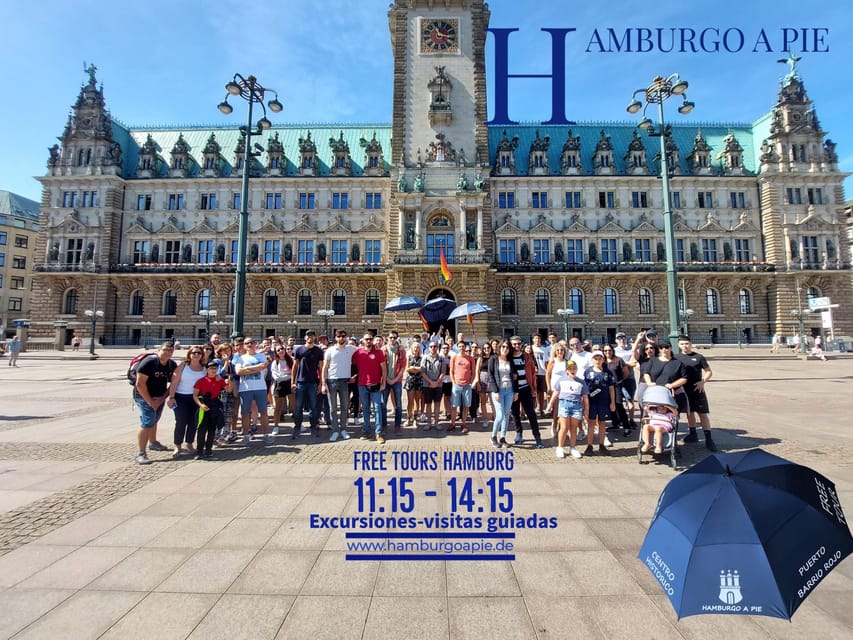
Starting beneath the blue umbrella at Rathausmarkt
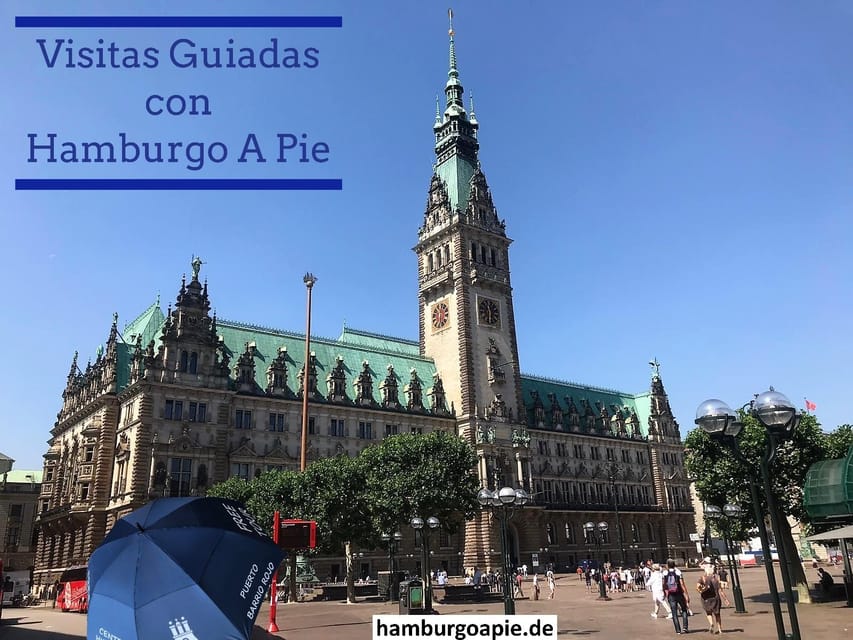
The meeting point is the main door of Hamburg’s town hall, in the square outside. Look for the guide with a blue umbrella. That marker is practical in a large public square, especially if several groups are gathering at the same time.
Rathausmarkt gives the tour a fitting start. You are not beginning at a random street corner, but beside one of Hamburg’s best-known civic buildings and in the center of the city’s public life. From here, the guide can set up the basic story: Hamburg as a major port city shaped by trade, politics, religion, conflict, and movement.
You should arrive ready to walk for about two hours. The tour is described as suitable for all ages and fitness levels, and it is wheelchair accessible. Still, it is an outdoor walking tour, so comfortable shoes and sensible clothing are wise. The activity specifically recommends bringing an umbrella. Hamburg weather has a habit of changing its mind.
St. Nikolai Memorial and the marks of war
One of the most meaningful stops is the St. Nikolai Memorial. The church site now serves as a visible reminder of the destruction Hamburg suffered during the Second World War.
This stop gives the walk some weight. Hamburg is not presented only as a handsome port with old brick buildings and canal views. You are asked to look at what was lost, what survived, and how the city remembers its past. The memorial can be especially useful early in a visit because it gives context to later sights that have been rebuilt, restored, or preserved.
The stop is listed as a visit and guided explanation, but no museum entry is included. If you want to spend time inside paid attractions, you will need to handle those costs separately. The walking tour gives you orientation and interpretation, while a separate visit lets you explore at your own pace.
Trostbrücke and the city beneath the city
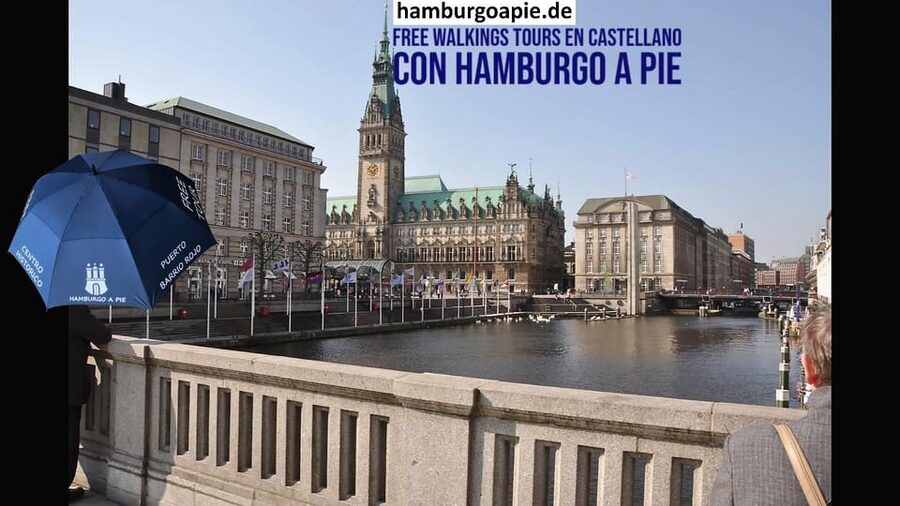
Trostbrücke is a good place to consider Hamburg’s older layers. The bridge connects the area around the town hall with the older streets near the harbor, and it helps explain how the center developed around water, commerce, and movement.
The tour uses this part of the route to bring out stories that may not appear in a standard guidebook summary. You might hear about old breweries, Hamburg’s local character, or the rougher chapters involving raiders and Viking attacks. The point is not to memorize every date. It is to understand that the city’s identity grew from practical trade and repeated upheaval.
This is also the kind of stop where a local guide adds value. A bridge may take only a few minutes to cross, but a good explanation can turn it into a clue about how the city worked. You will want to keep your eyes open for architectural details while listening, since the surrounding streets carry much of the evidence.
Same base, a different kind of day out:
- Hamburg: 2-Hour XXL Port of Hamburg Cruise Tour
★ 4.7 · 6,979 reviews - Hamburg: Line A Sightseeing Hop-On Hop-Off Bus Tour
★ 4.6 · 6,958 reviews - Hamburg: Elbphilharmonie Plaza Guided Tour
★ 4.7 · 5,882 reviews - Hamburg: Hamburg Dungeon Admission Ticket
★ 4.7 · 5,745 reviews
Domplatz and Hamburg’s medieval beginnings
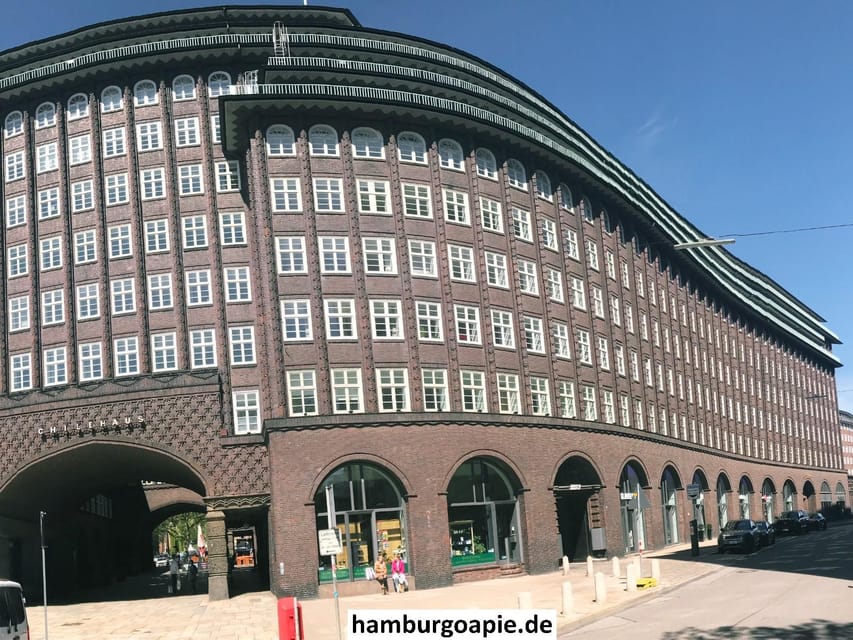
Domplatz introduces the oldest part of the story. The name refers to the former cathedral area, and the stop connects present-day Hamburg with its medieval religious foundations.
The historical account here includes cathedrals that were linked to earlier eras and even stories of Viking theft. That unusual detail gives the walk its promised mix of the wild, strange, difficult, and wonderful. Hamburg’s past is not reduced to a list of respectable merchants and grand civic buildings. You get stories of power, religion, raids, and the hard work of building a city on a strategic trading site.
Domplatz may not provide a grand intact cathedral to explore today, so manage your expectations. Its value is mainly historical and interpretive. The guide helps you imagine what occupied the area before later streets and buildings took shape.
Speicherstadt, where brick warehouses meet canals
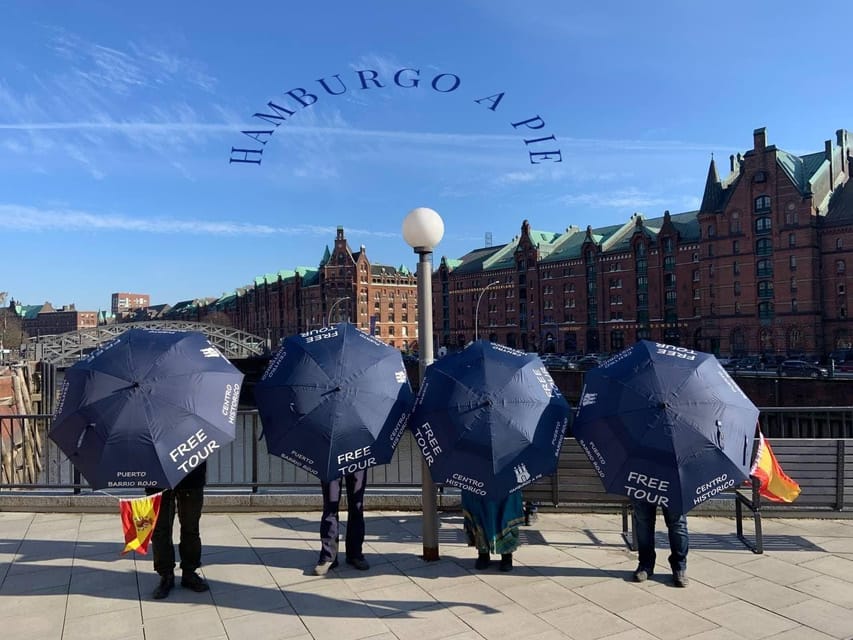
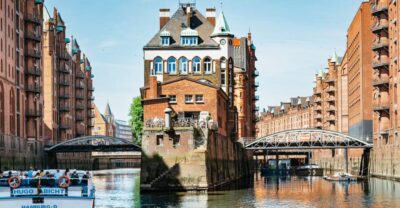
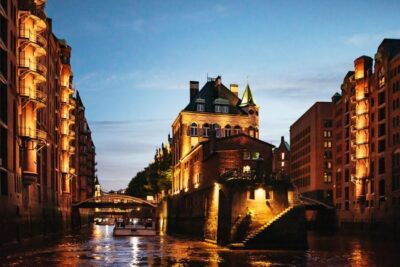
The route includes Hamburg’s UNESCO-protected Speicherstadt, one of the city’s most recognizable districts. Here, tall brick warehouses line waterways, creating a strong contrast with the open square around the town hall.
Speicherstadt is not just a pretty backdrop. Its warehouses point to Hamburg’s trading past and to the practical need for storage near the port. The brick architecture gives the area a unified look, while the canals explain why this part of the city feels so different from the civic center.
A walking tour is a good way to encounter Speicherstadt because you can see how the buildings relate to the streets, bridges, and water. You may not have time to enter every attraction in the district, and entry fees are not included. The value here lies in seeing the area as part of the city’s working history rather than as a disconnected sightseeing stop.
The timing also matters. Two hours can give you a strong overview, but Speicherstadt deserves a return visit if you want museums, longer canal walks, or detailed photographs. Treat the stop as a preview and a way to choose where to spend more time later.
A look toward the Elbphilharmonie
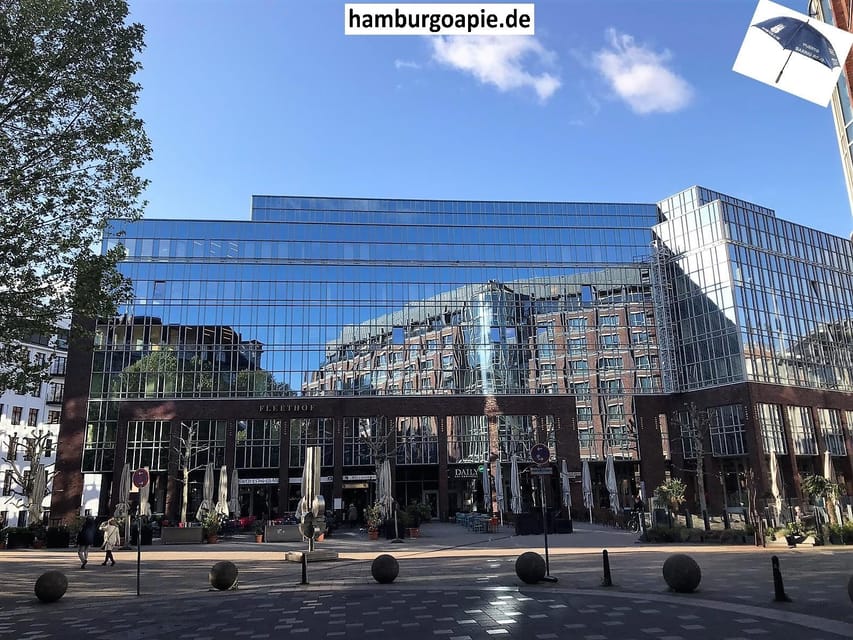
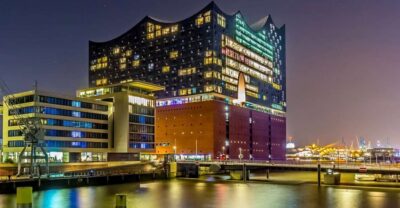
The Elbphilharmonie supplies the tour’s modern counterpoint. Its large glass form rises above the older port districts, making it easy to see how Hamburg combines preservation with new construction.
You will not be attending a concert as part of this walk, and no entrance is included. Instead, the building appears as one of the city’s key sights and as a useful visual marker for Hamburg’s changing waterfront.
I like this contrast. After hearing about medieval churches, old bridges, and brick warehouses, you reach a building that signals the city’s present-day ambitions. The guide can help place it within the larger story of Hamburg rather than leaving you with only a photograph.
If you want an interior visit, check separately for admission and opening details. The walking tour itself keeps moving, so the emphasis is on seeing the building and understanding its place in the city.
Deichstraße gives the walk a fitting finish
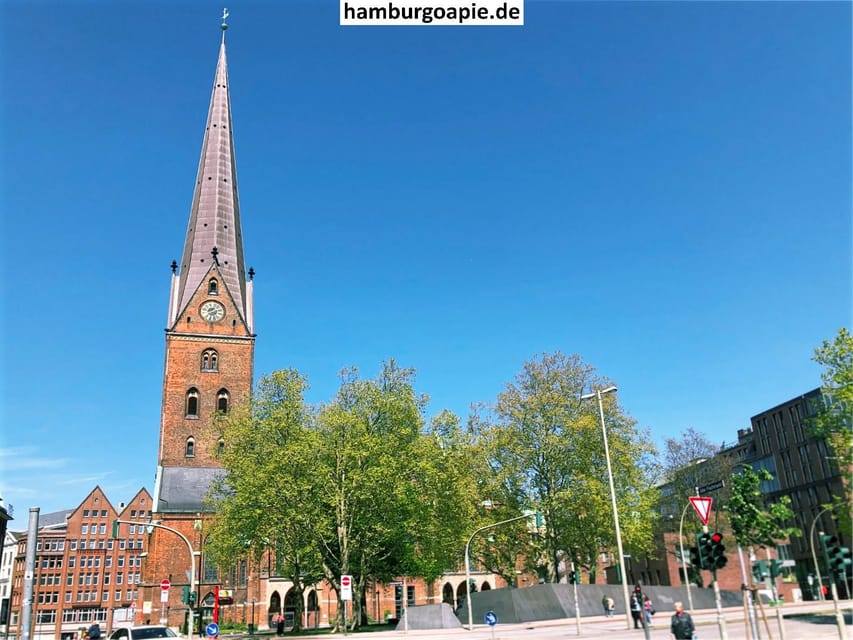
The tour ends at Deichstraße, an old street known for its historic buildings and connection to Hamburg’s earlier urban form. Ending here is practical because the route finishes among architecture rather than beside a transport stop with little character.
Deichstraße helps bring together the themes introduced earlier. You have seen civic Hamburg, memorial Hamburg, medieval Hamburg, warehouse Hamburg, and modern waterfront Hamburg. Here, the old street pattern and historic façades give you one last chance to look closely at the city’s built fabric.
The ending is also useful for planning the rest of your day. The tour includes recommendations for other activities and places, information about public transportation, maps and brochures, and suggestions for additional Free Tour routes. Use the final minutes to ask what deserves more of your time, especially if Hamburg is your first stop in the city.
What the pay-what-you-wish price really means
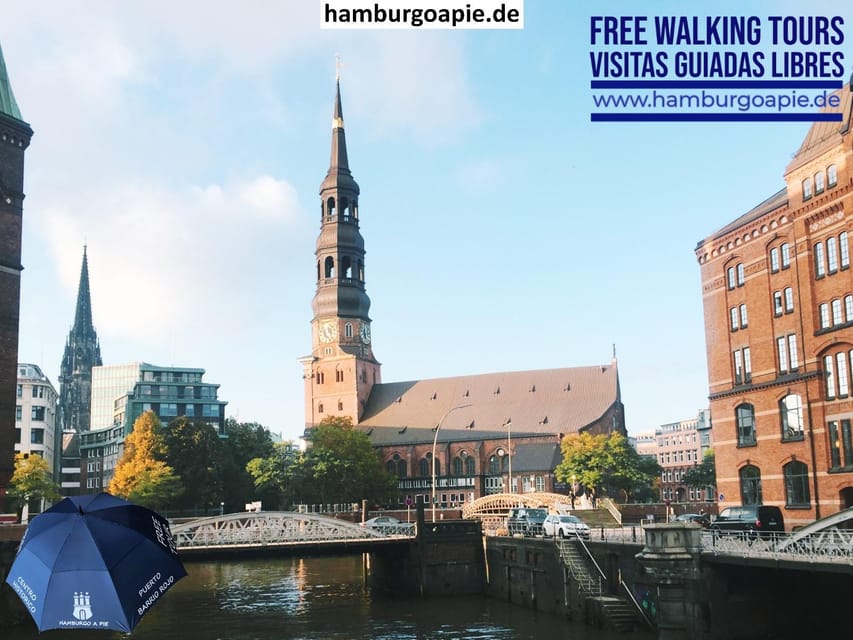
The listed cost is about $2.36 per person, but the important point is that this is a free tour in the traditional sense: you decide the amount at the end, based on your satisfaction and budget.
That arrangement can be excellent value when you want a quick orientation before deciding where to spend money. You get two hours with a Spanish-speaking guide, major landmarks, local stories, and practical advice for exploring alone. The low upfront cost also helps if you are building a larger Hamburg budget around museums, food, harbor activities, or transport.
Do not mistake free for costless. The guide’s payment comes from what the group chooses to give, so bring enough cash or another suitable way to pay if needed. The final amount is your decision, but the model works best when you judge the tour fairly after taking part.
The tour does not include meals, drinks, transportation to Rathausmarkt, or entry to museums and other attractions. Those exclusions are reasonable for a walking orientation, but they matter if you expect a full sightseeing package.
Who will get the most from this walk
I would choose this tour if you want an accessible introduction to Hamburg’s center and prefer listening to a person rather than reading plaques. It suits Spanish-speaking visitors particularly well, including families and mixed-age groups, since the walk is described as suitable for all ages and fitness levels.
It is also a good choice for you if you have only a short stay. The route covers several important areas without requiring a full-day commitment. You can use it to decide which districts deserve a second visit.
History-minded visitors should find plenty to enjoy. The walk does not stay with one narrow theme, but it reaches from medieval and Roman references through Viking stories, historic breweries, wartime memory, and present-day architecture. That range gives you a useful framework for later exploring.
You may want something else if you prefer quiet, small-group touring, long stops, or paid entry to interiors. The duration is fixed at two hours, and much of the experience depends on the guide’s storytelling. The strongest praise is directed at the guide’s professionalism and command of Hamburg’s past, so the quality of the presentation matters greatly.
Practical details before you go
Book a starting time that leaves room for a little flexibility afterward. Since the tour ends at Deichstraße rather than returning to Rathausmarkt, you will want to know where you plan to go next.
Bring an umbrella, as requested in the tour information. Wear shoes suited to walking on city streets, and remember that the activity takes place outdoors even if the guide pauses at major sights.
The tour is conducted in Spanish. If you need another language, this is not the right booking. The activity is wheelchair accessible, which makes it a useful option for many visitors, though the route remains an outdoor city walk.
You can cancel up to 24 hours in advance for a full refund, and the reserve-now, pay-later option keeps your plans flexible. These policies are helpful if your Hamburg schedule depends on weather or changing transport plans.
Should you book the Centro Histórico walk?
Book it if you want a low-cost, Spanish-language orientation that covers Hamburg’s old center, major landmarks, and lesser-known stories in one compact outing. The route is well chosen: Rathausmarkt, St. Nikolai, Trostbrücke, Domplatz, Speicherstadt, the Elbphilharmonie, and Deichstraße show several sides of the city.
I would be especially inclined to book if you are visiting Hamburg for the first time or have only one or two days. You can get the city’s basic shape, hear the stories behind the buildings, and leave with practical ideas for the rest of your stay.
Skip it if your priority is extended time inside museums, a private tour, or a tightly specialized subject. Otherwise, the pay-at-the-end format makes this a sensible first step, with the final amount determined by how much the guide adds to your understanding of Hamburg.
FAQ
Where does the Hamburg walking tour begin?
It begins outside the main door of Hamburg Town Hall, in Rathausmarkt.
How will I recognize the guide?
The guide will be waiting with a blue umbrella.
Where does the tour finish?
The walk finishes at Deichstraße.
How long does the tour last?
The tour lasts two hours.
What language is the tour conducted in?
The live tour guide speaks Spanish.
What sights are included on the route?
The route includes Rathausmarkt, St. Nikolai Memorial, Trostbrücke, Domplatz, Speicherstadt, the Elbphilharmonie, and Deichstraße.
Do I pay a fixed price at the end?
No. You decide how much to pay at the end based on your satisfaction and budget. The listed amount is about $2.36 per person.
Are attraction tickets, food, and transport included?
No. Entry fees, meals, drinks, and transportation to and from the meeting point are not included.
Just added in Hamburg
- Hamburg: Historical Tour of the St. Pauli Sex Work District★ 4.4 · 215 reviews
- Hamburg: St. Pauli Food and Bier Tour★ 4.7 · 5 reviews
- St. Pauli Tour: Drag-Attack with Barbie Stupid & Lee Jackson★ 4.8 · 280 reviews
- Hamburg: Private Tour Red Light District Walking Tour★ 4.7 · 227 reviews
- St. Michael’s, Elbe Tunnel & Harbor 2-Hour Hamburg Tour★ 4.9 · 21 reviews
- Satt Pauli – der kulinarische Rundgang durch St. Pauli★ 4.8 · 12 reviews
- Hamburg: Safari tour in St. Pauli★ 4.9 · 11 reviews
- Radtour um die Alster & durch traumhafte Alsterviertel★ 4.9 · 34 reviews
Tours in Hamburg, compared.
1.5-Hour Harbor and Speicherstadt Day Cruise
Read our review →

Browse the lists this tour appears in