
Reviewed · TOURS IN HAMBURG
Hamburg: Automuseum PROTOTYP ticket
Hamburg’s Automuseum PROTOTYP puts the focus on the people behind fast cars, not just polished machines behind glass. You can move from the original 1939 Porsche Type 64 to modern Formula 1 cars, then test your own skills in the Porsche 365 driving simulator. I like the personal stories of racing legends such as Graf Trips and designers such as Prof. Porsche. I also like the museum’s handy location in HafenCity, close to Speicherstadt and the Elbphilharmonie.
The main drawback is scale. This is a small, carefully chosen collection rather than a giant factory museum. If you already know Stuttgart’s major Porsche and Mercedes museums, you may find PROTOTYP less spectacular. Parking nearby is limited, so public transport or a planned walk through HafenCity makes more sense.
Key points at a glance
- The 1939 Porsche Type 64: See an early and important sports car linked to the beginnings of Porsche design.
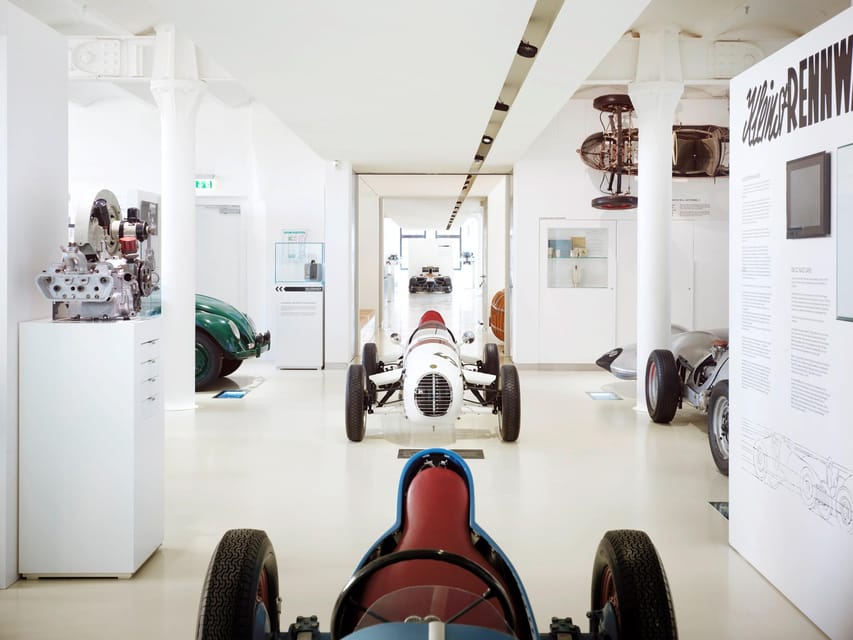
- More than 80 years of racing: The collection reaches from early sports cars to modern Formula 1 machines.
- Stories behind the machines: Learn about Graf Trips, Prof. Porsche, and the risks and ideas that shaped racing.
- A Porsche driving simulator: Try to set your personal best rather than only looking at cars.
- A useful rainy-day stop: The museum works well for families, car fans, and anyone building a HafenCity sightseeing day.
- A compact museum visit: Allow time to read the displays, use the simulator, and look closely at the cars without expecting a full-day automotive complex.
Why Automuseum PROTOTYP feels different
Many car museums are organized around brands, production numbers, or technical milestones. PROTOTYP takes a more personal route. Its central idea is that cars are tied to people: drivers who accepted danger, designers who pushed new ideas, and engineers who turned creative plans into working machines.
That approach changes the way you look at the collection. A Porsche is not simply presented as a beautiful object. The surrounding material connects it to the people who designed, drove, or risked their reputations on it. I find that useful because even a visitor who cannot tell a Porsche Type 64 from a later racing model can still follow the human story.
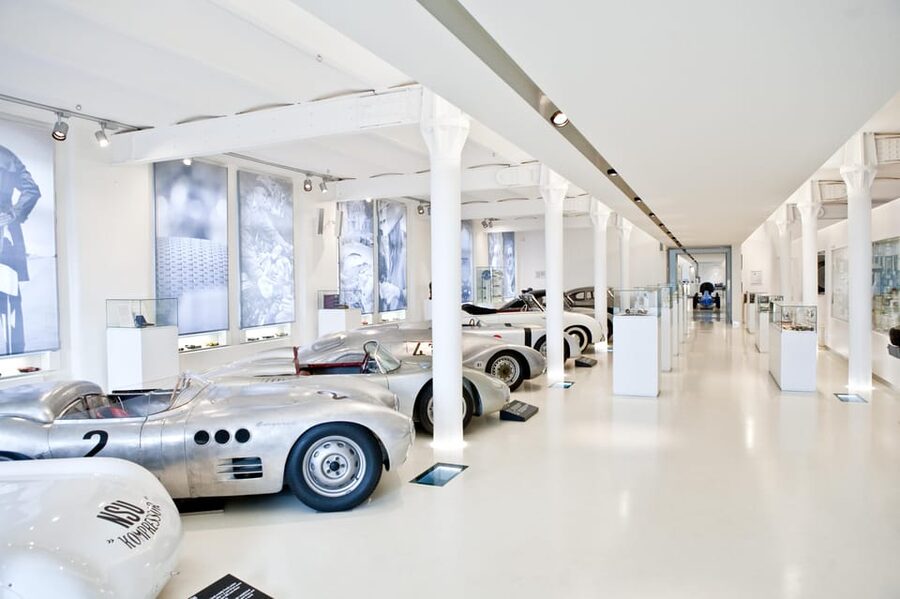
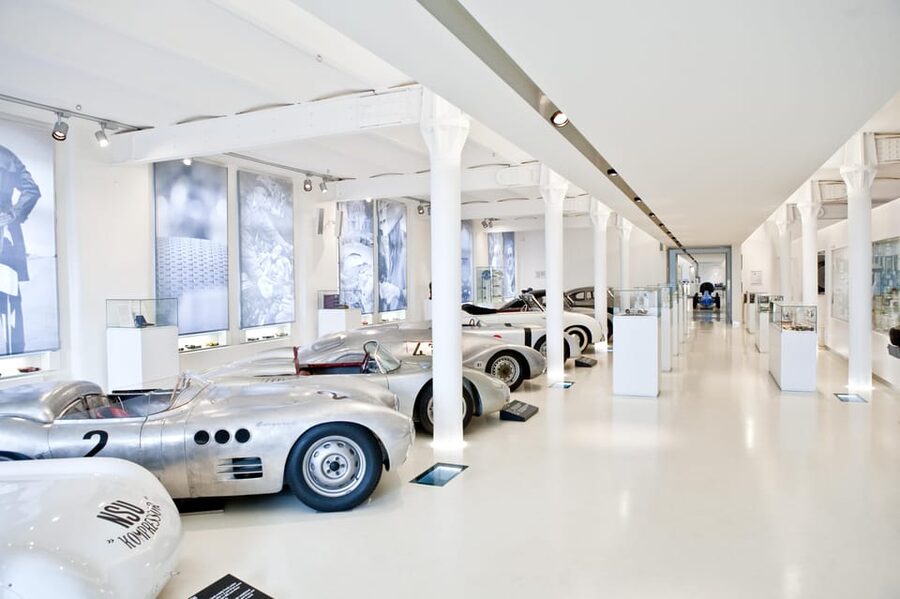
The museum began from the founders’ private enthusiasm. What started more than 25 years ago in a garage grew into the automotive museum opened in 2008. That background helps explain the collection’s personality. It does not try to cover every make and model. Instead, it presents hand-picked cars tied to sports and racing history.
You will see more than 80 years of that history in one visit. The span is broad, but the display is not meant to be a complete timeline. Think of it as a selection of important and unusual vehicles, with enough context to show why each one matters.
A few more things to do in Hamburg worth a look
- Hamburg: Hamburg Dungeon Admission Ticket
★ 4.7 · 5,745 reviews - Hamburg: Ticket to the Panoptikum Waxworks
★ 4.3 · 2,489 reviews - Hamburg: International Maritime Museum Entrance Ticket
★ 4.7 · 547 reviews
From the Porsche Type 64 to Formula 1
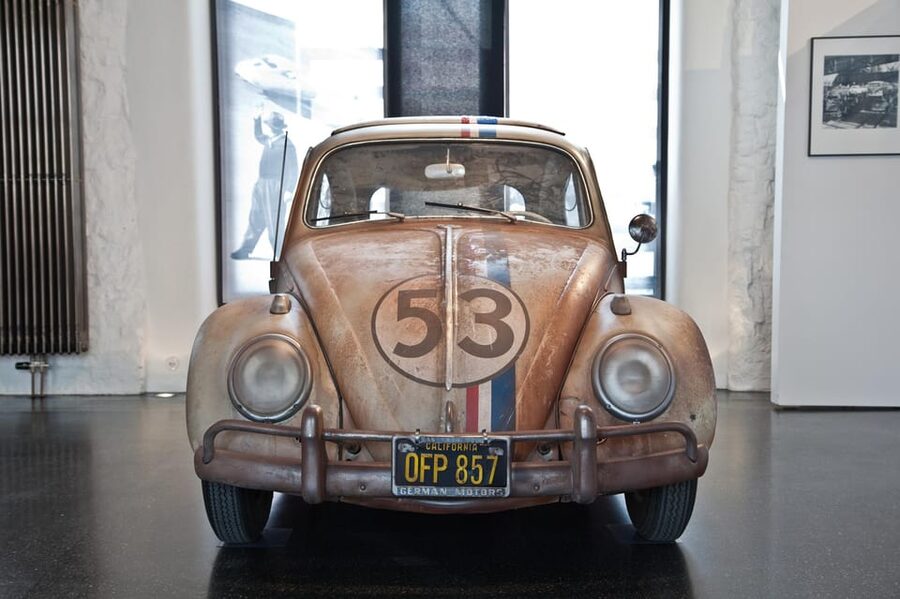
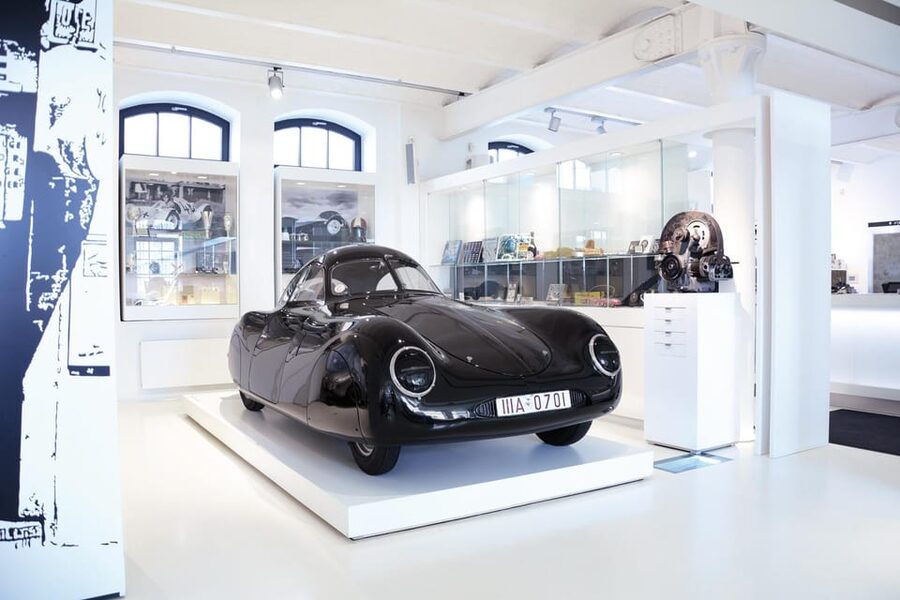
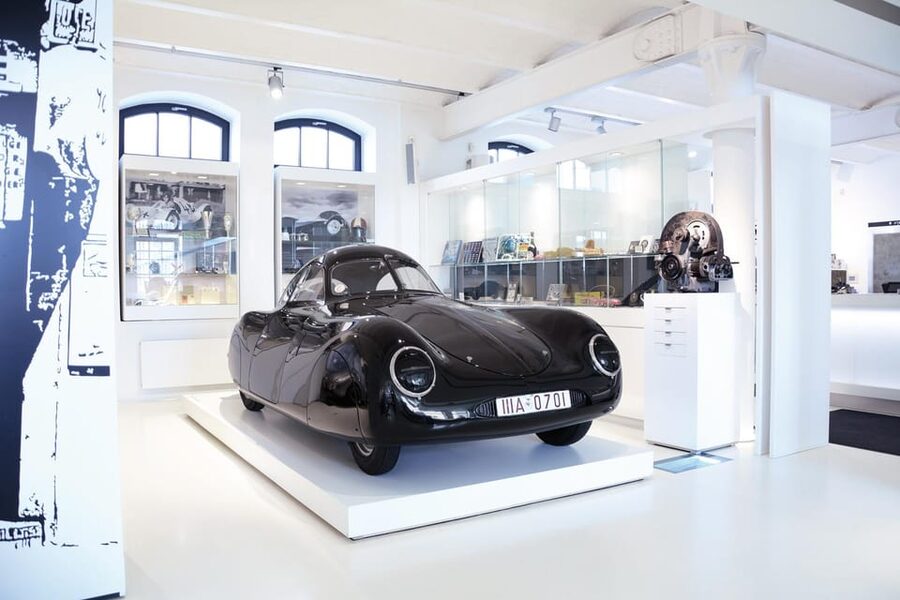
The 1939 Porsche Type 64 is one of the strongest reasons to visit. It represents an early stage in the development of Porsche sports and racing cars, long before the familiar modern road-car designs became common. Seeing such an early machine gives the collection a clear starting point.
From there, the display moves through different periods of speed, design, and competition. The exact route through the museum matters less than the contrast between the cars. Early racing forms look purposeful and spare, while later machines show how aerodynamic design and engineering changed the sport.
Modern Formula 1 cars provide a sharp visual contrast. They look built for one job, with little space wasted on comfort or decoration. Placing them in the same museum as older sports cars lets you see how racing moved from elegant mechanical experimentation toward highly specialized performance.
I recommend taking time with the written material instead of rushing from car to car. The displays explain the background of the models, and that information gives the collection its value. Without it, you might simply see a row of attractive cars. With it, you can connect a vehicle to a driver, designer, technical decision, or moment in racing.
Racing legends and the people behind the cars
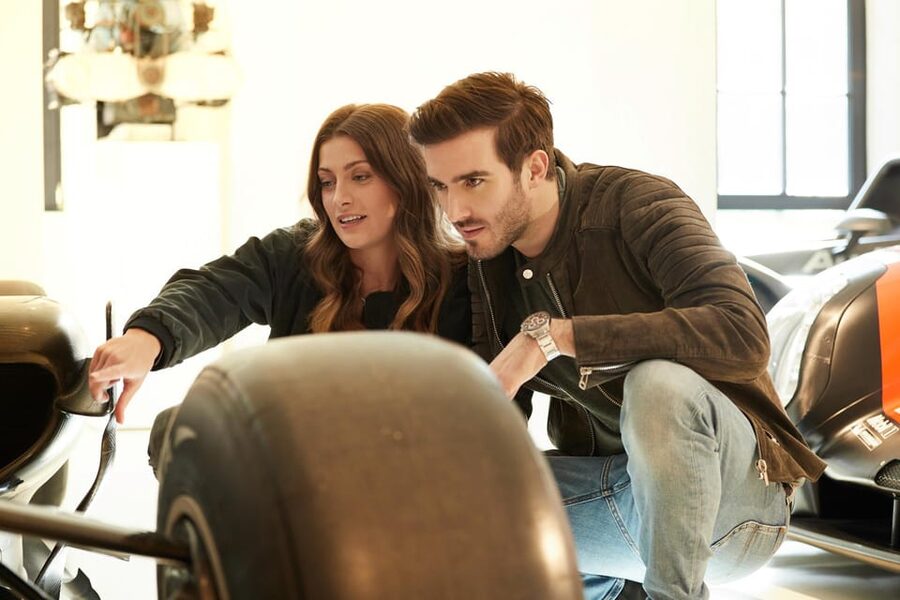
The museum gives special attention to racing figures such as Graf Trips. His story helps put a human face on a sport often reduced to lap times and engineering figures. Racing demanded talent, courage, and a willingness to accept real risk, and the museum’s storytelling keeps that side of the subject visible.
Prof. Porsche represents a different part of the story. His place in the displays points to the power of design and creative thinking. You get a sense of how a designer’s ideas can shape a car’s body, performance, and place in automotive history.
I like this balance between drivers and designers. A racing car is never the work of one person alone. The driver is the visible figure, but the final machine also reflects designers, engineers, mechanics, and the people willing to fund an uncertain idea.
The museum also talks about power in a wider sense: the power of creativity and the willingness to take risks. That may sound grand, but it becomes easier to understand when you stand beside an early racing car and then compare it with a modern Formula 1 machine. The cars show different answers to the same basic question: how far can performance be pushed?
The Porsche 365 driving simulator
The driving simulator adds a welcome hands-on element. You can set your personal best in a Porsche 365 simulator, which gives the visit more energy than a purely static display.
This is especially useful for families. Younger children may not spend long reading detailed racing panels, but a chance to drive can give them a reason to look more closely at the cars afterward. Adults can enjoy it too, especially if they are willing to treat the score as a small challenge rather than a serious test of racing talent.
Be aware that the simulator can be popular. One recent visit specifically noted that an orange Porsche you could sit in was occupied for much of the time by both children and adults. That detail offers a practical lesson: interactive features may require patience, particularly during busy periods.
You should not plan the entire visit around getting immediate access to the simulator. See the cars first, then return if needed. The museum is small enough for you to keep the activity in mind as you move through the exhibition.
Same base, a different kind of day out:
- Hamburg: Sex and Crime in St. Pauli Tour for Ages 18+
★ 4.7 · 15,447 reviews - Hamburg: 1.5-Hour Harbor and Speicherstadt Day Cruise
★ 4.6 · 14,200 reviews - Hamburg: 90-Minute Evening Lights Harbor Cruise
★ 4.5 · 7,728 reviews - Hamburg: 2-Hour XXL Port of Hamburg Cruise Tour
★ 4.7 · 6,979 reviews
The orange Porsche and hands-on appeal
The orange Porsche is another memorable part of the visit because you can sit inside it. That simple opportunity changes the mood of the exhibition. Instead of only viewing a car from behind a barrier, you can get a more direct sense of its cockpit and interior.
It is also the sort of feature that can create a wait. Children and adults may both want a turn, and the car may be occupied for long stretches. If you are visiting with a family, explain that the museum has other cars and stories to see while you wait.
The hands-on element is limited, but that is not a criticism. PROTOTYP remains a museum first, not an entertainment center. The simulator and sit-in car work best as small breaks within a display built around genuine vehicles and their histories.
Planning the visit in HafenCity
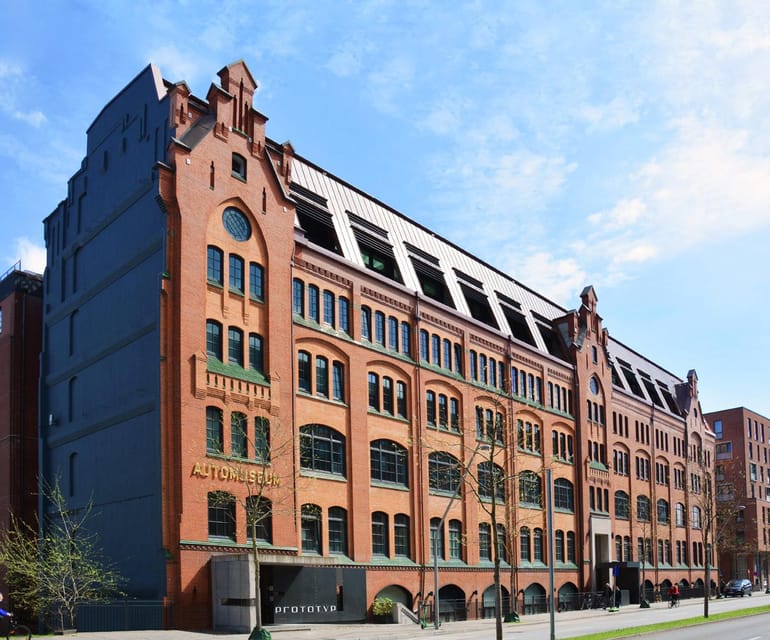
The museum is at Shanghaiallee 7, 20457 Hamburg, on the first floor. You should go directly to the museum entrance, as admission is on that level.
Its HafenCity location makes it easy to pair with other Hamburg sights. The Elbphilharmonie is nearby, as is Speicherstadt, the UNESCO World Heritage Site. You can build a compact sightseeing route around the area rather than making a separate trip only for the museum.
That location is one of the ticket’s practical strengths. If the weather turns wet, you have an indoor stop with enough variety for a short city break. It can also fill a gap before or after visiting the waterfront sights.
Parking is not the museum’s strong point. Nearby parking options are limited, so I would not choose this as a drive-in destination unless you already know where you will leave the car. Plan on arriving by public transport or combining the visit with a walk through HafenCity.
The museum is open Tuesday through Sunday from 10 a.m. to 6 p.m. The last admission is at 5:30 p.m. Since the ticket is valid for one day, you have some flexibility about when you enter, but do not leave it until the final minutes if you want time for the displays and simulator.
How long should you allow?
The ticket covers one day of entry, but the museum does not need to occupy an entire day. The collection is compact, and your visit length will depend on how closely you read the panels, how much time you spend with the simulator, and whether you need to wait for the orange Porsche.
I would treat it as a focused stop within a larger Hamburg outing. A quick look is possible, but it would miss much of the museum’s purpose. The written background is important, so give yourself enough time to connect the vehicles with their drivers and designers.
A longer visit suits committed car fans who want to study each model and return to the interactive features. A shorter visit works for families combining the museum with Speicherstadt or the Elbphilharmonie.
The museum welcomes adults from age 15 to 99 on the adult ticket and children from ages 4 to 14 on the child ticket. That age split makes the experience easy to plan for a mixed-age group.
Is the $15 ticket good value?
At about $15 per person, the ticket is reasonably priced for a specialized museum in central Hamburg. The value depends on your expectations. If you want a large collection with many rooms, extensive brand displays, and a full day of exhibits, this will feel modest.
If you care about sports cars, racing history, or the story of automotive design, the price is easier to justify. You are paying for access to unusual vehicles, historical context, and a location that fits naturally into a HafenCity day.
The ticket includes entry to Automuseum PROTOTYP but not the one-hour guided tour. That distinction matters. You can visit independently, while a guided tour would be a separate choice and cost.
I see the ticket as especially good value for three groups: car enthusiasts who want to see selected racing vehicles, families looking for an indoor activity, and visitors who already plan to be near Speicherstadt or the Elbphilharmonie. It is less compelling if your main goal is a vast automotive collection.
Who will enjoy it most?
You will get the most from PROTOTYP if you enjoy cars as cultural objects, not only as machines. The museum asks you to think about ambition, risk, design, and the people who shaped racing.
Families should find enough variety to keep different ages interested, although the reading material may appeal more to adults and older children. The simulator and sit-in Porsche give younger visitors something active to anticipate.
A serious Porsche fan may want to compare this museum with the much larger Stuttgart museums. One recent German visitor found PROTOTYP interesting but less spectacular after seeing those institutions. That is a fair comparison. PROTOTYP should be chosen for its personal scale and selected cars, not because it tries to outsize major factory museums.
It also suits a rainy afternoon. The museum is indoors, easy to add to a central Hamburg plan, and not so large that you need to sacrifice the rest of your day.
Access, language, and booking flexibility
The museum is wheelchair accessible, and information is available in German and English. The host or greeter can communicate in German or English, though the ticket is primarily for self-guided entry rather than a named guided experience.
You can cancel up to 24 hours in advance for a full refund. The reserve-now-and-pay-later option also helps if your Hamburg schedule is still changing. These policies are useful for a short city trip, where weather and other bookings can shift your plans.
For the latest opening information and tickets, check the museum’s website at prototyp-hamburg.de. Remember that Tuesday through Sunday are the stated opening days, with the final admission at 5:30 p.m.
Should you book Automuseum PROTOTYP?
Book it if you want a compact, well-located look at sports and racing cars, with personal stories and a few hands-on touches. The 1939 Porsche Type 64, the racing figures, the modern Formula 1 cars, and the Porsche simulator give the visit a clear identity.
Skip it if you expect the size and spectacle of Stuttgart’s major automotive museums. You may also want to reconsider if parking convenience is important to you.
For most car fans visiting Hamburg, the $15 ticket makes sense, especially when paired with Speicherstadt or the Elbphilharmonie. Go with realistic expectations: this is a focused collection built around stories and selected vehicles, not a giant industrial museum. That smaller scale is precisely what makes it manageable during a busy city day.
FAQ
Where is Automuseum PROTOTYP located?
The museum is at Shanghaiallee 7, 20457 Hamburg, in HafenCity. Admission is on the first floor.
What does the ticket include?
The ticket includes entry to Automuseum PROTOTYP.
Is a guided tour included?
No. The one-hour guided tour is not included in the admission ticket.
What are the museum’s opening hours?
The museum is open Tuesday through Sunday from 10 a.m. to 6 p.m. Last admission is at 5:30 p.m.
How long is the ticket valid?
The ticket is valid for one day.
What cars can I see at the museum?
The collection includes sports and racing vehicles from more than 80 years of automotive history, from the 1939 Porsche Type 64 to modern Formula 1 cars.
Is there a driving simulator?
Yes. You can use a Porsche 365 driving simulator and try to set your personal best.
Can I sit inside one of the cars?
An orange Porsche is available to sit in. Access can involve waiting if it is occupied.
Is the museum wheelchair accessible?
Yes. Automuseum PROTOTYP is wheelchair accessible.
Can I cancel my booking?
Yes. You can cancel up to 24 hours in advance for a full refund. You can also reserve now and pay later.
Just added in Hamburg
- Hamburg: Historical Tour of the St. Pauli Sex Work District★ 4.4 · 215 reviews
- Hamburg: St. Pauli Food and Bier Tour★ 4.7 · 5 reviews
- St. Pauli Tour: Drag-Attack with Barbie Stupid & Lee Jackson★ 4.8 · 280 reviews
- Hamburg: Private Tour Red Light District Walking Tour★ 4.7 · 227 reviews
- St. Michael’s, Elbe Tunnel & Harbor 2-Hour Hamburg Tour★ 4.9 · 21 reviews
- Satt Pauli – der kulinarische Rundgang durch St. Pauli★ 4.8 · 12 reviews
- Hamburg: Safari tour in St. Pauli★ 4.9 · 11 reviews
- Radtour um die Alster & durch traumhafte Alsterviertel★ 4.9 · 34 reviews
Tours in Hamburg, compared.

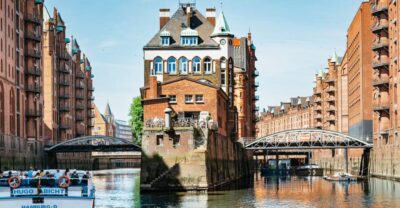
1.5-Hour Harbor and Speicherstadt Day Cruise
Read our review →



Browse the lists this tour appears in