
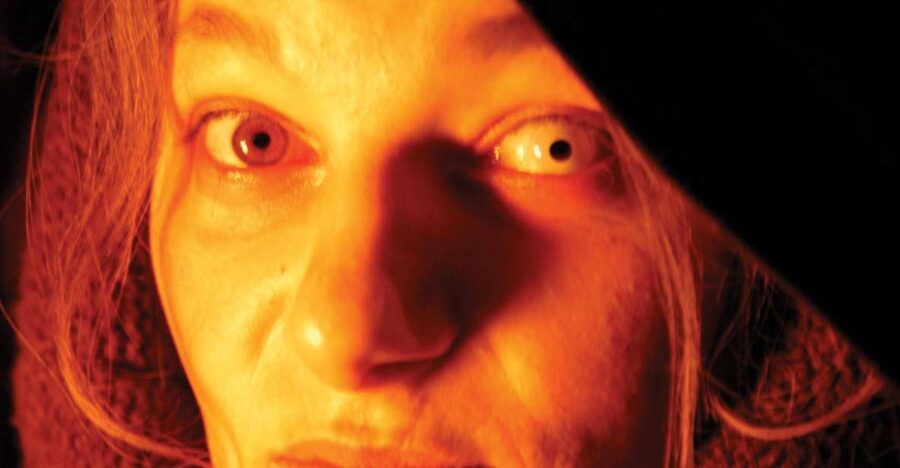
Reviewed · GERMAN-LANGUAGE TOURS
Munich: Scary Tour with actors in GERMAN
Munich’s old center looks polished by day, but after dark its past turns grim. On this 90-minute theatrical walk, actors in period costume bring witch hunts, torture, executions, prostitution, and devil legends into the streets. The stories are researched, but the delivery is lively rather than academic.
I like the way the tour uses real places as its stage, from the Neuhauser Tor to the Frauenkirche and the old torture chamber. I also like the mix of facts and short acting scenes, which helps you remember why Munich’s past was not all palaces and beer halls. The main drawback is clear: this is conducted entirely in German, so you need strong enough German to follow fast dialogue and historical jokes.
Key points
- Actors turn Munich’s streets into a live stage, with scenes involving witches, hangmen, alchemists, and the Devil.
- The route links major sights including St. Michael’s Church, the Frauenkirche, the Town Hall courtyard, St. Peter’s Church, and the Old Town Hall.
- Dark subjects are central, including witch trials, torture, executions, prostitution, and the former red-light district.
- The meeting point is easy to find, under the Karlstor archway at Karlsplatz, with a guide carrying a big blue bag.
- The tour runs in German and in all weather, so language ability and a rain-ready plan matter.
- At $46 per person, the price pays for both a city walk and live performances rather than a standard sightseeing lecture.
Starting beneath the Karlstor archway
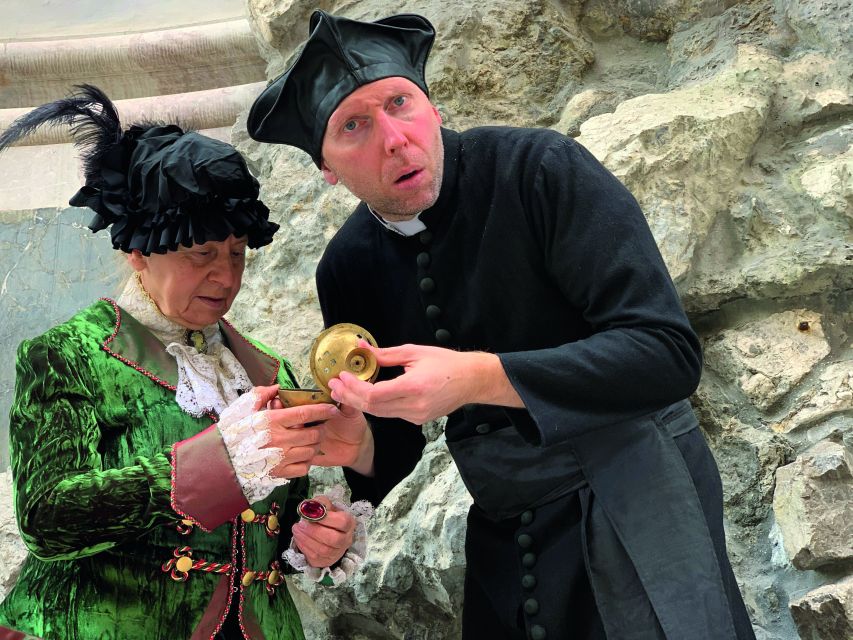
The tour begins at Karlsplatz, also called Stachus, beneath the archway of the Karlstor. This gate once marked the edge of Munich, and that makes it a fitting starting point for a story about criminals, punishment, and people pushed outside respectable society.
Look for the guide with a big blue bag marked Weis(s)er Stadtvogel in white letters. That detail matters in a crowded square, especially if you arrive close to the starting time. The meeting place is central and easy to reach, but Karlsplatz can be busy, so give yourself a few minutes to find the archway rather than arriving at the last second.
From here, the route heads toward the former Neuhauser Tor. Delinquents were led through this gate toward execution sites outside the town. The walk quickly makes an important point: old city gates were not just defensive structures. They also marked the boundary between civic life and punishment.
You will not get a detached lecture about municipal history. The actors use the setting to put you near the people who lived under these rules. That approach makes the material easier to grasp, though it also means the tour can feel intense if you prefer quiet sightseeing.
Other tours run in German:
- Munich: Old Town & Viktualienmarkt City Walk in German
★ 4.7 · 2,304 reviews - Munich: Night Watchman Torch Tour in German
★ 4.8 · 1,280 reviews - Munich: Spooky Tour of Old Town in German
★ 4.6 · 1,112 reviews
Salzstraße and the witch-hunt story
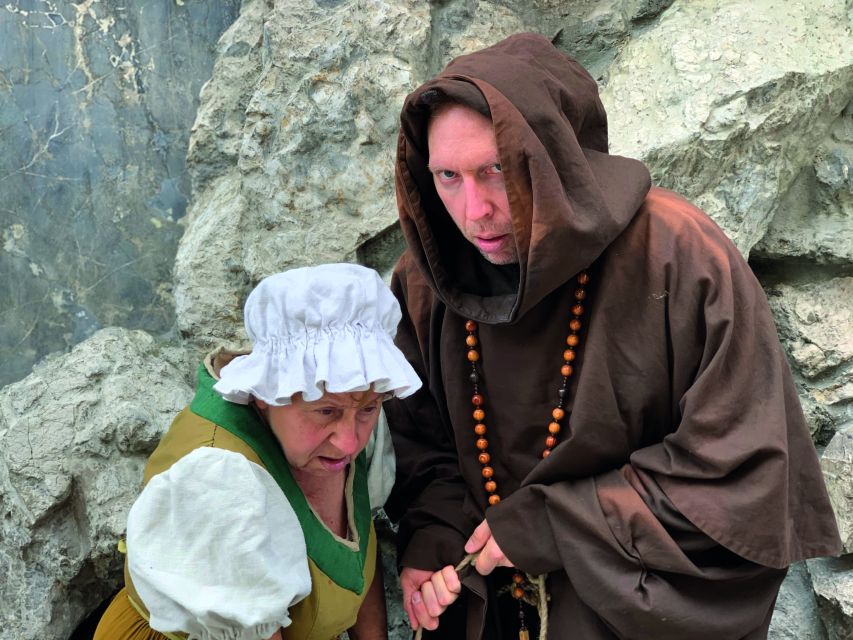
The route continues along historic Salzstraße toward the former Jesuit school. Here the story moves into the religious tensions of the 16th century and the fear surrounding witchcraft.
One scene centers on an argument between Duchess Renata and Jesuit Father Ignatius. Their exchange brings the period’s beliefs into view without turning the walk into a simple list of dates. You hear how unusual events were explained through sin, witchcraft, and divine punishment.
The collapse of a tower during construction of St. Michael’s Church becomes part of that story. Rather than seeing the accident as an engineering failure or a storm, people blamed allegedly wicked women. The scene shows how quickly fear could become an accusation, and how religious authority shaped public thinking.
The tour also tackles familiar witch lore. You will hear why witches were said to fly on brooms and encounter stories involving potions, toads’ tongues, and children’s hands. These details are unsettling, but they explain how folklore, rumor, and legal persecution fed one another.
Because the acting breaks up the narration, the information does not arrive as one long speech. A recent participant described the performances as a welcome break from monotony, and that is exactly where this format earns its keep. The actors give the material a human face and keep the pace moving.
Schöner Turm and a goldsmith’s fate
At the Schöner Turm, the focus shifts from accused witches to the sad story of an unfortunate goldsmith. This stop adds variety to the route. The tour is not only about supernatural beliefs, but also about how ordinary people could become caught in legal and social systems they could not control.
The details here are best taken as a compact historical drama. You are not simply looking at a tower and hearing its construction date. The building becomes the backdrop for a personal story about accusation, punishment, and reputation.
That is one of the tour’s strengths. Munich’s major sights can sometimes blur together after a day of churches and grand facades. A story attached to a specific corner gives you a reason to remember it. You may later pass the same place and recall the person rather than just the stonework.
The Frauenkirche and Munich’s Devil legend
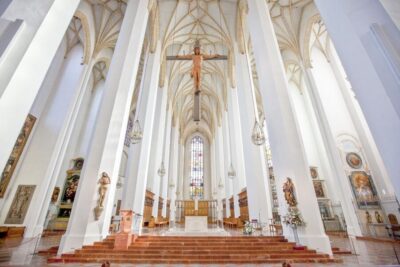
The route then reaches the Frauenkirche, Munich’s best-known church landmark. Here the tone turns supernatural, with a strong blast of wind leading into the story of the Devil and the church’s construction.
The legend says the Devil helped the master builder. You will hear why the Devil was involved, why it is supposedly windy inside the church, and even the strange question of the Devil’s shoe size. That last detail gives the scene a touch of humor, useful after the darker accounts of executions and witch hunts.
The church stop works best if you enjoy the border between local legend and historical fact. The tour presents the story as part of Munich’s traditional lore, while the broader route supplies the social context behind the legends. You should not expect a full architectural tour of the Frauenkirche. The emphasis here is the dramatic tale connected to the building.
This is also a good point to notice the tour’s balance. It deals with torture, death, and persecution, but it is not designed as pure horror. Comic details and theatrical timing keep the atmosphere from becoming relentlessly bleak.
Same base, a different kind of day out:
- From Munich: Neuschwanstein & Linderhof Castle Full-Day Trip
★ 4.5 · 12,494 reviews - Neuschwanstein & Linderhof Castle-Fairytale Day Tour from Munich
★ 4.5 · 7,275 reviews - Munich: Third Reich & WWII Walking Tour
★ 4.6 · 6,181 reviews - Dachau Concentration Camp Memorial Site Tour from Munich by Train
★ 4.5 · 5,637 reviews
The Town Hall courtyard and Marco Bragadino
At the magnificent Town Hall, an alchemist named Marco Bragadino enters the story. The supposed goldsmith tries to persuade the audience of his skills, bringing the old dream of turning ordinary material into gold into the center of the performance.
This scene widens the tour’s subject matter. You move from witchcraft accusations to early ideas about science, fraud, wealth, and spectacle. Alchemy could inspire hope, suspicion, and financial loss, making it a useful window into the uncertainties of earlier centuries.
The Town Hall courtyard also gives the actors a memorable setting. Grand civic architecture can seem formal and distant when you see it without context. A character pleading his case in the same space helps you picture how public performance and persuasion worked in the past.
You may be invited into parts of the scenes. The tour information specifically notes involvement of participants, and one recent visitor praised the way the audience was included. Expect a little interaction, not a passive audio guide. If you dislike being called into a performance, keep that in mind before booking.
St. Peter’s Church and the hangman’s trade
At St. Peter’s Church, the tour examines the daily life of a hangman. This is one of the most unusual sections because it moves beyond the execution itself and asks what kind of person performed the work.
You hear how a hangman looked, why people avoided him, and how someone could obtain a gallows rope. The tour also explains the strange connection between hangmen, prostitution, and pimping. According to the story presented on the walk, hangmen were not limited to torture chambers and gallows. They could also be involved in the sex trade.
That connection gives the tour one of its sharper themes: people who performed necessary public work were often treated as social outcasts. The same society that needed a hangman could refuse to accept him as a neighbor. This tension makes the subject more interesting than a simple catalogue of gruesome punishments.
The stop at St. Peter’s is not intended to replace a church visit or art-history tour. You are there for the human story attached to punishment and social status. The church is another stage in the route, not the main subject.
A narrow escape and the old torture chamber
The walk includes the story of a beautiful woman escaping certain death. This gives the evening a change of pace. After several stories about accusation and punishment, you get a tale built around survival and suspense.
The final section at the Old Town Hall brings you near the former torture chamber. Here the actors return to gruesome stories and the machinery of justice. The setting carries weight because it connects the performance to a real civic building where punishment was once part of public administration.
You should expect disturbing themes, though the supplied description does not present the tour as a haunted-house attraction. There are no claims of ghosts or jump scares. The fear comes from historical situations, theatrical scenes, and the realization that torture and execution were once accepted tools of law.
That distinction matters when choosing the tour. If you want fantasy horror, this may feel too factual. If you want history delivered with dramatic staging, the balance should suit you well.
Platzl, prostitution, and Munich after 1972
The final part of the route reaches Platzl, once home to Munich’s red-light district. The district remained in the historic center until the Olympic Games of 1972, when prostitution was pushed out of the area.
This section connects older social history with modern Munich. It also explains the background behind the Spider Murphy Gang song Skandal im Sperrbezirk, which refers to the city’s restricted prostitution zone and the figure of Rosi.
The subject is handled as part of the city’s development rather than as a side joke. Munich wanted to present itself as a clean, decent city with a heart, and the location of prostitution became part of that public image. The story gives you a less polished view of the city center and shows how urban policy can change the use and reputation of a neighborhood.
For many people, this may be the most surprising stop. It proves that the tour is not limited to medieval legends. Its timeline reaches into the 20th century, making the route feel connected to modern Munich rather than sealed in the distant past.
What the $46 price includes
At about $46 per person, this is more expensive than a basic city walk and less comparable to a large-scale evening show. The price covers a competent guide plus a professional team of actors in historic costume, so you are paying for a staged format as well as information.
I see the value if you want more than landmarks and dates. The actors help explain why each stop matters, and the route covers several major sights while adding stories you are unlikely to get from a standard orientation walk. Multiple ratings describe the experience as both entertaining and informative, with particular praise for the acting and the clear explanations.
The value is weaker if you do not understand German. One booking from a German-speaking visitor specifically regretted the lack of English or Chinese guiding. That is not a minor detail. Much of the tour depends on dialogue, timing, and spoken jokes, so a little German will not necessarily be enough.
The 90-minute length is sensible for an evening walk. You get a focused route without giving up an entire night, and the pace should suit a visitor who wants a themed activity after daytime sightseeing. The tour is wheelchair accessible, though the supplied information does not describe the exact street surfaces or any assistance arrangements.
Practical advice for the evening
Wear shoes suited to a city walk and bring rain protection. The tour runs rain or shine, so weather can affect your comfort even when it does not cancel the performance.
Arrive at Karlsplatz with enough time to locate the Karlstor archway. The big blue bag is your main visual clue. You can reserve now and pay later, and cancellation is free up to 24 hours before the tour, which gives you some flexibility if your Munich plans shift.
The tour is best for adults and older teenagers who can handle stories about torture, executions, witch hunts, and prostitution. Families should judge the content carefully. The tone includes humor, but the subjects remain dark.
I would also avoid scheduling a major indoor performance immediately afterward. The walk is only 90 minutes, but the actors and stories make it a concentrated experience. Leave yourself room to stop for a drink or continue exploring the old center at your own pace.
Should you book the German scary tour?
Book it if you understand German well and want Munich’s old center explained through characters, legends, and uncomfortable facts. The strongest parts are the professional acting, the clear connection between stories and places, and the range of subjects, from witch trials to the 1972 relocation of prostitution.
Skip it if you need English or Chinese, dislike audience participation, or want a quiet architectural tour. At $46, the cost makes sense for a theatrical history walk, but not if the language barrier will leave you following only the mood.
For the right audience, this is a memorable way to see familiar Munich landmarks from a less polished angle. You leave with more than photographs of churches and civic buildings. You get the stories of the accused, the condemned, the tricksters, the outcasts, and the people who made a living around the city’s darkest rules.
FAQ
Where does the Munich scary tour begin?
It begins at Karlsplatz, also called Stachus, under the archway of the Karlstor.
How do I find the guide?
Look for a guide carrying a big blue bag with the white words Weis(s)er Stadtvogel on it.
How long does the tour last?
The walking tour lasts 90 minutes.
What language is the tour conducted in?
The live tour guide and actors conduct the experience in German.
Is the tour wheelchair accessible?
Yes, the activity is listed as wheelchair accessible.
Does the tour run in bad weather?
Yes. The tour takes place rain or shine.
Which Munich sights are included on the route?
The route includes the Neuhauser Tor, St. Michael’s Church, the Frauenkirche, the Town Hall courtyard, St. Peter’s Church, the Old Town Hall, and Platzl.
What subjects does the tour cover?
It covers witch hunts, prostitution, torture, executions, hangmen, alchemy, local legends, and Munich’s former red-light district.
How much does the tour cost?
The listed price is $46 per person.
Can I cancel the booking?
You can cancel up to 24 hours in advance for a full refund. You can also reserve now and pay later.
Just added in Munich
- Pub crawl incl. Oktoberfest museum guided tour with beer tasting (private)★ 5.0 · 5 reviews
- South Tyrolean specialties and wine tasting★ 5.0 · 5 reviews
- Short & sweet: Tasting the Viktualienmarkt★ 4.8 · 37 reviews
- Size Matters Beer Tour Munich★ 4.6 · 105 reviews
- Secret Food Tours Munich★ 4.8 · 5 reviews
- Munich: Romantic Wine Experience for Two at Viktualienmarkt★ 4.2 · 14 reviews
- Munich: Resistance against Hitler – Historical Walking Tour★ 5.0 · 5 reviews
- Residence of Munich private tour with skip the line ticket★ 5.0 · 4 reviews
German-Language Tours, compared.
Old Town & Viktualienmarkt City Walk in German
Read our review →
The Night Watchman Old Town Walking Tour in German
Read our review →
Browse the lists this tour appears in