
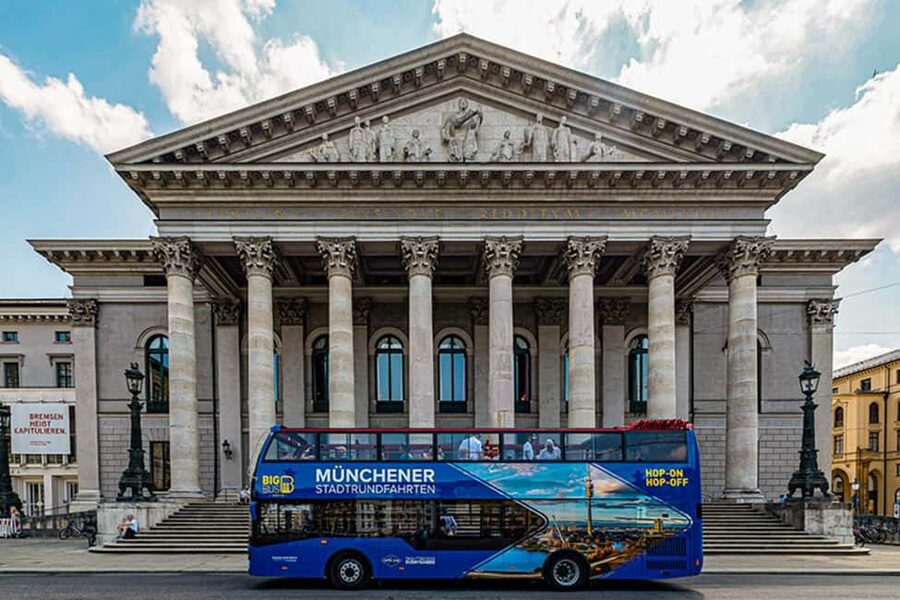
Reviewed · HOP-ON HOP-OFF BUS TOURS
Munich: Big Bus Hop-On Hop-Off Sightseeing Bus Tour
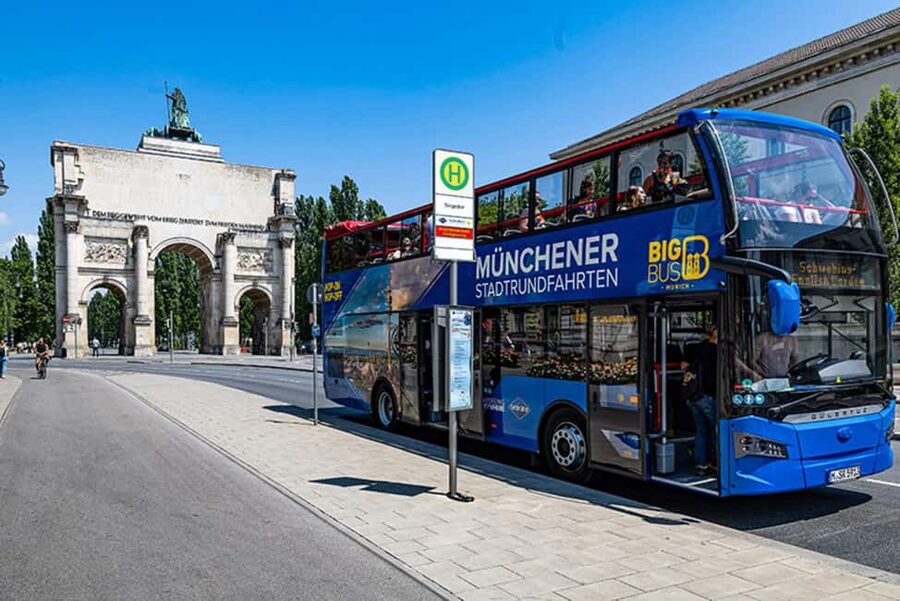
Munich’s Big Bus tour is at its best when you want a quick first look at the city without wrestling with maps, trams, or a rainy forecast. The full ride takes about 2.5 hours, and you can hop off at central sights such as Marienplatz, the Pinakotheken, and Viktualienmarkt before continuing when it suits you.
I like the easy overview and the useful Orange Route to Nymphenburg Palace, Olympiapark, and BMW Welt. I also like the audio commentary, which gives you enough background to understand the buildings rolling past. The main drawback is timing: central stops come about every 20 minutes, but the outer route runs about every 60 minutes, and the buses may stop for the day before you have seen everything.
Key points before you book
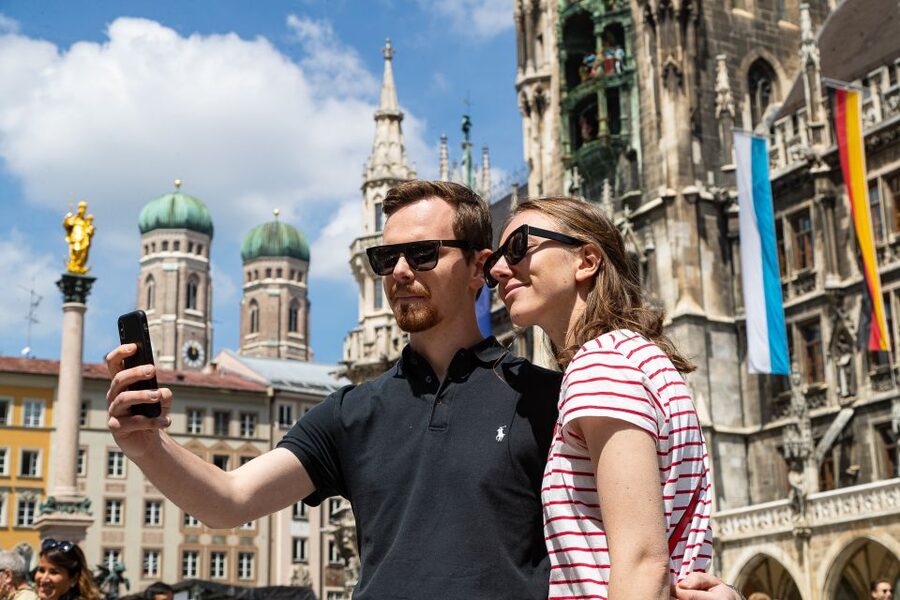
- Two routes cover very different Munichs: the central circuit focuses on old streets, museums, markets, and royal squares, while the Orange Route reaches Nymphenburg, Olympiapark, BMW Welt, and Schwabing.
- The complete ride takes about 2.5 hours: stay aboard for orientation, or split the pass across a full day to make a few worthwhile stops.
- Central buses are more frequent: stops 1 through 7 usually see a bus every 20 minutes, while stops 7 through 11 are served about hourly.
- Audio is available in nine languages: English, German, Chinese, French, Italian, Japanese, Portuguese, Russian, and Spanish.
- The Deutsches Museum stop is temporarily suspended: construction work affects this stop, so check the current route before planning around it.
- The open-top bus is weather dependent: the retractable roof helps, but cold or heavy rain can still make the upper deck uncomfortable.
What this Munich bus tour is really good at
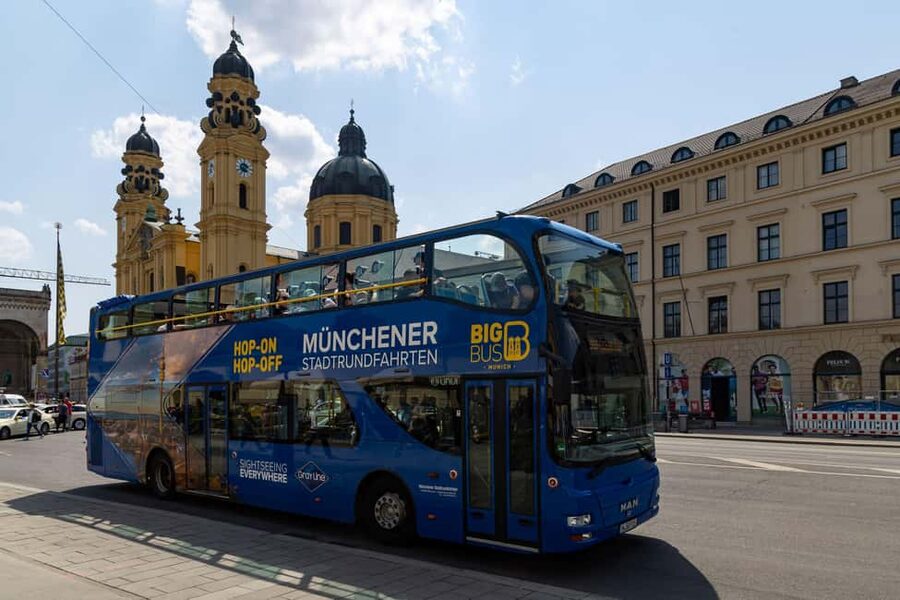
A hop-on, hop-off bus is not the most intimate way to meet Munich. It does not take you into quiet lanes or explain the city over a beer at a local table. What it does very well is show you how Munich fits together.
You see the grand center, the museum quarter, the royal sights, the English Garden area, and the Olympic complex in one outing. That matters on a short visit. It also helps you decide where to spend your limited walking time.
At about $27 per person, the 24-hour pass is reasonable if you use it as transportation and sightseeing rather than as a single scenic ride. The 48-hour option makes more sense if you want to stop at several places and use the bus again the next day. For a family of four, the adult pricing can add up quickly, so calculate the total against Munich’s public transport options and your planned museum visits.
The bus has an open upper deck, a retractable roof, WiFi, and headphones for the audio guide. On a clear day, the high seat gives you a good view over squares and broad avenues. In heavy rain, the bus becomes more valuable because you can still see much of Munich without spending the day outdoors.
Other sightseeing routes around Munich:
- Munich Hop-On Hop-Off Tour: 1-Day or 2-Day Ticket
★ 4.3 · 4,161 reviews - Munich City Hop-on Hop-off Tour
★ 3.5 · 1,233 reviews - Hop-On Hop-Off Tour CitySightseeing Munich
★ 4.0 · 309 reviews
Starting in central Munich at Karlsplatz
The tour begins at one of two listed meeting locations, and the exact starting point can vary with the option you book. Confirm the location before setting out. One practical snag is that some passengers have had trouble finding the bus at an advertised stop and ended up going to the main station area.
Karlsplatz, also called Stachus, is a useful place to begin because it puts you near Munich’s pedestrian shopping zone. The square is a busy urban gateway, with the old Karlstor marking the entrance toward the historic center.
You only pass by Karlsplatz on the sightseeing circuit, but you can use it as a starting point for a walk after your first ride. If you have just arrived in Munich, this is a good area for getting your bearings before heading toward Marienplatz.
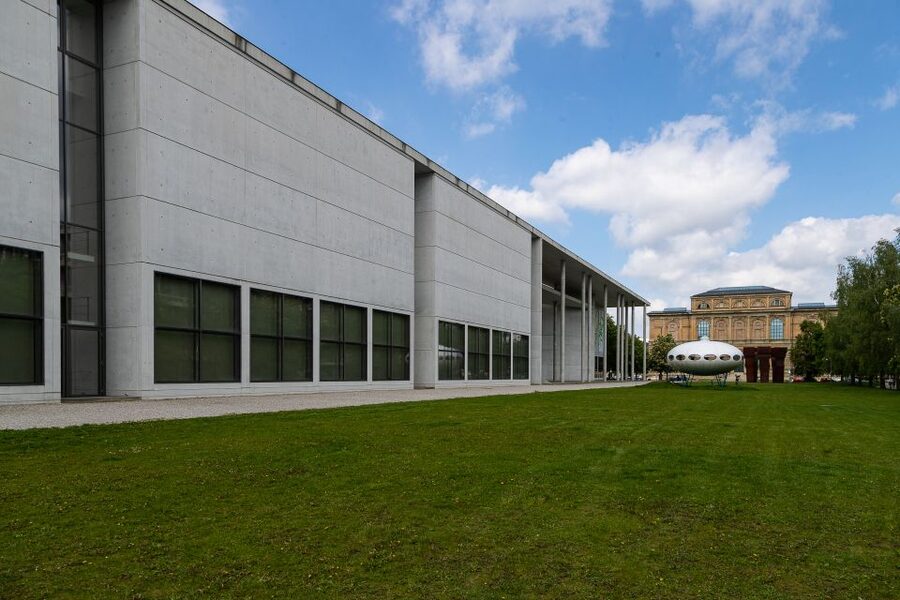
The bus then moves toward the Kunstareal, Munich’s museum quarter. This area is known for the Pinakotheken, including the Alte Pinakothek, and for striking museum architecture. The audio commentary is useful here because the buildings can look impressive even when you do not have time to visit the collections.
I would not use the bus as a substitute for the Alte Pinakothek. If you care about art, get off and allow proper museum time. If you have only one day, stay aboard and make a note of the area for another visit.
Odeonsplatz, Eisbach, and the city’s grand center
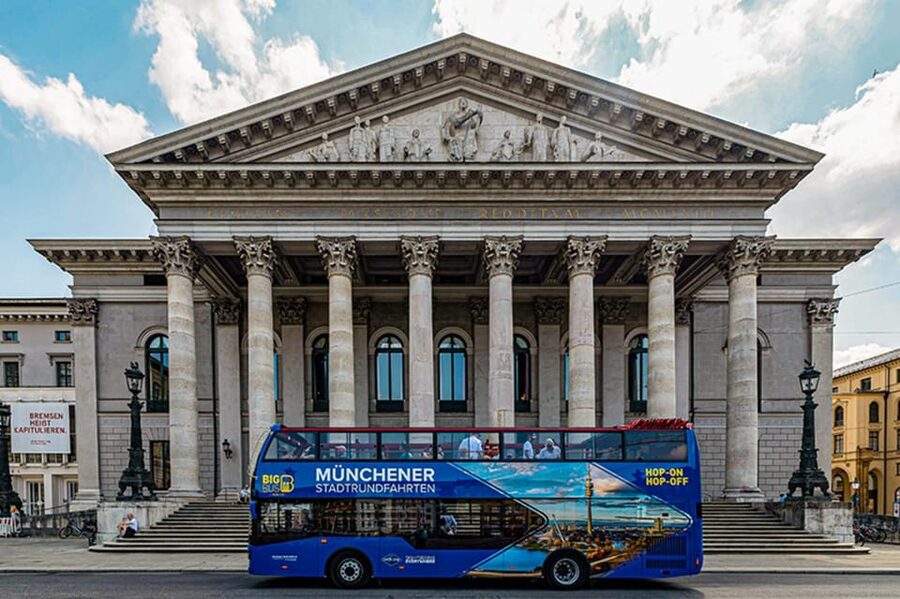
Odeonsplatz is one of the most handsome sections of the ride. The square is framed by formal architecture and leads toward several major sights. From the bus, you get a quick sense of Munich’s royal scale without spending your energy crossing the city on foot.
The next section includes Eisbach, where the famous river wave draws surfers in the English Garden area. The bus gives you a passing view rather than a guaranteed front-row look, so do not treat this stop as a long visit unless you hop off and walk.
The Deutsches Museum stop is currently suspended because of construction work. That is important, since the museum is one of Munich’s major attractions. You can still pass through the general area, but do not plan your day around stepping off there until the stop is restored.
The audio guide runs through the supplied headphones and covers the city in nine languages. The commentary is informative, but it does not have the warmth or jokes of a strong live guide. English and German support are associated with the driver, while the other languages are available through the recorded guide.
The timing of the commentary can also be imperfect on the express route. If you want the best match between what you see and what you hear, sit where you can look forward and listen closely. A visual screen showing the current sights would make the experience easier to follow, but that is not included.
Marienplatz, Viktualienmarkt, and Max-Joseph-Platz
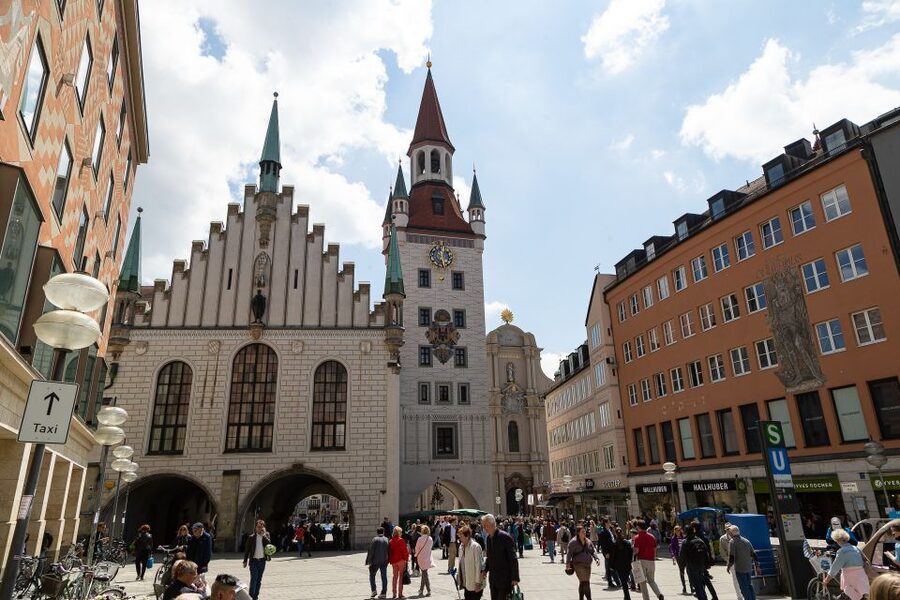
Marienplatz is the tour’s natural center of gravity. It is the square most people picture when they think of Munich, with the Neues Rathaus and its famous clock display. Get off here if you want the city’s most central walking base.
From Marienplatz, Viktualienmarkt is close by. The market is a good place to pause for snacks, local food, and a look at everyday Munich rather than only grand monuments. It is also near the Hofbräuhaus, though you should expect a highly visited beer hall rather than a quiet local pub.
The bus route through this area is valuable because it lets you combine several sights without repeatedly returning to one station. You can get off for the market, walk through the center, and later rejoin the route at a nearby stop.
Max-Joseph-Platz adds another dose of formal Munich. The square sits near important royal buildings and gives you a strong view of the city’s architectural confidence. You may prefer to remain on the bus here if your priority is seeing more of Munich’s districts rather than visiting individual interiors.
This central section is where the frequent service matters most. Buses generally come every 20 minutes between stops 1 and 7. That makes it easier to stop without losing half your day waiting beside the road.
Same base, a different kind of day out:
- From Munich: Neuschwanstein & Linderhof Castle Full-Day Trip
★ 4.5 · 12,494 reviews - Neuschwanstein & Linderhof Castle-Fairytale Day Tour from Munich
★ 4.5 · 7,275 reviews - Munich: Third Reich & WWII Walking Tour
★ 4.6 · 6,181 reviews - Dachau Concentration Camp Memorial Site Tour from Munich by Train
★ 4.5 · 5,637 reviews
The Orange Route to Nymphenburg Palace
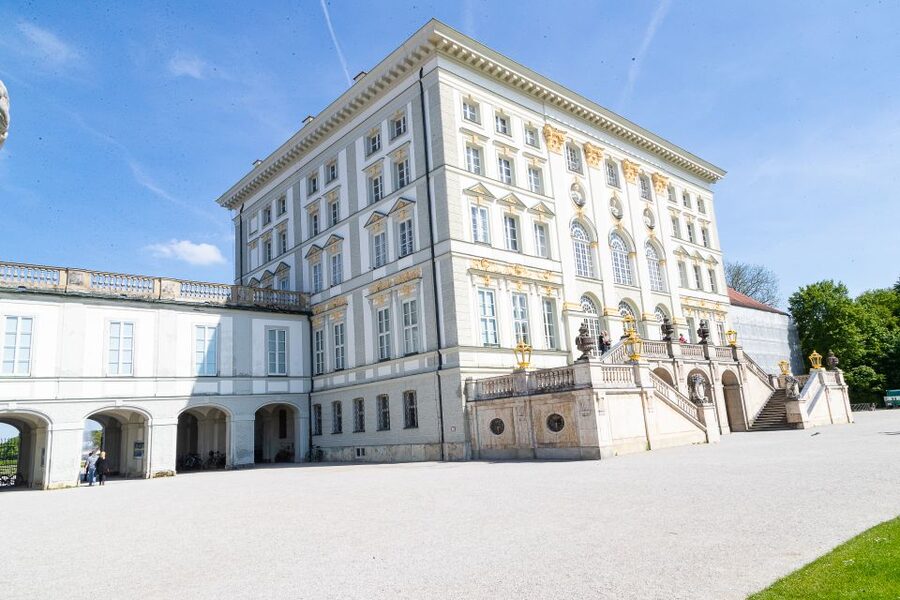
The Orange Route is the part I would prioritize if you have enough time. It leaves the compact center and takes you toward Nymphenburg Palace, one of Munich’s grand royal sights.
The palace itself is presented as a stop, but you need to allow extra time if you plan to explore the building or its gardens. The bus is useful for reaching the area, not for replacing a proper visit. The gardens provide a welcome change from traffic and city streets.
Pay close attention to the ticket type you select. The supplied details describe 24-hour and 48-hour passes, but some booking options and promotional descriptions can make it unclear if both loops are included or if a larger tour requires an upgrade. Check that the product you choose includes the Orange Route if Nymphenburg is a priority.
Service becomes less forgiving once you leave the central circuit. Stops 7 through 11 are served about every 60 minutes. That means a missed bus can cost you a full hour, especially outside the summer season when schedules may change.
For this reason, I would not try to visit every major sight on one day. Choose Nymphenburg or the Olympic complex, then use the rest of your time in the center. If you insist on both, start early and keep an eye on the last bus.
Olympiapark and BMW Welt

The Orange Route continues to Olympiapark and BMW Welt and Museum. This is a strong pairing because the two attractions offer very different experiences.
Olympiapark is known for its broad open spaces and distinctive architecture from the 1972 Olympic Games. From the upper deck, you get a helpful overview of the park’s scale. It is one of the more spacious sections of the tour and a welcome break after the dense central streets.
BMW Welt and the BMW Museum appeal to different interests. BMW Welt presents the modern brand experience, while the museum focuses on BMW vehicles and the company’s story. The bus stops in this area, but the museum visit itself requires your own time and may be the main reason to choose the Orange Route.
Build in a margin for delays. One reported schedule problem involved a bus expected at BMW Welt at 2:30 p.m. arriving an hour later. The general timetable says the outer route runs hourly, so you should not plan a tight connection after leaving the museum.
In poor weather, Olympiapark is less inviting, while BMW Welt and the museum offer a more suitable indoor plan. Still, the bus itself can be cold on damp days, particularly upstairs.
Schwabing and the English Garden
The route also reaches Schwabing and the English Garden. Schwabing is known for stylish shops and an easygoing city feel, while the English Garden offers paths, trees, and the famous Eisbach area.
This is another stop where you need to decide between a quick look and a real visit. The bus can show you the district, but the English Garden is best appreciated on foot. If you get off, allow plenty of time and remember that the next bus may not come for about an hour.
The English Garden is particularly useful for breaking up a museum-heavy day. You can combine a central ride with a walk here, then return to the city later if the timetable works.
The route description includes the Deutsches Museum, Marienplatz, Max-Joseph-Platz, Nymphenburg Palace, BMW Welt and Museum, Olympiapark, and Schwabing. Not every listed location functions as a perfect hop-off stop at every moment, so use the current driver instructions and route board before leaving the bus.
Audio, staff, comfort, and practical limits
The bus is wheelchair accessible, and WiFi is included. Hotel pickup and drop-off are not included, so you need to reach the starting point on your own and finish back at the meeting area.
The drivers and staff are generally described as friendly, and one guide identified as Wolf or Rolf was especially good at mixing city knowledge with dry humor. That kind of live personality can make the ride much more enjoyable, but the quality of spoken English may vary by driver.
Most of the tour uses recorded commentary. You receive headphones on board, and the choices include Chinese, English, French, German, Italian, Japanese, Portuguese, Russian, and Spanish. Arabic is not listed, so keep that in mind if language support is important to you.
The open roof is a genuine plus on a sunny day. It gives you better views than a standard city bus and makes the ride feel less enclosed. On wet or cold days, the retractable roof protects you to a point, but warm clothing and a waterproof layer still make sense.
The service does not run late enough for a relaxed evening plan. One practical complaint is that roughly seven hours of daily operation leaves limited time for several long stops. Think of the pass as a daytime sightseeing tool, not an all-day transport ticket.
How I would use the 24-hour pass
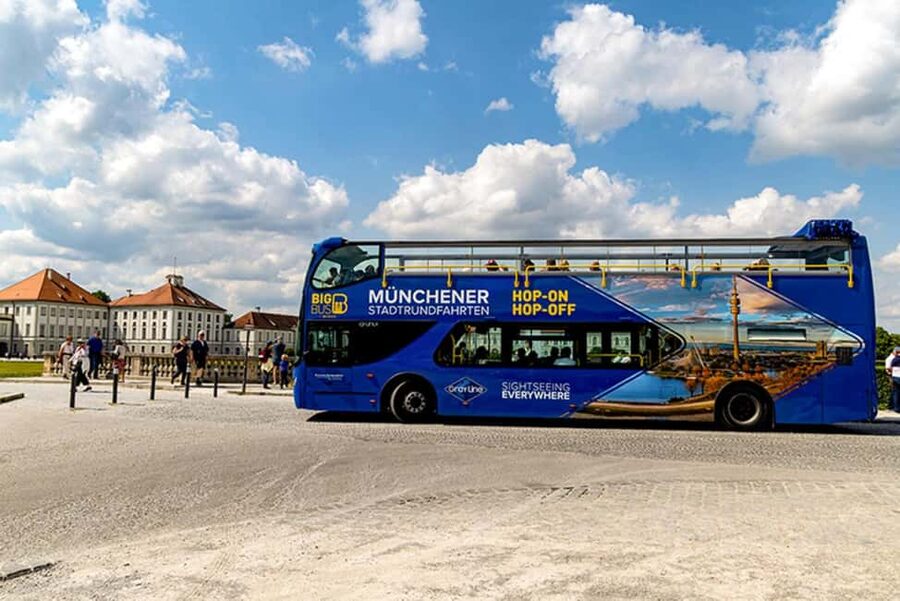
I would start with one complete circuit and stay aboard for the central route. This gives you the audio overview and helps you mark the places you want to revisit.
Next, I would get off at Marienplatz and walk to Viktualienmarkt. After lunch, I would choose one central museum or continue toward Karlsplatz. If the weather is good and the timetable allows, I would use the Orange Route for either Nymphenburg or BMW Welt.
With only one day, do not chase every stop. The bus is most useful when you use it to connect two or three real visits, not when you spend the entire day waiting for the next departure.
Is the 48-hour pass worth choosing?
The 48-hour ticket is worthwhile if you want a slower pace or expect to visit sights on separate days. You can use one day for the central route, Marienplatz, the market, and the museum district, then reserve the second day for Nymphenburg, Olympiapark, BMW Welt, and Schwabing.
It also gives you protection against bad weather. A rainy afternoon can ruin a walking plan, but you can still take the bus for an overview and return to a stop when conditions improve.
The value drops if you already know Munich well or plan to spend most of your time inside museums. In that case, public transport and individual admission tickets may be a better fit.
Who should book this Munich tour?
I would recommend it for a first visit, a short stay, families, older visitors, and anyone who wants a simple city overview. It is also a smart backup for wet weather, when a long walking route is less appealing.
You should think twice if you want a detailed personal guide, late evening service, or plenty of time at every stop. The audio track is clear and useful, but it cannot adjust itself to your questions or add the humor of a great live guide.
At $27, book it when you will use the bus at least several times and include the Orange Route. If you only want one ride around central Munich, the value is weaker. If you want orientation, flexible stops, and access to districts that are too far apart for an easy walk, it earns its place in your plans.
FAQ
How long is the complete Munich bus route?
If you remain on the bus without hopping off, the full route takes about 2.5 hours.
Is the ticket valid for one or two days?
You can choose a ticket valid for either 24 hours or 48 hours. Check the available option when booking.
How often do buses run?
Buses generally come every 20 minutes at stops 1 through 7. Service at stops 7 through 11 is generally about every 60 minutes.
Is the Deutsches Museum stop operating?
The Deutsches Museum stop is temporarily suspended because of construction work.
Which languages are available for the audio guide?
The audio guide is available in Chinese, English, French, German, Italian, Japanese, Portuguese, Russian, and Spanish.
Is hotel pickup included?
No. You must reach the meeting point yourself, and the activity ends back at the meeting point.
Can wheelchair users take this tour?
Yes. The tour is listed as wheelchair accessible.
Just added in Munich
- 2 Hours Munich: VIP Private Segway Tour★ 4.9 · 5 reviews
- “Comedykills” – das Open Mic im Glockenbachviertel★ 4.1 · 51 reviews
- From Munich: Herrenchiemsee Palace and Boat Trip Day-Tour★ 4.8 · 129 reviews
- Munich: Classical Concert at the Residenz Palace★ 4.5 · 148 reviews
- Munich: City Highlights Guided Segway Tour★ 4.6 · 266 reviews
- Munich: Law Library Guided Visit with Entry Tickets★ 4.6 · 297 reviews
- From Munich: Guided Group Tour to Eagle’s Nest★ 4.8 · 303 reviews
- From Munich: Nuremberg Day Trip by Train★ 4.4 · 357 reviews
Hop-On Hop-Off Bus Tours, compared.
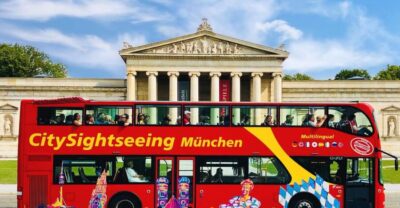
Munich Hop-On Hop-Off Tour: 1-Day or 2-Day Ticket
Read our review →
Hop-On Hop-Off Sightseeing Bus with Boat Options
Read our review →
Browse the lists this tour appears in