

Reviewed · GERMANY
Heilbronn: Kleine Citytour am Samstag
Heilbronn’s best-known sights fit neatly into a one-hour walk, and the star is Kilianskirche, with its remarkable Renaissance west tower by Hans Schweiner and a late Gothic altar by Hans Seyfer. You also get the town hall’s astronomical clock by Isaac, plus a look at the city’s towers and market square life.
I like the small group of six because it gives you a fair chance to ask questions, and I like the low $11 price for a guided introduction to central Heilbronn. Guide Ulrich Sauter has earned praise for clear answers and helpful suggestions for the rest of your visit. The main consideration is simple: the tour is in German, so it may not suit you if you need English guiding.
Key points at a glance

- Kilianskirche’s Renaissance west tower: See one of the important Renaissance buildings north of the Alps.
- Hans Seyfer’s 1498 altar: Study a major work of German late Gothic carving inside the church.
- Heilbronn’s astronomical town hall clock: Learn about the unusual clock by Isaac.
- Saturday marketplace meeting point: Begin among the sights and activity of the central market.
- Small group, short format: Six participants maximum and one focused hour in the downtown area.
- Useful local advice: Guide Ulrich Sauter is praised for answering questions and suggesting further things to do.
Why this one-hour Heilbronn tour works

Heilbronn can be easy to skim. You walk through the center, see a church and town hall, perhaps notice a tower, and move on. This tour gives those sights a clear order and a human explanation. In only an hour, you get the basic map of the city center and a reason to look closer.
The setting helps. You begin at the Heilbronn marketplace during market time, so the tour starts in the middle of ordinary city life rather than at a remote meeting point. You can expect the first part to connect the square with the major buildings around it, then move through the central sights on foot.
I see this as an orientation tour rather than a full study of Heilbronn. It does not promise long interior visits, extended art lectures, or a broad tour of the wider city. Its value is focus. You spend an hour learning what matters most, then decide where to return on your own.
The group limit of six is particularly useful here. A guide can respond to questions without trying to manage a crowd, and you are less likely to be standing at the back while an important detail gets lost. The one-hour length also fits neatly before lunch, after arrival, or at the beginning of a short stay.
Other trips people book in Germany:
- Berlin: Reichstag, Dome and Government District Guided Tour
★ 4.7 · 18,288 reviews - Berlin: 1-Hour City Tour by Boat with Guaranteed Seating
★ 4.3 · 16,993 reviews - Hamburg: Sex and Crime in St. Pauli Tour for Ages 18+
★ 4.7 · 15,447 reviews
Starting at the marketplace on Saturday
The marketplace is a practical place to start because it gives you an immediate sense of Heilbronn’s central district. The tour begins at market time, so you are not simply looking at an empty square. You see the city center as a working public space, with the market providing the local setting for the opening explanation.
This is also where you begin to understand Heilbronn as both a wine city and a city of learning on the Neckar. The tour does not turn those themes into a long specialist talk, but they provide useful context for the streets and buildings around you.
I would arrive with enough time to find the marketplace before the stated start. The tour lasts only one hour, so a late arrival matters more than it would on a half-day outing. Since the group is limited to six participants, the guide should be easier to spot than on a large city walk, but the exact meeting details should still be checked when booking.
Starting at the market has one small drawback. Saturday activity can bring more movement and noise around the square. That adds atmosphere, but it may make it harder to hear at times. The small group helps, though you should stay close to the guide.
Kilianskirche and its unusual mix of styles

Kilianskirche is the tour’s strongest architectural stop. Its west tower, designed by Hans Schweiner, is described as one of the most important Renaissance buildings north of the Alps. That gives you a useful point of focus: instead of seeing the church as one old building, you can look at the tower as a major work in its own right.
The style matters because the church also connects to an earlier period of German art. Inside, the high altar created by Hans Seyfer in 1498 is considered a masterpiece of German late Gothic carving. You get two important artistic moments in one place: the Renaissance tower outside and the late Gothic altar inside.
That combination makes Kilianskirche especially worthwhile for anyone who enjoys architecture but does not want a long museum visit. The guide can help you notice the difference between the building’s large-scale design and the detailed work of the altar. Without an explanation, you might simply register an impressive church. With context, you have a better chance of understanding why these particular features matter.
The supplied details do not promise a lengthy church interior visit, so keep your expectations measured. The tour is designed to cover several downtown sights in one hour. If the church is busy or access is limited at the time, your explanation may be more visual and historical than an extended examination of every detail.
Still, this is where the $11 begins to make sense. A short tour that points out a major work by Hans Seyfer and an important Renaissance tower gives you something far more useful than a quick photograph. You leave knowing what to look for if you return to Kilianskirche later.
The 1498 altar by Hans Seyfer
The high altar deserves its own attention because it adds a fine-art dimension to what could otherwise be a straightforward city walk. Hans Seyfer’s work dates to 1498 and belongs to the late Gothic period. It is described as a masterpiece of German carving, so this is not merely a decorative object tucked into the church.
I like that the tour includes this detail in a general city introduction. You do not need to plan a separate specialist visit to encounter an important piece of German art. The guide can place it within Heilbronn’s wider story and explain why the date and artist are worth remembering.
You should listen for the relationship between the altar and the church itself. The altar offers close, detailed craftsmanship, while the west tower gives you a larger architectural statement. Together, they show how one central building can preserve different stages of Heilbronn’s artistic past.
If you have limited time in town, make a mental note to return to the church if the tour moves quickly. The guide’s comments will tell you what deserves a second look. This is one of the most useful habits on a short walking tour: do not try to absorb every detail at once. Identify the two or three features worth revisiting.
Same base, a different kind of day out:
- Hamburg: 1.5-Hour Harbor and Speicherstadt Day Cruise
★ 4.6 · 14,200 reviews - From Munich: Neuschwanstein & Linderhof Castle Full-Day Trip
★ 4.5 · 12,494 reviews - Dresden: Semperoper Tickets and Guided Tour
★ 4.7 · 12,102 reviews - Berlin: Boat Tour Along the River Spree
★ 4.4 · 11,252 reviews
Heilbronn town hall and Isaac’s astronomical clock

The historic town hall supplies a different kind of interest. Kilianskirche focuses on architecture and religious art. The town hall turns your attention to civic life, public design, and the way a city once displayed time in a prominent public building.
The attraction here is the astronomical artificial clock by Isaac. That is a specific feature, not a vague reference to an old clock. Your guide can explain what makes it unusual and help you notice it as part of the town hall rather than as background decoration.
I find public clocks useful stops on city tours because they show how a city presented itself to residents and visitors. A clock on a town hall had a practical role, but an astronomical design also carried a sense of learning and technical skill. In Heilbronn, it fits the wider image of a city linked with knowledge and civic life.
The clock may be one of the easier sights to miss if you are walking independently. You may pass the town hall, admire the façade, and never know where to look. This is exactly the sort of small but meaningful detail a guide adds.
The information provided does not specify how long the group spends at the clock or whether there is an interior visit. Expect a guided look and explanation within the larger route, not a dedicated clock exhibition. For most people, that is enough to make the building more memorable.
Towers, public art, and the less obvious details

The tour also includes Heilbronn’s towers and an unusual pulsating armillary feature. These stops broaden the walk beyond the two headline buildings. They give you a chance to see how the city’s identity is expressed through vertical landmarks and public objects.
The towers help you place Heilbronn geographically within the central area. Even when you do not climb them, they give the city a stronger shape in your mind. After the tour, you are more likely to recognize the main district and understand how the sights relate to one another.
The pulsating armillary feature sounds like the sort of public detail you might walk past without a guide. Its exact presentation is not described, so I would treat it as an added point of interest rather than the reason to book the tour. Still, unusual public features often make a city walk more personal and easier to remember.
This part of the tour also keeps the hour from becoming a church-and-town-hall checklist. You get architecture, art, civic history, towers, and a modern or unusual public feature in one compact route. That variety is helpful if you are touring with someone whose interests differ from your own.
What the $11 price really gives you
At $11 per person, this is an inexpensive way to add structure to a visit. You are paying for a live, guided hour in central Heilbronn, not transport, meals, entrance packages, or a full-day program. The value depends on whether you want interpretation. If you are content to walk past the sights and read a plaque, you may not need it.
For me, the strongest value comes from the expert framing of Kilianskirche and the town hall clock. A guide can connect names, dates, artistic styles, and civic details in a way that takes time to assemble on your own. The price is also modest enough that you can treat the tour as an introduction, then spend the rest of your day choosing what deserves more attention.
The 4.4 rating from 25 reviews suggests a generally strong experience, while leaving room for normal differences in guiding style and expectations. The most consistent praise focuses on clear explanations, a lively pace, useful answers, and good value. One guide named Ulrich Sauter is specifically praised for historical knowledge and practical suggestions for other things to do in Heilbronn.
The German-only format is the biggest value question. If you understand German, the tour is a good bargain. If you do not, the main benefit may be reduced, since the experience depends on spoken explanation rather than a self-guided handout or multilingual format.
Who should book this Saturday walk
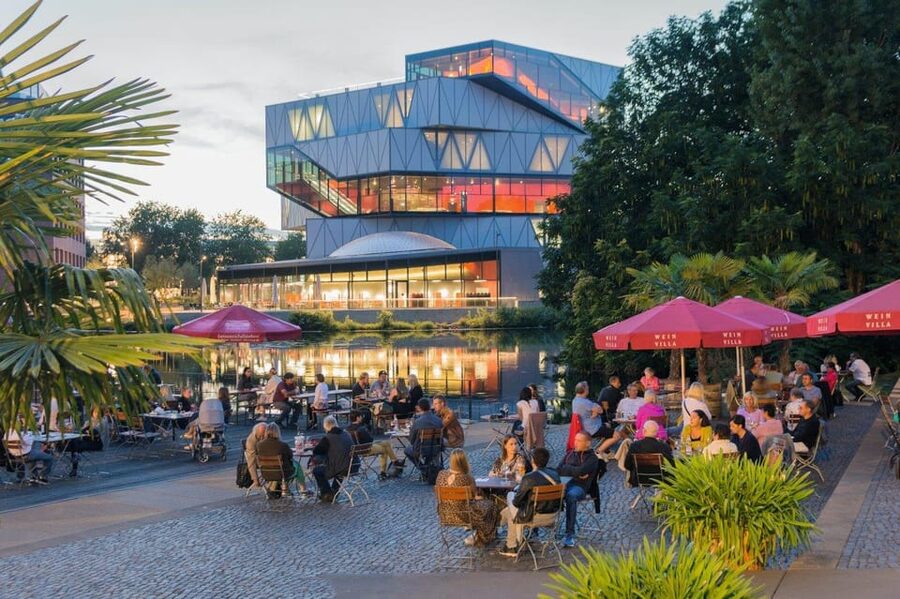
I would recommend this tour if you are visiting Heilbronn for a short time and want a quick introduction before exploring alone. It is also a good fit if you enjoy historic buildings but prefer a short walk to a long formal tour.
You will likely get the most from it if you can follow German comfortably and enjoy asking questions. The group size makes that possible, and the comments about Ulrich Sauter suggest that questions are welcomed rather than brushed aside.
The tour suits:
- First-time visitors who want a clear downtown orientation
- People making a brief stop in Heilbronn
- Architecture and art fans interested in Kilianskirche
- Visitors who want practical ideas for the rest of the day
- Anyone looking for a low-cost, one-hour activity
- Wheelchair users, since the activity is listed as wheelchair accessible
It may be less suitable if you need English guiding, want a long museum-style explanation, or prefer to explore without a fixed schedule. It is also not the right choice if you expect a broad tour of every part of Heilbronn. The route is centered on downtown sights and finishes after one hour.
Booking flexibility and useful planning details
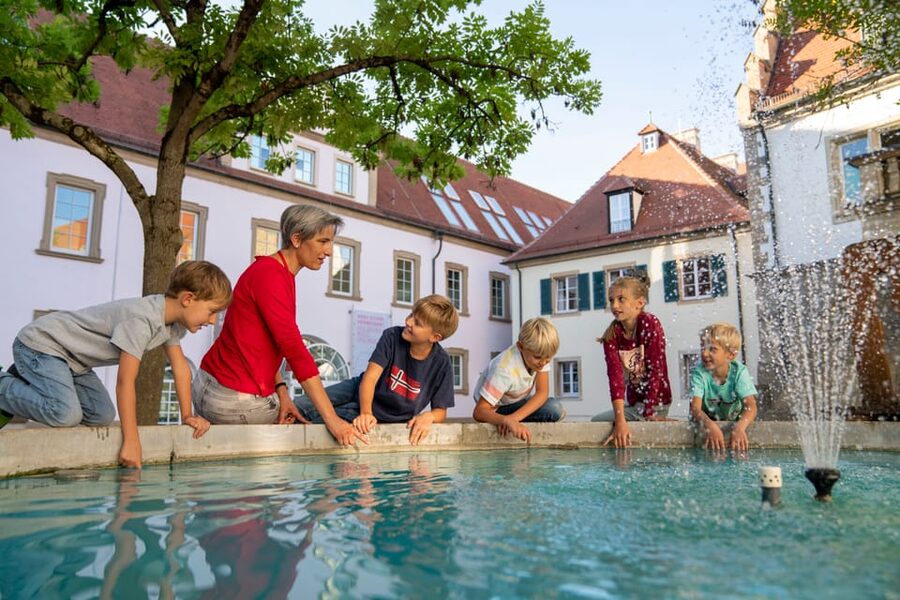
The tour is listed at $11 per person and lasts one hour. It is offered as a small group with no more than six participants, and a live guide leads the tour in German.
You can cancel up to 24 hours before the start for a full refund. The reserve-now, pay-later option lets you hold a place without paying immediately, which is useful if your Saturday plans are still shifting.
The tour is wheelchair accessible. Since the route takes place in the downtown area and begins at the marketplace, check the exact meeting instructions and start time before setting out. Availability can vary, so you need to check the selected date for the precise departure.
My verdict: a smart short introduction to Heilbronn
Book this tour if you want the main downtown sights explained clearly, you understand German, and you value a small group. The combination of Kilianskirche, Hans Seyfer’s 1498 altar, Isaac’s astronomical clock, and Heilbronn’s towers gives you a solid sense of the city in just one hour.
The price is fair, the format is easy to fit into a short visit, and the practical tips from guide Ulrich Sauter could help you plan what comes next. Skip it if you need an English tour or want a much broader look at the city. For a Saturday morning introduction at the marketplace, though, this is a focused and sensible choice.
FAQ
Where does the Heilbronn city tour start?
The tour starts at the Heilbronn marketplace during market time.
How long does the tour last?
The guided city tour lasts one hour.
What is the price?
The price is $11 per person.
What language is the tour offered in?
The live tour guide speaks German.
How many people can join the tour?
The tour is limited to six participants.
Is the tour wheelchair accessible?
Yes, the activity is listed as wheelchair accessible.
What church will I see?
You will visit Kilianskirche, including its Renaissance west tower by Hans Schweiner and the high altar by Hans Seyfer.
What is special about the Kilianskirche altar?
The high altar dates from 1498 and is considered a major work of German late Gothic carving.
What clock is included in the tour?
The tour includes Heilbronn’s historic town hall and its astronomical artificial clock by Isaac.
Can I cancel for a full refund?
Yes. You can cancel up to 24 hours in advance for a full refund.
Just added in Germany
- Romantic Berlin Rickshaw City and Photo Tour – incl. pick-up★ 4.0 · 9 reviews
- Moonshine Comedy – English Stand Up Comedy by the bay★ 5.0 · 11 reviews
- Berlin Protest History Tour: Rebels, Resistance, and Revolution★ 5.0 · 7 reviews
- Private taxi tour to Potsdam and Sanssouci 6-8h★ 5.0 · 30 reviews
- Private Half-Day Berlin Sightseeing Tour with a Minivan Including Short City Walks★ 5.0 · 31 reviews
- One Up to 3 Rickshaws(6 GUESTS)-Taylor Made Rickshaw Berlin Tour★ 5.0 · 20 reviews
- Private City Kickstart Tour: Berlin★ 4.5 · 71 reviews
- Berlin Private Custom Walking Tour With A Guide (Private Tour)★ 4.5 · 8 reviews