
Reviewed · TOURS IN LEIPZIG
Guided tour of the Federal Administrative Court in Leipzig
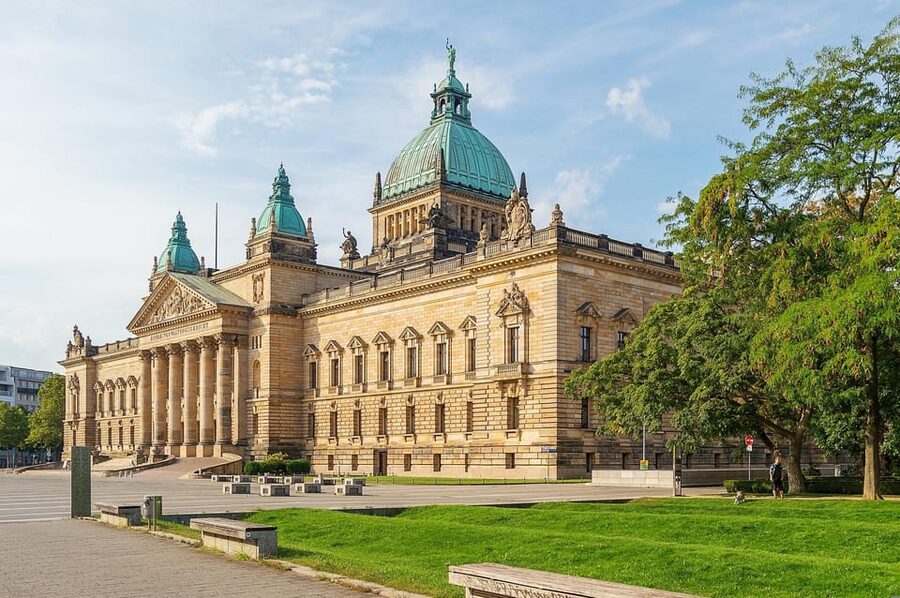
The most unusual part of this Leipzig tour is that you enter Germany’s largest Palace of Justice as a visitor, not as a litigant. Inside the former Imperial Court of Justice, grand architecture meets difficult chapters of German political history, including the 1933 Reichstag Fire Trial and Karl Liebknecht’s defense against high treason charges.
I like the way the tour joins building history with present-day law, so you are not just admiring carved stone and ceremonial rooms. I also like the chance to see spaces rarely included on a standard city walk, especially the domed hall, historic courtrooms, judges’ ancestral gallery, and the ceremonial hall in the president’s apartment.
The main limitation is language: the live tour is in German. You should also arrive 10 minutes early, since late arrivals cannot enter once the courthouse tour has begun.
Key points to know before you book
- The 1933 Reichstag Fire Trial took place here, giving the large hall a direct link to one of Germany’s most troubling political trials.
- You visit an active federal institution, not simply a preserved historic building. The Federal Administrative Court has used the site since 2002.
- The 90-minute route includes spaces with different moods, from the grand domed hall to the president’s ceremonial apartment.
- A certified German-speaking guide leads the tour, with explanations of the court’s modern work and decisions.
- The $16 price is reasonable for a specialized indoor tour, especially if you care about architecture, law, or German history.
- The tour is wheelchair accessible, but you must arrive on time and leave a 1 euro coin for the luggage compartment.
Entering Leipzig’s former Imperial Court of Justice
Your tour begins in the foyer of the Federal Administrative Court, where you meet the certified guide. This is a practical starting point: you are already inside the building, and the tour can move straight into the court’s architecture and story.
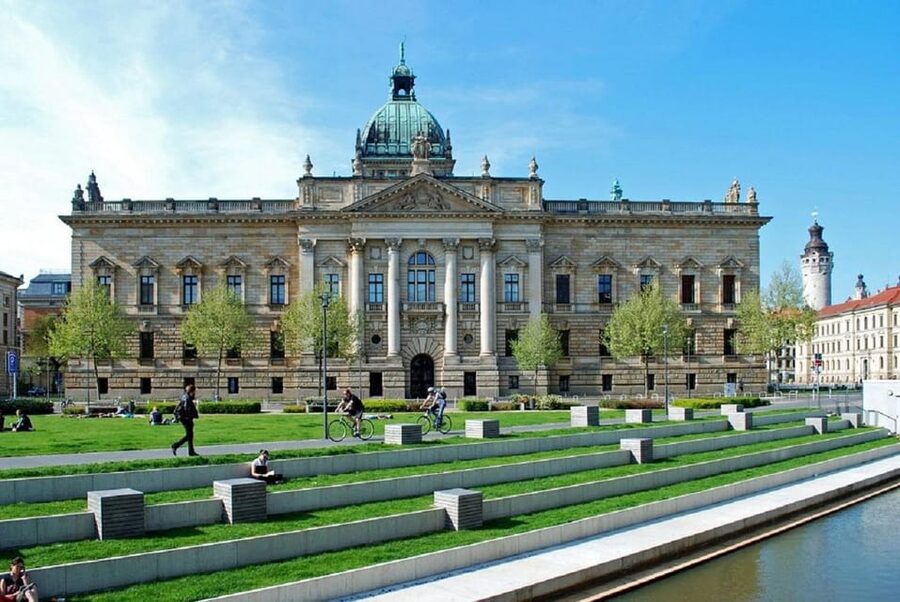
The site was built for the Imperial Court of Justice, founded in 1879 as the supreme court of the German Reich. Its design was meant to project authority. Even before you learn the legal details, the scale and formal character of the building make clear that this was never intended to feel like an ordinary office.
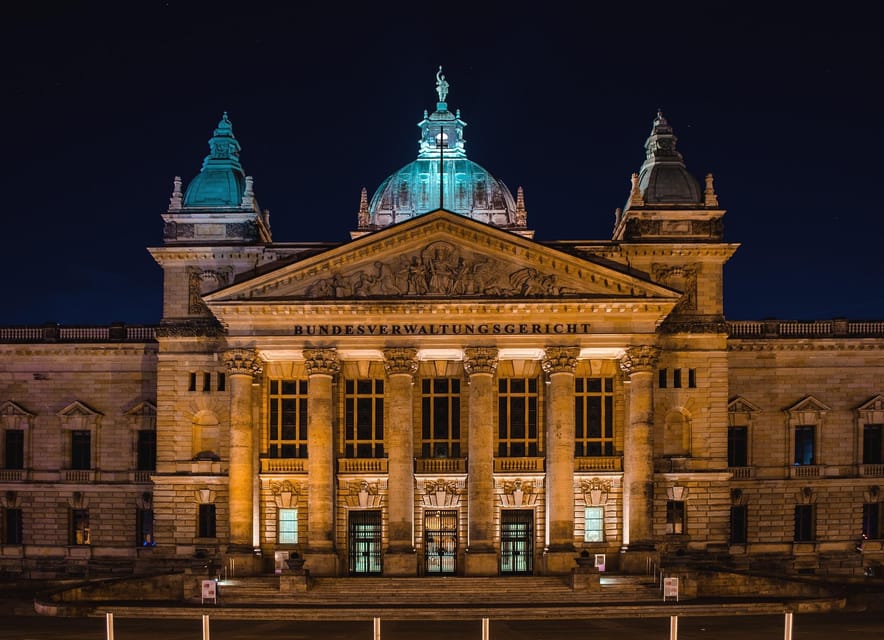
Since 2002, the building has been home to Germany’s Federal Administrative Court, known as the BVerwG. That gives the tour a useful present-day purpose. You are not walking through a dead monument. You are seeing a historic courthouse that still serves the German legal system.
The tour lasts about 1.5 hours. That is long enough to cover several important rooms and explain the court’s role without turning the visit into an all-day commitment. I would set aside extra time before the tour for finding the entrance and getting settled, since the doors close to late arrivals once the group has started.
A few more things to do in Leipzig worth a look
- Combo Tour in Leipzig: Guided City Tour & City Sightseeing
★ 4.7 · 2,317 reviews - Leipzig: 2-Hour Guided Walking Tour in German
★ 4.8 · 1,612 reviews - Gruseltour Leipzig: A Haunted Guided Tour
★ 4.5 · 1,385 reviews
The domed hall and the building’s public face
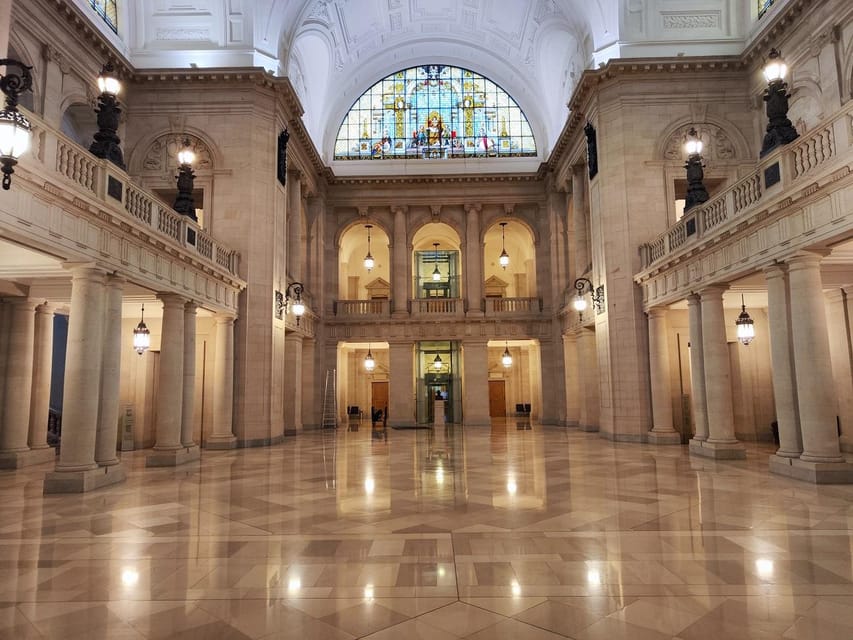
The domed hall is one of the main architectural moments of the visit. It gives you a sense of how the Imperial Court of Justice presented itself to the public: formal, imposing, and designed to make legal power visible.
A room like this is easier to appreciate with a guide than on your own. The guide can connect the building’s materials and layout to its original purpose, then explain how the same setting functions within the Federal Administrative Court today.
You should pay attention to the change in mood between the grand public spaces and the working courtrooms. The building is not just decorative. Its rooms were arranged around the ceremony and authority of justice, and the tour helps you see how architecture can shape the way people experience a court.
The domed hall is also a good place to begin because it provides a visual map of the institution. After seeing this large central space, the historic courtrooms and ceremonial rooms feel connected rather than like a random collection of old interiors.
Historic courtrooms and the legal story of the site
The tour includes historic courtrooms, where the guide explains both the building’s earlier role and the current work of the Federal Administrative Court. This part should appeal to you if you want more than dates and decorative details.
The Federal Administrative Court is Germany’s highest administrative court. It rules on disputes involving administrative law, which broadly concerns the actions and decisions of public authorities. The tour presents this work in an accessible way, helping you understand why the court matters today.
The distinction between the former Imperial Court of Justice and the present Federal Administrative Court is important. The building has changed political systems and legal institutions, but its central function remains connected to the administration of justice. You get to see how a historic judicial setting continues to serve a modern federal court.
You should not expect to sit in on a current case or receive legal advice. This is a guided look at the court’s building, history, work, and decisions. The value lies in understanding the institution and the rooms where judicial authority has been exercised.
Karl Liebknecht and the Reichstag Fire Trial

The building’s historical weight becomes sharper when the guide discusses Karl Liebknecht. He defended himself here against accusations of high treason, adding a personal and political dimension to the courthouse’s story.
The large hall connected with the 1933 Reichstag Fire Trial is another major stop. This is not simply a room with attractive decoration. It is linked to a trial that took place during one of the darkest periods in German history.
I appreciate that the tour places these events inside the physical rooms where they happened. Reading about a trial in a book gives you names and dates. Seeing the hall, its proportions, and its formal setting can help you picture how public power was presented and exercised.
The guide’s role matters here. The subject requires care, and a good explanation can separate the building’s Imperial-era origins, the political events of the 1930s, and the court’s current constitutional role. Since the tour is in German, you will get the most from it if you can follow spoken German comfortably.
This portion may be the most meaningful for visitors interested in German political history. It is also the reason I would not treat the experience as a simple architecture visit. The rooms carry difficult associations, and the tour acknowledges them as part of the building’s identity.
Same base, a different kind of day out:
- Leipzig: City History Canal Sightseeing Tour on a Motorboat
★ 4.7 · 6,232 reviews - Leipzig: 1.5-Hour Public Tour with Night Watchman Bremme
★ 4.6 · 3,116 reviews - Leipzig: 1.5-Hour Historical Walking Tour in German
★ 4.7 · 2,217 reviews - Leipzig: 13-Stop Hop-on/Hop-off Bus Ticket
★ 4.6 · 1,468 reviews
The judges’ ancestral gallery
The ancestral gallery of the judges offers another way to understand the institution. Portrait galleries are often easy to rush past, but here they connect individual judges with the court’s long history.
A guide can explain what the portraits represent and how the gallery fits into the building’s judicial tradition. You may find this stop less dramatic than the domed hall or the Reichstag Fire Trial room, but it adds useful context.
This is the sort of detail that makes the tour worthwhile for anyone interested in how courts build institutional memory. The gallery is not just wall decoration. It shows how the court presents its succession of judges and its sense of continuity.
If you are mainly seeking dramatic interiors, this part may feel quieter. If you enjoy political history and the structure of public institutions, it gives the visit more substance.
The president’s apartment and ceremonial hall
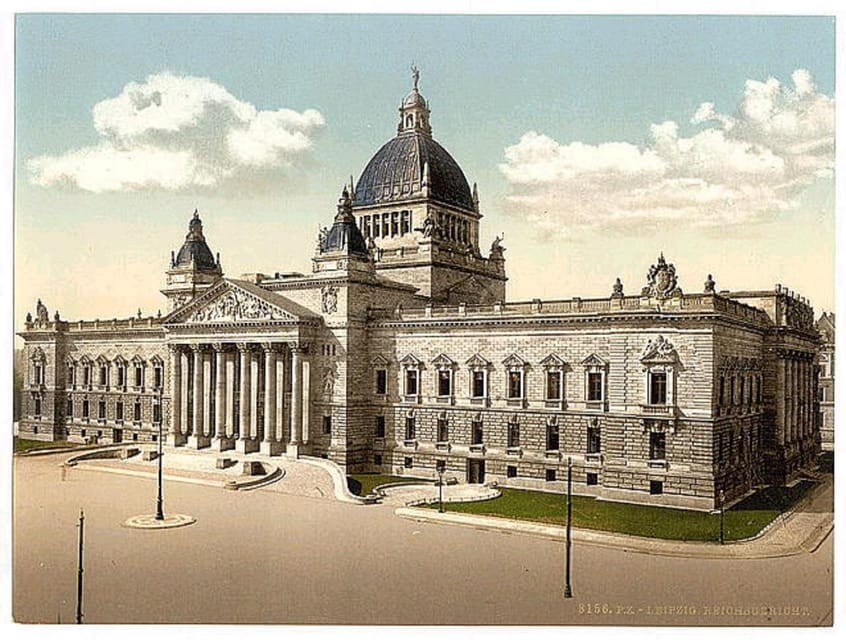
The tour also enters the president’s apartment, including its ceremonial hall. This is one of the more unusual features because it takes you beyond standard courtroom spaces and into the formal private world connected with the court’s leadership.
The ceremonial hall helps explain how the president of the court represented the institution. It adds a social and official dimension to the building, showing that judicial work has included not only hearings and decisions but also receptions and formal duties.
You should expect this area to feel different from the courtrooms. The design is likely to be more domestic or ceremonial in character, while still reflecting the building’s official purpose. The contrast helps you understand the layers of the courthouse rather than seeing every room as part of one grand style.
For many people, this will be one of the most memorable stops because it is not the kind of space you normally encounter during a city sightseeing walk. It also rounds out the tour. You see public halls, working legal rooms, portraits of judges, and the ceremonial side of court leadership.
How the Federal Administrative Court fits into Leipzig today
The tour does not leave the building trapped in the Imperial era. A central part of the visit is learning about the work and decisions of the Federal Administrative Court today.
That modern section gives the experience practical value. You learn why the court exists and what kinds of disputes reach Germany’s highest administrative court. The building’s history provides the setting, but the institution’s current role gives the tour a reason to exist beyond preservation.
I like this balance because it prevents the visit from becoming a parade of old rooms. You can admire the architecture, think about the building’s political past, and still leave with a clearer idea of how German administrative justice operates.
The explanations are delivered by a certified live guide in German. There is no indication of multilingual guiding, so you should check your comfort level before booking. If you understand German, the direct conversation and spoken explanations should make the visit more useful than simply viewing photographs or reading a short panel.
Is the $16 price good value?
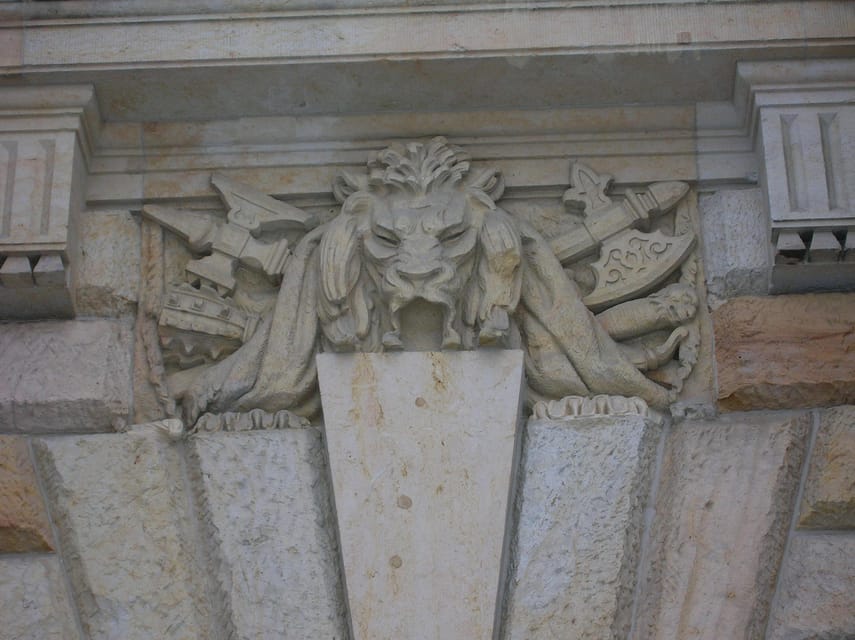
At $16 per person, this is a fair price for a 90-minute guided visit to a specialized historic building. You are paying for access to several significant interiors and for an explanation of both past and present legal work.
The value is strongest if you have an interest in architecture, political history, German law, or Leipzig’s institutional past. The tour reaches places that are not part of the usual outdoor sightseeing circuit, including the president’s ceremonial hall and the judges’ gallery.
It may be less appealing if you want a broad introduction to Leipzig or prefer a casual walk with plenty of free time. This is a focused experience about one building and one institution. The subject is serious, and the schedule is structured.
Still, the combination of access, history, and expert guidance makes the cost easy to justify. You are not simply paying to enter a grand building. You are getting a guided explanation of why the building was created, what happened inside it, and how it functions now.
Practical advice for the visit
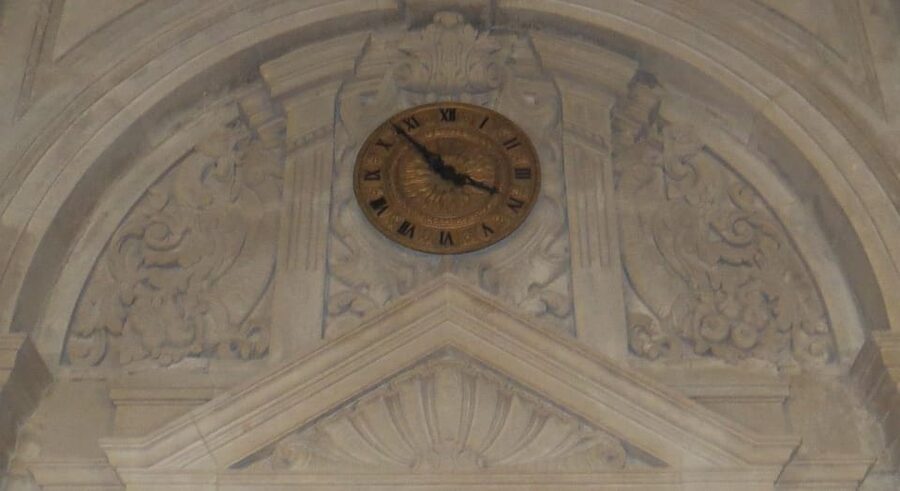
Meet in the foyer of the Federal Administrative Court. The tour ends back at the same location, which makes it simple to plan before or after another activity in Leipzig.
Arrive at least 10 minutes early. This is not a suggestion to ignore. Once the tour has started, you cannot enter the courthouse, so a late arrival could mean missing the entire experience.
A 1 euro coin is required for the luggage compartment. Bring one with you if possible, and avoid arriving with unnecessary bags. Pets are not allowed, although assistance dogs are permitted.
The activity is wheelchair accessible. The available information does not provide details about every room or route, so if you need particular assistance, it is sensible to confirm the arrangements when booking.
Party groups and bachelor or bachelorette groups are not allowed. That fits the setting. This is a working federal court and a place of serious historical importance, not a party-oriented attraction.
You can cancel up to 24 hours in advance for a full refund, and the reserve-now, pay-later option gives you some flexibility. Starting times vary, so check availability for the date you want rather than assuming a fixed departure time.
Who should take this tour?
I would recommend it to you if you enjoy places where architecture and history are tied closely together. It is especially suitable for visitors who want to understand Leipzig beyond its churches, music traditions, and central squares.
The tour is a strong choice for anyone interested in the German Empire, the political events of 1933, Karl Liebknecht, or the workings of modern German courts. Students and legal-history enthusiasts should find plenty to think about, while architecture fans will appreciate the progression from grand public halls to more private ceremonial rooms.
Families can consider it if older children or teenagers can follow a German-speaking guided tour and handle serious subject matter. The tour is not designed as a playful attraction, and the historical discussions may be too specialized for young children.
I would hesitate to book it if you do not understand German or if you are looking for a relaxed, self-guided visit. The guide’s explanation is central to the experience, and there is no stated English-language option.
Should you book the Federal Administrative Court tour?
Book this tour if you want a compact, focused look at one of Leipzig’s most important judicial buildings. The domed hall, Reichstag Fire Trial hall, judges’ gallery, historic courtrooms, and president’s ceremonial hall give you a strong mix of architecture and history in 90 minutes.
The $16 cost is sensible, particularly because the tour includes access to spaces that are not part of a normal city stroll. Just make sure German is suitable for you, arrive early, and bring a 1 euro coin for the luggage compartment.
If those conditions work, I would choose this over a generic sightseeing stop. It gives you a more serious and distinctive view of Leipzig, with a direct connection to Germany’s legal past and present.
FAQ
Where does the tour begin?
The tour begins in the foyer of the Federal Administrative Court in Leipzig.
Where does the tour end?
The activity ends back at the meeting point in the foyer.
How long does the guided visit last?
The tour lasts 1.5 hours.
What language is the tour in?
The live tour guide conducts the tour in German.
What rooms and areas are included?
The tour includes the domed hall, historic courtrooms, the judges’ ancestral gallery, and the ceremonial hall in the president’s apartment.
Is the Federal Administrative Court tour wheelchair accessible?
Yes, the activity is wheelchair accessible.
What should I bring or know before arriving?
Arrive 10 minutes early because entry is not possible after the tour begins. A 1 euro coin is required for the luggage compartment. Pets are not allowed, except for assistance dogs.
Just added in Leipzig
- City tour on foot, by S-Bahn and tram★ 4.5 · 12 reviews
- Leipzig City Centre: Scavenger Hunt Self-Guided Tour★ 4.4 · 114 reviews
- Tour on Lake Cospuden★ 4.7 · 58 reviews
- Leipzig Spirits Manufacture: Guided Tour and Tasting★ 4.8 · 79 reviews
- Leipzig: True or false? Walking Tour and Interactive Game★ 4.8 · 28 reviews
- Leipzig: Scavenger Hunt Self-Guided Tour★ 4.7 · 11 reviews
- Leipzig: Segway City Tour – Discover Sights, Parks & History★ 5.0 · 7 reviews
- Leipzig: Segway tour to the Battle of the Nations Monument★ 5.0 · 4 reviews
Tours in Leipzig, compared.
City History Canal Sightseeing Tour on a Motorboat
Read our review →
1.5-Hour Public Tour with Night Watchman Bremme
Read our review →
Combo Tour in Leipzig: Guided City Tour & City Sightseeing
Read our review →



Browse the lists this tour appears in