
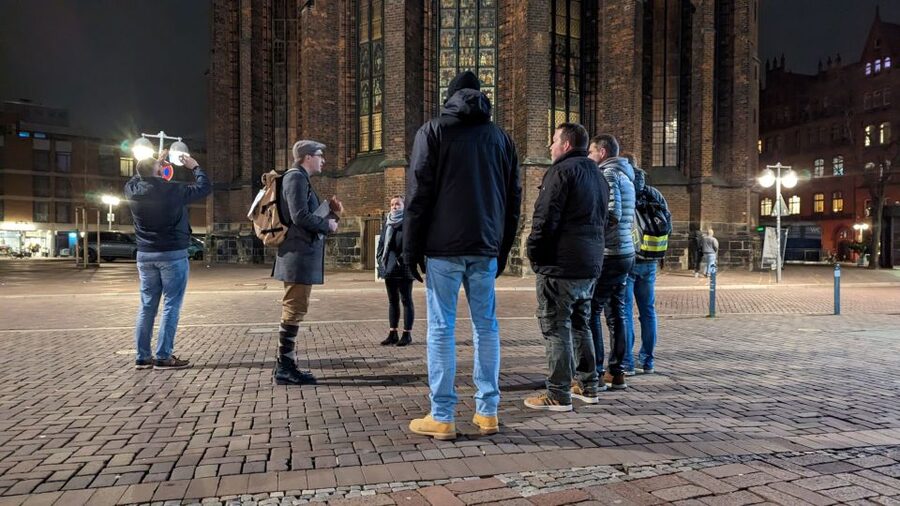
Reviewed · TOURS IN HANOVER
Fritz Haarmann – Die Mördertour
Fritz Haarmann’s story is one of the darkest chapters in Hannover’s past. This two-hour walk follows the case from the main train station into the Old Town, then connects the former murder house and the place where victims’ bones were buried with the political and social climate of 1920s Germany. I like the clear route and the way the tour links crime to its wider setting. I also like that the guide leaves room for questions, rather than racing through a grim list of facts.
The main consideration is language: the tour is offered in German only, and the subject is disturbing. You are not signing up for a light ghost walk. You are signing up for a serious account of murder, public fear, policing, and the way the Haarmann case was used in a politically tense period.
Key points at a glance
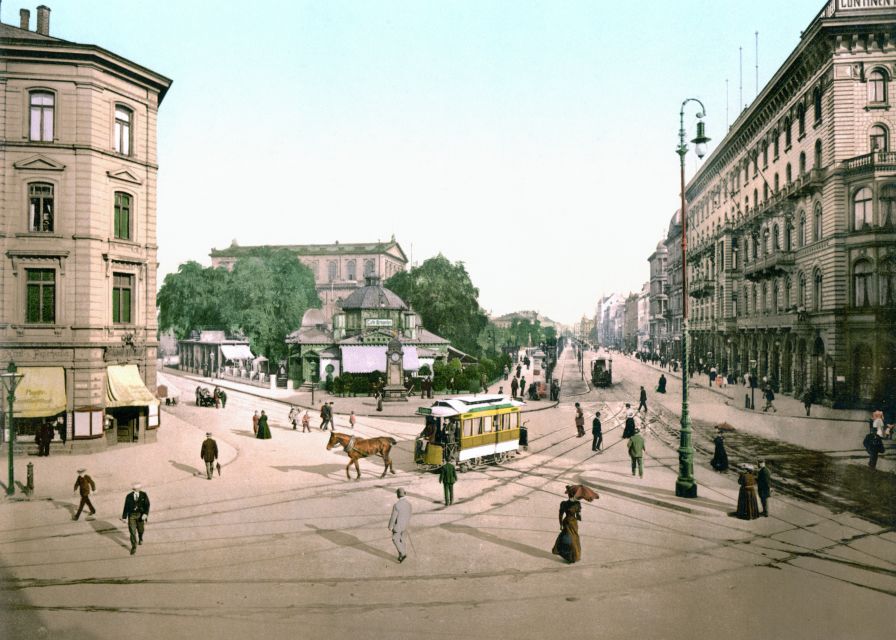
- Begins beneath Hannover’s Ernst-August Statue: Meet at the famous Unterm Schwanz meeting point, five minutes before departure.
- Walks from the train station to the Old Town: The route helps you connect Hannover’s modern center with the places tied to the 1920s case.
- Visits the former murder house site: You see where Haarmann lived and where the murders took place.
- Stops at the burial site for the victims’ bones: This is one of the tour’s most sobering locations.
- Explains more than the crimes: The story includes social conditions, politics, policing, and the case’s international attention.
- Costs $35 per person for two hours: The price includes the guided walk, while beer or sparkling wine costs an additional €3.50 per person.
Starting beneath the horse’s tail
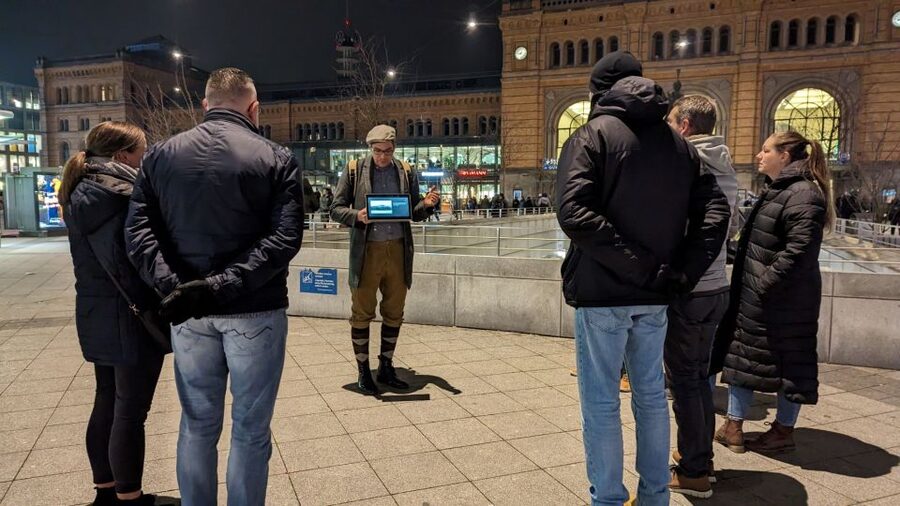
Your meeting point is the Ernst-August Statue in front of Hannover’s main train station. The local nickname is Unterm Schwanz, which means under the tail, a practical bit of Hannover shorthand that makes the location easy to identify.
Arrive five minutes early. That small margin matters at a walking tour, since the group moves out together and the first part of the route heads from the station toward Hannover’s Old Town.
The starting point is useful for more than convenience. Hannover’s main station is one of the city’s best-known landmarks, and beginning here gives the tour a clear orientation. You do not need to find an obscure side street or travel across town before the story begins.
The walk then leads toward the Altstadt. The supplied information does not give a full street-by-street route, so you should not expect a printed map of every stop in advance. What is clear is that the walk uses the city itself as the setting, rather than placing the case in a museum room or treating it as a detached lecture.
Other trips people book in Hanover:
- Hannover: Guided Old Town Walking Tour
★ 4.5 · 338 reviews - Hannover: 24-Hour Hop-On Hop-Off Sightseeing Bus Ticket
★ 4.2 · 298 reviews - Hanover: Crime Walking Tour
★ 4.5 · 243 reviews
A crime story rooted in 1920s Hannover
Fritz Haarmann became known as one of Germany’s most infamous serial killers. The case reached its peak in 1924, when authorities and the public learned that at least 24 citizens of Hannover had been killed.
The name often attached to Haarmann was The Butcher of Hannover. That nickname tells you something about the grim public image that formed around the case, but the tour aims to do more than repeat a sensational label. It places Haarmann’s actions within the conditions of early 20th-century Hannover and explains why the case had such a strong effect on German public life.
That wider setting is one of the tour’s best features. A murder case does not happen outside history. Questions about policing, poverty, public trust, political pressure, and the treatment of victims all shape how a case is understood.
The 1920s were a tense period in Germany, and the Haarmann case became heavily politicized. I like that the tour treats this as part of the main subject, not as a footnote. You hear how the case affected Hannover and how it helped shape discussions that reached beyond the city.
The story also gained international attention. For you, that means the tour offers a useful way to understand why a local crime became a national and international story. The focus remains on places in Hannover, but the meaning of those places reaches far beyond the Old Town.
Walking to the former murder house
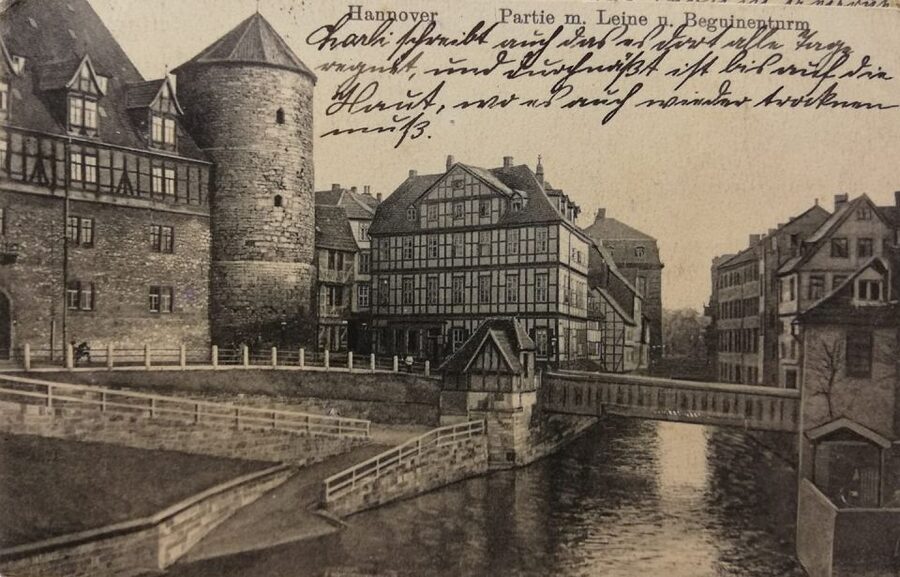
One of the most important stops is the place where the murder house used to stand. The site is significant because it gives the case a physical point in the city.
You will not be looking at a preserved crime scene or a grand historical building connected to the story. Instead, the value comes from learning what happened at that location and placing the account on the streets where the events unfolded.
That distinction is important. If you want theatrical sets, actors, or graphic displays, this is probably not the right experience. If you prefer to understand a case through real locations and an explanation of their setting, the former murder house site gives the story weight without turning the stop into a spectacle.
The guide’s job is especially important here. One German-language review praised the way the guide described the events in a vivid and understandable way, while also explaining how they connected to the conditions of the time. That is the balance you should hope for at a tour like this: enough detail to make the location meaningful, but enough context to avoid reducing the city to a crime scene.
The burial site and the tour’s most difficult stop
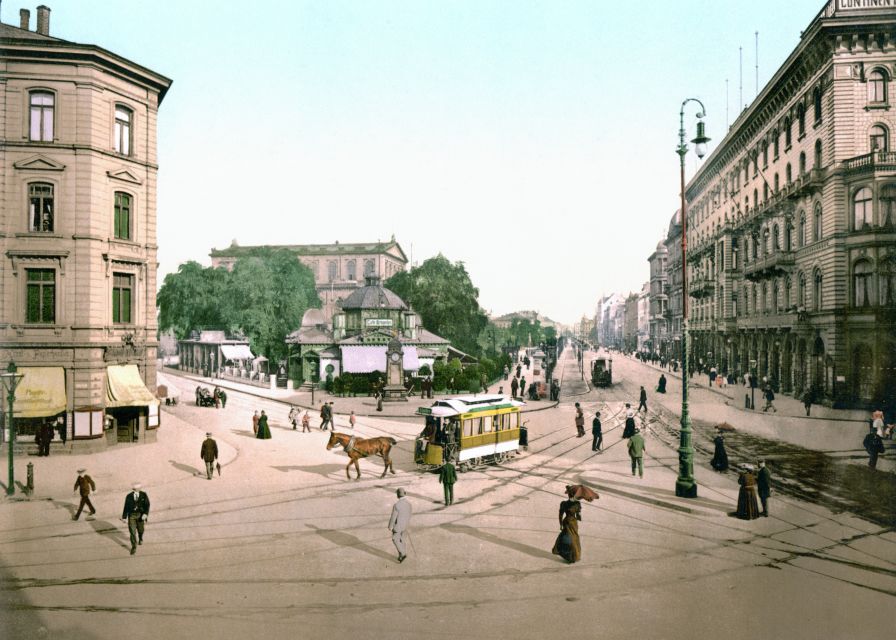
The walk also goes to the place where bones from Haarmann’s victims were buried. This is likely to be the most sobering point on the route.
The stop matters because it shifts the story away from the murderer and toward the people harmed by the crimes. It also shows how the case entered the physical record of Hannover. A location associated with the remains of victims carries a different emotional weight from a general discussion of the investigation.
Expect the guide to describe disturbing material. The available information does not provide graphic detail, and the tour’s strength appears to be its explanation of the case and its context rather than shock tactics. Still, the subject itself is severe. Think carefully before booking if you dislike true crime, murder stories, or discussion of victims’ remains.
For many people, this kind of stop can make the past feel more immediate. You are not simply memorizing dates. You are standing in places connected to an event that shaped how Hannover was viewed and how people thought about public safety at the time.
Same base, a different kind of day out:
- SEA LIFE Hannover Ticket
★ 4.0 · 96 reviews - Hanover: Royal Gardens of Herrenhausen Guided Tour
★ 4.6 · 78 reviews - Hanover: Night tour with night watchman Melchior
★ 4.4 · 72 reviews - Hannover: Guided Bike Tour for Foodies with Tastings
★ 4.8 · 64 reviews
How the guide handles the story
The guide is the key to this experience because the places alone will not explain the case. The provider is Hendrik Seiffert, but the supplied information does not identify the individual guide assigned to every departure.
The German-language presentation has received particularly strong feedback. It is described as informative, clearly delivered, interesting, and easy to follow. One account specifically notes that the guide connected the Haarmann story with the conditions of the period, which is exactly the kind of explanation that makes a dark city tour worthwhile.
Another useful detail is the handling of larger groups. On one busy departure, an additional guide joined the tour and the group was divided. That arrangement allowed time for questions and kept the presentation from becoming a single crowded mass.
You should still expect group size to vary by departure. The information does not promise a fixed maximum, so do not book this expecting a private walk unless your reservation clearly says so. The use of an additional guide when numbers rise is encouraging, but it is not the same as a guaranteed small group.
The guide style sounds conversational rather than stiff. The case is presented as both informative and gripping, with enough space for questions. That makes a difference with a two-hour walk. A tightly packed lecture can feel long, while a clear story with pauses and discussion gives you time to place each stop.
Why the Old Town setting adds value
Hannover’s Old Town is not just a backdrop for the tour. Moving through it helps you see how the story belongs to the city’s past rather than to an isolated criminal file.
The route begins at the railway station and continues toward the Altstadt, giving the experience a natural progression. You start in a modern transport center, then walk into older parts of Hannover where the case is discussed through its locations.
That change of setting helps you get your bearings. You also avoid spending the full two hours in one indoor venue. The format is active, though the experience remains a walking tour rather than a strenuous hike.
The route details are limited, so you should not assume that every stop will be a fully preserved landmark. The former murder house no longer exists as the original building, and the burial location may be meaningful mainly because of the guide’s explanation. Go for the interpretation and the connection between places, not for grand architecture.
I also appreciate that the tour makes Hannover part of the story. You are not merely hearing about Germany’s most famous serial killer in general terms. You are following a case linked to specific streets and sites in the city where it unfolded.
Price, timing, and what you receive
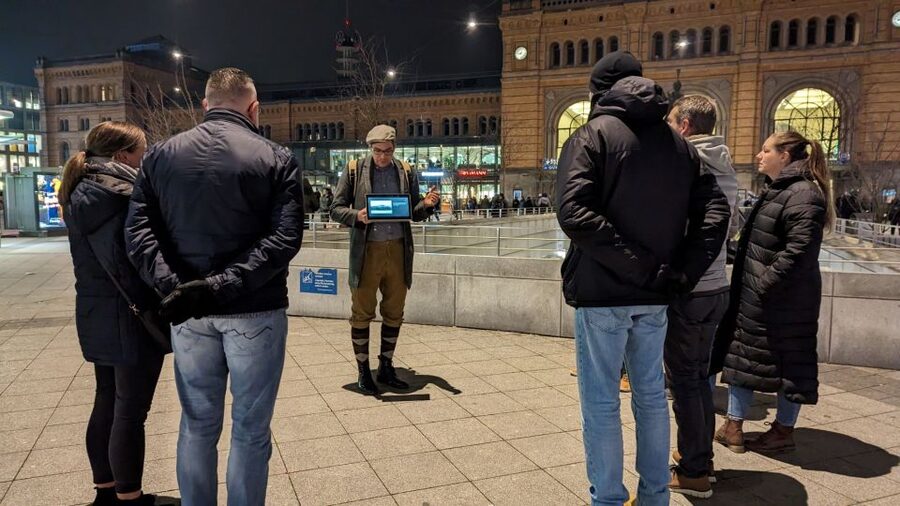
The cost is $35 per person for a two-hour guided walk. That is a fair price if you value a focused German-language history tour with a live guide and several significant locations.
You are paying for the guide’s explanation, route planning, and ability to connect the sites into one story. The fee does not include drinks, but beer or sparkling wine can be served for an additional €3.50 per person.
The value depends on your interests. If you enjoy serious local history and want a structured introduction to a case that affected Hannover and Germany, the price is reasonable. If you are mainly looking for general Old Town sightseeing, you may find the subject too narrow and grim for the cost.
The duration is long enough to give the case proper context without taking over your day. Two hours leaves room to combine the walk with other Hannover plans. Since the starting point is at the main station, it is also easy to fit the tour into an arrival day or a short city visit.
The tour includes the guided walk, but there is no indication that food, drinks, transport, or museum admission are part of the price. Plan on walking between the listed sites and paying for any optional drink separately.
Who should book this experience
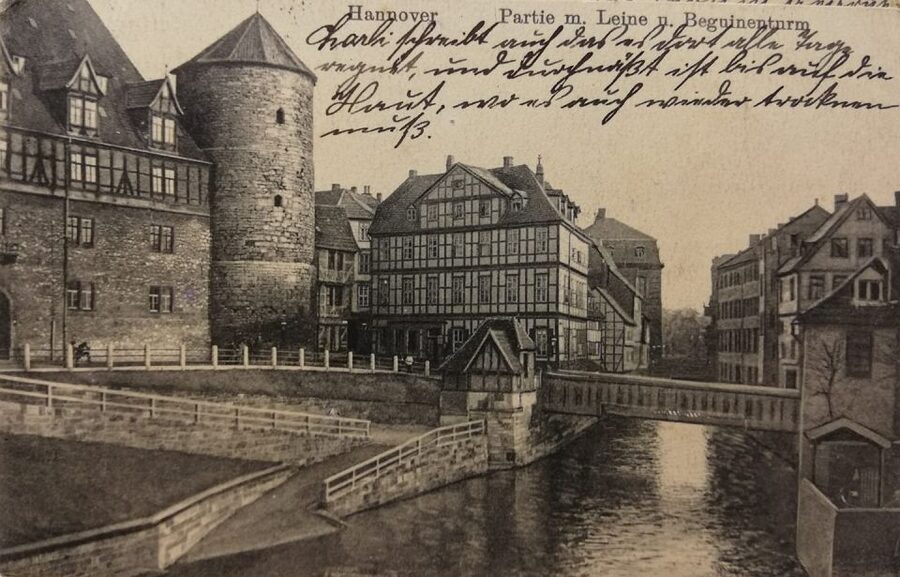
I would recommend this tour to adults and older teenagers who are comfortable with true crime and want to understand the social and political setting around a notorious case.
It is a good fit for you if you:
- Prefer local history told at the actual locations
- Want a German-language tour with a live guide
- Like serious subjects presented with background and discussion
- Have two hours available in Hannover
- Are interested in how crime cases affect politics and public life
- Appreciate time for questions during a guided walk
It may not suit you if you want a cheerful introduction to Hannover, a general sightseeing route, or a dramatic performance. The story involves multiple murders and the burial of victims’ remains, so the tone is necessarily dark.
The tour is listed as wheelchair accessible. That is useful for anyone who needs a route designed with access in mind, although the information provided does not describe the pavement, slopes, or restroom arrangements. If you need detailed route conditions, ask before booking.
The tour is conducted in German. If you do not understand German well, you may miss the case details and the political context that give the walk its value. An English version is not listed.
Booking flexibility and practical details
You can cancel up to 24 hours before the start for a full refund. The reserve-now, pay-later option lets you hold a place without paying immediately, which is helpful if your Hannover schedule is still shifting.
Check the available departure times when booking, since the start time is not fixed in the information provided. Be at the Ernst-August Statue five minutes early, and look for the meeting point beneath the horse rider’s tail.
The overall format is simple: meet at the station, walk into the Old Town, visit the former murder house site and the burial location, and follow the guide’s account of Haarmann’s life, crimes, and impact. Because the route is outdoors, sensible walking shoes and clothing suited to the weather are practical choices, though no special equipment is required.
Should you book Fritz Haarmann: Die Mördertour?
Book it if you want a serious, place-based account of a major Hannover crime and you can follow German. The strongest reasons are the specific locations, the attention to political and social context, and the guide’s clear, question-friendly presentation.
Skip it if you want light sightseeing or if the subject of serial murder will spoil your day. This is not a general Old Town tour with a dark anecdote added on. It is a focused two-hour examination of a painful case.
At $35, the tour offers good value for people who want local history explained at the places where it happened. Go with realistic expectations, respect the subject, arrive early, and allow the guide’s context to do the work. The result should be a more serious understanding of Hannover’s past, not just a collection of grim facts.
FAQ
Where does the tour meet?
The meeting point is the Ernst-August Statue outside Hannover’s main train station, at the location known as Unterm Schwanz, or under the tail.
How early should I arrive?
You should be at the Ernst-August Statue five minutes before the tour starts.
How long does the tour last?
The guided walking tour lasts two hours.
What language is the tour in?
The tour is conducted in German, and the listed language is German.
How much does the tour cost?
The listed price is $35 per person.
What does the price include?
The price includes the guided tour.
Are drinks included?
No. Beer or sparkling wine can be provided for an additional €3.50 per person.
Which locations does the tour visit?
The walk begins at Hannover’s main train station, continues into the Old Town, visits the former murder house site, and goes to the place where the bones of victims were buried.
Is the tour wheelchair accessible?
Yes, the activity is listed as wheelchair accessible.
Can I cancel the booking?
Yes. You can cancel up to 24 hours before the tour for a full refund. You can also reserve now and pay later.
Just added in Hanover
- Hanover: Night tour with night watchman Melchior★ 4.4 · 72 reviews
- Hanover Center: Outdoor Escape Game★ 4.7 · 13 reviews
- Hanover: Old Town Historical Walking Tour by Geo Epoche★ 4.4 · 11 reviews
- Hanover: Royal Gardens of Herrenhausen Guided Tour★ 4.6 · 78 reviews
- Hanover: Linden-Limmer Krimi-Rätsel-Tour★ 4.5 · 15 reviews
- Hannover: Private pub crawl with insider-guide & free shots★ 4.0 · 11 reviews
- Hanover: Crime Tour by Bike★ 4.8 · 25 reviews
- Hanover: Flashlight Guided Walking Tour at Night★ 4.7 · 52 reviews
Tours in Hanover, compared.





Browse the lists this tour appears in