
Reviewed · TOURS IN DUSSELDORF
Düsseldorf: The Wehrhahn Line Metro Guided Tour
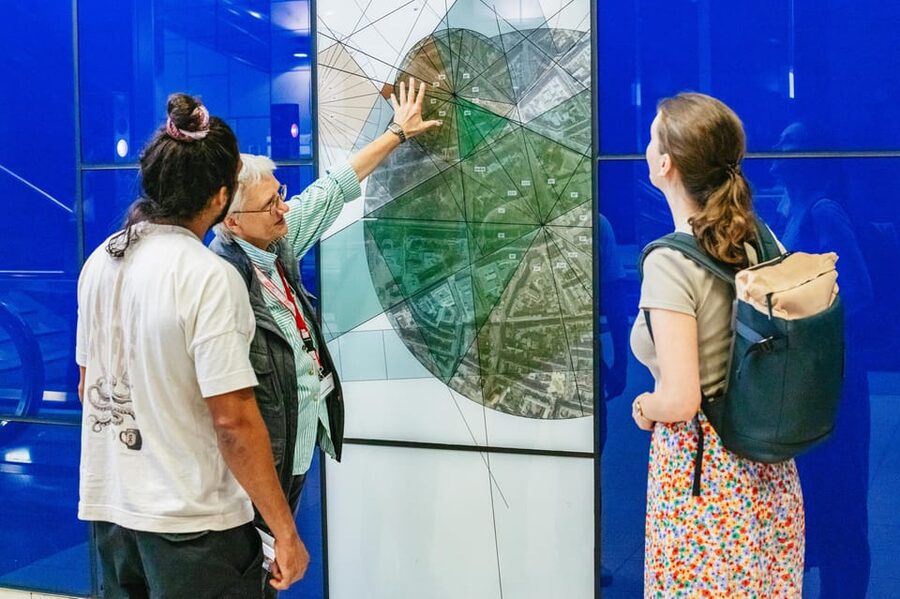
Düsseldorf’s Wehrhahn Line turns an ordinary subway ride into an underground art walk. The six stations were designed with artists and subway engineers working together, so each stop has its own mood, from painted surfaces and geometric forms to sculptural and interactive features. I like the focus on stations you might otherwise rush through, and I like that a guide explains how the art and engineering fit together.
The 90-minute route also gives you a compact way to see several central parts of Düsseldorf without committing half a day. The small groups can make the experience feel personal, and the guides are praised for being friendly, competent, and generous with detail. The main drawback is that the tour is conducted in German, and you must buy your own price-level A3 metro ticket.
Key points to know before booking
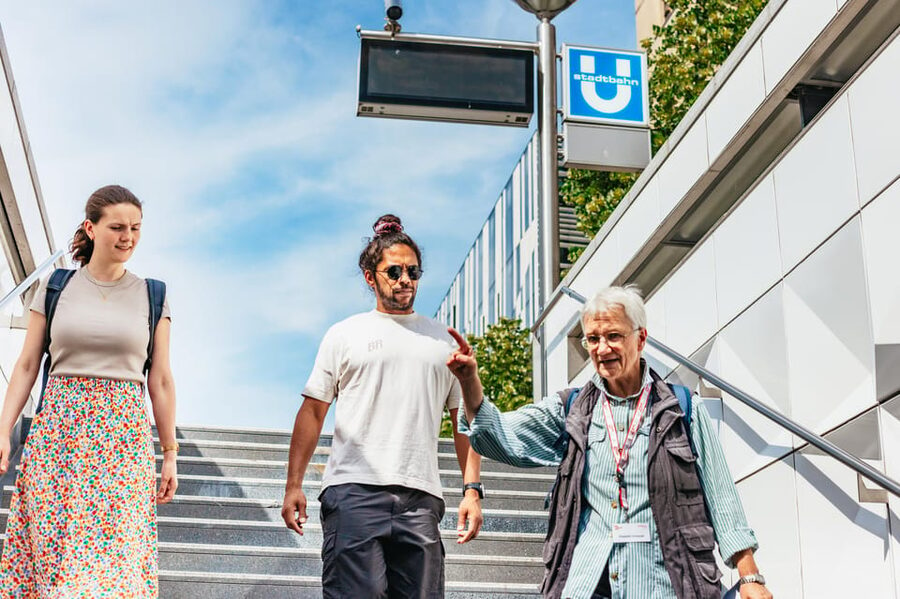
- The tour makes six U-Bahn stations the attraction: You are looking at subway design, not simply using the metro to get somewhere.
- Pempelforter Straße, Schadowstraße, and Kirchplatz are central stops: Heinrich-Heine-Allee and Benrather Straße are also part of the route.
- Art takes several forms: Expect painted, sculptural, interactive, acoustic, and geometric elements.
- The guide speaks German: This matters if you want to follow the explanations about the artists, engineers, and design concept.
- You can choose shared or private: The private option may suit you if you want a more focused pace or have your own group.
- The ticket is extra: Bring or purchase a metro ticket at price level A3 before joining.
Why Düsseldorf’s Wehrhahn Line is worth a closer look
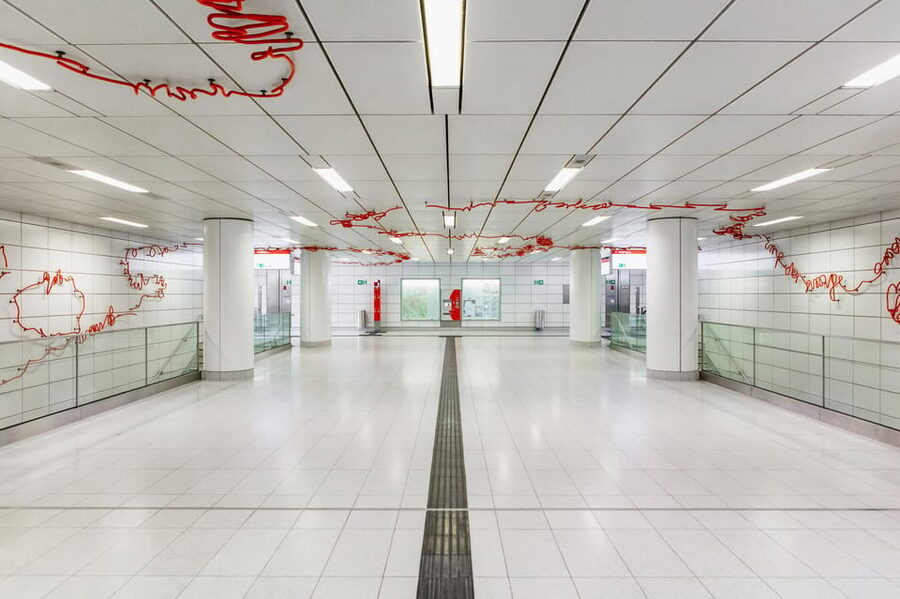
Most people treat a metro station as a place to wait. Düsseldorf’s Wehrhahn Line asks you to slow down and look up, around, and along the walls. The stations were planned as a connected design project, with different artists working alongside the engineers who had to make the railway function.
That partnership is the main reason this tour has value. You are not only seeing decorative pieces added after construction. You are learning how art and transport infrastructure were developed together. A station has practical duties: it must guide people, handle movement, and support a working rail system. Here, those needs share space with color, sound, shapes, and sculpture.
I like this kind of city tour because it does not require a grand monument. You are shown how public design affects daily life. The stations become part of Düsseldorf’s identity, even as commuters pass through them on routine journeys.
The experience lasts about an hour and a half. That is long enough to visit several stations and hear the main ideas, but short enough to fit beside a museum, shopping, or city-center walk. It is especially useful on a first visit when you want a quick introduction to Düsseldorf beyond the usual streets and landmarks.
A few more things to do in Dusseldorf worth a look
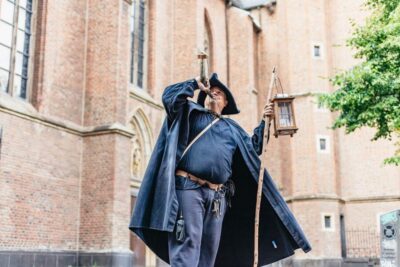
- Düsseldorf: Guided Tour with a Night Watchman
★ 4.7 · 986 reviews - Düsseldorf: Altstadt Guided Tour
★ 4.5 · 447 reviews - Düsseldorf: Scavenger Hunt Self-Guided Tour
★ 4.6 · 127 reviews
Starting at Pempelforter Straße and Oststraße
The meeting point is at the street-level station entrance on Pempelforter Straße, on Oststraße at the corner of Am Wehrhahn. Take a moment to get your bearings before the guide begins. This is a working transit area, so allow enough time to find the correct access point.
The starting location matters because the tour begins with the station itself. You do not spend the first part walking from a distant landmark. Instead, the subject is right in front of you: the entrance, the station design, and the relationship between the street above and the railway below.
The starting information also lists Oststraße and Ferienwohnung Nordwind among the possible starting-location options. Check the exact details attached to your booking, but use the street-level access at Pempelforter Straße and Oststraße as the key point to confirm.
You need a metro ticket at price level A3. It is not included in the tour price, so this is a small extra cost to plan for. The ticket is not an optional detail. Without it, you cannot take part in the station-to-station route.
Pempelforter Straße: begin with the design idea
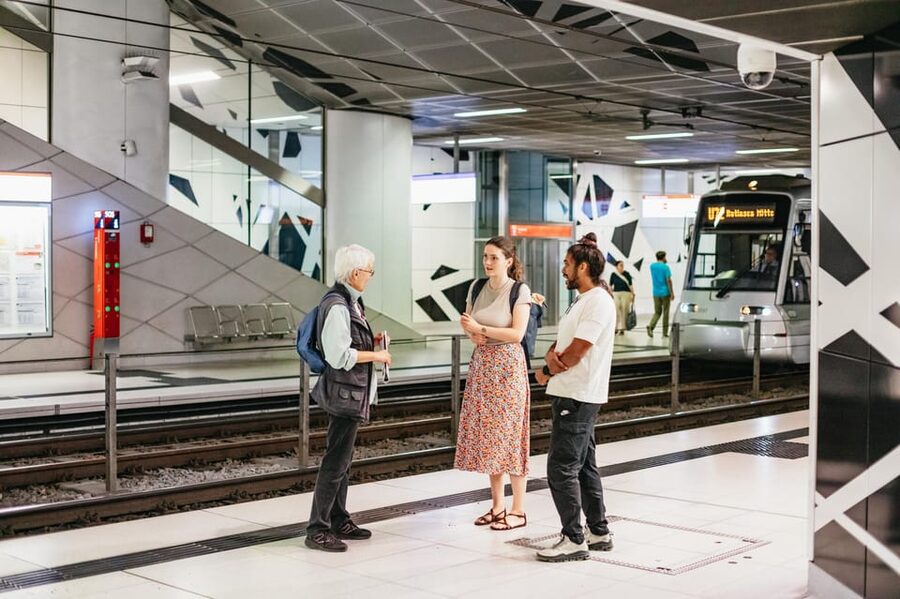
Pempelforter Straße is one of the named stations on the tour and a natural place to start thinking about the line as a whole. The guide introduces the idea behind the six stations and explains how the design concept was developed and carried out by artists working with subway engineers.
That explanation gives the rest of the tour a useful frame. Instead of seeing unrelated decorations, you can compare how each station handles the same basic challenge: how do you make a functional underground stop distinctive?
The station may also help you notice the difference between art made for a gallery and art made for public transport. A subway station has crowds, trains, signs, entrances, and changing light. The design must survive daily use while still rewarding careful attention.
Listen for the practical side of the story. The appeal is not only the final visual effect, but also the process of fitting creative work into a complex public project. If you enjoy architecture, urban planning, or public art, this first stop sets up the questions that make the later stations more interesting.
Schadowstraße: design in a busy city setting
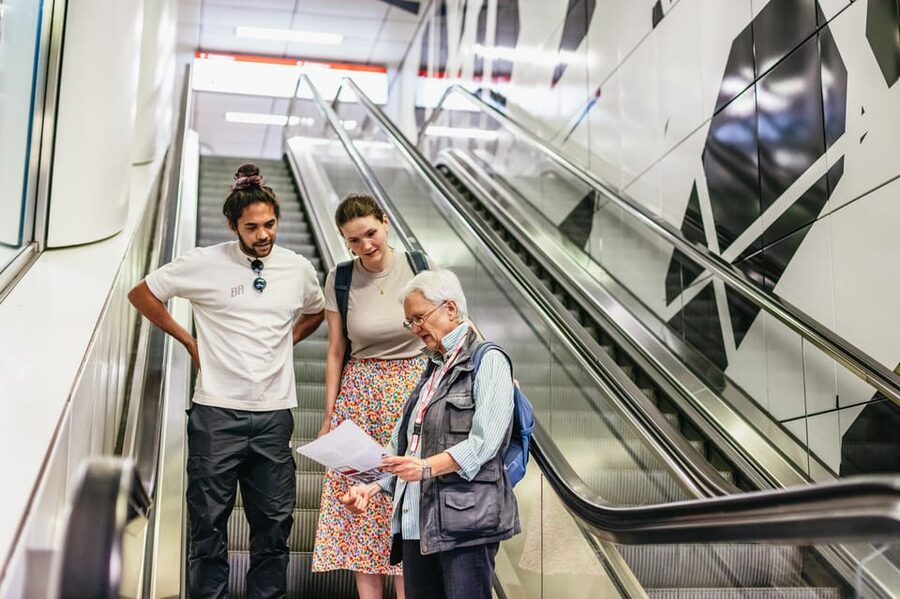
Schadowstraße is another major stop on the route. The tour uses it to show how the Wehrhahn Line’s art works in a more active urban setting. You are not viewing a display in an empty room. You are seeing design placed within a station that serves everyday movement.
This is where the difference between a guided visit and a solo metro ride becomes clear. On your own, you might notice that the station feels unusual without knowing why. With the guide, you can connect its appearance to the wider plan for the line and to the work of the artists involved.
The station is also a reminder that public art does not need to be isolated from ordinary life. People use the metro to get to work, shop, and move across Düsseldorf. The art shares that space with them. That gives the experience a more grounded feel than a standard art museum visit.
Same base, a different kind of day out:
- Düsseldorf: City Sightseeing Cruise on the Rhine
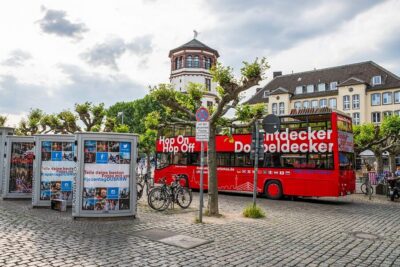
★ 4.1 · 2,954 reviews - Düsseldorf: 24-Hour Hop-On Hop-Off Ticket
★ 4.2 · 1,685 reviews - Düsseldorf: Brewery Tour with Alt Beer Tastings
★ 4.7 · 1,523 reviews - Düsseldorf: Altbier-Safari Beer Walking Tour
★ 4.4 · 1,150 reviews
Heinrich-Heine-Allee: compare function with expression

Heinrich-Heine-Allee is one of the best-known stops included in the route. By this point, you have already heard the basic design concept, so you can start comparing the stations rather than simply collecting names.
Look for differences in the way each place uses space and material. The line includes painted, sculptural, interactive, acoustic, and geometric features. Not every station uses the same approach, and that variety is part of the point. The tour encourages you to see how a station’s character can be shaped through more than color alone.
A guide is particularly useful here because some features may be easier to understand through explanation than through photographs. Interactive and acoustic elements can have a different effect when you encounter them in person. The tour gives you time to consider what each feature contributes to the station.
If you have limited time in Düsseldorf, Heinrich-Heine-Allee is one of the stops that helps justify the tour. It combines a well-known station with the larger story of the Wehrhahn Line’s creative planning.
Benrather Straße: notice the differences between stations
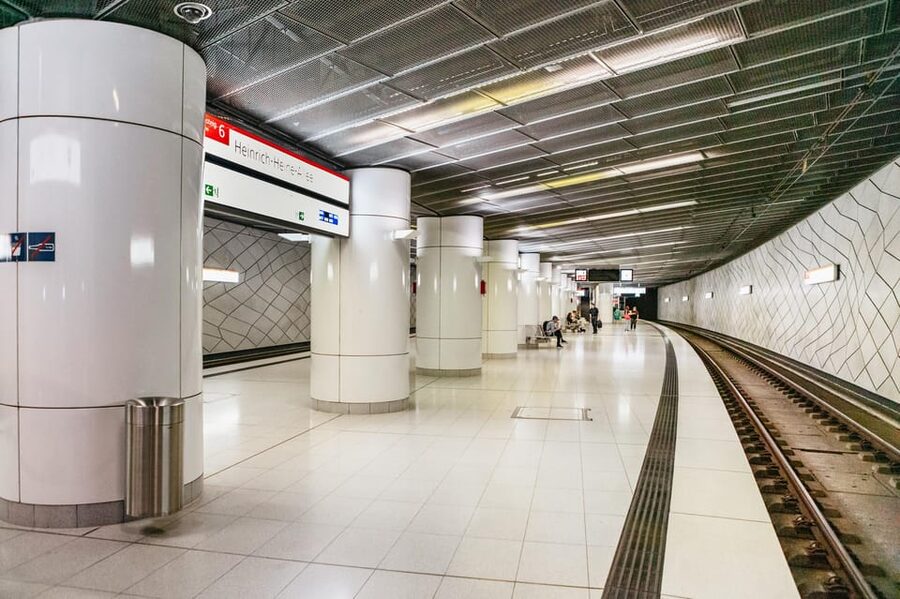
Benrather Straße continues the comparison. The value of visiting several stops is that no single station has to carry the whole experience. You can see how different artists and different design choices create separate identities along one metro line.
I would pay attention to repeated ideas as well as contrasts. Do the stations feel related because they belong to one project? Do they differ because each artist took a separate path? Those are the questions that turn a sequence of station visits into a proper architectural tour.
The route is not presented as a standard sightseeing walk through Düsseldorf’s historic center. Its subject is more specific: the meeting point between rail engineering, public space, and art. That makes it a good choice if you have already seen the obvious sights and want something less conventional.
The German-language format is the main limit. If you do not understand German, you may still appreciate the forms and colors, but the explanations about the concept and execution will be harder to follow. Choose the tour mainly for the visual experience if language is a concern, or consider the private option only if a suitable language arrangement is confirmed directly.
Kirchplatz: finish with a broader view of public art
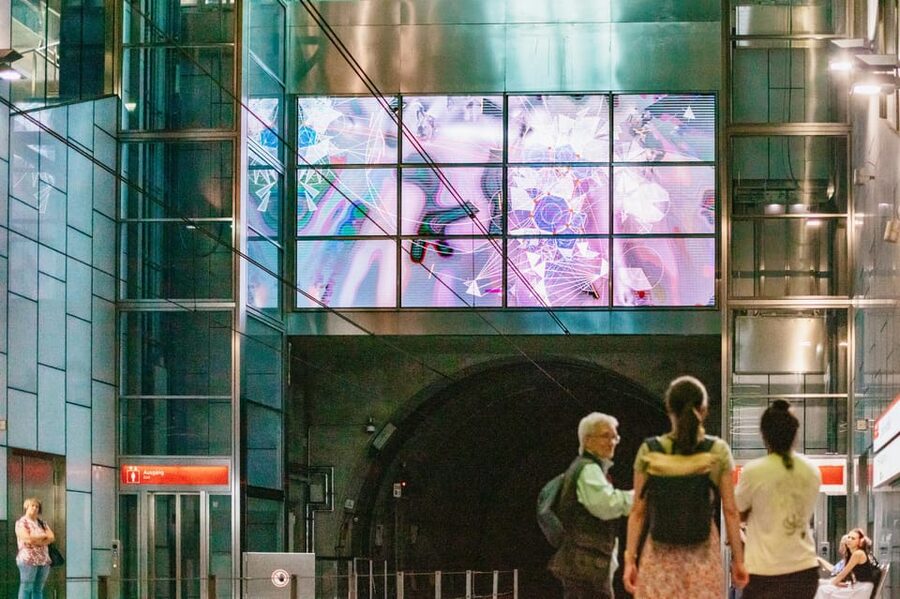
Kirchplatz is listed as the final stop and one of the tour’s possible drop-off points. It gives the experience a clear ending after the stations named along the route.
By the final stop, you have seen how the line moves from one designed environment to another. The closing impression is less about a single masterpiece and more about the decision to treat an entire transport line as a series of individual spaces.
That is what makes the Wehrhahn Line unusual. The art is not placed in one building that you visit once. It is integrated into the infrastructure of the city. You can return to the stations later, use them for transport, and notice details you missed on the first pass.
The tour information also lists Oststraße as a possible end point, while the stated meeting arrangement says the activity ends back at the meeting point. Confirm the exact end location when you book, especially if you have a restaurant reservation or another timed activity afterward.
What the guide adds to the experience
The guide is the difference between a themed metro ride and a guided architectural visit. You are given the story behind the six-station concept, the role of the artists, and the practical involvement of the subway engineers.
The strongest qualities to look for are clarity and detail. The guide needs to explain not only what you are seeing, but why the station was designed that way. The experience has earned praise for friendly, competent guiding, with plenty of information and interesting details.
The group size can affect the mood. A shared group keeps the price lower and can be a pleasant way to join a focused city walk. The feedback connected with this activity includes a group of only three people, which shows that the experience can sometimes be quite intimate, though you should not assume every departure will be that small.
A private tour gives you more control over the experience. It may be useful if you are traveling with family or friends and want the guide’s attention centered on your group. It will cost more than the basic shared option if priced separately, so compare the final booking price before deciding.
Is $20 a fair price?

At $20 per person, the tour is reasonably priced for a 90-minute guided experience, especially if you have an interest in public art or architecture. You are paying for interpretation, not just access to stations you could enter with a metro ticket.
The extra metro fare slightly changes the calculation. You must buy a price-level A3 ticket, so the true cost is the tour price plus local transport. Even so, the activity remains a modest-cost way to spend part of a morning or afternoon.
Value depends on how you travel. If you only want to ride the metro from one neighborhood to another, this is not necessary. If you want to understand why the stations look the way they do, the guide adds something you would be unlikely to get from a casual ride.
I would compare it with the price of a museum ticket and a standard city walk. The Wehrhahn Line tour is shorter and narrower in subject, but it offers a very different setting. You are seeing public art where it functions as part of the city rather than as an isolated exhibit.
Who should book this metro art tour?
I would recommend it most strongly to:
- People interested in architecture, urban design, or public art
- Repeat visitors who have already seen Düsseldorf’s main sights
- First-time visitors who want a short, unusual introduction to the city
- Anyone who enjoys learning how creative projects are built
- Small groups looking for a focused private activity
- German speakers who want detailed explanations from a live guide
It is less suitable if you want a broad history tour, a long walking route above ground, or a multilingual experience. The listed guide language is German, and the focus stays on the Wehrhahn Line rather than on Düsseldorf’s full story.
Families may appreciate the changing station designs, especially the interactive and sculptural elements, but the experience is still a guided explanation rather than a children’s activity. Keep that in mind if you are traveling with young children who need constant movement.
Practical advice for a smooth visit
Buy or arrange your price-level A3 metro ticket before the tour starts. This avoids a rushed beginning and ensures you meet the ticket requirement.
Wear comfortable shoes. The tour involves walking through several stations, and even a short route can feel tiring if you are standing for much of the 90 minutes.
Confirm the starting time when checking availability. The tour has different possible departure times, and the meeting point is at street level near Pempelforter Straße, Oststraße, and Am Wehrhahn.
The experience offers free cancellation up to 24 hours before the start for a full refund. You can also reserve and pay later, which helps if your Düsseldorf schedule is still changing.
Allow a little time after the tour if you want to continue exploring near the listed end points. The activity is compact, but its subject can send you back to a station later for another look.
Should you book the Wehrhahn Line tour?
Book it if you want a short, specific, and unusual Düsseldorf experience that connects art with everyday transport. The price is fair, the route includes several notable stations, and the guide adds the design story that you would miss on an ordinary metro ride.
Skip it if you need English guiding, want a general city overview, or are not interested in architecture and public art. For German-speaking visitors, design fans, and repeat visitors, this is a smart way to spend 90 minutes underground while seeing a side of Düsseldorf that most sightseeing routes leave out.
FAQ
How long does the Düsseldorf Wehrhahn Line metro tour last?
The tour lasts 1.5 hours.
What language is the tour conducted in?
The live tour guide speaks German.
How much does the tour cost?
The listed price is $20 per person.
Do I need a metro ticket?
Yes. You must purchase a metro ticket at price level A3 to take part.
Which stations are included?
The route includes Pempelforter Straße, Schadowstraße, Heinrich-Heine-Allee, Benrather Straße, and Kirchplatz. The tour covers the notable stations of the Wehrhahn Line, which has six stations in the design project.
Where does the tour start?
Meet at the street-level station access on Pempelforter Straße, on Oststraße at the corner of Am Wehrhahn.
Where does the tour end?
The activity information says it ends back at the meeting point. Kirchplatz and Oststraße are also listed as possible drop-off locations, so confirm the exact end point when booking.
Can I book a private tour?
Yes. You can choose between a shared group tour and a private guided tour.
Can I cancel the tour for a refund?
Yes. You can cancel up to 24 hours in advance for a full refund. You can also reserve now and pay later.
Just added in Dusseldorf
- (H)Alt! 4 Bier! Brauhaus! Führung!★ 4.3 · 27 reviews
- Filmtour Düsseldorf: From Hollywood to Netflix★ 4.9 · 4 reviews
- Explore Düsseldorf with Passionate tour guides!★ 4.0 · 69 reviews
- DüsseldorfCard Plus★ 4.1 · 14 reviews
- Düsseldorf: Private pub crawl with insider-guide & shots★ 4.1 · 18 reviews
- Düsseldorf: The Ultimate Team event (3 rooms – 9 games)★ 3.4 · 5 reviews
- Düsseldorf: Old Town Interactive Crime Tour with actor★ 4.9 · 22 reviews
- Düsseldorf: Old Town Historical Walking Tour with GEO EPOCHE★ 4.0 · 5 reviews
Tours in Dusseldorf, compared.



Browse the lists this tour appears in