
Reviewed · HISTORICAL TOURS
Bremen: Walking Tour of Historic Schnoor District
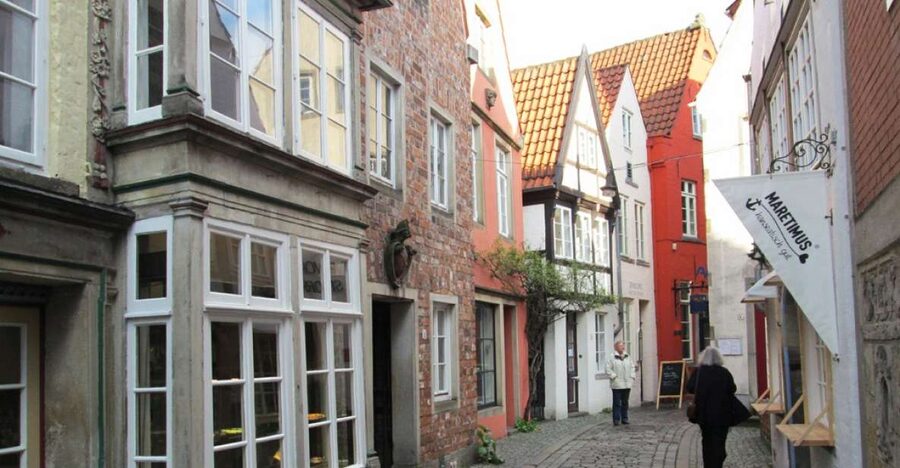
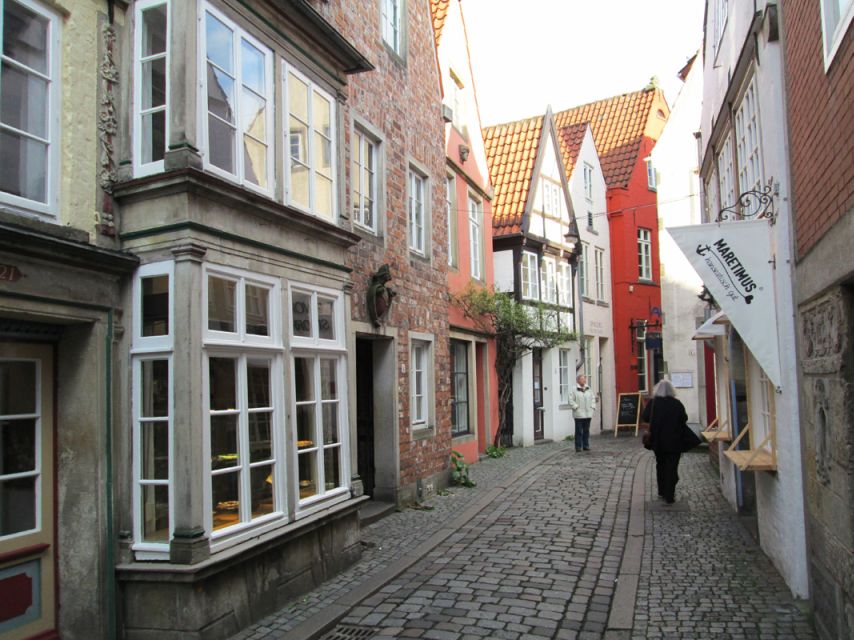
The best part of this tour is the setting: Schnoor’s narrow lanes twist between tiny houses that seem strung together like beads. You’ll see buildings from the 14th century onward, with half-timbering, redbrick Gothic design, Baroque details, Renaissance touches, and later historicist styles all packed into a small quarter.
I like the way the guide adds meaning to streets you could otherwise walk through in minutes, and I like the tour’s short one-hour length. The main consideration is that the tour is in German, buildings are viewed from outside, and the tight historic lanes are not suitable for wheelchair users.
Key points to know before you book
- A compact walk through Schnoor: One hour is enough to see the district’s main architectural sights without taking over your day.
- Centuries in a few lanes: Look for 14th-century homes, 15th-century secular buildings, 17th and 18th-century houses, and later styles.
- A strong local character: Goldsmiths, handicraft shops, and small historic facades help the quarter feel like a living neighborhood rather than an open-air museum.
- German-speaking guiding: The guide explains Schnoor and its residents in German, with storytelling and local humor forming an important part of the experience.
- Private or shared format: You can book a regular shared walk or choose a private group if you want a more personal pace.
- Easy booking value: At $14 per person, this is a modest way to add context to a self-guided stroll, with cancellation up to 24 hours before the start.
Why Schnoor is worth an hour of your Bremen visit
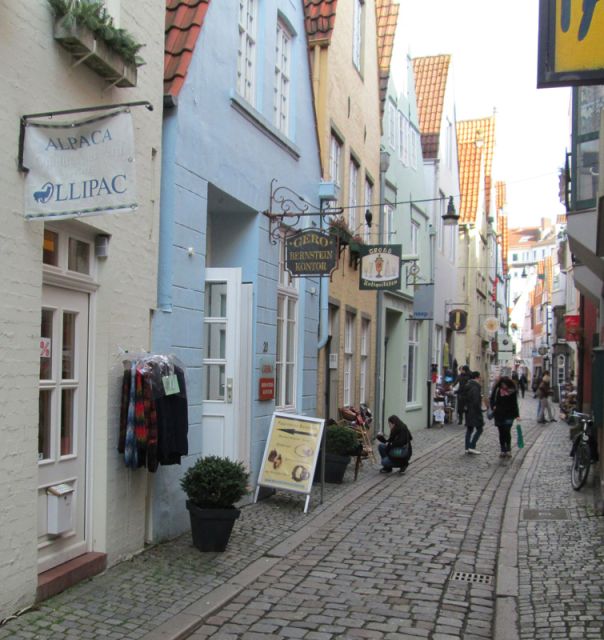
Schnoor is one of those places where the scale changes as soon as you leave the wider streets of central Bremen. The lanes become narrow, the houses sit close together, and the usual city rhythm gives way to a slower walk between old walls and small shopfronts.
The name and character of the quarter are tied to its old trades and compact layout. The houses appear linked one after another, with little gaps, bends, and changes in building style. You are not simply walking past one grand monument. You are reading a whole district through its details.
That is why a guide helps. On your own, you can admire the crooked lines and colorful facades. With the tour, you get explanations of how Schnoor developed, who lived there, and why certain buildings look the way they do. The result is less of a photo stop and more of an introduction to Bremen’s older urban life.
The walk begins in front of Die Glocke concert hall at Domsheide 6. Your guide waits with a sign reading Bremen Tour Guide. This meeting point is practical because it gives you a clear landmark before you enter the smaller streets of Schnoor.
More Historical Tours across Germany
- Leipzig: City History Canal Sightseeing Tour on a Motorboat
★ 4.7 · 6,232 reviews - Berlin: Natural History Museum Entrance Ticket
★ 4.6 · 3,382 reviews - Leipzig: 1.5-Hour Historical Walking Tour in German
★ 4.7 · 2,217 reviews
From Domsheide into the winding lanes
The first part of the experience helps you shift from modern Bremen to the old quarter. Schnoor’s streets are not laid out like a broad ceremonial center. They bend and narrow, and several buildings are close enough that you need to slow down to look properly.
I would not treat this as a fast sightseeing circuit. Give yourself time to notice doorways, upper floors, timber framing, brickwork, and the way different periods sit side by side. The guide’s commentary is especially useful here because many of the most interesting details are above eye level.
The tour is designed as a relaxing walk, but comfortable shoes still matter. The route passes through narrow historic lanes, and the district’s character comes from its old, compact form rather than from wide, smooth promenades.
One practical point is worth keeping in mind: the tour is conducted in German. If you understand German, you can expect the guide to add stories and local color rather than simply name buildings. The experience appears to benefit from a personal, humorous style. Guide Sönke, in particular, is described as a warm Bremen character who tells funny and interesting stories about Schnoor and its surroundings.
St. John’s Church and the Franciscan past
The first written reference to Schnoor dates to the 13th century. Around that time, a Franciscan monastery was built at the edge of the district. Only the monastery church remains today, but that surviving religious connection gives the quarter a useful starting point.
The present Catholic St. John’s Church dates from the 14th century and was built in redbrick Gothic style. Its material and form fit Bremen well, where brick architecture became a major part of the city’s visual identity.
The church is not just another old building on the route. It helps explain that Schnoor was shaped by more than small homes and workshops. Religious buildings, homes, working spaces, and narrow passages all occupied the same tight area.
You should expect to view the church from the outside rather than enter it as part of the tour. That is an important distinction. This experience focuses on the quarter’s streets and exterior architecture, so anyone hoping for an interior church visit will need to make separate plans.
Houses from the 17th and 18th centuries
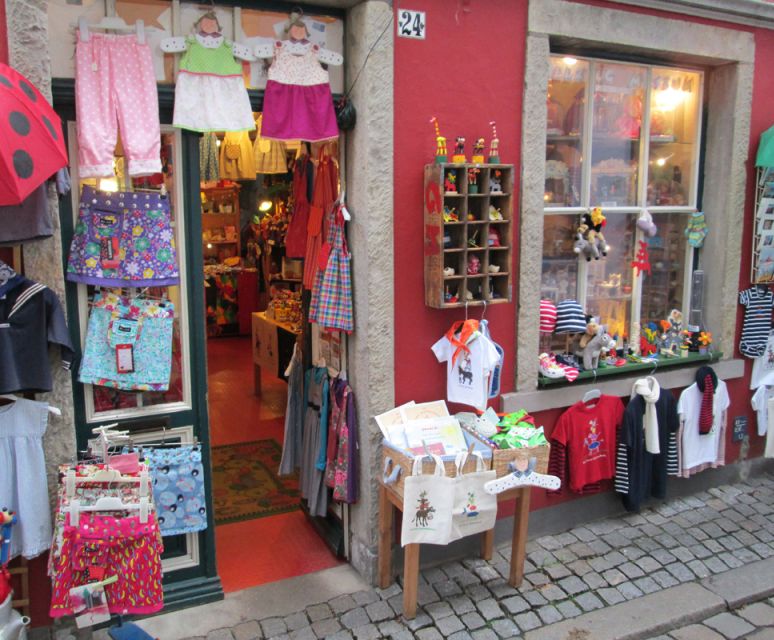
Many Schnoor houses from the 17th and 18th centuries remain preserved in their original state. Their appeal is not based on one uniform design. Instead, you see a mix of proportions, materials, facades, and decorative details.
Some homes are narrow because the old plots were narrow. Others show later changes or different architectural tastes. This gives the walk its visual variety. In a short stretch, you can move from half-timbering to brick, from restrained classicism to more decorative historicist work.
I like this kind of sightseeing because it rewards attention. A grand palace tells you where to look. Schnoor asks you to compare one small building with the next. The guide can point out which features are original, which buildings were recreated according to historical specifications, and which structures retain only their facades.
The romantic feeling of the district comes from this close view of domestic architecture. You are seeing the sort of places where people lived and worked, not only monumental buildings built to impress. That makes the quarter useful for understanding everyday urban history, even within a short tour.
More Walking Tours across Germany
- Discover Berlin Half-Day Walking Tour
★ 5.0 · 9,624 reviews - Berlin: Third Reich and Cold War 2 Hour Walking Tour
★ 4.9 · 6,830 reviews - Munich: Third Reich & WWII Walking Tour
★ 4.6 · 6,181 reviews - Berlin: Discover Berlin Walking Tour
★ 4.9 · 5,998 reviews
Brasilhaus and Packhaus Schnoor 2
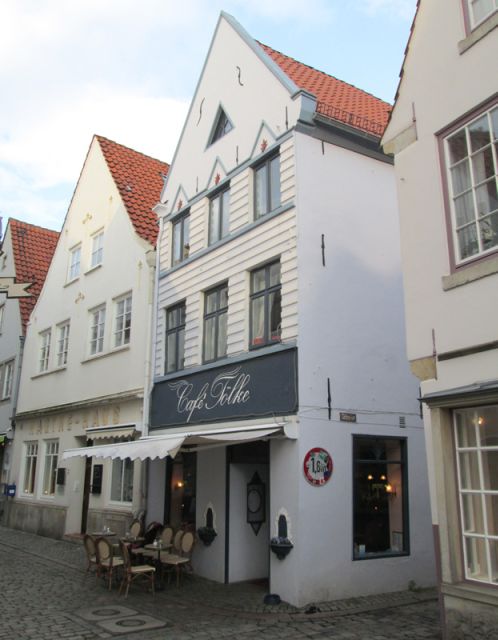
Two of the most important secular buildings on the route are Haus Schnoor 15, also called Brasilhaus, and Packhaus Schnoor 2. Both date to the 15th century and help show how much older Schnoor’s built fabric can be than the surrounding modern city.
These are not simply houses to photograph and pass. Their dates give you a reference point for the rest of the walk. Once you learn that certain buildings reach back to the 15th century, the later 17th and 18th-century homes become easier to place.
Packhaus Schnoor 2 also hints at the working side of the neighborhood. The name suggests a storage or trading function, and it belongs to the category of old secular buildings that tell you about practical urban life. The supplied information does not promise entry, so plan to study the exterior and listen to the guide’s explanation from the street.
Brasilhaus and Packhaus Schnoor 2 are valuable stops for visitors who want more than a pretty lane. They provide firm architectural markers in a district where the overall charm can otherwise blur individual dates and styles together.
Half-timbered houses, facades, and recreated details
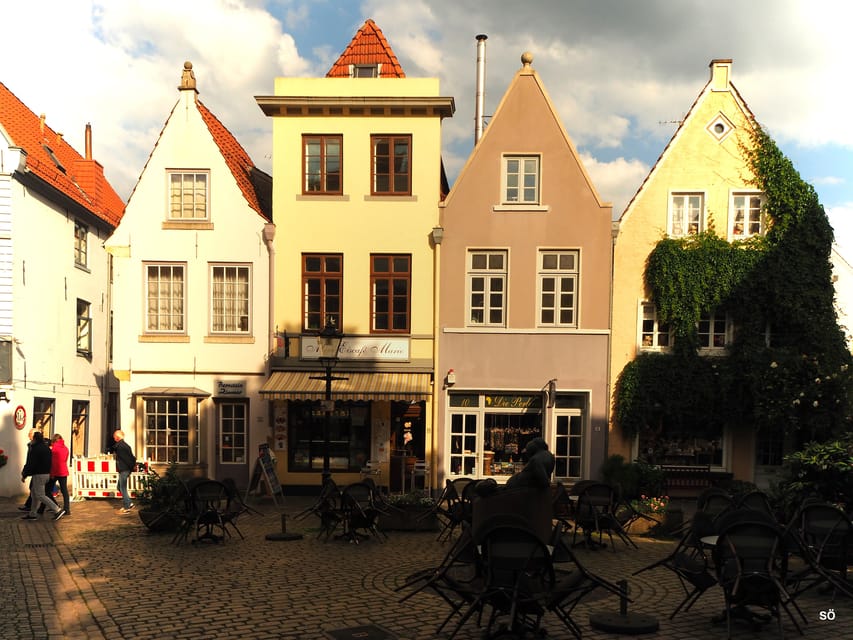
One unusual feature is a half-timbered house that now contains a tea room. It combines the appeal of historic construction with a present-day use. You are looking at an old-style building that has not been frozen entirely in the past.
The tour also points out buildings that consist only of facades and once stood elsewhere. This is the kind of detail you are unlikely to understand from a quick solo walk. A facade can look completely authentic from the lane, yet its story may involve reconstruction, relocation, or careful historical recreation.
That does not make the buildings less interesting. It gives you a more honest view of preservation. Old districts are often maintained through repair and reconstruction, not by leaving every structure untouched. A guide can help you separate original fabric from work carried out later according to historical specifications.
For me, this is one of the tour’s strongest subjects. Schnoor is attractive, but it also raises questions about what an old neighborhood really is. Seeing original houses beside recreated or relocated elements makes the district more than a postcard scene.
Architecture from Gothic to historicism
The route brings together several periods and styles. You can expect references to Gothic, Baroque, Renaissance, classicism, and historicism. These labels matter because they help you understand why the quarter does not look uniform.
The redbrick Gothic St. John’s Church has a different visual language from a Baroque facade. A Renaissance detail will not feel the same as the more formal lines of classicism. Historicism may borrow from older styles while belonging to a later period.
A one-hour tour cannot turn you into an architectural specialist, but it can give you a useful set of categories. Afterward, you will be better equipped to look at Schnoor and ask what period a detail belongs to, rather than describing every old building as simply medieval.
The guide also discusses Schnoor’s inhabitants. That human side matters. Architecture becomes easier to remember when it is connected to the people who lived, worked, traded, worshipped, and passed through these lanes.
Goldsmiths, handicrafts, and present-day Schnoor
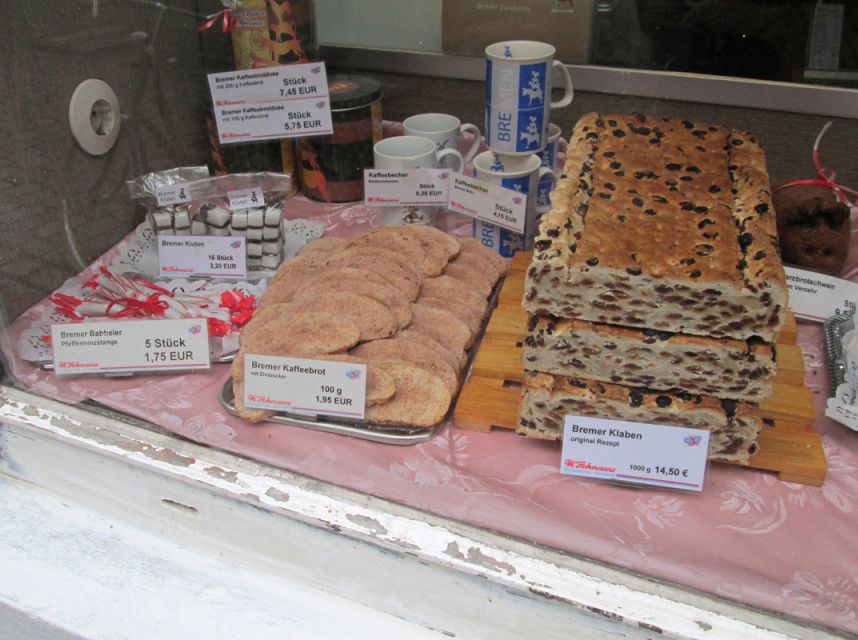
Schnoor is not preserved as an empty monument. The walk passes goldsmiths and shops selling local handicrafts, giving the district a current purpose alongside its old buildings.
These businesses add a useful layer to the visit. You can see how small shops fit into historic houses, and you get a sense of the quarter as a place where people still browse, work, and sell things. The tour does not include food, drinks, or shopping, so any purchase is your own choice.
I would leave a little time after the walk if you want to look more closely at the shops. The official tour lasts one hour, which keeps the experience focused, but it also means you may prefer to return to a lane or storefront afterward at your own pace.
The presence of craft shops also makes Schnoor a good stop for visitors who want something less formal than a museum. You are still learning about architecture, but the streets have everyday activity and small businesses rather than only display cases.
Shared walk or private group
The experience is available as a shared walking tour or a private group. The shared option makes the $14 price especially attractive. For the cost of a casual snack, you get a guide for a full hour and a clearer understanding of a district you could otherwise explore without context.
A private booking makes more sense if your group wants a more personal format. The available information does not state the exact private-group size or whether the route changes, so you should check those details when selecting the option.
The private format may also suit groups who prefer to ask more questions about particular buildings, trades, or architectural styles. Still, the quality of the experience depends on your comfort with German, since German is the stated tour language.
The short length is a benefit for most itineraries. You can fit the walk between other Bremen sights, use it as an introduction at the start of your visit, or book it before a meal or another activity. The tradeoff is that the guide cannot cover every corner of Schnoor in depth.
Who will get the most from this tour
I would recommend this walk to you if you enjoy old neighborhoods, architecture, local stories, and compact sightseeing. It works particularly well if you have already planned to stroll through Schnoor and want the buildings to make more sense.
It also suits visitors who prefer a small amount of structure. You are not committing to a long bus ride or a full-day program. You meet at a central point, walk for an hour, and finish with a stronger sense of the quarter.
Families and casual sightseers may appreciate the stories and humor, especially if the German language is not a problem. Sönke’s style, with funny local anecdotes and plenty of information, sounds well suited to people who want a lively explanation rather than a dry list of dates.
You should think twice if you need step-free access. The experience is not suitable for wheelchair users, and the historic lanes may be difficult for anyone who has trouble with uneven or confined walking routes. Also remember that the buildings are seen only from outside.
Price, timing, and practical value
At $14 per person, the tour is good value if you want context rather than just a walk through attractive streets. The price includes the guided tour, and a private option is available when selected. Food and drinks are not included.
One hour is enough to introduce the quarter, but not enough for a slow shop-by-shop visit or lengthy interior sightseeing. I would treat it as a focused orientation. Afterward, you can return to the lanes that caught your eye.
The booking terms are traveler-friendly. You can cancel up to 24 hours before the start for a full refund, and you can reserve now while paying later. Starting times vary, so check availability for your date.
Bring comfortable shoes and arrive at Die Glocke with enough time to find the meeting point. Look for the guide holding a Bremen Tour Guide sign. Since the walk stays outdoors, dress for the weather.
Should you book the Schnoor walking tour?
Book it if you want Bremen’s prettiest old quarter explained in person, especially if you understand German and enjoy architectural detail. The combination of 15th-century secular buildings, a 14th-century redbrick church, preserved 17th and 18th-century homes, recreated facades, and active craft shops gives the hour plenty to discuss.
Skip it if you need interior access, wheelchair-friendly arrangements, or an English-language guide. If those limits work for you, $14 is a sensible price for a compact, story-filled introduction to Schnoor. It leaves you with enough time to wander again on your own, now knowing what you are looking at.
FAQ
Where does the Schnoor walking tour meet?
The meeting point is in front of Die Glocke concert hall at Domsheide 6, Bremen, 28195. The guide waits with a sign saying Bremen Tour Guide.
How long does the tour last?
The walking tour lasts one hour.
What language is the tour conducted in?
The live tour guide speaks German.
Is a private tour available?
Yes. You can choose a private group option when booking.
Are the buildings visited from the inside?
No. The buildings viewed during the tour are seen from the outside.
Is the tour suitable for wheelchair users?
No. The experience is listed as not suitable for wheelchair users.
What should I bring?
Bring comfortable shoes. Food and drinks are not included in the tour price.
Just added in Germany
- Berchtesgaden: Via Ferrata Beginner Tour of Schützensteig★ 4.7 · 15 reviews
- Berlin: Energizing 2-Hour Morning Segway Tour★ 4.7 · 35 reviews
- Berlin: Thrilling E-Scooter Adventure Tour★ 4.4 · 66 reviews
- Bayreuth: German City Walking Tour (Tourist Info)★ 4.7 · 202 reviews
- Beelitz-Heilstätten: Baum&Zeit Tree Top Walk Entry Ticket★ 4.9 · 7 reviews
- Beer Bike & Party Bike: Unforgettable Berlin City Tour incl. pickup★ 5.0 · 5 reviews
- Bavaria: Beginner Canyoning Tour★ 4.5 · 10 reviews
- Bayreuth: Christmas city tour in German★ 4.9 · 12 reviews
Historical Tours, compared.
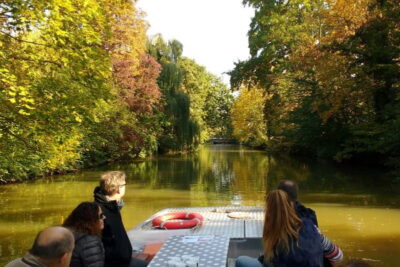
City History Canal Sightseeing Tour on a Motorboat
Read our review →

Browse the lists this tour appears in