
Reviewed · TOURS IN LEIPZIG
Music in Leipzig – Bach, Wagner and the Thomanerchor
Leipzig’s musical story comes alive on foot, from Bach’s work at St. Thomas Church to Wagner’s birthplace and the institutions that still shape the city’s sound. You’ll walk the Music Trail, hear period street noise and Bach excerpts, and connect famous names to real places rather than treating them as a list of dates.
I like the tour’s compact 90-minute length and its private format, which gives your group room to ask questions. I also like the mix of walking, music, and visual detail, especially the Bach bust at St. Nicholas Church. The main thing to consider is that the musical portion may feel lighter than expected, and church interiors can be closed at the scheduled time.
Key points for your Leipzig music walk
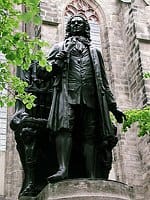
- Bach’s Leipzig workplace: Learn about Johann Sebastian Bach’s long connection with St. Thomas Church and the Thomanerchor.
- Wagner’s birthplace: Connect Richard Wagner to Leipzig through the city’s birth registry and music story.
- Period sound effects: Hear 18th-century street noise alongside examples of music Bach composed in Leipzig.
- Private group format: The tour is priced at $188 for up to 25 people, so the value improves sharply with a larger group.
- St. Nicholas Church: Look for the Bach bust linked to his first performance there as cantor in 1723.
- Several language choices: Tours are offered in English, Spanish, French, German, Italian, and Russian.
Leipzig beyond trade fairs and commerce
Leipzig often first presents itself as a city of markets, commerce, and trade shows. That is only half the picture. Its churches, concert institutions, opera, conservatory, and choir tradition give the center a musical identity that is easy to miss if you simply stroll from square to square.
This tour gives you a useful way to read the city. Instead of seeing St. Thomas Church as just another historic building, you learn why it mattered to Bach. Instead of treating Wagner as a name from a distant musical past, you connect him with Leipzig as his birthplace. Mendelssohn and Schumann also become part of the same urban story.
I like this approach because Leipzig’s musical importance is not confined to one museum. It is spread through the center, and the Music Trail ties those places together in a short walk. You get a guided introduction rather than a full concert program or a long specialist lecture.
The guide’s role matters here. One guide named Tom is described as engaging, clear, and entertaining, with an ability to explain how the people and institutions fit together. The experience is designed to keep the facts moving, without burying you under a string of dates.
Other trips people book in Leipzig:
- Leipzig: City History Canal Sightseeing Tour on a Motorboat
★ 4.7 · 6,232 reviews - Leipzig: 1.5-Hour Public Tour with Night Watchman Bremme
★ 4.6 · 3,116 reviews - Combo Tour in Leipzig: Guided City Tour & City Sightseeing
★ 4.7 · 2,317 reviews
Meeting at the Old Town Hall
The tour begins at Markt 1, at the Old Town Hall’s museum shop. This is a practical central starting point, since the Markt is one of Leipzig’s main urban spaces and an easy place to find your guide.
Starting at the Old Town Hall also sets up the tour’s main theme. Leipzig’s civic and commercial life helped make the city a meeting point, while its churches and music institutions gave it a second identity. You begin in the public heart of the city before moving into the religious and cultural places tied to its musicians.
The meeting point is specific, but you should still allow a few minutes to locate the museum shop inside the Old Town Hall. The tour lasts only 90 minutes, so arriving late could mean missing the opening explanation and the first connections between Leipzig’s city center and its music history.
Because the group is private, you are not being folded into a large public walk. The listed price is $188 for the whole group, with up to 25 people allowed. For one or two people, that is a considerable cost. For a family, school group, music society, or gathering of friends, the per-person price becomes much more reasonable.
Following the Leipzig Music Trail
The Music Trail is the backbone of the walk. It links the city’s musical museums, cultural centers, churches, opera, and Gewandhaus tradition. You should think of it less as a single attraction and more as a guided route through Leipzig’s musical map.
The value is in the connections. Bach, Wagner, Mendelssohn, and Schumann did not all belong to the same period or musical circle, yet Leipzig gave each of them an important link to the city. The tour helps you understand that the city’s musical reputation grew through several generations and institutions.
The route also includes information about the Thomanerchor, the boys’ choir associated with St. Thomas Church. Its history reaches back 800 years, making it much older than Bach’s period in Leipzig. That long timeline gives useful perspective: Bach is one famous chapter in the church’s story, not the entire story.
You will also hear about the Gewandhaus, the opera, and the conservatory. The supplied information does not promise entry into each institution, so you should expect to learn about these places from the route rather than assume that the tour includes performances, backstage access, or museum admissions.
That distinction matters. This is a city walk with a music theme, not a concert ticket and not a full museum tour. It works best if you want a strong orientation to Leipzig’s musical places and plan to explore a concert hall, museum, or church in greater depth on your own.
Bach, St. Thomas Church, and the Thomanerchor

Bach is the central figure of the tour, and St. Thomas Church is its key stop. Bach worked in Leipzig as cantor, and his connection with the church helps explain why the city is so important to music lovers.
The Thomanerchor adds another layer. The choir’s 800-year history reaches far beyond Bach, but Bach’s time with it gave the institution an especially famous place in music history. You learn how the choir, the church, and Bach’s duties were linked.
The walk is designed to give you musical examples as well as spoken explanation. You hear pieces Bach composed in Leipzig, which can make the setting feel less abstract. You are not just told that Bach wrote music here; you are given a chance to associate his work with the streets and buildings around you.
At the same time, keep your expectations measured. One recent assessment gave the experience four stars while noting that the participant had expected more music. The tour includes musical examples, but the main format remains a guided walking tour. If you want a full Bach performance, this is not a substitute for attending a church service or concert.
Same base, a different kind of day out:
- Leipzig: 1.5-Hour Historical Walking Tour in German
★ 4.7 · 2,217 reviews - Leipzig: 2-Hour Guided Walking Tour in German
★ 4.8 · 1,612 reviews - Leipzig: 13-Stop Hop-on/Hop-off Bus Ticket
★ 4.6 · 1,468 reviews - Gruseltour Leipzig: A Haunted Guided Tour
★ 4.5 · 1,385 reviews
St. Nicholas Church and the 1723 connection
St. Nicholas Church provides one of the tour’s most specific historical details. In 1723, Bach gave his first performance there as cantor, and you are directed to the bust of Bach connected with that event.
This is the sort of small detail that makes a walking tour worthwhile. A bust is easy to pass without context. With a guide, it becomes a marker of Bach’s arrival in Leipzig and a reminder that his working life involved more than one church.
St. Nicholas Church also gives you a different setting from St. Thomas Church. The tour’s information emphasizes both places, helping you see that Bach’s Leipzig was a network of churches and musical duties rather than a single address.
There is an important practical catch. Church access is not guaranteed at the scheduled time. A recent booking found the churches closed, so you should be prepared for the guide to explain the sites from outside or adjust the focus of the walk. If entering both churches is essential to your plans, check their opening arrangements separately and avoid treating admission as certain.
Wagner, Mendelssohn, and Schumann in the same city
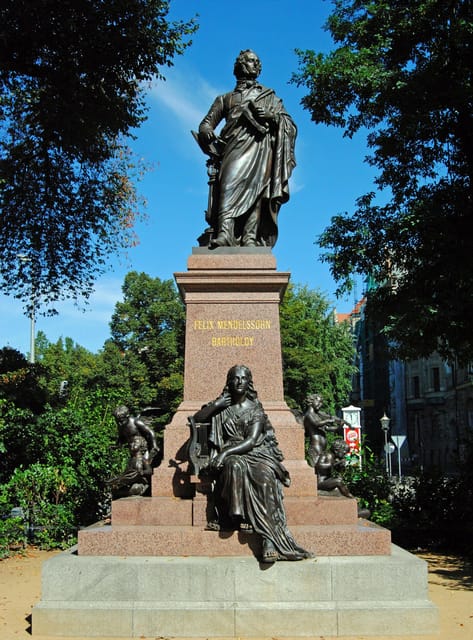
Bach is the best-known name on this walk, but the tour widens its scope. Richard Wagner was born in Leipzig, a fact recorded in the city’s registry of births. That gives Leipzig a direct connection to one of the most influential composers of the 19th century.
Mendelssohn and Schumann also lived and worked in Leipzig. Their presence shows how the city continued to attract major musicians after Bach. You get a sense of Leipzig as an active center of composition, performance, teaching, and musical debate across different eras.
I appreciate that the tour does not treat famous composers as isolated geniuses. The route includes the institutions that helped shape Leipzig’s musical life: the Gewandhaus, the conservatory, the opera, and the Thomanerchor. These places explain why musicians came to Leipzig and why the city’s influence lasted.
The available details do not promise a separate stop at every composer’s home or a dedicated museum visit for each one. The strength of the experience is the broad city story. If you want an intensive Wagner or Mendelssohn tour, you may need a longer, more specialized outing.
Hearing Leipzig as an 18th-century city
The use of 18th-century street sounds is a smart touch. It gives you more than a standard spoken account of Bach’s Leipzig. As you walk, you hear an attempt to recreate the noise of the city Bach knew, along with excerpts from music he composed there.
This kind of sound design can help you picture the setting, particularly if you do not already know Leipzig well. The streets stop being a neutral backdrop and become part of the story.
Still, the amount of music is limited by the tour’s format and length. Ninety minutes must cover several composers, institutions, churches, and centuries of history. The musical examples support the guide’s explanations, but they do not turn the walk into a listening session.
I would book this tour if you enjoy learning how music fits into a city. I would choose a concert, recital, or longer music program if hearing substantial performances is your top priority.
What the 90-minute format does well
The short length is one of the experience’s practical strengths. You can fit it into a busy Leipzig schedule without giving up most of a morning or afternoon. It also gives you a clear introduction before deciding which musical sites deserve more of your time.
A private group makes the short format more flexible. You can ask about Bach, Wagner, the choir, or the churches as questions come up. The guide can respond to your interests instead of following the pace of a large mixed group.
The tradeoff is breadth over depth. You receive a compact tour of Leipzig’s music story, not a detailed examination of every composer or institution. The guide must move on, and you may leave with several places you want to investigate later.
The available language choices are English, Spanish, French, German, Italian, and Russian. That makes the tour practical for a wide range of groups, though you should select the language when checking availability.
Price, group size, and overall value
At $188 per group of up to 25 people, the price needs to be judged by group size. For 25 people, it works out to about $7.52 per person. For 10 people, it is $18.80 each. For two people, it is $94 each, which is a much tougher value unless private guiding is especially important to you.
The tour becomes a sensible choice for families, friends, student groups, and music clubs. You are paying for a private guide, not simply access to a site. That privacy can make the cost worthwhile when several people share it.
The 4.8 rating from 26 ratings suggests strong satisfaction overall, and the most consistent strengths are clear storytelling, useful facts, and an enthusiastic guide. One German-language assessment praised the balance: not too many numbers, but plenty of facts. That is exactly what you want from a 90-minute city walk.
The weaker point is also clear: do not book it expecting a large amount of live or recorded music. You receive musical examples, but the guide’s explanations remain the main event. Church closures can also affect the visual side of the itinerary.
Who should book this Leipzig music tour?
I would recommend it to you if you want a focused first look at Leipzig’s musical identity, especially if Bach and the Thomanerchor are high on your list. It also suits anyone who likes city walks that explain why buildings matter rather than simply pointing them out.
It works well for a private family group because the route is short and the subject can interest both casual visitors and serious music fans. The range of languages is useful, and the guide can answer questions within the group’s own interests.
You may want something else if your main goal is a concert, a long church visit, or a specialist study of one composer. You should also think twice if entering St. Thomas Church and St. Nicholas Church is essential, since church access may not be available at the scheduled time.
The best use of this tour is as an introduction. Afterward, you can decide if you want to return to a church, visit a music museum, attend a Gewandhaus performance, or learn more about Wagner, Mendelssohn, or Schumann.
Should you book it?
Book this Leipzig music tour if you value a private, well-paced introduction to Bach, Wagner, Mendelssohn, Schumann, and the Thomanerchor. The strongest reasons are the Music Trail, the Bach examples, the 18th-century street sounds, and the chance to ask questions in a small private setting.
Before booking, make two checks. Confirm the language and starting time, and accept that church interiors may be closed. If you are comfortable with a guided overview rather than a full concert or extended church tour, the experience offers a useful and affordable introduction for a group.
FAQ
Where does the Leipzig music tour meet?
The meeting point is at Markt 1, at the Old Town Hall, specifically at the museum shop.
How long does the tour last?
The walking tour lasts 90 minutes.
How much does the private tour cost?
The price is $188 per group, with up to 25 people included.
Is this a private group experience?
Yes. The activity is offered as a private group tour.
Which languages are available?
The tour is available in Spanish, English, French, German, Italian, and Russian.
Is the tour wheelchair accessible?
Yes. The activity is listed as wheelchair accessible.
Does the tour include music?
Yes. You hear 18th-century street sounds and examples of music Bach composed in Leipzig. The tour is primarily a guided city walk, not a full concert.
Which churches are connected with the tour?
The tour covers St. Thomas Church and St. Nicholas Church. St. Nicholas Church is connected with Bach’s first performance there as cantor in 1723.
Can I cancel the booking?
You can cancel up to 24 hours in advance for a full refund. You can also reserve now and pay later.
Just added in Leipzig
- 1.5-Hour Historical Tour of Leipzig with Costumed Guide★ 4.5 · 128 reviews
- Leipzig: Exclusive BMW & MINI Behind-the-Scenes Factory Tour★ 4.6 · 289 reviews
- Leipzig’s Mystery Morning: Breakfast & Escape Game★ 4.2 · 108 reviews
- 1.5 hour walking tour through beautiful Leipzig★ 4.6 · 292 reviews
- Leipzig: Floodplain Forest & City River Cruise★ 4.9 · 334 reviews
- Leipzig: Riverside Forest Tour on the Pleiße★ 4.6 · 347 reviews
- Leipzig: 2-hour Auwald Motorboat Tour★ 4.5 · 439 reviews
- Leipzig: 360° Panorama THE CATHEDRALE OF MONET ticket★ 4.7 · 410 reviews
Tours in Leipzig, compared.
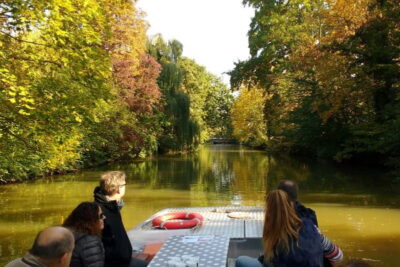
City History Canal Sightseeing Tour on a Motorboat
Read our review →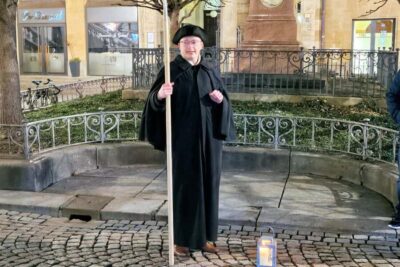
1.5-Hour Public Tour with Night Watchman Bremme
Read our review →
Combo Tour in Leipzig: Guided City Tour & City Sightseeing
Read our review →




Browse the lists this tour appears in