
Reviewed · GERMAN-LANGUAGE TOURS
Munich – Illuminati & other Secret Societies, Tour in German
Munich’s old center is full of symbols most people walk past without seeing. This two-hour tour turns the streets between Karlstor and Promenade Square into a puzzle involving the Illuminati, Freemasons, Knights Templar, the Order of the Golden Fleece, and the little-known Guglmen.
I like two things here: the route gives you a fresh way to read familiar churches and squares, and the guides leave room for questions. Albert has earned especially strong praise for his lively handling of the subject. The main caution is language: this is a German-language group tour, and the content can sometimes feel broader than specifically Munich-focused.
Key points to know before booking
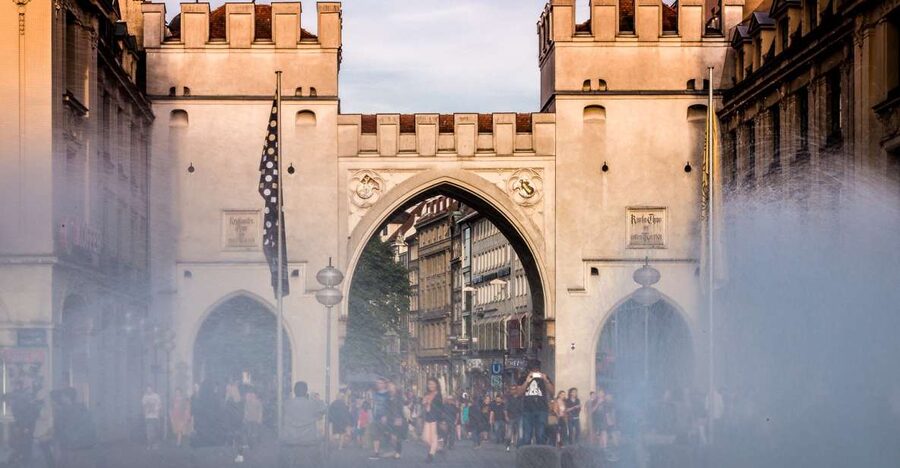
- Karlstor is the starting clue: Meet directly beneath the archway at Neuhauser Str. 47.
- The route links major landmarks: Expect the Old Academy, St. Michael’s Church, Frauenkirche, and Promenade Square.
- Secret societies are the main subject: The tour covers Illuminati, Freemasons, Knights Templar, Golden Fleece, and Guglmen.
- Look beyond the obvious: Your guide points out symbols and building details that are easy to miss on a normal city walk.
- The language matters: German is offered for the group tour. English is available only for a private tour.
- Two hours is a useful length: You get a focused themed walk without giving up most of your sightseeing day.
A different way to read Munich’s old center
This is not a standard introduction to Munich. You will not spend the entire walk on kings, beer halls, or famous buildings in the usual way. Instead, the guide asks you to look at the city as a record of ideas, alliances, symbols, and secret networks.
The central question is how much influence these groups really had. Were the Illuminati simply radical Enlighteners? Did Freemasons help shape political life? Why do certain signs connected with the Golden Fleece appear around Munich? The tour presents these questions through stories and visual clues rather than treating the city as a simple list of monuments.
I like that approach because it gives familiar places a second layer. If you have already walked through central Munich, this can make the same streets feel new. You are not only looking at a church facade or an old square. You are asking who commissioned it, which symbols appear on it, and what those symbols meant at the time.
Still, keep your expectations in check. This is a themed history walk, not a full Munich sightseeing tour. One important limitation is that parts of the discussion may be general rather than closely tied to a single building or event in Munich. If your main goal is a broad city orientation, another walking tour will serve you better.
Other tours run in German:
- Munich: Old Town & Viktualienmarkt City Walk in German
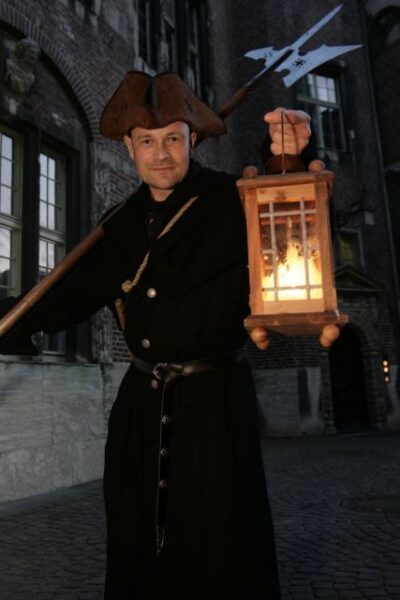
★ 4.7 · 2,304 reviews - Munich: Night Watchman Torch Tour in German
★ 4.8 · 1,280 reviews - Munich: Spooky Tour of Old Town in German
★ 4.6 · 1,112 reviews
Meeting beneath Karlstor
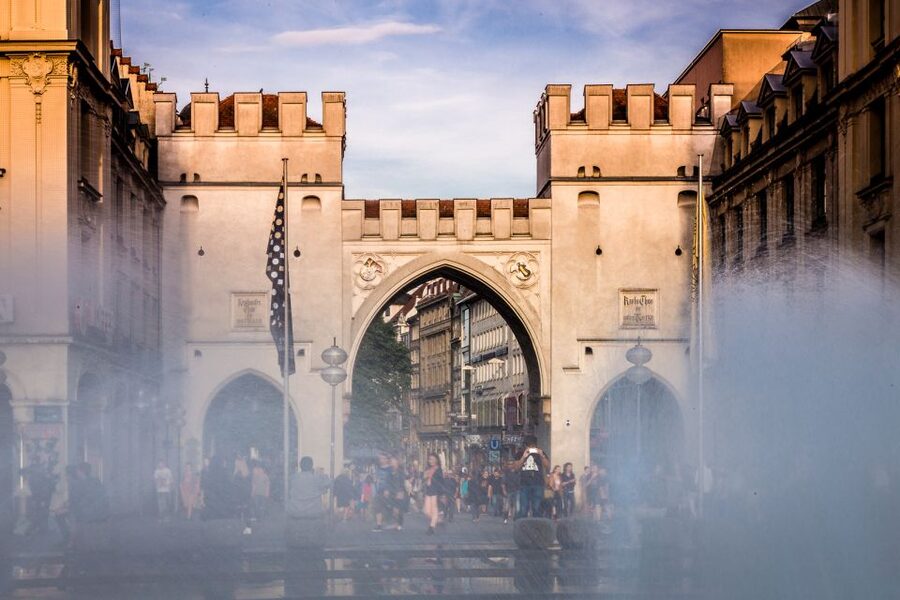
The meeting point is directly under the arch of Karlstor at Neuhauser Str. 47, 80331 Munich. Karlstor is one of the most recognizable gateways into the old center, so the location is practical for anyone already sightseeing around the pedestrian heart of town.
The tour begins with the larger story of secret societies in Bavaria. Some groups presented themselves as forces for improvement and enlightenment. Others are described through plans for influence and control. Your guide uses these competing ideas to set the mood, then leads you into a search for physical evidence.
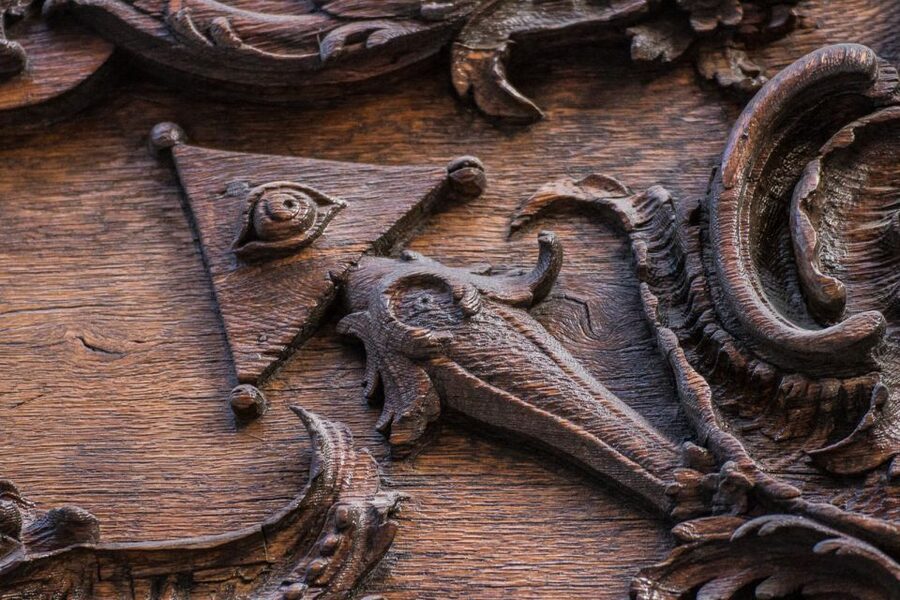
That opening matters. You are not simply handed a list of mysterious organizations. You are given a way to look at Munich. A carved emblem, a building detail, or a repeated sign can become part of the discussion.
Because the walk starts in a busy central location, arrive with the meeting point in mind rather than relying on a vague search for Karlstor. The stated location is under the archway, not just somewhere near the gate.
The Old Academy and the city’s coded details
The Old Academy is one of the first major locations on the route. Here, the focus shifts from the broad story of secret societies to the marks they may have left on the city.
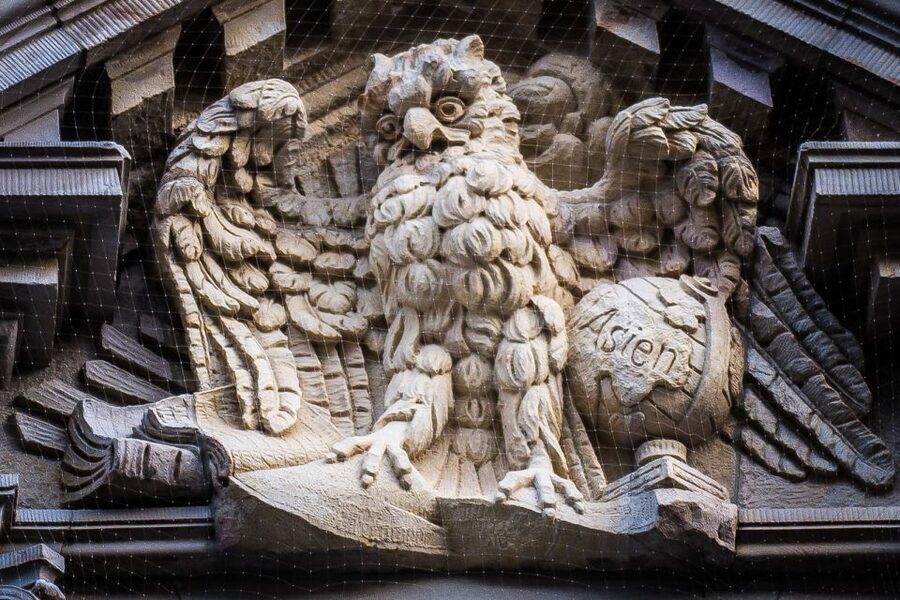
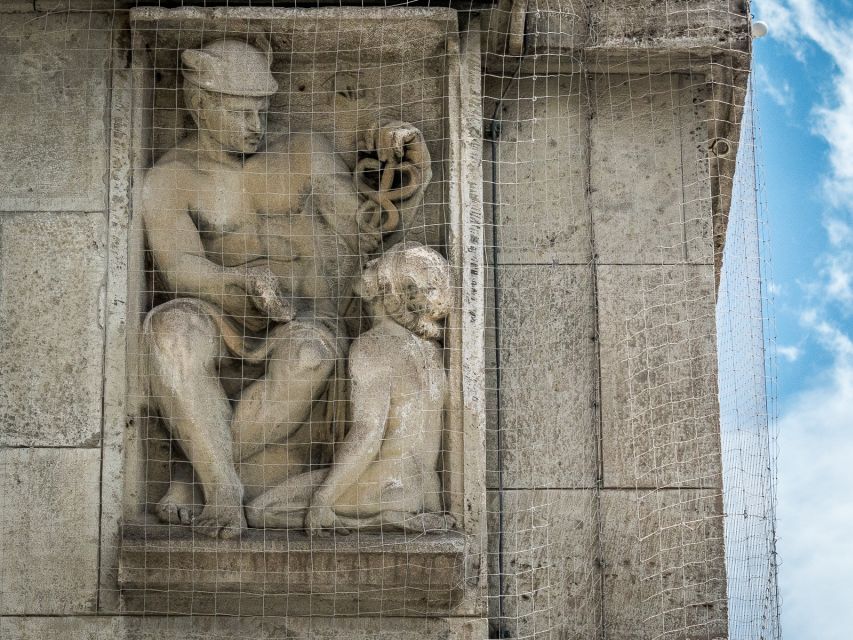
Your guide points out details that ordinary passersby might miss. That is the real value of this kind of walk. You can see Munich’s buildings every day and still fail to notice a symbol above eye level or an emblem tucked into a decorative program.
The tour also introduces the background of Freemasonry. One important theme is the connection between medieval dombau huts, the building lodges associated with cathedral construction, and the later development of Masonic traditions. The subject gives you a useful distinction between the practical world of medieval craftsmen and the later political and intellectual image of Freemasonry.
The story does not stay limited to architecture. You also hear about the role Masons supposedly played in the founding of the Kingdom of Bavaria. This adds a political layer to the walk and explains why the subject matters beyond secret signs on stone.
I would pay close attention here if you enjoy connecting buildings with political history. If you prefer hard, clearly documented facts at every stop, some of the broader claims may feel less firmly anchored to the building in front of you.
St. Michael’s Church and the Illuminati question
The route continues to St. Michael’s Church, one of the central locations for the tour’s discussion of power, belief, and political influence. The church becomes part of a larger story about the groups founded or active in Bavaria.
The Illuminati naturally receive major attention. The tour explains what a Bavarian Elector did to end the conspiracy of the Illuminati and Freemasons once and for all. That promise is one of the main reasons to book this experience, especially if you know the word Illuminati mainly from modern conspiracy stories.
The useful point is the historical setting. The Illuminati are not presented only as a shadowy force controlling the world. You hear about their connection with Enlightenment ideas, their place in Bavarian society, and the response of the ruling authorities.
Your guide also leaves room for questions. That is important with a topic where fact, rumor, later legend, and modern conspiracy culture can easily blur together. Recent tours led by Albert have been praised for both strong subject knowledge and a willingness to respond to participant comments.
Expect a story-led stop rather than a museum-style presentation. The value comes from the guide’s explanation and the way the church fits into the overall route. The limitation is that the experience does not appear to include a dedicated interior visit or an extended examination of a particular archive or exhibit.
Same base, a different kind of day out:
- From Munich: Neuschwanstein & Linderhof Castle Full-Day Trip
★ 4.5 · 12,494 reviews - Neuschwanstein & Linderhof Castle-Fairytale Day Tour from Munich
★ 4.5 · 7,275 reviews - Munich: Third Reich & WWII Walking Tour
★ 4.6 · 6,181 reviews - Dachau Concentration Camp Memorial Site Tour from Munich by Train
★ 4.5 · 5,637 reviews
Frauenkirche and the symbols you may miss
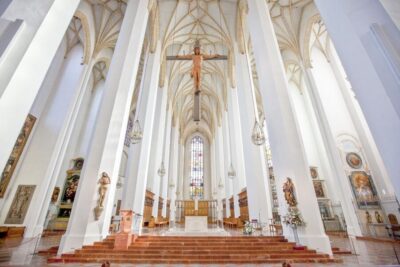
Frauenkirche brings the tour to another major Munich landmark. You may already know the cathedral for its twin towers and powerful presence in the city center. Here, the guide directs your attention toward symbols and associations connected with secret orders.
The Order of the Golden Fleece is one of the more unusual topics. Its insignia appears in several places around Munich, according to the tour’s focus, and the guide explains what to look for and why the emblem matters.
This is a good example of how the experience changes your sightseeing habits. You do not need to accept every mystery as proof of a hidden plot. You can simply learn how symbols travel through architecture, dynastic culture, religion, and public power.
The tour also asks who the Guglmen were. They are not as familiar to most people as the Illuminati or Freemasons, which makes this part useful for anyone who wants a less predictable subject than the usual conspiracy checklist.
The route through Frauenkirche should appeal to you if you enjoy visual details. You will get more from this stop if you stay alert to coats of arms, insignia, and decorative signs. If you want a long architectural explanation of the cathedral itself, this is not the right tour for that purpose.
Promenade Square and the final questions
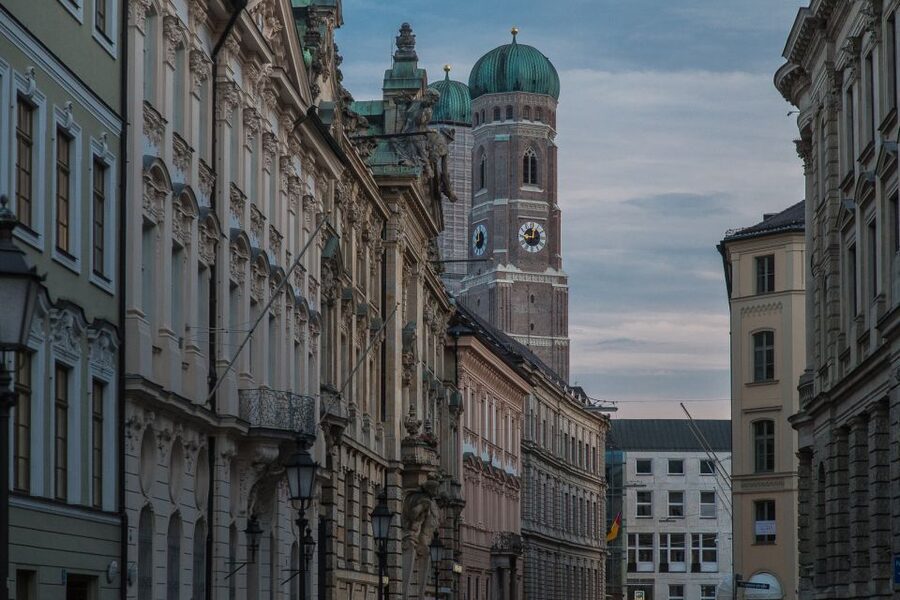
The walk ends at Promenade Square, bringing together the strands introduced at earlier stops. By this point, you have heard about several societies and orders, their symbols, and their claimed influence on Bavarian political and social life.
The closing discussion returns to the central question: are these groups historical organizations with limited influence, or do they still shape the modern world? The tour gives you material to think about, but it is best approached as an interpretation of history rather than a promise that every mystery will be solved.
I appreciate that the route ends in a place connected with Munich’s ceremonial center. The walk remains compact, but it covers several important points in the old city. You finish with a clearer sense of how public buildings can carry political and symbolic messages.
Do not expect a dramatic reveal at the end. The reward is the new habit of looking closely. Afterward, you may notice emblems and architectural details across Munich that you would have ignored before.
What the German-language format means
The regular tour is conducted in German, with a live German-speaking guide. English is available only as a private tour, so language should be your first booking decision.
If you understand German well, the format should suit you particularly well because the subject depends on explanation, wordplay, and historical connections. You can ask questions during the walk, and the guide can respond to the group rather than reading a fixed script.
If your German is limited, do not assume that recognizing place names will be enough. The tour covers complicated organizations, political events, and competing interpretations. Missing a few key explanations could make the experience feel less connected.
For English speakers, a private version may offer a better fit if available for your dates and budget. It also lets you ask for more detail about the stops that interest you most. The supplied price of $29 per person applies to the listed experience, while the private English option may be priced differently.
Price, length, and overall value
At $29 per person, the tour is reasonably priced for a two-hour guided walk in central Munich. You are paying for a specialist theme rather than a general overview, so the value depends on your interest in secret societies and symbolic history.
I would consider it good value if you enjoy history with a puzzle-solving angle, especially since the route includes several major central landmarks. The small gift is a pleasant extra, but it is not the reason to book. The guide’s interpretation and the unusual subject carry the experience.
The two-hour length is another strength. It is long enough to develop the subject and move between several locations, yet short enough to fit around museum visits, meals, or a wider Munich itinerary.
The main value concern is focus. If you want every story tied tightly to Munich, you may find some material too general. A recent booking received a middling rating for precisely this reason, despite praising the guide’s specialist knowledge. That is a fair warning, not a deal breaker.
You can cancel up to 24 hours before the start for a full refund, and the reserve-now, pay-later option makes it easier to hold a place while your plans are still changing.
Who will enjoy this walk most
I would recommend this tour to you if you enjoy:
- Political and intellectual history
- Symbols hidden in architecture
- The Illuminati and Freemasonry beyond modern conspiracy claims
- Unusual stories about Munich’s old center
- Asking questions and discussing competing interpretations
- German-language guided tours
It is also a smart choice for someone who has already seen Munich’s main sights and wants a second look at the center. The route does not require you to give up a full day, and the familiar landmarks gain a more unusual context.
I would choose another experience if you need a basic orientation to Munich, want a tour in English without arranging a private booking, or prefer a strictly evidence-based architectural tour. This walk is built around mystery, interpretation, and the way secret societies have been remembered.
Accessibility and practical comfort
The tour is listed as wheelchair accessible. Its central route keeps the experience within Munich’s main old-town area, though the exact ease of movement can depend on the conditions at individual streets and stops.
Wear comfortable shoes and dress for the weather. The experience takes place outdoors as you move between sites, and two hours is long enough for footwear and rain protection to matter.
The meeting point is easy to identify if you use the full address: directly beneath Karlstor at Neuhauser Str. 47. A small gift is included, and no other included items are specified.
Should you book Munich’s secret-societies tour?
Book it if you want to see central Munich through symbols, political intrigue, and stories about groups most people know only from rumor. Albert and other guides bring the subject to life, and the route gives you a fresh reason to examine the Old Academy, St. Michael’s Church, Frauenkirche, and Promenade Square.
Skip it if you need English in a shared group, a conventional city overview, or a tour where every point is tightly tied to one Munich building. For German speakers with an appetite for unusual history, $29 is a fair price for two focused hours and a more curious way to walk through the city.
FAQ
Where does the tour begin?
The tour begins directly under the archway of Karlstor, at Neuhauser Str. 47, 80331 Munich.
How long does the tour last?
The tour lasts two hours.
What language is the tour in?
The regular tour is conducted in German. English is available only for a private tour.
Which Munich landmarks are included?
The route covers the Old Academy, St. Michael’s Church, Frauenkirche, and Promenade Square, beginning at Karlstor.
Which secret societies are discussed?
The tour covers the Illuminati, Freemasons, Knights Templar, the Order of the Golden Fleece, and the Guglmen.
Is the tour wheelchair accessible?
Yes, the activity is listed as wheelchair accessible.
What is the cancellation policy?
You can cancel up to 24 hours in advance for a full refund. You can also reserve now and pay later.
Just added in Munich
- Pub crawl incl. Oktoberfest museum guided tour with beer tasting (private)★ 5.0 · 5 reviews
- South Tyrolean specialties and wine tasting★ 5.0 · 5 reviews
- Short & sweet: Tasting the Viktualienmarkt★ 4.8 · 37 reviews
- Size Matters Beer Tour Munich★ 4.6 · 105 reviews
- Secret Food Tours Munich★ 4.8 · 5 reviews
- Munich: Romantic Wine Experience for Two at Viktualienmarkt★ 4.2 · 14 reviews
- Munich: Resistance against Hitler – Historical Walking Tour★ 5.0 · 5 reviews
- Residence of Munich private tour with skip the line ticket★ 5.0 · 4 reviews
German-Language Tours, compared.
Old Town & Viktualienmarkt City Walk in German
Read our review →
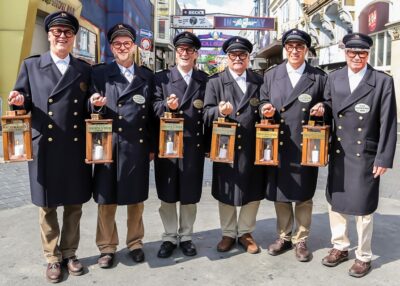
The Night Watchman Old Town Walking Tour in German
Read our review →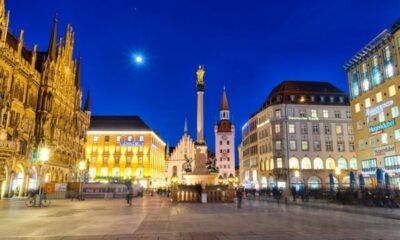
Browse the lists this tour appears in