
Reviewed · FOOD TOURS
Munich: 3-Hour Culinary Nightwatch Tour
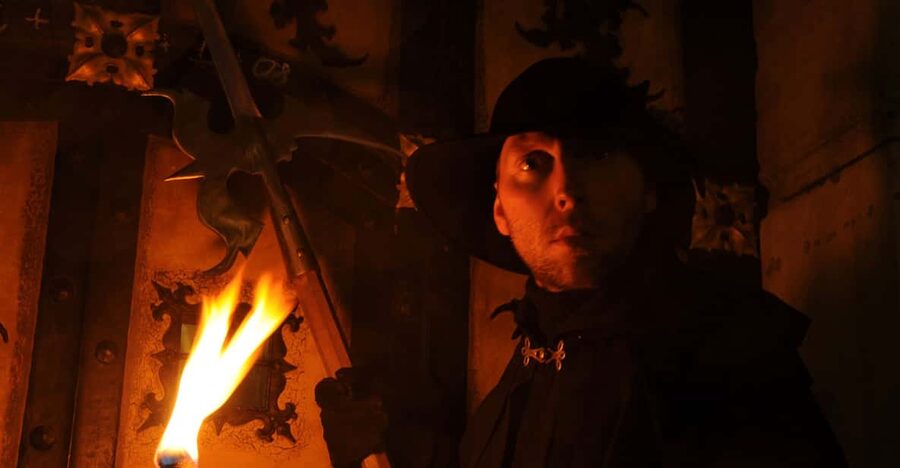
Munich’s old town takes on a different mood after dark, especially when your guide carries a lantern, wears a night watchman’s costume, and tells you about foul-smelling corpses, torture chambers, church scandals, and missing pews. I like the way this tour combines a hearty tavern meal with a walking route instead of making you choose between dinner and sightseeing.
I also like the human touch. The guide plays a real character, not just a lecturer, and Matthias has been singled out for his humor, strong historical knowledge, singing, and easy way with a group. The main caution is that the tour is German-language only, and the first meal and final dessert both take place in the same tavern, which may feel repetitive if you want several food stops.
Key points to know before booking
- Meet at the Mariensäule: Find the column in Marienplatz and look for the guide carrying a big blue bag marked Weis(s)er Stadtvogel.
- Eat before walking: The first tavern stop includes meat, bread, and a drink, so you begin the route with a proper bite.
- Expect a theatrical guide: The night watchman wears historical costume and tells stories in character.
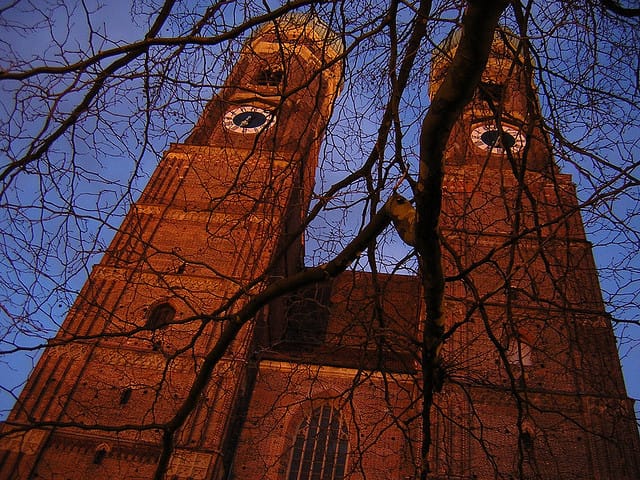
- See major Munich sights after dark: The route passes St. Peter’s Church, the Old Town Hall, Frauenkirche, Promenadeplatz, Salvatorkirche, and the Theatine Church.
- Finish with dessert and a nightcap: The group returns to the tavern for a sweet course and another drink.
- Book only if German works for you: The live guide language is German.
A Munich evening built around grim stories
This is not a standard church-and-palace walk. It presents Munich as a guarded medieval town, a place where a night watchman had to keep order, spot suspicious people, and help protect the streets from fire and crime.
That idea gives the evening a clear shape. You meet your costumed guide, stop for food and drink, then head out into the old town as if you have been assigned a late shift. The stories focus on the unpleasant details that ordinary sightseeing often skips: death rituals, bad smells, punishment, religious disputes, prison life, and the rough practical business of keeping a city safe.
I like this approach because the guide’s character gives the history a voice. Instead of hearing a list of dates, you get a tour built around the concerns of a working night watchman. The tone can be playful, but the material is often dark. You should enjoy spooky anecdotes and theatrical storytelling to get the most from it.
The tour lasts about three hours. That is long enough for a full meal, a substantial walk, and a final drink without feeling like a quick evening add-on. The pace may vary depending on the guide and group. One evening ran a little beyond three hours, with plenty of conversation, laughter, and even singing.
More Food Tours in Munich
- Munich: Viktualienmarkt Food Tour
★ 4.5 · 1,127 reviews - Munich: Beer and Food Tour with Dinner & Oktoberfest Museum
★ 4.7 · 1,086 reviews - Lunch Like a Local: Munich’s ORIGINAL Viktualienmarkt Food Tour
★ 5.0 · 416 reviews
Starting at the Mariensäule in Marienplatz
The practical starting point is the Mariensäule in Marienplatz, Munich’s central square. The information also describes the first meeting place as Marktplatz, so use the specific booking instructions rather than wandering around the square looking for a medieval figure.
The easiest identifying sign is the guide’s big blue bag with white Weis(s)er Stadtvogel lettering. That detail matters in a busy central square, especially if several tours are gathering nearby. Arrive with enough time to find the column and check the guide’s bag before the group moves off.
The live tour is in German. This is not a minor detail. The humor, old stories, wordplay, and dramatic timing are central to the experience, so you need a good working understanding of German to follow the evening properly. If you speak German, the format should feel much more natural than a standard multilingual audio tour.
The activity is listed as wheelchair accessible. Since the route uses Munich’s old town streets and includes several tavern stops, confirm any personal mobility needs when booking. The supplied information does not describe the exact street surfaces or tavern seating arrangements.
The first tavern stop: meat, bread, and a drink
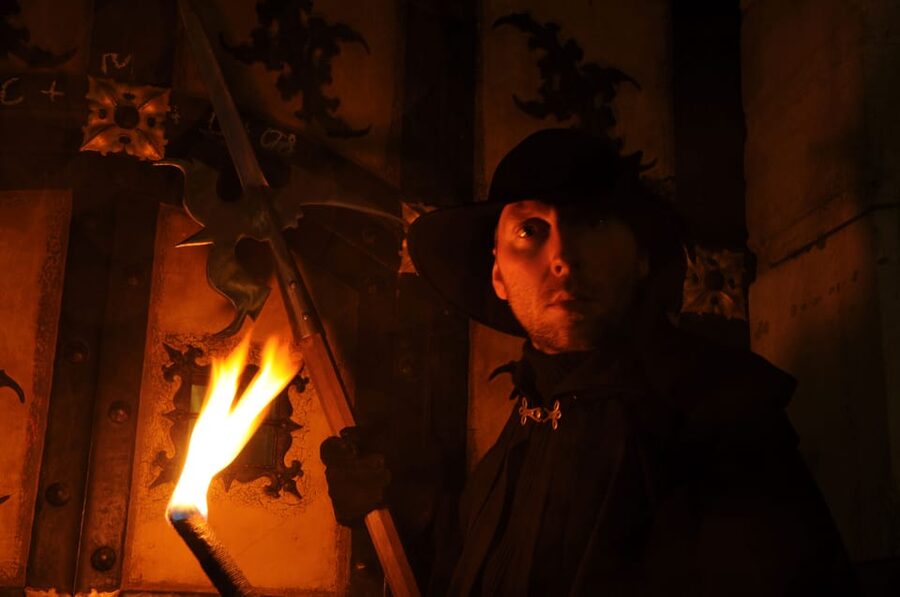
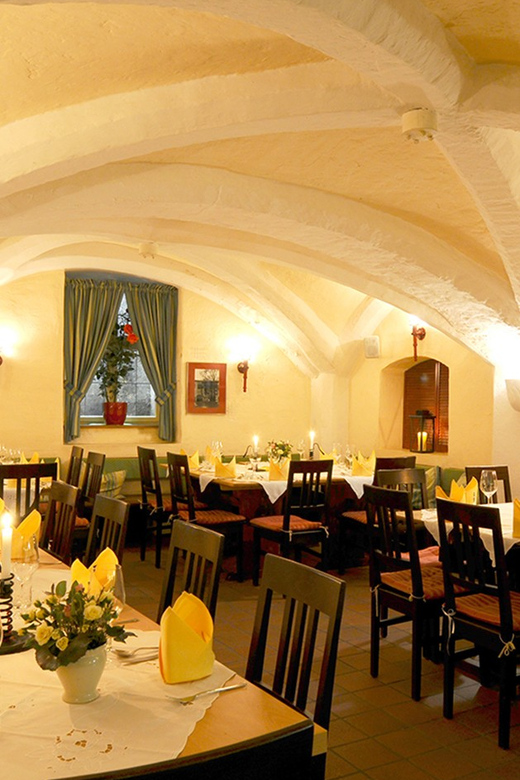
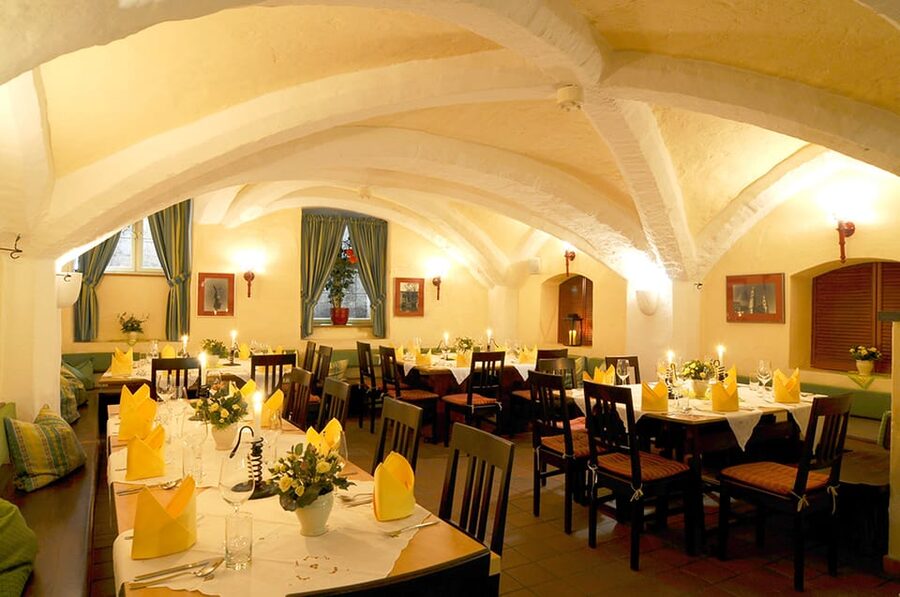
Before the walking portion begins, the night watchman leads you to a quaint Munich tavern. There you receive the nightwatch meal, described as meat and bread, along with a drink.
This is one of the tour’s better ideas. A three-hour evening walk can feel long if you begin hungry, particularly if you have just arrived in Munich after a day of sightseeing. The meal gives the evening a social opening and lets the guide establish the mood before the group heads outside.
The food is hearty rather than elaborate. You should think of it as a traditional tavern plate designed to prepare you for the walk, not as a formal restaurant dinner or a food-focused tasting menu. One rating described the meal as very good, while another found it only average. That mixed response is useful: food quality may not be the strongest reason to book.
Seating can also be tight. A large group once made the tavern arrangement feel cramped. If you prefer a quiet, spacious dinner, this may not be your ideal evening. If you like sitting close to a group and getting into the mood together, the crowded table can add to the character.
St. Peter’s Church and the cemetery stories
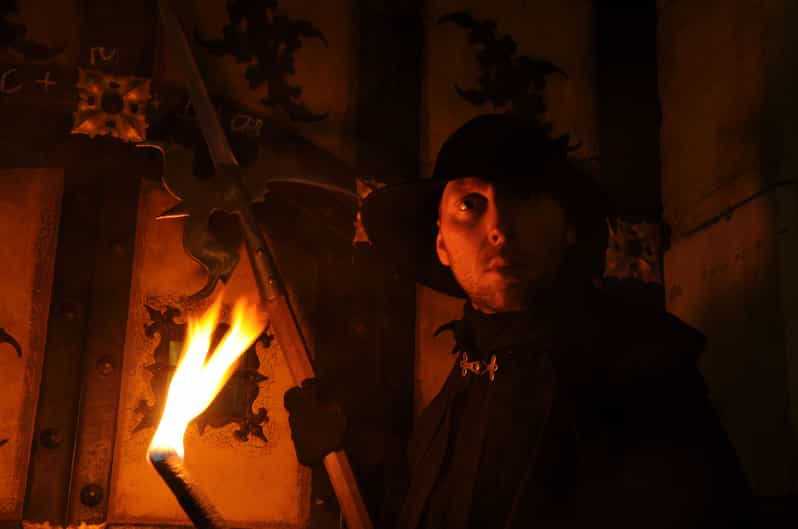
The route then reaches St. Peter’s Church, one of the most important old churches in central Munich. The stop focuses not only on the building but also on the cemetery and the customs surrounding death.
Here you hear about funerary practices, epitaphs, unpleasantly smelling corpses, and missing church pews. The details are deliberately grisly. That is the point: the night watchman’s Munich is physical and messy, not polished for a postcard.
I find this kind of stop more memorable than a quick architectural description. A cemetery tells you how earlier residents dealt with the dead, how religious spaces were used, and how ordinary people encountered illness and decay. The stories may be uncomfortable, but they give the church a human setting.
The material can also be too macabre for some people. This is not a gentle family tale about old Munich. The tour uses horror, humor, and shock, so you should expect direct references to death and decomposition.
Other eating walks in Munich:
- Munich: Viktualienmarkt Food Tasting Tour in German
★ 4.7 · 394 reviews - Munich: 3-Hour Food Tour Through Haidhausen in GERMAN
★ 4.7 · 21 reviews - Munich Food Tour: The Ultimate Bavarian Full Meal & Drinks
★ 4.7 · 18 reviews - Munich: Food Tour Beer- 3 small beers & “Brotzeit” in GERMAN
★ 4.5 · 14 reviews
The Old Town Hall and the Salzstraße
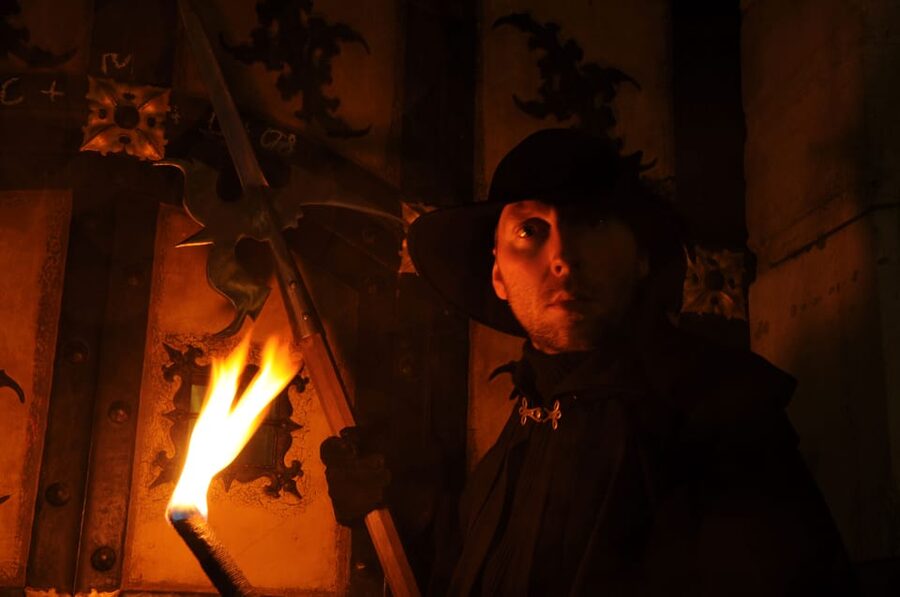
From St. Peter’s, the night watchman continues toward the Old Town Hall along the historic Salzstraße. The route connects a major civic building with the older movement of goods through the city.
You learn about an old city gate and the reconstruction of the Old Town Hall spire in the 1970s. That combination is typical of the tour: one foot in medieval Munich, the other in the modern city that has repaired, rebuilt, and altered its historic center.
The stop helps explain why Munich should not be read as a perfectly preserved medieval town. Parts of the city have changed, been damaged, or been rebuilt. A story about reconstruction can be more useful than a simple claim that everything around you is original.
The Old Town Hall also fits the night watchman’s role. Civic buildings, gates, and streets were tied to rules about who could enter, what could be sold, and how the city controlled movement after dark. You are not just looking at a landmark. You are hearing how urban life was managed.
Torture, prison, and the Old Court
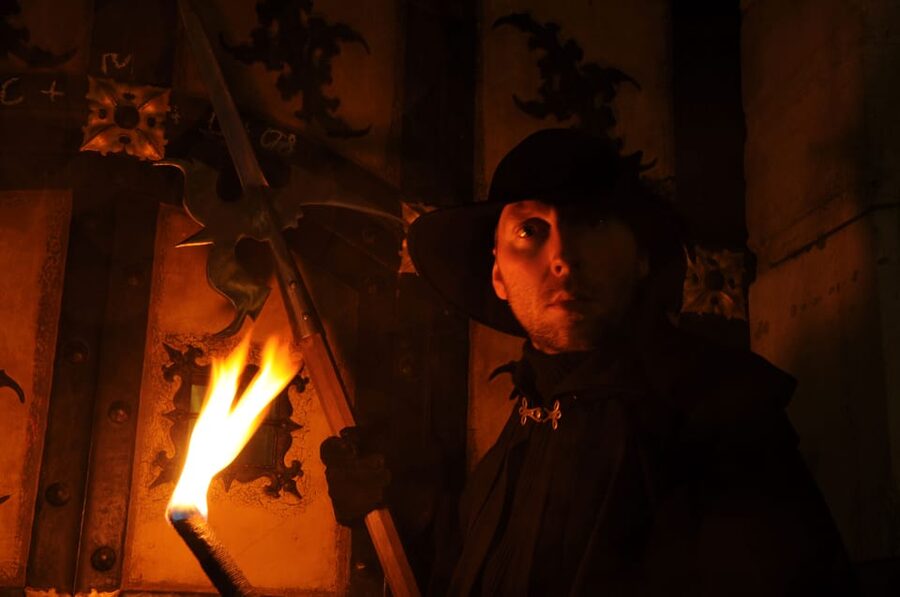
The mood gets darker as the group passes a former torture chamber and prison before reaching the Old Court. These stories place punishment beside everyday city life. The same compact old town that now holds restaurants and shops once contained cells, courts, and places where authorities enforced order in very public ways.
The Old Court is especially useful in this part of the walk because it connects royal power with the city’s older defensive structure. The route follows the line where the original 12th-century city wall once stood, then moves west after leaving the moated castle.
This is where the walking route becomes more than a string of spooky anecdotes. You begin to understand the shape of Munich, including where walls, gates, courts, and defensive spaces once controlled the center. The night watchman’s job makes sense in that setting.
Do not expect a museum-style presentation with detailed visual displays. The value comes from standing in the streets and hearing the guide point out what used to occupy the spaces around you. Pay attention to directions and buildings as you walk, because the historical boundaries are not always obvious from the modern street plan.
Gruftgasse and the medieval taste for wine
Gruftgasse supplies another grisly chapter. The name itself sets the tone, and the stories here continue the tour’s focus on death, burial, and the less pleasant corners of old Munich.
Then comes a useful correction to a common modern assumption: in medieval Munich, wine was the drink of choice, not beer. Today, visitors often connect Bavaria first with beer halls and large mugs, so this detail helps separate present-day tradition from earlier drinking habits.
The route continues through Schäfflergasse, where the guide keeps mixing local streets with social history. These narrow passages work well for the night watchman theme. You can picture a costumed guard moving through dark lanes, checking that the streets remain free of trouble.
The stories are likely to be more effective if you let the guide set the tone rather than expecting a formal lecture. Humor is an important part of the evening. One highly rated guide, Matthias, was praised for making the material entertaining and easy to follow, with enough warmth to keep the darker tales from becoming oppressive.
Frauenkirche, grand palaces, and city power
The two towers of the Frauenkirche provide one of the tour’s clearest visual moments. They are among Munich’s best-known landmarks, and seeing them during an evening walk gives the route a strong sense of place.
You also pass Promenadeplatz, Palais Portia, and Palais Holnstein. These stops shift the focus from medieval punishment and cemeteries toward aristocratic and political Munich. The tour does not stay in one period. It uses the route to show how the city changed as power moved through churches, courts, noble residences, and public squares.
That mixture suits the night watchman persona. A watchman would have known the difference between an ordinary alley, a church precinct, a civic building, and a palace district. You get a tour of Munich’s social order as much as its architecture.
The walk is also a good choice if you have already seen Marienplatz by day. Familiar buildings can feel different when the route is framed by old rules, night patrols, and tales of danger. You are not getting a new viewpoint from a high tower, but you are getting a different way to read the streets.
Religious scandal at Salvatorkirche
At Salvatorkirche, the guide tells the story of a shocking host desecration. This is one of the tour’s clearest examples of how religious belief, accusation, and punishment could collide in earlier centuries.
The subject is serious and potentially disturbing. The tour uses it as a historical story, but you should expect religious conflict and upsetting accusations to be part of the material. It is not treated as a quiet church visit.
The church stop also shows why this tour works best for people who enjoy context. You see a building, hear an event connected with it, and consider how strongly religious ideas shaped public life. The route does not require you to be an expert in Munich’s church history, but curiosity helps.
Theatine Church and the final route back
The Theatine Church brings another royal and religious story. You hear about Henriette Adelaide and her son, who arranged for the Theatine cloister to be built.
This is a calmer counterpoint to the torture chamber, prison, and cemetery stories. It shows how personal devotion, family, status, and building projects shaped the city. The evening has room for both grim tales and stories of patronage.
By the time you return to the tavern, the route has covered churches, former walls, civic buildings, palaces, streets, and religious sites. You have also moved through several kinds of story: death customs, drink, punishment, reconstruction, city defense, royal life, and religious scandal.
Dessert and a nightcap at the same tavern
The final stop returns you to the tavern for dessert and a nightcap. Kaiserschmarren has been served as the dessert, though the information does not promise that exact sweet on every date.
This ending is convenient and keeps the group together. You do not have to search for a restaurant late at night, and you can finish with a drink while the guide brings the evening to a close. After a dark walking tour, a sweet course gives the event a lighter finish.
The drawback is clear: if you want to sample several different Munich restaurants, returning to the same tavern will feel limited. One person specifically disliked going back to the original location for dessert. I would see this as a social tour with food included, not as a serious culinary tour.
The food matters, but the storytelling is the real product. The meal and nightcap make the three-hour format more comfortable and help create a shared evening. They do not turn the activity into a detailed survey of Bavarian cuisine.
Is $88 a fair price?
At $88 per person, the value depends on how you measure the evening. You receive a three-hour guided walk, a costumed German-speaking performer, a meal with meat, bread, and a drink, dessert, and a nightcap. Buying dinner and drinks separately, then adding a private-feeling history walk, could approach the same cost.
The price is less attractive if you care mostly about food quality or want several substantial dishes. The meal has received both warm and lukewarm assessments, and the format is not designed for gourmet tasting.
I think the price works best for you if you want a complete evening plan rather than a simple walking tour. You get dinner, entertainment, sightseeing, and a final drink without having to arrange each part yourself. The cost also makes more sense if you appreciate live storytelling and German theater-style presentation.
A current score of 4.3 out of 5 from 87 ratings suggests a generally strong experience, but not a perfect one. The most consistent praise centers on the guides, especially humor, historical detail, and an ability to keep the group engaged. The weaker points concern cancellation due to low attendance, crowded seating, and food that may feel ordinary.
Who should book this night watchman tour?
I would recommend it to you if you:
- Speak German well enough to follow fast storytelling and humor
- Enjoy spooky subjects, old legends, and gruesome details
- Want a guided evening in central Munich
- Prefer a social activity with food included
- Like costumed guides and character-based history
- Have already seen Munich’s main sights by day and want a different angle
I would hesitate if you:
- Need an English-language tour
- Want a focused food tour with several restaurants
- Dislike stories about corpses, torture, religious conflict, or punishment
- Prefer a small, quiet dinner
- Need a tightly timed activity with no chance of running long
The activity is wheelchair accessible, and free cancellation is available up to 24 hours before the start for a full refund. You can also reserve now and pay later, which helps if your Munich plans are still shifting. Starting times vary, so check availability for your date.
Should you book it?
Book this tour if the idea of Munich after dark, a costumed night watchman, and grim local stories sounds better than another standard sightseeing loop. The strongest part is the guide-led storytelling, with the food and drinks giving the evening a comfortable structure.
Skip it if you want English, refined dining, or a broad tasting of Munich specialties. For German speakers who enjoy dark humor and old city lore, though, this is a lively way to spend three hours, and a guide such as Matthias can make the night especially memorable.
FAQ
Where does the tour meet?
The meeting point is the Mariensäule at Marienplatz in Munich. The guide carries a big blue bag with the white words Weis(s)er Stadtvogel.
How long does the activity last?
The tour lasts three hours. One reported evening ran slightly longer.
What language is the tour in?
The live tour guide speaks German. The provided activity information does not list another guide language.
Is a meal included?
Yes. The first tavern stop includes a nightwatch meal with meat, bread, and a drink.
Is dessert included?
Yes. The group returns to the tavern for dessert and a nightcap.
Does the tour include a costumed guide?
Yes. A night watchman in historical costume leads the tour.
Which Munich sights are included?
The route includes St. Peter’s Church, the Old Town Hall, Frauenkirche, Promenadeplatz, Palais Portia, Palais Holnstein, Salvatorkirche, and the Theatine Church.
Does the tour discuss Munich’s old city wall?
Yes. The route follows the trail where the original 12th-century city wall once stood.
Is the activity wheelchair accessible?
Yes, the activity is listed as wheelchair accessible.
Can I cancel for a refund?
You can cancel up to 24 hours in advance for a full refund. The activity also allows you to reserve now and pay later.
Just added in Munich
- Pub crawl incl. Oktoberfest museum guided tour with beer tasting (private)★ 5.0 · 5 reviews
- South Tyrolean specialties and wine tasting★ 5.0 · 5 reviews
- Short & sweet: Tasting the Viktualienmarkt★ 4.8 · 37 reviews
- Size Matters Beer Tour Munich★ 4.6 · 105 reviews
- Secret Food Tours Munich★ 4.8 · 5 reviews
- Munich: Romantic Wine Experience for Two at Viktualienmarkt★ 4.2 · 14 reviews
- Munich: Resistance against Hitler – Historical Walking Tour★ 5.0 · 5 reviews
- Residence of Munich private tour with skip the line ticket★ 5.0 · 4 reviews
Food Tours, compared.
Elbphilharmonie Plaza and HafenCity Food Tour
Read our review →
Berlin Center Food Tour with 8+ Authentic Local Tastings
Read our review →

Beer and Food Tour with Dinner & Oktoberfest Museum
Read our review →

Browse the lists this tour appears in