
Reviewed · GERMANY
Der Klassiker RAVENSBURGER STADTGESCHICHTE
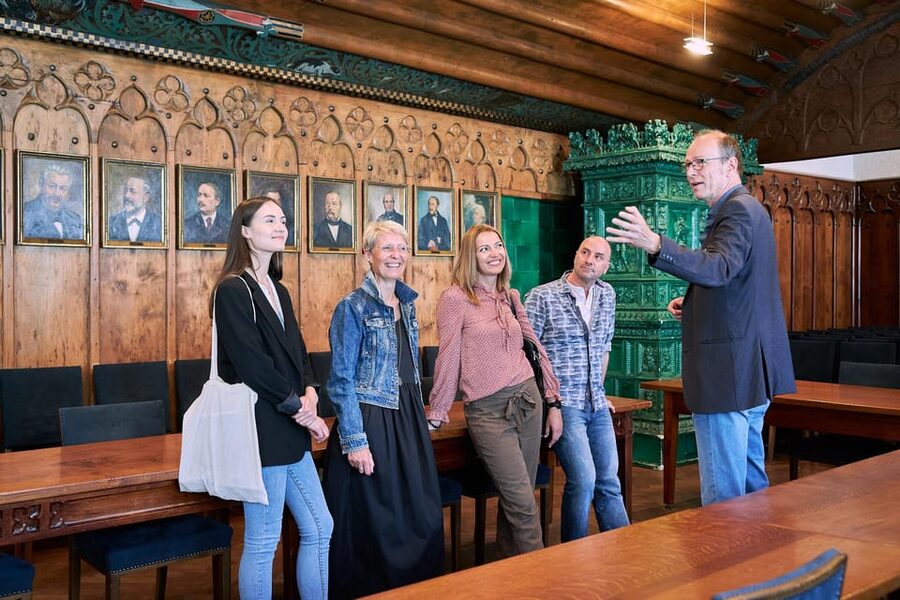
Ravensburg’s old town is the star here: a remarkably preserved medieval center shaped by gates, towers, squares, and trading wealth. The route also reaches the Humpis Quarter Museum, where medieval living quarters make the city’s past feel more human and less like a list of dates.
I like the clear 90-minute format and the way the tour links major sights into one story. I also like the guide style: informative, humorous, and able to react to the situation instead of delivering a stiff speech. The main consideration is language, since the tour is offered in German only.
Key points at a glance
- Medieval Ravensburg in 90 minutes: A compact introduction to the city’s origins, major eras, and surviving old-town sights.
- Humpis Quarter Museum: See medieval living quarters in one of the upper town’s most important museum areas.
- A city shaped by trade: Learn how Ravensburg grew as an imperial city and the home of the Ravensburger trading company.
- A useful route: Begin at the Tourist Information in the Lederhaus and finish at Obertor.
- Lively guiding style: Expect useful context, humor, and some flexibility in how the guide responds to the group and surroundings.
- Good practical value: At $14 per person, the tour costs less than many longer guided walks and includes a full 90 minutes with a live guide.
Why Ravensburg makes a strong walking-tour city
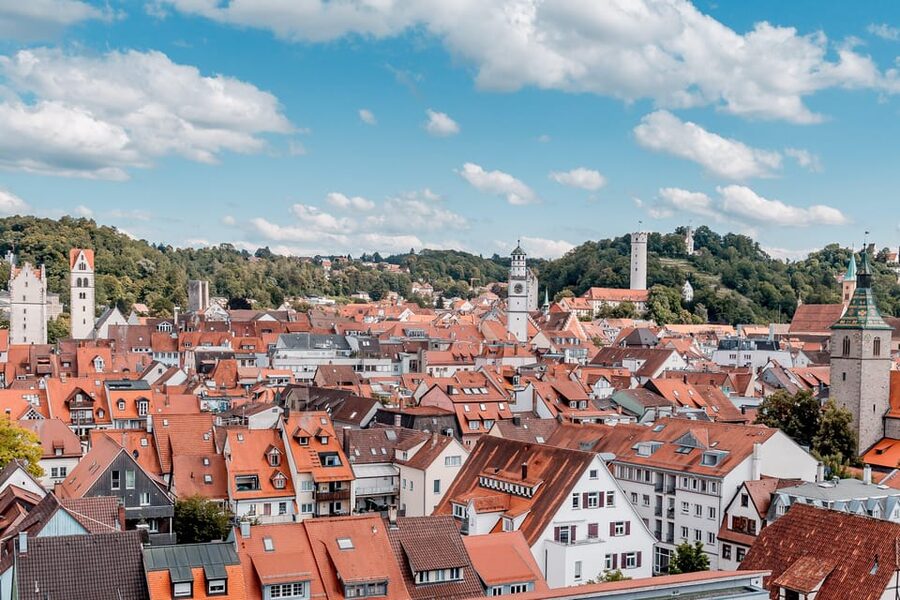
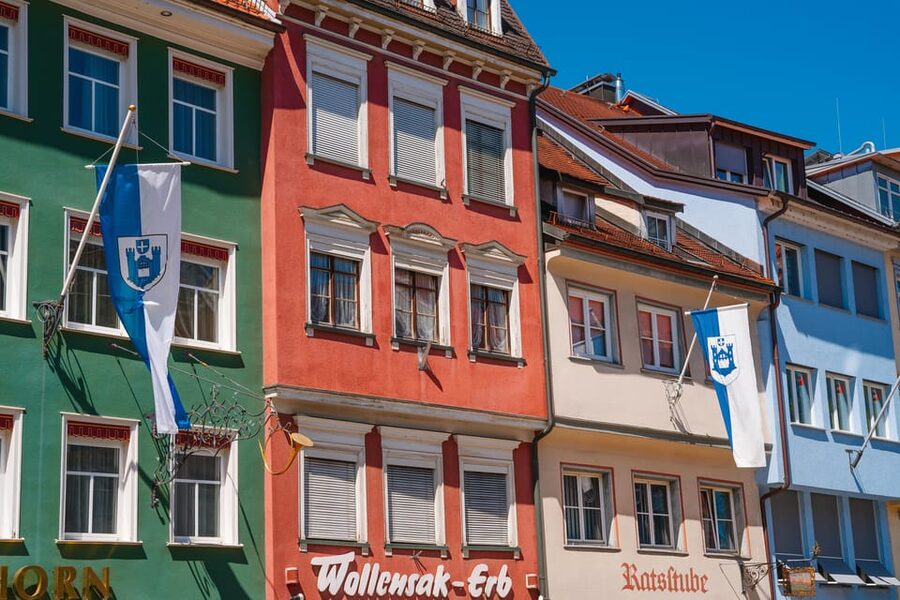
Ravensburg is one of southern Germany’s better-preserved historic towns. That matters because the setting does much of the teaching for you. Instead of seeing one isolated church or tower, you move through streets, squares, defensive structures, and civic buildings that still form a connected old town.
The city grew in importance during the late Middle Ages. It was an imperial city and a center for the Ravensburger trading company, which helped make it an important place around Lake Constance. The tour uses that background to explain why Ravensburg developed the way it did.
I like this kind of city walk because it gives you a framework. Without one, Marienplatz is simply a square, the Kornhaus is simply a historic building, and Obertor is simply an impressive gate. With the story in place, each stop helps explain how the city worked.
The route also gives you a useful mix of public and private life. You see civic buildings, religious sites, commercial spaces, and medieval homes. That balance makes the tour more than a parade of attractive façades.
Other trips people book in Germany:
- Berlin: Reichstag, Dome and Government District Guided Tour
★ 4.7 · 18,288 reviews - Berlin: 1-Hour City Tour by Boat with Guaranteed Seating
★ 4.3 · 16,993 reviews - Hamburg: Sex and Crime in St. Pauli Tour for Ages 18+
★ 4.7 · 15,447 reviews
Starting at the Lederhaus and Tourist Information
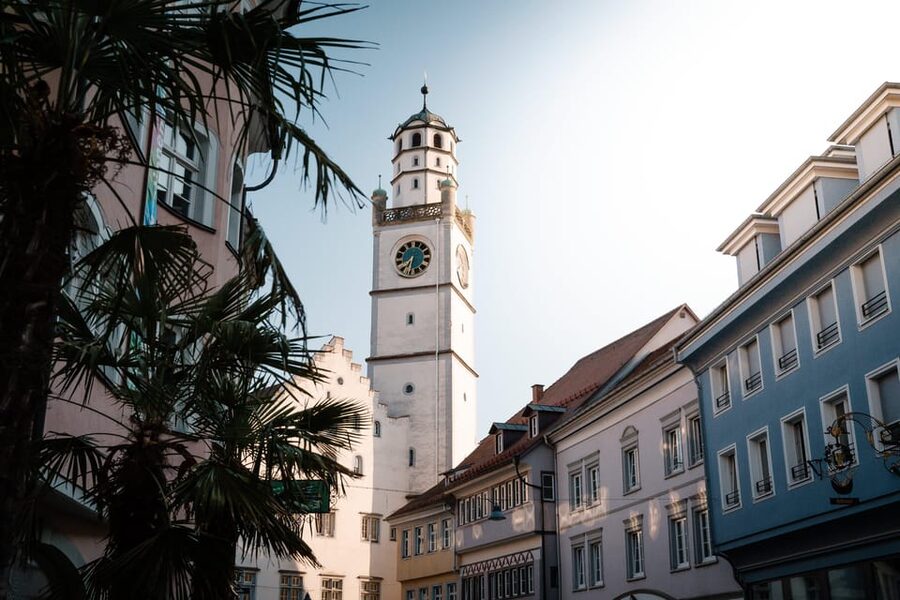
The meeting point is the front entrance of the Tourist Information in the Lederhaus. This is a practical starting place in the old town, since you can arrive there before the walk and get oriented without searching through a residential street or an outlying district.
From here, the guide introduces Ravensburg’s origins and major historical periods. The opening matters because the city’s sights come from different stages of its development. A short explanation at the start helps you understand how the medieval trading center relates to the Ravensburg you see today.
The tour lasts 90 minutes. I consider that a good length for a first look. You get enough time to cover the central old town without committing half a day, and you still have time afterward to return to a favorite square, visit another museum, or continue exploring on your own.
The compact format also suits visitors who want structure but not a full-day program. You are not signing up for a long lecture. The guide keeps the pace moving, and the tone can include humor as well as facts. That combination is useful in a town where many details are easy to miss if you walk without context.
Marienplatz, Bachstrasse, and the shape of the old town
Marienplatz is one of the key stops. As the route moves through the central streets, the guide points out how Ravensburg’s squares and lanes fit together. This is where the city begins to feel like a working medieval center rather than a collection of restored buildings.
Bachstrasse adds another street-level view of the old town. The value of stops like this is not only architectural. They help you notice the scale of Ravensburg, the relationship between its streets, and the way historic buildings define the walking experience.
I would pay attention to the transitions between stops. The tour is not built around one grand monument. Its appeal comes from seeing several pieces in sequence, then understanding how they support one another. A square, a street, a public building, and a tower each tell only part of the story.
The guide’s role is especially important here. Architecture alone cannot always tell you which building mattered politically, which space supported trade, or how the city’s old center changed over time. A good explanation turns a pleasant walk into a useful orientation for the rest of your visit.
The town hall and Kornhaus
The town hall brings civic life into the route. It helps explain how an imperial city was administered and how public authority appeared in the built environment. The stop gives the walk a useful change of pace after the streets and squares.
The Kornhaus adds a commercial and practical side to the story. Its name points toward the importance of grain and provisioning, though the supplied tour information does not provide further detail about its original use. You can expect the guide to place the building within Ravensburg’s wider urban development rather than treat it as a photo stop alone.
These stops are valuable for visitors who want more than pretty medieval scenery. Ravensburg’s success came from its role as a city of commerce and administration, so civic and trading buildings belong at the center of the story.
The route also keeps the history grounded. You are not asked to remember a long succession of dates. Instead, you see how power, trade, religion, and daily life left marks on the same small area.
Same base, a different kind of day out:
- Hamburg: 1.5-Hour Harbor and Speicherstadt Day Cruise
★ 4.6 · 14,200 reviews - From Munich: Neuschwanstein & Linderhof Castle Full-Day Trip
★ 4.5 · 12,494 reviews - Dresden: Semperoper Tickets and Guided Tour
★ 4.7 · 12,102 reviews - Berlin: Boat Tour Along the River Spree
★ 4.4 · 11,252 reviews
The Evangelical City Church and changing religious life
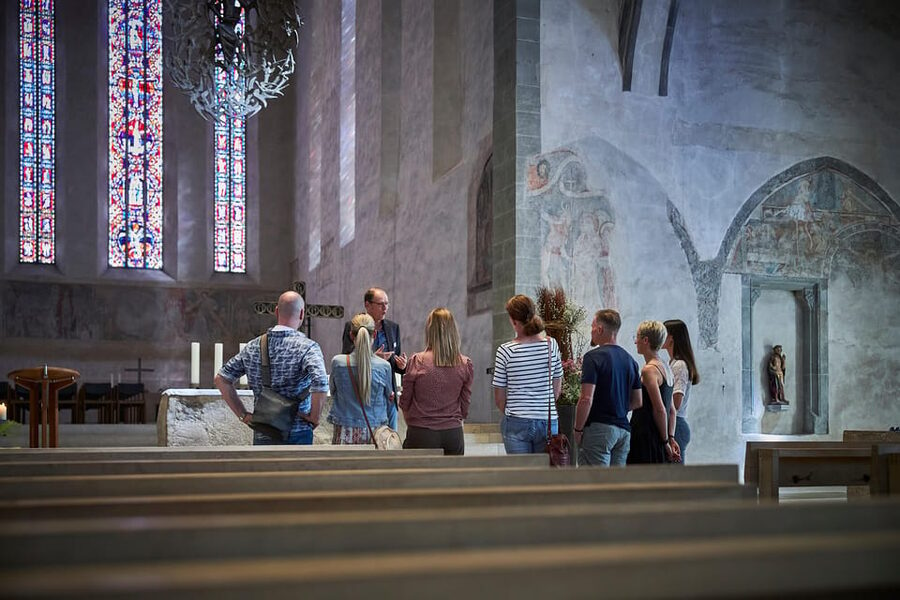
The Evangelical City Church is another important stop. Its place in the old town gives the guide a chance to discuss the city’s religious story and the way faith shaped public space.
The information provided for the tour does not promise an interior visit, so you should think of this as a sightseeing and historical stop rather than a guaranteed church tour. That distinction is useful if you are hoping to see a particular interior or attend a service.
Even from the outside, the church helps you read the old town. Religious buildings were major anchors in medieval cities, and their location tells you something about how people moved through the center and where public life gathered.
I appreciate that the route includes the church alongside the town hall and Kornhaus. The combination keeps the story balanced. You see the religious, civic, and commercial sides of Ravensburg instead of hearing only about castles and military defenses.
The upper town and Humpis Quarter Museum
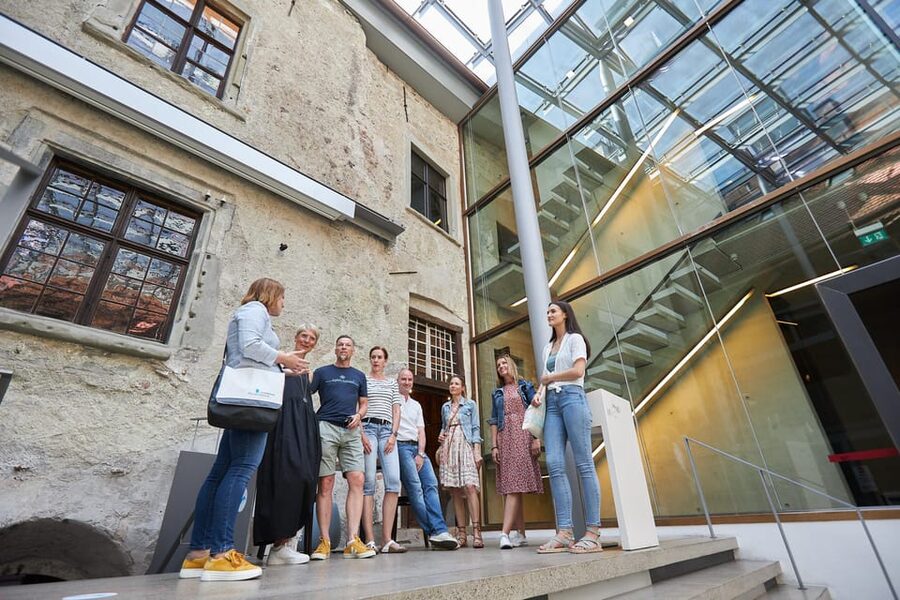
The route continues into the upper town and museum district. This section is one of the most distinctive parts of the walk because it moves from broad city history toward everyday life.
The Humpis Quarter Museum is especially useful for that shift. Its medieval living quarters give you a more personal sense of the past. Rather than focusing only on rulers, merchants, or major events, the museum helps show how people lived within the old city.
The supplied details do not state that a full museum admission or interior museum tour is included, so check what your particular departure covers. The tour does include the upper town with its museum district, and the Humpis Quarter is identified as a highlight, but the walk should not be treated automatically as a complete museum visit.
Still, even a guided look at the quarter adds depth. You begin with Ravensburg as a trading center and end up thinking about homes, rooms, and daily routines. That is a strong reason to choose this tour over a simple exterior walk.
The upper town also prepares you for the finish at Obertor. The route ends with a major piece of Ravensburg’s fortified identity, tying together the city of merchants and the city of gates and towers.
Finishing at Obertor Ravensburg
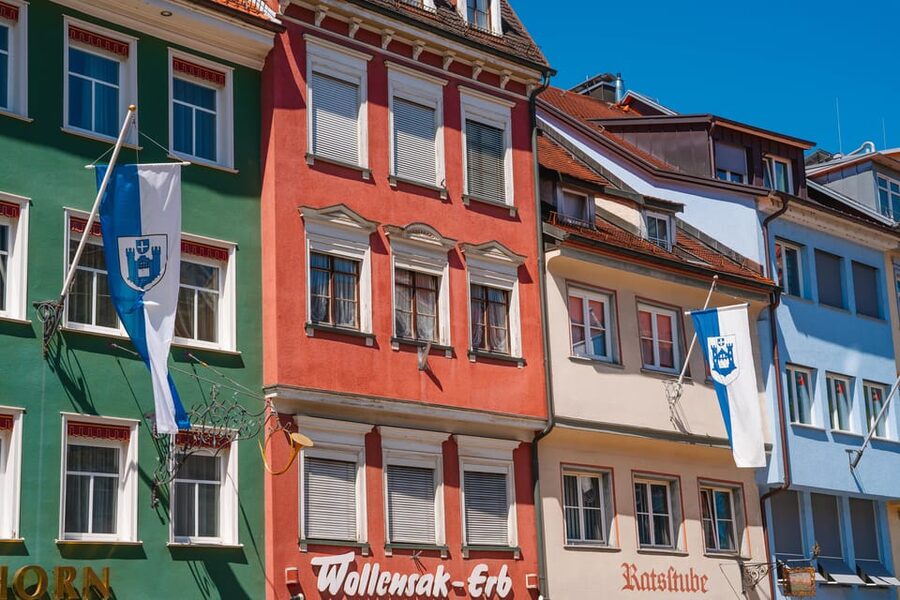
Obertor is the endpoint. Ending there gives the walk a clear sense of arrival rather than dropping you back at the starting point without a final landmark.
Ravensburg is often described as a city of gates and towers, and Obertor brings that character into focus. The gate is a fitting final stop because it connects the old town to its defenses and to the wider world beyond the walls.
The finish is also practical. Once the tour ends, you can decide whether to continue through the old town, return toward the Tourist Information, or spend more time in the upper town and museum district. The walk does not strand you at an obscure location.
Because the tour ends at a different place from where it starts, you should note the route before making plans immediately afterward. The distance is within the historic center, but anyone arranging a timed connection should allow a little flexibility.
What the guide style adds
The strongest praise for this tour centers on the guide’s delivery. The walk is described as interesting, concise, informative, humorous, and entertaining. That is a useful combination for a 90-minute city tour.
The guide also reacts flexibly to the situation. That might mean adjusting an explanation, responding to something happening along the route, or making the walk feel less scripted. You should still expect a planned historical route, but not necessarily a rigid speech delivered without regard for the group.
No guide name is provided, so I cannot point you to a particular individual. The activity is offered in German with a live guide. If you understand German comfortably, the humor and quick situational comments are likely to add a great deal to the walk.
If you do not speak German, this is probably not the right choice unless you are happy to enjoy the buildings and route without following the explanations. There is no alternate language listed.
Is $14 a fair price?
At $14 per person, the tour offers solid value for a 90-minute guided introduction to Ravensburg. You are paying for a live guide, a planned route, and historical interpretation across the old town rather than simply receiving a meeting point and a map.
The value is strongest if you are new to Ravensburg. A first walk can help you decide which areas deserve more of your own time. The tour also saves you from having to assemble the city’s story from separate signs and buildings.
The price is less compelling if you already know Ravensburg well or mainly want to wander at your own pace. A self-guided walk costs less, and the old town can certainly be explored independently. The tour earns its price through explanation, humor, and connections between the sights.
The 4.8 rating from 22 reviews supports the idea that the format works well for many people. The repeated praise focuses on the guide’s ability to make the history enjoyable without losing useful information. That is the part of the price you are really buying.
Who should book this walk?
I would recommend it to first-time visitors who want a quick, organized introduction to Ravensburg. It suits people interested in medieval urban history, historic architecture, trading cities, and everyday life in old town neighborhoods.
It is also a good fit if you prefer a guide who can keep the tone light. The feedback points to humor, entertainment, and flexible responses alongside solid historical information. That makes the walk friendlier than a formal lecture.
Families and mixed-age groups may also appreciate the 90-minute length, though the data does not provide a specific age recommendation. Anyone who finds long historical tours tiring gets a manageable introduction here.
The tour is wheelchair accessible, which makes it a practical option for visitors who need an accessible route. Since the supplied details do not describe the exact street surfaces, slopes, or access arrangements at every stop, you may still want to confirm route specifics when booking.
Booking details worth knowing
The tour begins at the front entrance of the Tourist Information in the Lederhaus. It ends at Obertor Ravensburg, not at the starting point.
The activity is offered in German and lasts 1.5 hours. It includes a 90-minute city tour through Ravensburg’s old town with a live guide.
You can cancel up to 24 hours before the tour for a full refund. A reserve-now, pay-later option is also available, which helps if your schedule around Lake Constance is still changing.
Availability controls the start time, so check the date you want rather than assuming a fixed daily departure. The experience provider is the Amt für Tourismus und Stadtmarketing.
Should you book Der Klassiker Ravensburger Stadtgeschichte?
Book it if you want Ravensburg’s old town to make sense quickly. The route covers the right mix of squares, streets, civic buildings, church architecture, museum areas, and fortified gates, and the 90-minute length leaves room for your own plans.
The best reason to choose it is the guiding style. You get historical context with humor and flexibility, not just a procession of names and dates. At $14, that is a sensible price for a first orientation.
Skip it if you need an English-language tour, a guaranteed full museum visit, or a completely self-directed walk. For German-speaking visitors who want a lively introduction to a well-preserved medieval city, this is an easy recommendation.
FAQ
Where does the Ravensburg city tour begin?
The tour begins at the front entrance of the Tourist Information in the Lederhaus.
Where does the tour finish?
The tour finishes at Obertor Ravensburg.
How long does the tour last?
The guided walk lasts 90 minutes, or 1.5 hours.
What language is the tour offered in?
The tour is offered in German with a live tour guide.
Is the tour wheelchair accessible?
Yes, the activity is listed as wheelchair accessible.
Can I cancel for a full refund?
Yes. You can cancel up to 24 hours in advance for a full refund.
Just added in Germany
- Romantic Berlin Rickshaw City and Photo Tour – incl. pick-up★ 4.0 · 9 reviews
- Private taxi tour to Potsdam and Sanssouci 6-8h★ 5.0 · 30 reviews
- Moonshine Comedy – English Stand Up Comedy by the bay★ 5.0 · 11 reviews
- Berlin Protest History Tour: Rebels, Resistance, and Revolution★ 5.0 · 7 reviews
- One Up to 3 Rickshaws(6 GUESTS)-Taylor Made Rickshaw Berlin Tour★ 5.0 · 20 reviews
- Private Half-Day Berlin Sightseeing Tour with a Minivan Including Short City Walks★ 5.0 · 31 reviews
- Private City Kickstart Tour: Berlin★ 4.5 · 71 reviews
- Berlin Private Custom Walking Tour With A Guide (Private Tour)★ 4.5 · 8 reviews